You step into the shower and notice the grout lines before you notice the fixtures, especially the ones that never seem clean for long. Bathroom designers are rethinking those walls, and the options worth considering may not be among the tile samples you brought home for your renovation.
In short
- Designers are replacing small shower tiles with large porcelain or stone slabs.
- Large-format tile gives you a similar look with fewer grout lines.
- Solid surface panels cover shower walls in broad, grout-free sections.
- Textured finishes such as microcement offer another way to skip grout.
Designers are choosing less grout
View in gallery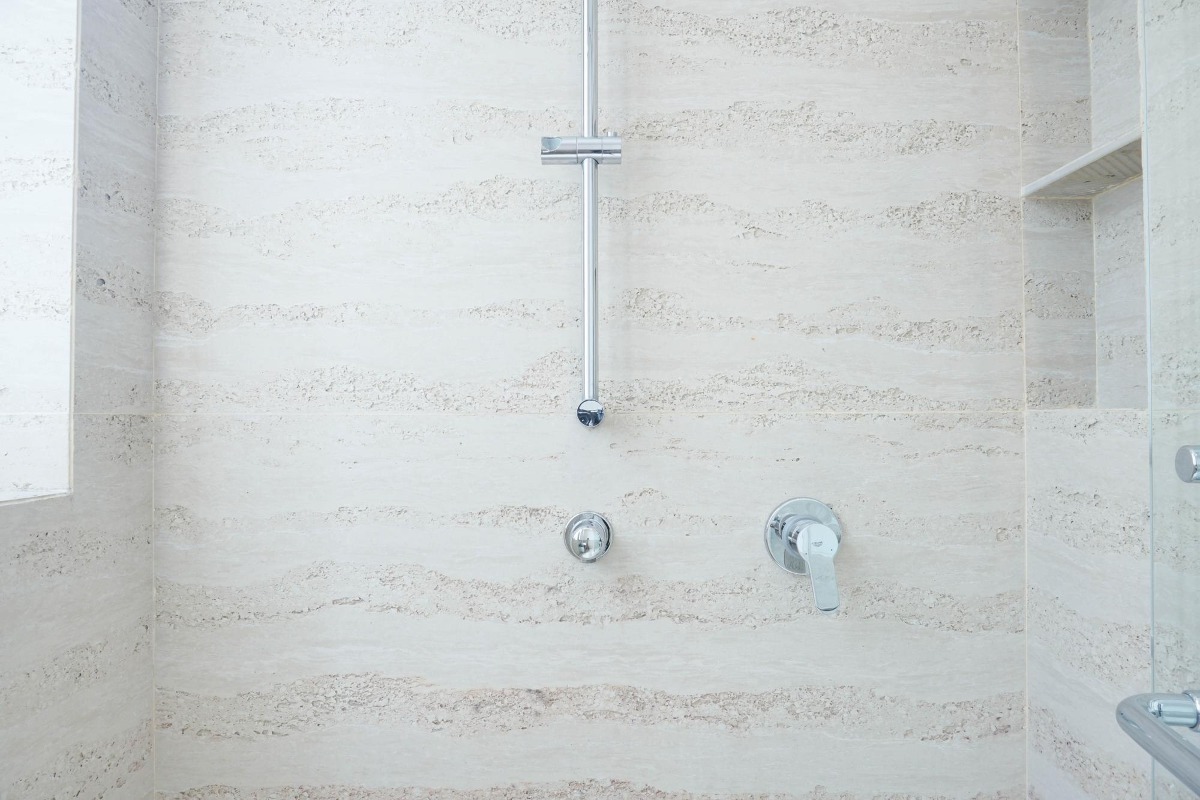
You know the part of the shower that asks for the most attention. It is the narrow line between the tiles, especially where the wall stays damp. Designers are responding with walls that have fewer of those lines, or none across the surface you see every morning.
Julie Beuerlein, founder of JKB Home Design, puts the appeal simply: “Less grout means less maintenance, which feels right for how people live today.” The change is about daily cleaning as much as appearance. A broad, nearly uninterrupted wall can look calm while leaving you with fewer lines to scrub.
That preference shows up in the National Kitchen & Bath Association’s 2026 Bath Trends Report. In its survey of nearly 700 industry experts, 89% said homeowners want smaller or no grout lines on bathroom floors. For shower walls, designers are pursuing the same clean-lined look with slabs, larger tiles and panels.
Slabs and panels are taking the wall
Picture the wall behind your shower faucet as 1 broad surface instead of a patchwork of little squares. Large-format porcelain or stone slabs can cover an entire shower wall in 1 or 2 pieces. Some measure up to 5 by 10 feet, so the eye follows the surface rather than a grid of grout.
Porcelain slabs offer the look of a continuous wall with very few seams. California designer Rosanna Bassford favors full slabs because fewer seams reduce the chance of mildew. If you still like tile, larger formats bring a related effect: Bassford recommends pieces at least 24 by 24 inches or 18 by 36 inches.
Solid surface panels take a different route. Made from mineral dust mixed with resin, they are custom fabricated in large sections and give the shower a seamless, non-porous appearance without grout lines. Installing those sections typically takes less time than laying tile, which is another reason they are drawing attention during bathroom remodels.
Texture offers another look
A shower wall does not have to look like stone to leave grout behind. Designers are also using textured finishes, including microcement, Roman clay, limewash and plaster, to create a more handcrafted appearance. Instead of seeing a repeated tile pattern, you see a continuous surface with texture of its own.
That opens up a different kind of bathroom mood. You can favor the smooth sweep of a slab, the quiet finish of a solid surface panel or the softer look of a textured wall. Each moves attention away from grout and toward the wall itself.
The limit
Tile has not disappeared from showers; larger tile is part of this shift, too. Large porcelain slabs need a flat wall and specialized installation under the ANSI A108.19 standard. Textured finishes are another design choice, not a promise of the same durability or upkeep as a porcelain slab or solid surface panel. If you love the pattern of traditional tile, fewer grout lines will give your shower a different look.