

The sofa, loveseat and chair arrived together, and they still sit exactly as they did in the showroom. That instant-suite look is one of several details some high-end designers prefer to avoid in a living room. The good news is that many improvements cost far less than replacing your furniture.
The set that came home as a family
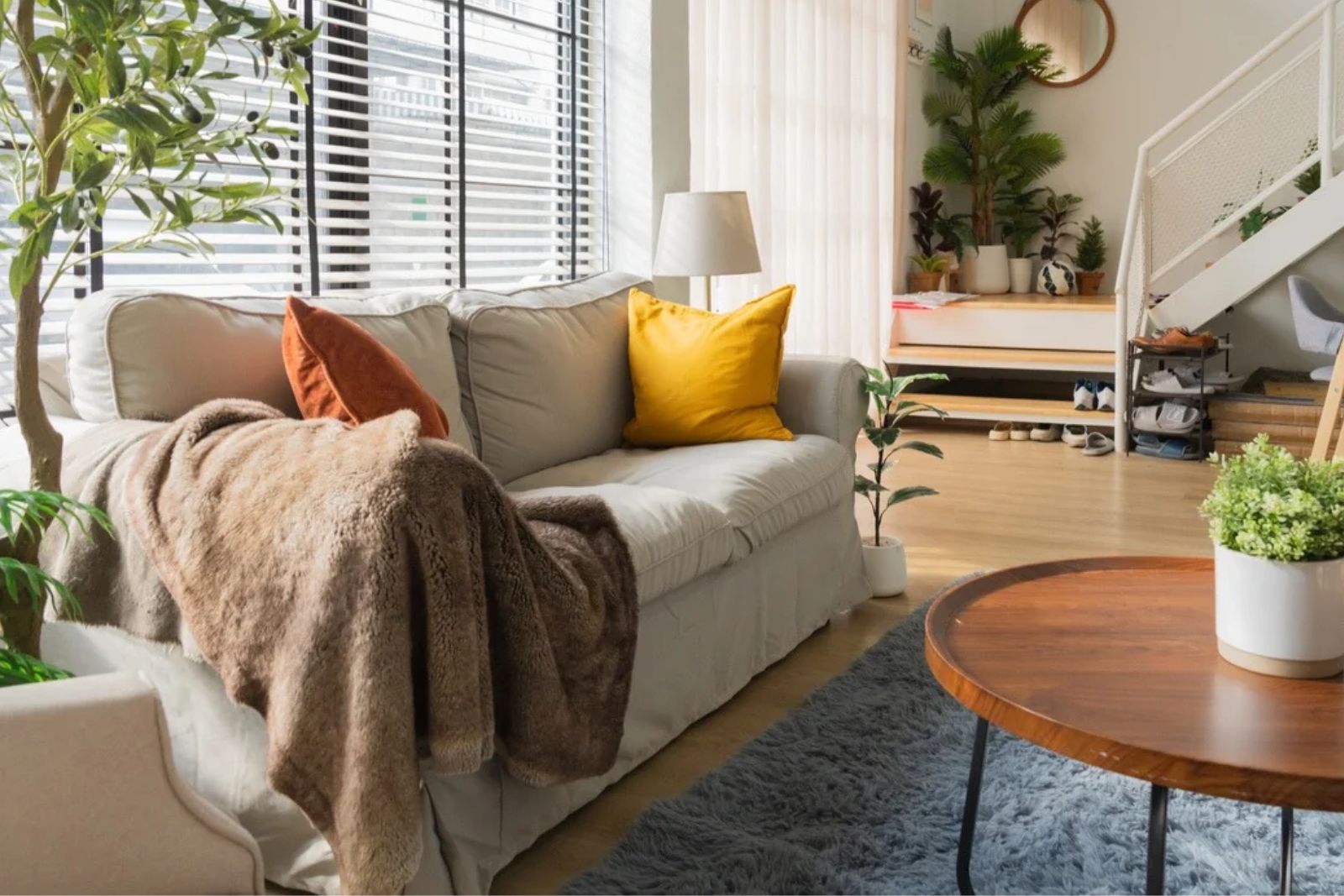
Matching furniture suites are convenient. But when every piece shares the same fabric, finish and shape, the room can feel repetitive rather than thoughtfully assembled.
Interior designer Ashley Hauza, founder of Hauza Studio, explains that identical wood tones, finishes and silhouettes can leave a space without enough contrast or visual interest.
In an Architectural Digest article, designers identify both matching furniture sets and undersized area rugs as common decorating mistakes.
A rug that’s too small can make the seating arrangement feel disconnected. If only the coffee table sits on it, the sofa and chairs may appear to float around the edges.
Designer Nancy Evars recommends choosing a rug that helps unify the furniture. Kate Marker similarly advises placing at least the front legs of the seating on the rug whenever the layout allows.
You don’t have to give up your entire matching suite. Keep the sofa, then consider introducing a chair, side table or lamp with a contrasting shape, height or material.
A tall floor lamp can break up a row of low furniture. A wooden side table beside upholstered seating can add texture without making the arrangement feel busy.
Before buying anything, stand in the doorway and take a photograph of the room. Sometimes you can make the room feel expensive simply by clearing a crowded surface and bringing the seating into a more comfortable conversation group.
Look at that photograph again, though, and you may notice where all the chairs are pointing.
The big black rectangle on the main wall
Wealthy homes aren’t necessarily TV-free. What some designers question is a living room where every chair faces a large screen and little else draws attention.
A television can become the dominant feature of a room because of its size, dark surface and prominent position. When it occupies the main wall, artwork, architectural details and window views may receive less attention.
The furniture arrangement can reinforce that effect. Line up every seat toward the screen, and a multipurpose living room begins to resemble a dedicated viewing area.
That isn’t inherently wrong. If watching movies is the room’s primary purpose, the arrangement may be entirely appropriate.
But if you also want a place for conversation, reading or entertaining guests, try giving the seating another orientation.
Start small. Turn one chair toward the sofa rather than directly toward the television. Consider whether a painting, fireplace or attractive window could serve as another focal point.
Keep electronics and loose cables organized so they don’t spread across the console or create tripping hazards.
If the television remains visible, choose a size and position that suit the room and allow comfortable viewing. A screen mounted too high can be uncomfortable to watch for long periods, as interior designer Diana Lombard explains in Architectural Digest.
Custom cabinetry can conceal a television, but it isn’t essential. Sometimes the simplest improvement is to stop arranging every piece of furniture around it.
Once evening comes, the lighting can make just as much difference.
Bringing the light down to the sofa
One ceiling fixture may provide enough general illumination, but it doesn’t always create the most inviting atmosphere.
Light coming from a single overhead source can leave seating areas unevenly illuminated. It may also make reading or other close-up activities less comfortable if the light doesn’t reach the right places.
Interior designers often recommend layering warm light rather than relying on one fixture.
The principle involves three complementary types of lighting:
- Ambient lighting: General illumination that allows people to move around the room comfortably.
- Task lighting: Focused light for activities such as reading beside an armchair.
- Accent lighting: Illumination that draws attention to artwork, shelves or architectural features.
In Architectural Digest, James Fung and Whitney Maehara of NB Design Group recommend combining light sources at different heights. Table lamps, in particular, bring light closer to where people sit.
If your ceiling fixture already has a compatible dimmer, try lowering its brightness in the evening. Then switch on a floor lamp beside an armchair and a table lamp near the sofa.
For a warm residential atmosphere, bulbs around 2700K are a common choice. Many designers also favor color temperatures below 3000K for relaxed living spaces.
At night, compare the room with two lamps switched on at different heights. Separate pools of light can add depth while providing useful illumination near faces, books and tabletops.
You don’t need expensive designer fixtures to achieve this effect. Placement, appropriate brightness and the ability to adjust the lighting are often more important than the price of the lamp.
When the matching pair can stay
These are decorating preferences, not rules about wealth or good taste. A visible television, matching chairs or a bright ceiling fixture can all be appropriate when they suit the way your household uses the room.
Matching furniture can also create balance, particularly when other elements introduce enough contrast. A coordinated pair of armchairs may look intentional rather than repetitive.
Likewise, a television-centered layout makes sense in a family room primarily used for watching movies. And strong overhead lighting can be valuable for cleaning, hobbies or other practical tasks.
The mistake is making a room less functional simply to imitate a particular design aesthetic.
There’s little benefit in hiding everyday objects if retrieving them becomes inconvenient. Nor is there a reason to replace comfortable furniture with supposedly more sophisticated pieces that don’t reflect your taste.
A thoughtfully designed living room balances proportion, comfort, function and personality. Those qualities aren’t exclusive to expensive homes, and they don’t necessarily require expensive purchases.
Sometimes the most effective upgrade is simply moving a chair, changing the lighting or giving the furniture you already own a better arrangement.