You get home with grocery bags in both hands and find yourself digging through your purse for the front-door key. More homeowners are rethinking that familiar routine, and the decision reaches beyond your own trips in and out. It matters when your sister arrives for the weekend or the neighbor needs to water your plants.
In short
- More than 12 million US internet households have a smart door lock.
- A keypad lets you open the front door with a code instead of reaching for a key.
- Access codes make visits easier when someone needs to get into your home.
- Consumer Reports’ 2026 top performers include locks from Kwikset, Yale, Eufy, and August.
The front door is changing
View in gallery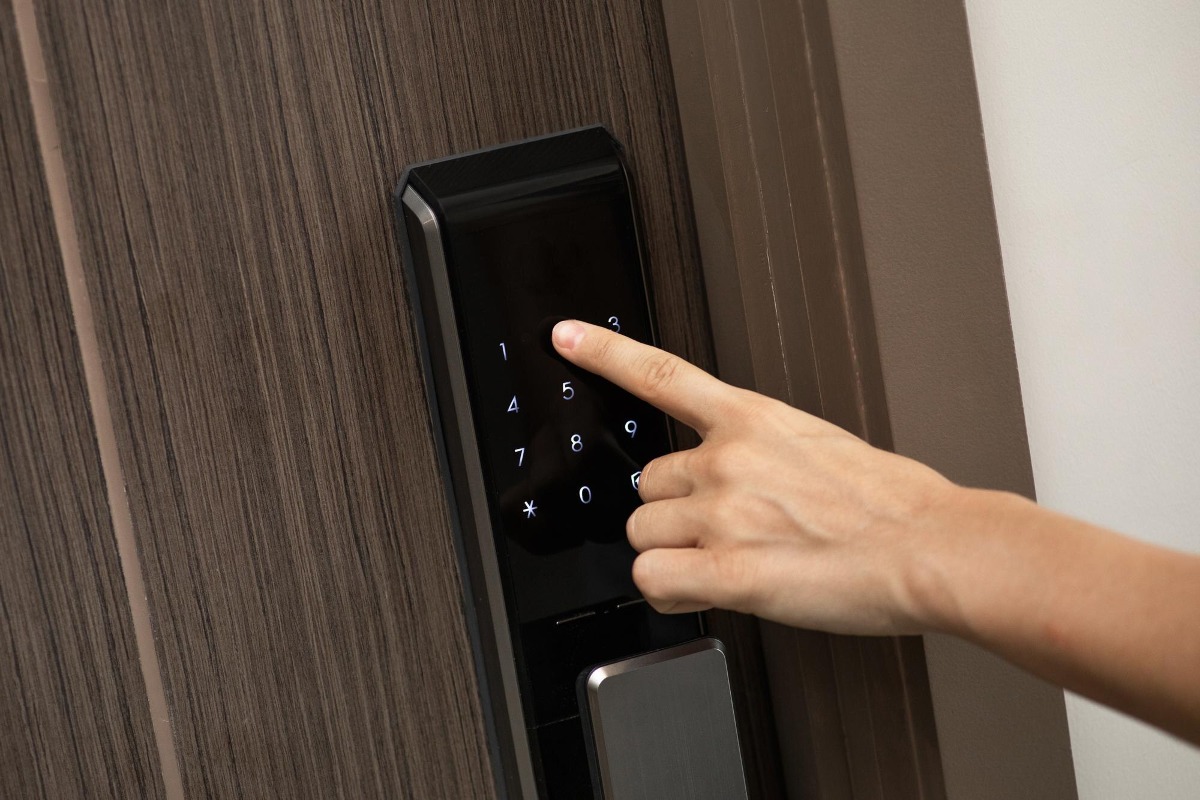
You come home with grocery bags in both hands. Instead of setting them down to find your house key, you enter a code at the door. That small change is a big part of why keypad entry appeals to homeowners.
In a keypad lock, the code opens a motorized deadbolt right at the door. A connected smart lock can add features that use WiFi or another wireless connection. Both put the key you carry in a less important role during an ordinary trip home.
The shift shows up in the numbers. Parks Associates found that 25% of US households with professionally monitored security systems own a smart door lock, compared with 3% of households without a security system. Its research also found that more than half of households planning a move within the next 6 months planned to buy one.
A code makes visits easier
Think about the person coming to care for your pet or clean your house. Handing over a metal key means keeping track of who has it and getting it back afterward. With a keypad, you can give that person a code, then change or remove it when the visit is over.
That feature is high on shoppers’ minds. Among households planning to buy a smart lock, 47% say a keypad is a must-have. Nearly 40% of current smart lock owners find a keypad useful for guest access, including housekeeping visits and package deliveries.
You can also choose how much technology you want at the door. A basic electronic keypad lock accepts a code locally and works offline. A connected model brings other features into the picture: for example, Consumer Reports gave a Eufy model strong marks for remote monitoring and ease of setup.
These models stand out in testing
The names on the box can start to blur together. Consumer Reports’ 2026 lab-tested rankings offer a place to start: the Kwikset Juno 991J15SMTCP, Yale Assure Lock 2 YRD450-WF1-BSP, Eufy Smart Lock Touch & WiFi S230, and August WiFi Smart Lock AUG-SL05-M01-G01 are among its top performers.
The August stands out if you are looking at a retrofit smart lock. Consumer Reports named it the best in that category and noted that it connects directly to WiFi without a separate adapter. The Eufy Security Smart Lock S230 earned a place among its best locks with built-in WiFi.
The limit
The house key has not disappeared. Typical keypad locks keep a mechanical key cylinder for backup, so you still need a safe place for that key. Smart locks are growing in popularity, yet Parks Associates puts ownership at 11% of US internet households. Codes need attention, too: an ADT survey found 21% of people willing to share a smart lock code, while a Brinks Home survey found 76% of homeowners with smart security systems had given someone access by key, code, or password and never revoked it. And the lock itself matters. In Consumer Reports’ testing, the Defiant Round Smart Wi-Fi Deadbolt did not hold up against kick-ins, drilling, or lock picking.