You wipe down your glass shower door, then notice the same cloudy spots when the light hits it. You’ve tried the usual vinegar spray and plenty of scrubbing, yet those white marks still make the bathroom look less clean than the rest of your hard work deserves.
In short
- Citric acid is the better choice for hard-water mineral stains on glass shower doors.
- It dissolves limescale without the lingering vinegar smell.
- Mix 2 to 3 tablespoons of citric acid with 1 cup of warm water, then apply it to dry glass.
- Use a squeegee after each shower to keep new spots from forming.
Those cloudy marks are minerals
View in gallery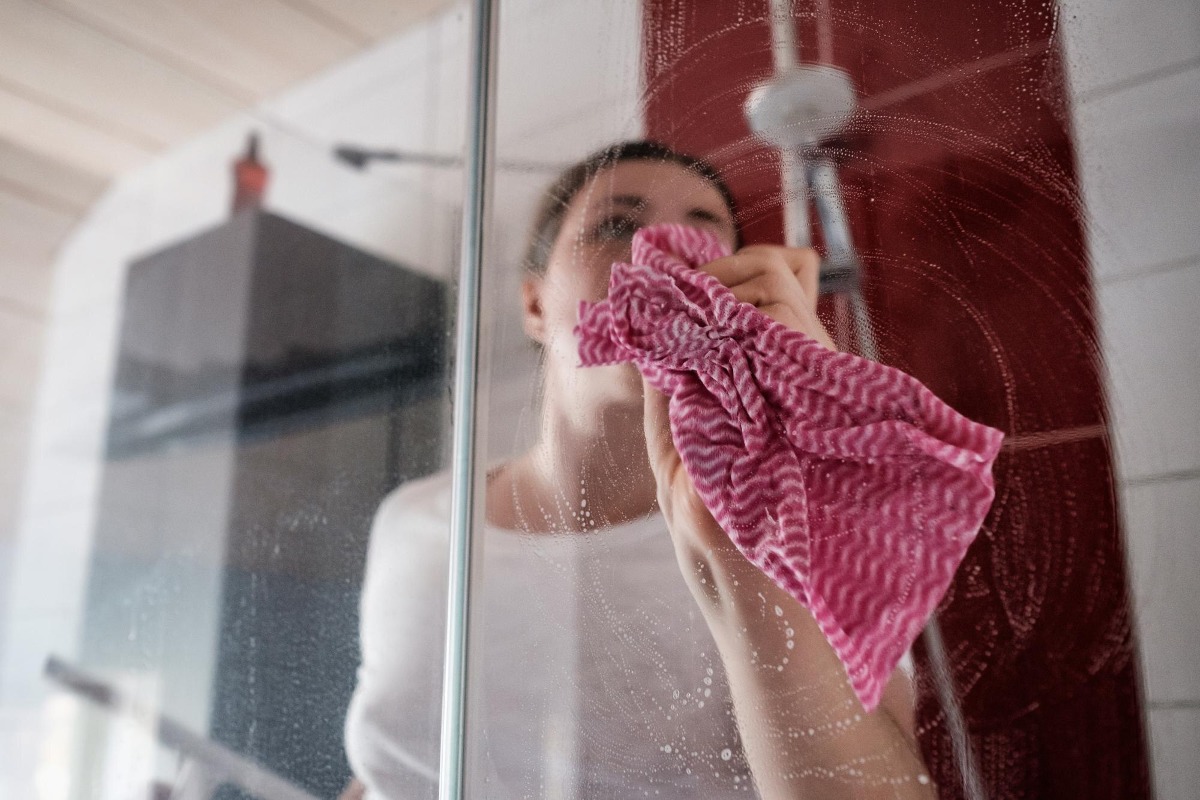
You step out of the shower, look back at the door, and there they are again: cloudy streaks across the glass. Wiping them with a damp cloth seems to do little. The trouble is what the water leaves behind as it evaporates.
Hard-water stains are mineral deposits, with calcium carbonate making up much of the chalky buildup called limescale. Citric acid reacts with that mineral and turns it into calcium citrate, which can rinse away. That gives you a way to loosen the marks before you reach for a sponge.
Vinegar is an acid, too, and it can remove limescale. Citric acid has a stronger limescale-dissolving action at the same concentration, while vinegar takes longer to soak and can leave its smell in the bathroom. Baking soda is more useful for scrubbing than for dissolving the mineral deposit you see on the glass.
Give the solution time on the glass
Start with the shower door dry. Dissolve 2 to 3 tablespoons of citric acid crystals or powder in 1 cup of warm water. You can put the mixture in a spray bottle, or apply it with a microfiber cloth or soft sponge.
Cover the cloudy areas and leave the solution in place for about 15 to 20 minutes. That waiting time lets the acid work on the buildup, so you are not relying on pressure from your hand. Then wipe or lightly scrub with a soft cloth or sponge, rinse with clean water, and dry the glass.
The method fits neatly into a regular bathroom cleaning day. Spray the door, tend to another part of the room, then come back to rinse. You are treating the mineral film itself rather than repeatedly wiping a door that still looks cloudy when it dries.
A squeegee keeps water from settling
Once the glass is clear, the simplest next step happens right after your shower. Run a clean squeegee from the top of the door to the bottom. It takes less than 1 minute and removes most of the water before it can evaporate and leave minerals behind.
That quick swipe also helps keep water spots and soap residue from building up. For more protection, Rain-X Shower Door Water Repellent is made to help water bead and slide off glass. Think of it as support for the routine, while the squeegee handles the water you can see.
The limit
Citric acid works on mineral deposits, not every mark that can cloud a shower door. Older, stubborn stains can need another treatment, and treated glass or coatings call for a small, discreet test before you clean the whole door. Vinegar and baking soda still have uses for other cleaning jobs; this choice is about hard-water minerals on glass.