
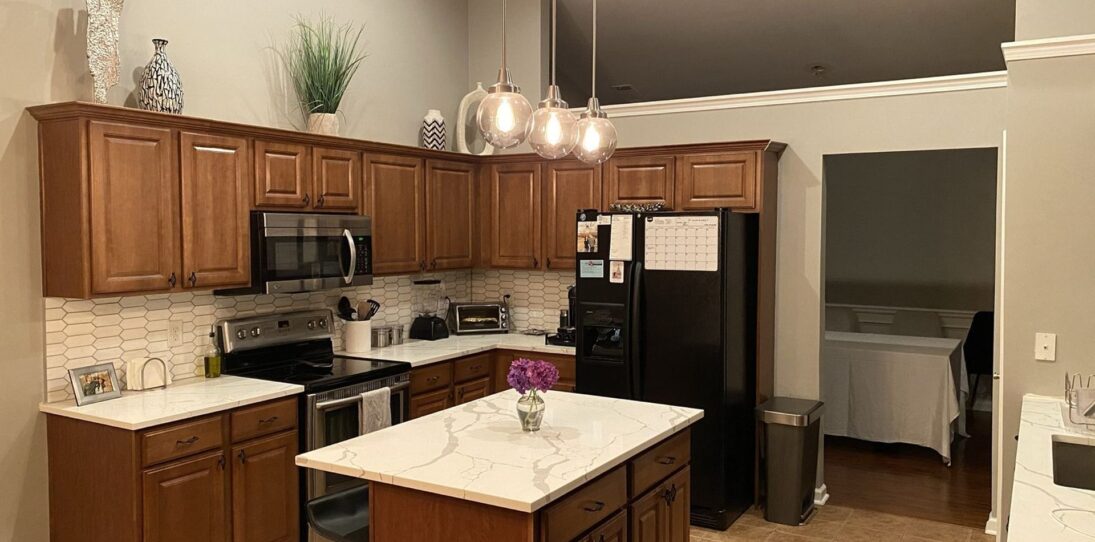
Painted oak cabinets usually give themselves away within a year. Brush strokes at the edges, thumbprints cutting through the finish near the handles, one corner yellowing faster than the rest. That’s the quiet reason most people hesitate to touch their honey oak at all. They’ve seen what the shortcut looks like after it ages.
This kitchen did not take that shortcut, and the first photo tells you so.
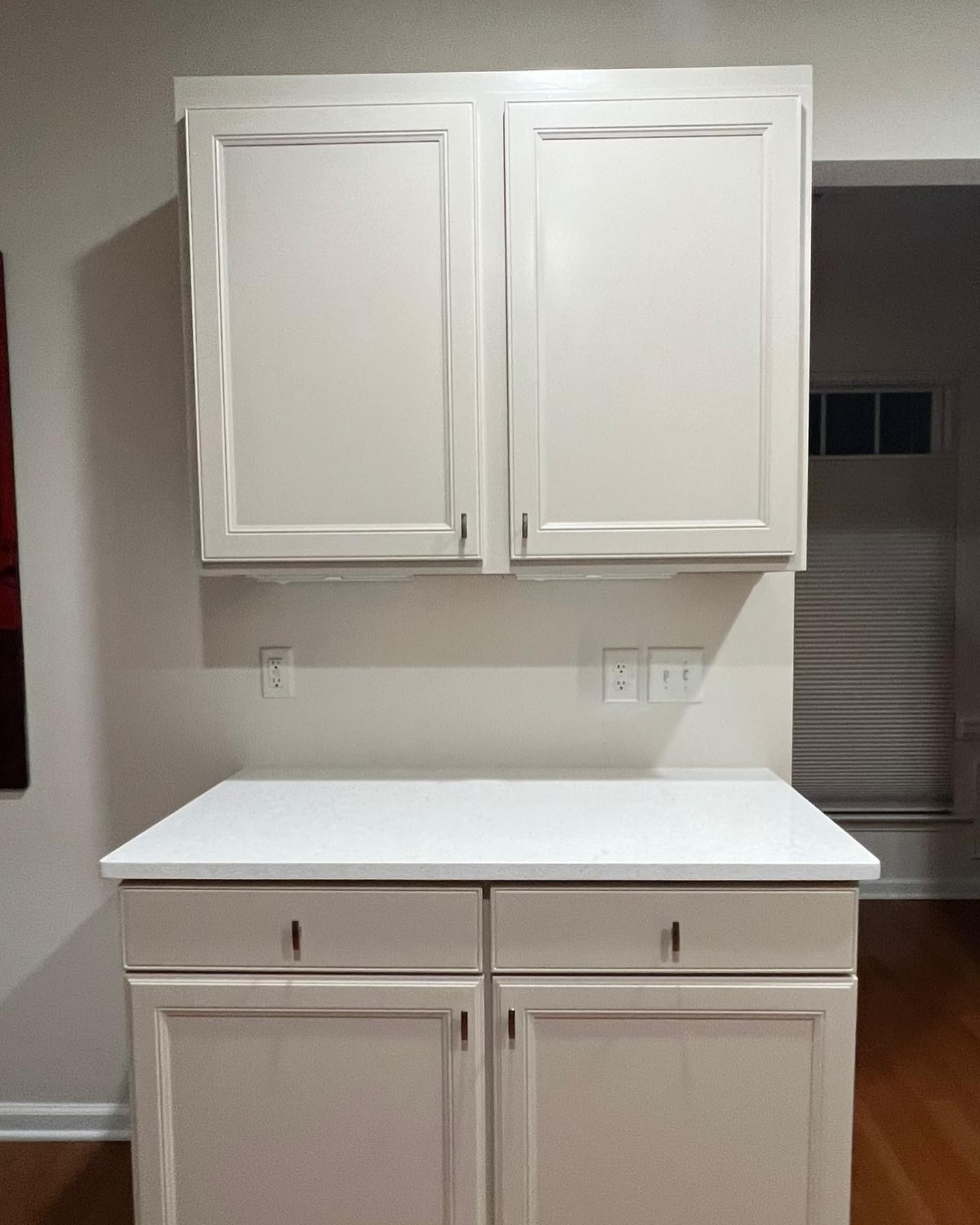
Look at the edge where the door meets the frame. No ridge of paint where a brush stopped. The panel detail is crisp, not clogged. The quartz underneath reads cool enough to feel modern but warm enough it doesn’t fight the room. The whole thing looks like a brand new build, which is the trick.
Then you remember what she started with.
Where this kitchen started
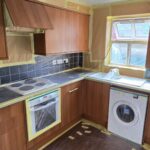
The oak here wasn’t a worst case, and that almost makes it harder. Middle-of-the-road orange oak, a beige speckled counter, small white tile with dark grout, chunky traditional hardware. The kind of kitchen that technically works and quietly drains the room every time you walk in.
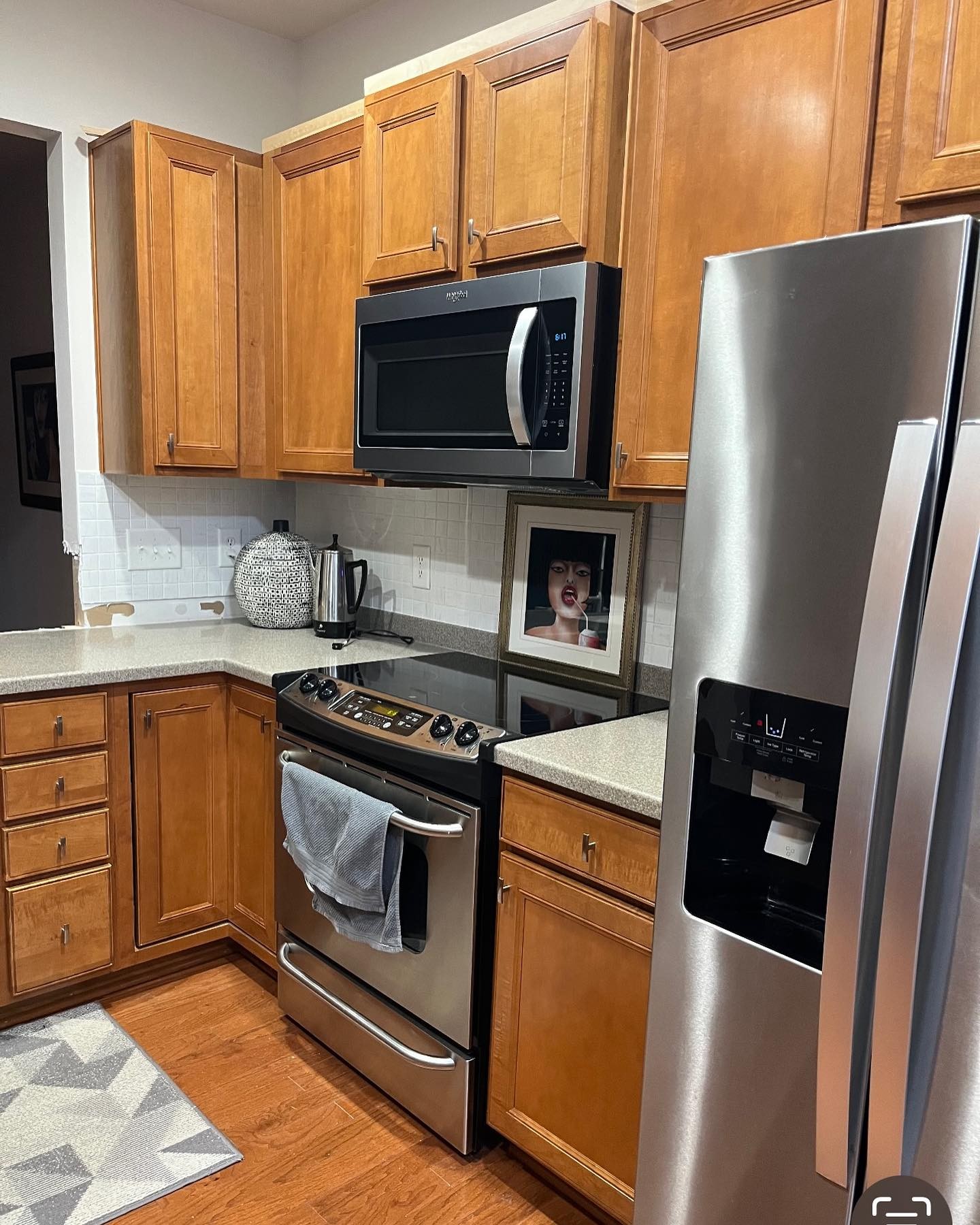
Notice the little tells. A framed piece of art is leaning on the counter with nothing to do with cooking. It’s there because the room needed real contrast and the oak would not give it. The patterned rug is doing the same job, compensating for a palette that refuses to cool off.
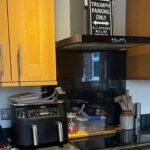
The wider shot during demo makes the project easier to understand.
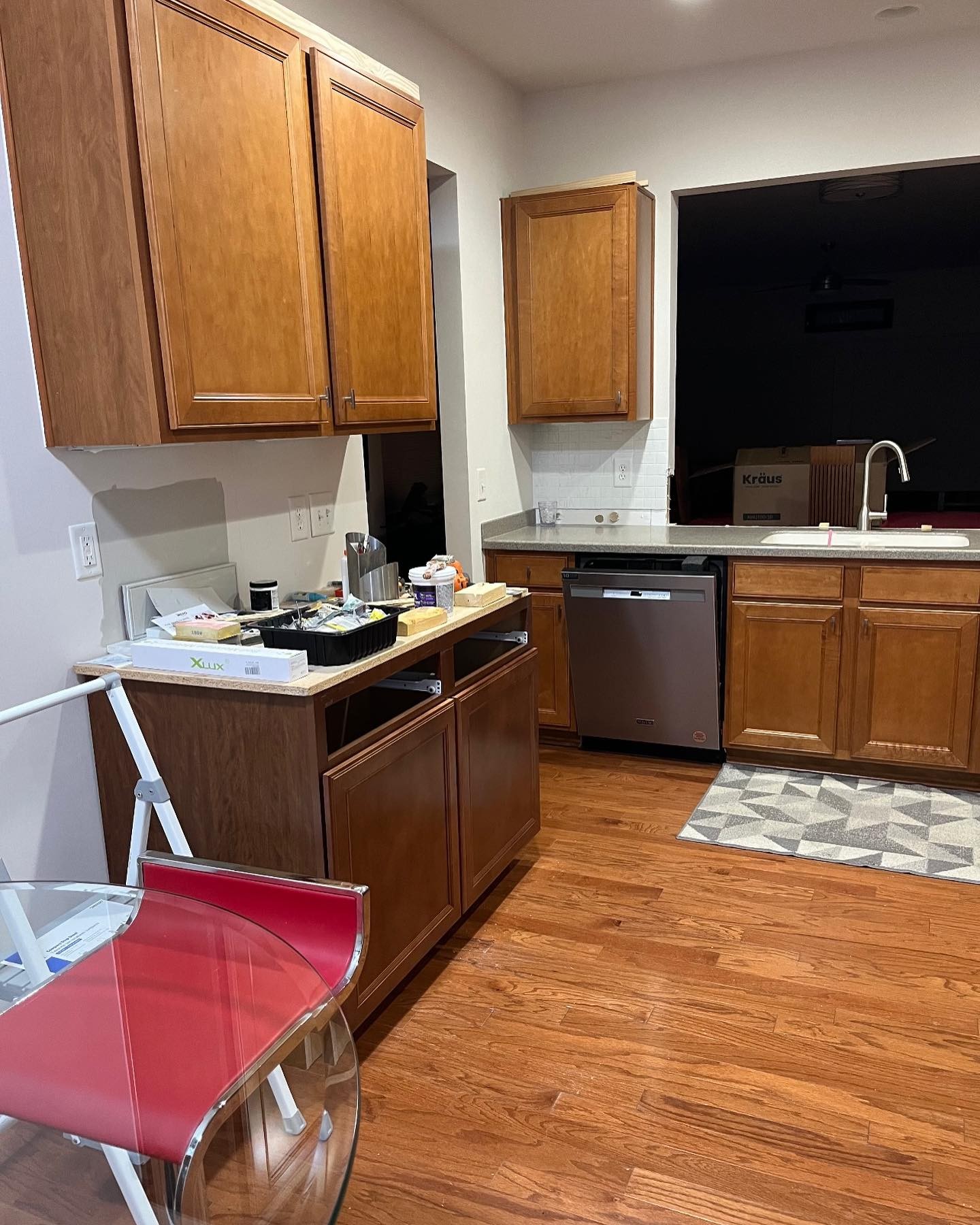
No walls came down. No cabinets were pulled. The layout on day one is the layout she has now. This is surface work, not architecture, and that caps the project cost much lower than the industry usually quotes.
The shade is doing most of the quiet work
The single most common way a painted oak kitchen goes wrong is the white. People reach for the starkest one they know, because they want the strongest possible break from the orange. That instinct is the trap. A cool bright white next to warm hardwood floors reads clinical. It makes the floor look dirty and turns every shadow blue. Within a month the owner is adding brass and linen, trying to warm the room back up.
The shade she chose sits in the quiet band of warm whites like Benjamin Moore White Dove, Sherwin-Williams Alabaster, or Natural Linen. Almost no yellow in the undertone, just enough warmth to stay friendly with wood. On paper it’s a small call. In the room, it is the reason your eye stops fighting the floor.

Why these doors don’t betray the paint
The second thing most people get wrong is the application. Brushes drop fibers. Rollers leave stipple. Water-based trim paint pulls back from the inside corners of a raised panel and leaves a halo you can see from the hallway.
These doors were sprayed with a cabinet-grade finish, likely a water-based alkyd or a professional lacquer. The surface is smooth enough that nothing in the photos gives away it’s paint. If you didn’t know the before, you’d assume these are new doors from a mid-tier cabinet maker.
Design media has spent five years telling readers that raised panel doors are dated and shaker is the only modern answer. It was never quite true. The raised panel was never the problem. Orange oak was. Painted in a warm soft white with a crisp spray finish, those arched panels read classic and transitional.
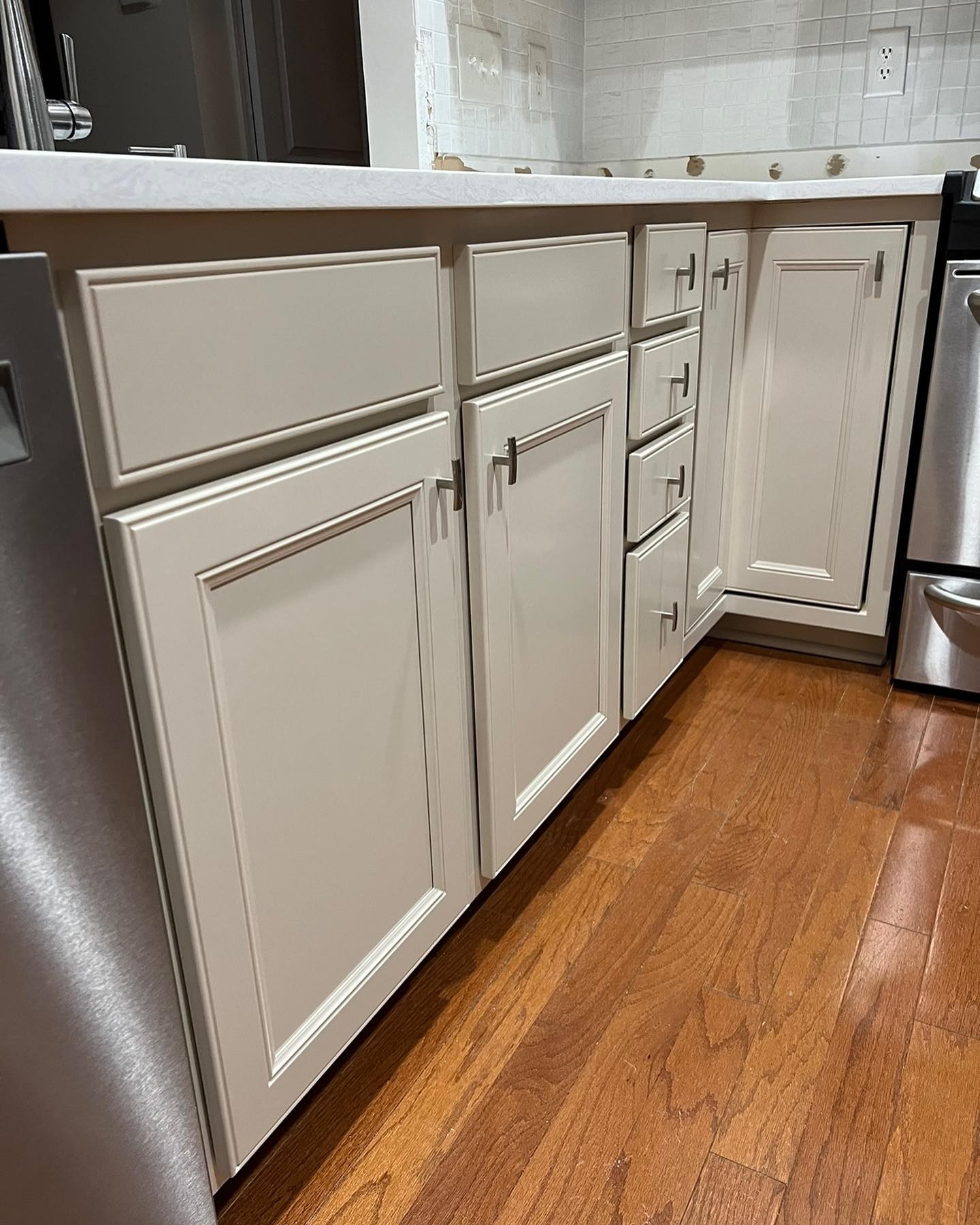
You can see the honest in-progress nature here. The small tile backsplash is pulled and the drywall is patched, waiting for new tile. Painting the cabinets and leaving the dated tile would have shortchanged the whole move.
The counter is secretly the hero
The third decision is the one most DIYers skip to save money. It’s the one most responsible for how new the room looks.
The old speckled laminate was doing more visual damage than the oak itself. Beige speckle pulls yellow out of anything near it. Keep that counter with new painted cabinets and the kitchen still reads tired. Swap in a soft white quartz with gentle gray veining and the cabinets finally get to breathe. Quartz runs around $55 to $85 per square foot installed, which in an average kitchen lands between three and five thousand dollars.
That is a real check to write. It is also what separates projects that pass for new construction from the ones that still look like a repaint.
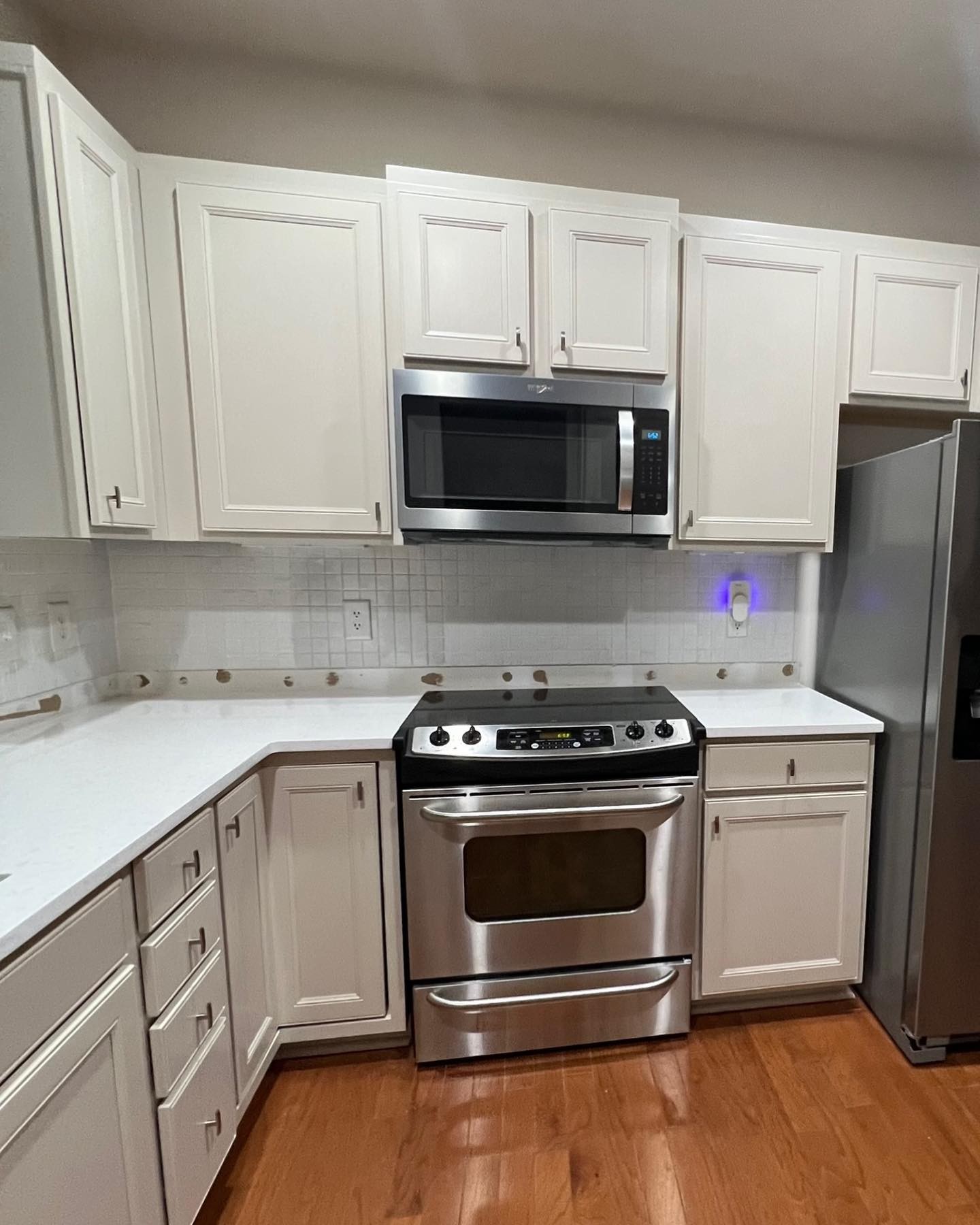
The appliances are the same. The hardwood floor is the same. The fridge did not move. Everything that was going to cost real money, she left alone. What she changed were the three surfaces that actually controlled the mood.
What this means if you have the same cabinets
The number the replacement industry wants you to hear is twenty thousand dollars and up. A professional paint job plus a quartz counter runs closer to six to nine thousand in most markets. For that money you keep your boxes, doors, layout, and hardware locations. You change the shade, the finish quality, and the counter.
Three moves. Pick a soft warm white, not a crisp cool one. Have a specialist spray it, not roll it. And budget the quartz into the same job, because the counter is what tells the eye whether the paint is intentional or a cover-up.
Honey oak is not the problem people think it is. The three surfaces touching it usually are.