A small 1920s bungalow in central Florida had been sitting behind a coat of tired beige paint for what looks like a very long time. A local painting crew turned up with three cans of paint, a ladder, and a plan. They didn’t touch a single window. They didn’t replace a board of siding. They didn’t add shutters, change the roofline, or pull out a bush. The house they handed back could pass for a brand-new build in any modern real estate listing. What they changed is smaller than you’d guess. What it does to the house is bigger than you’d think.
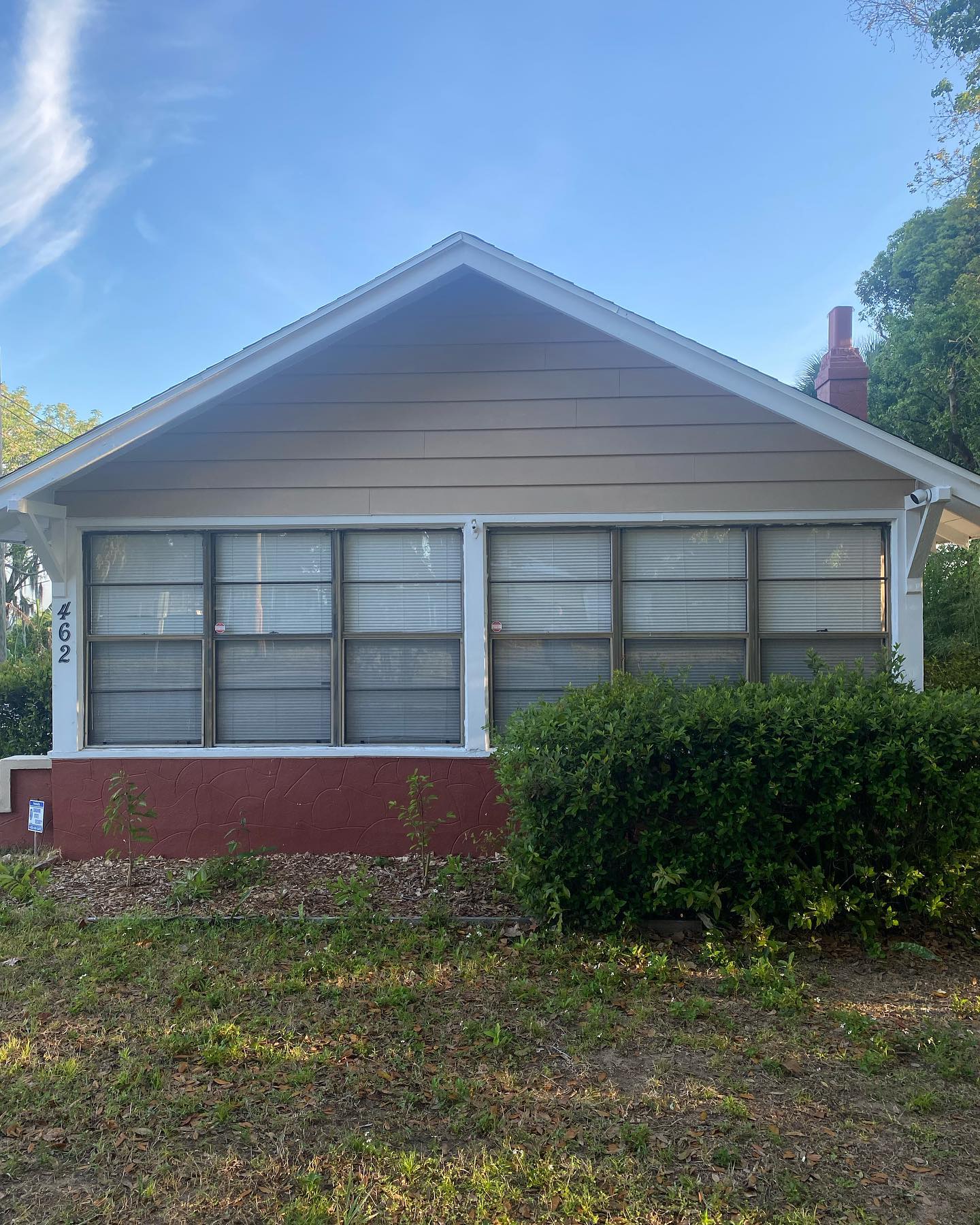
This is the house dead-on. Address 462. If you cover the bottom third with your hand, the top actually reads pretty well. Uncover it, and that bright red stucco knee wall at the base pulls your eye straight down. That foundation color is the first thing homeowners stop noticing about their own house after a couple of years, and it’s the quiet reason a beige repaint never seems to fix the place.
The side that really gave the age away
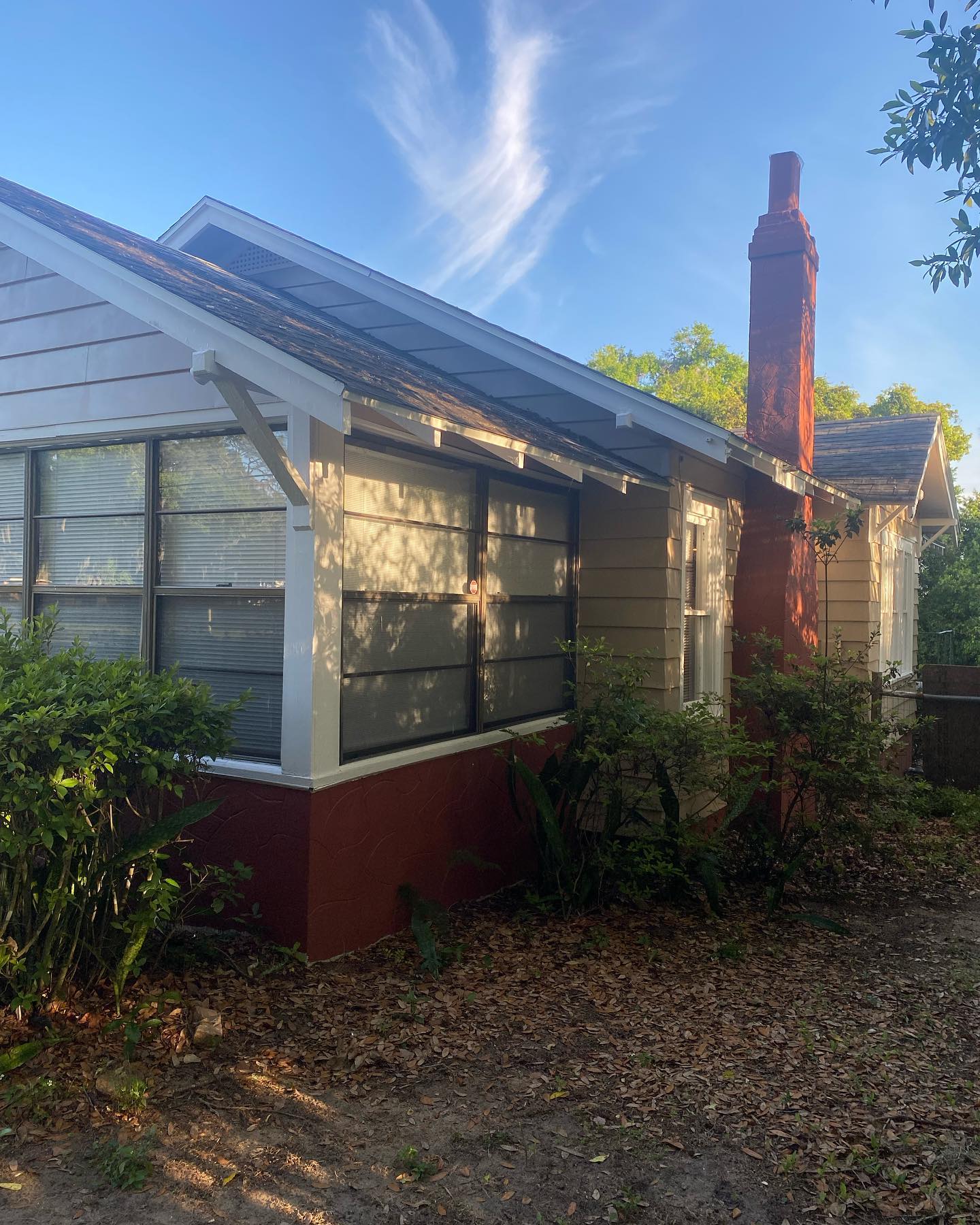
From the side you can see why this house actually has good bones. Craftsman brackets under the eave. An original brick chimney, still standing after a century. A small sunroom tucked under its own little gable. But the colors are fighting each other. Beige wall, red foundation, red chimney, brown roof. Every surface is a different warm hue, and nothing on the house gives your eye anywhere to rest.
Even around the back, nothing was helping
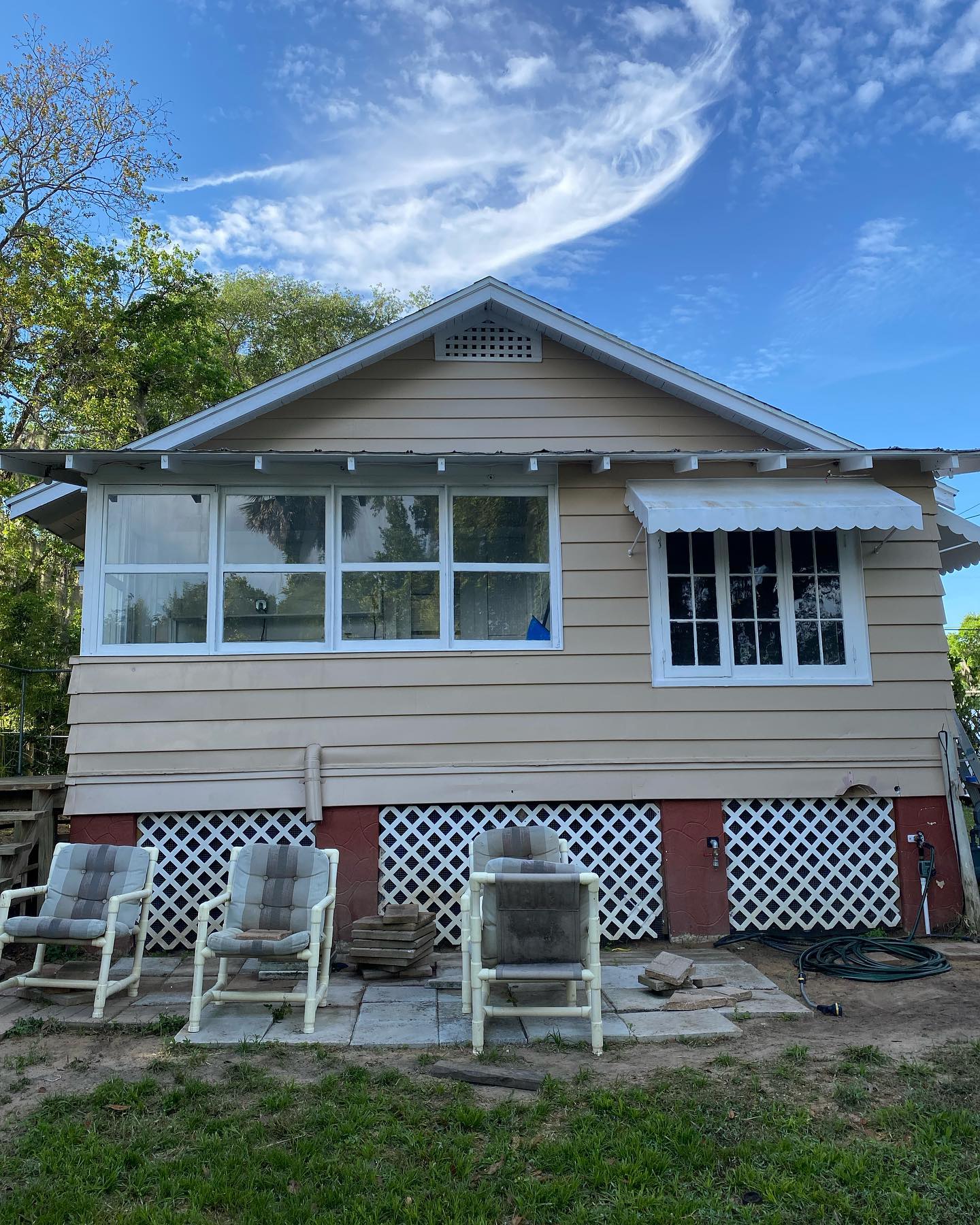
Same story at the back, just quieter. Beige siding. Red stucco peeking through the lattice. The patio chairs aren’t the issue. Honestly, nothing you could point at is the issue. That’s exactly what makes a house like this hard to rescue. If you can’t name what’s wrong, you don’t know what to paint.
Three colors, in three places, in this order
The painters picked three colors and put them in a specific order of importance.
One. The foundation went deep black. The scored stucco pattern is still there, still textured, still catching light. It just stopped shouting.
Two. The window frames, the porch base, the front steps, and the door surround all went the same deep black. Now a continuous dark frame runs around every opening in the house, which gives your eye something to follow instead of something to work around.
Three. The body went crisp white. Siding, gable, soffits, brackets, eaves, all one clean color sitting on top of the two dark anchors below.
That’s it. Three cans. Three roles.
Put the front side by side and it’s almost unfair
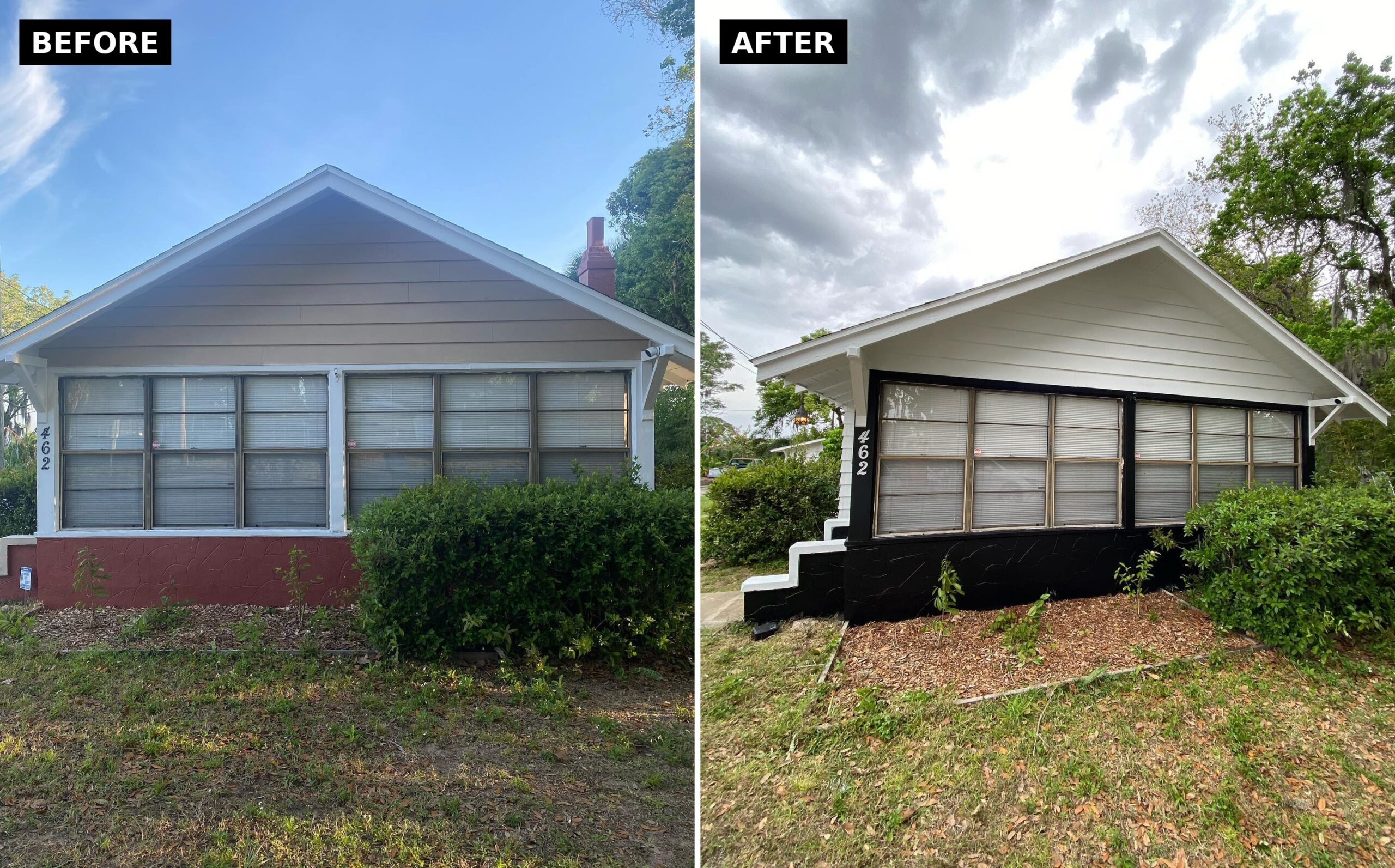
Same house. Same bricks. Same windows. Same 462 column. Same shrubs. Nothing structural moved. All that changed is which bucket of paint ended up where. The version on the right looks forty years newer, and the loudest single reason is that someone finally repainted the strip of foundation nobody ever thinks about.
The front elevation, in one word: readable
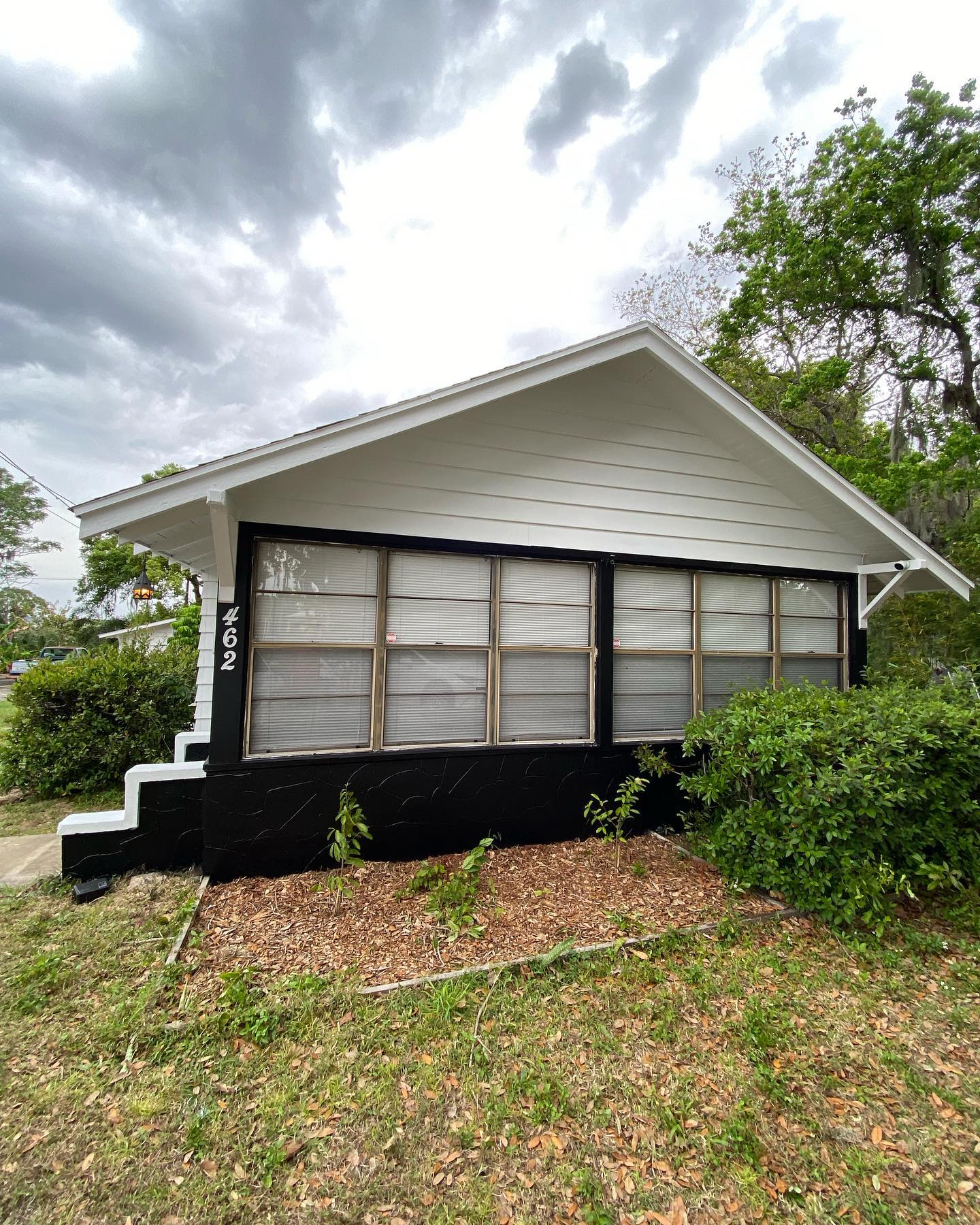
After paint, your eye finally knows where to go. The brackets are visible. The gable reads sharp against the sky. The window band is framed in black like a picture, not floating in a mush of beige. Nothing fancy happened. It just stopped being noisy.
The porch actually invites you now
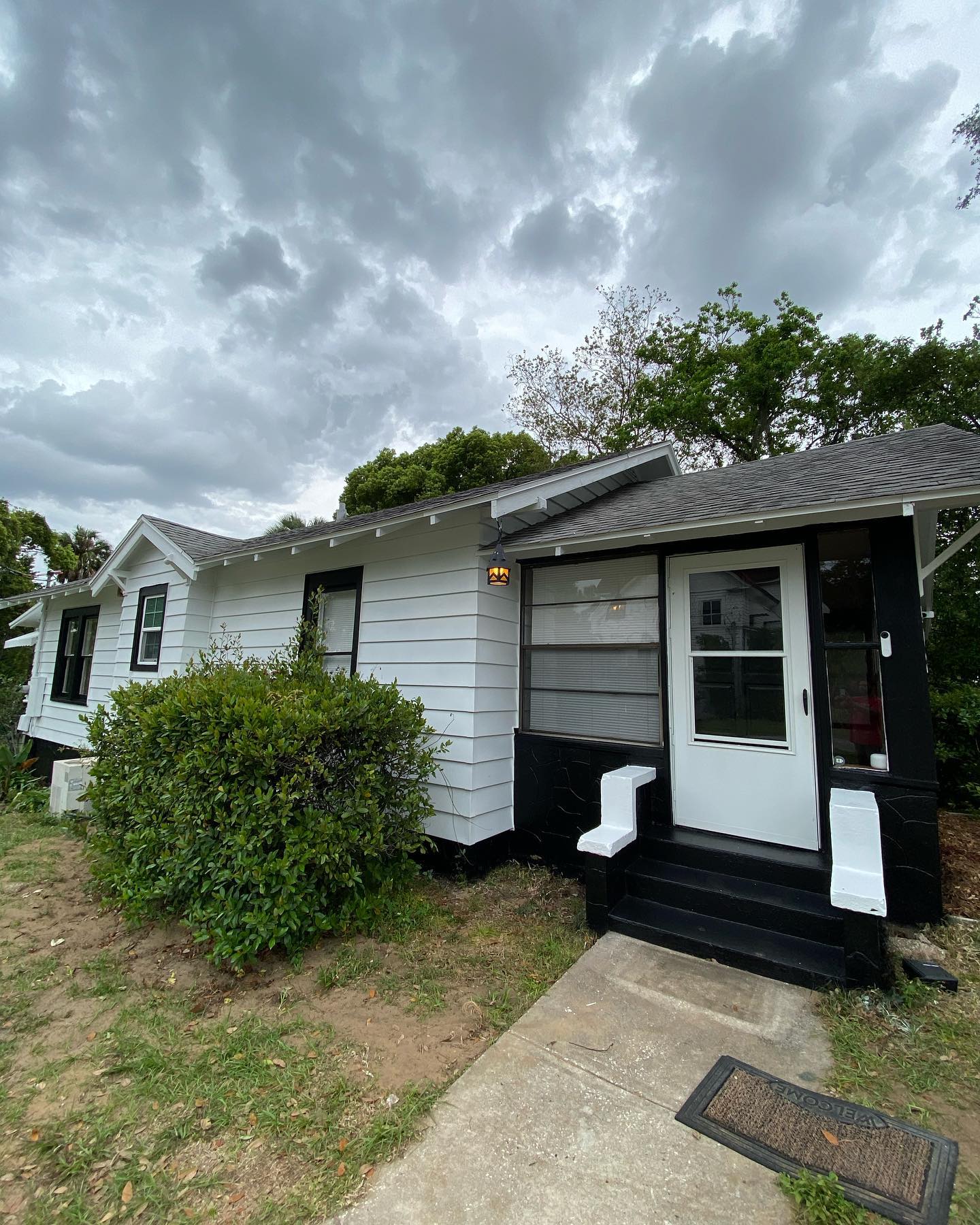
Look at what the black does when it climbs up off the ground. Porch base, step risers, door frame, lantern, all black. White door in the middle. That one simple frame-around-a-door trick is what every new build in your zip code is doing right now. It costs nothing but attention.
A warm, busy side turns quiet
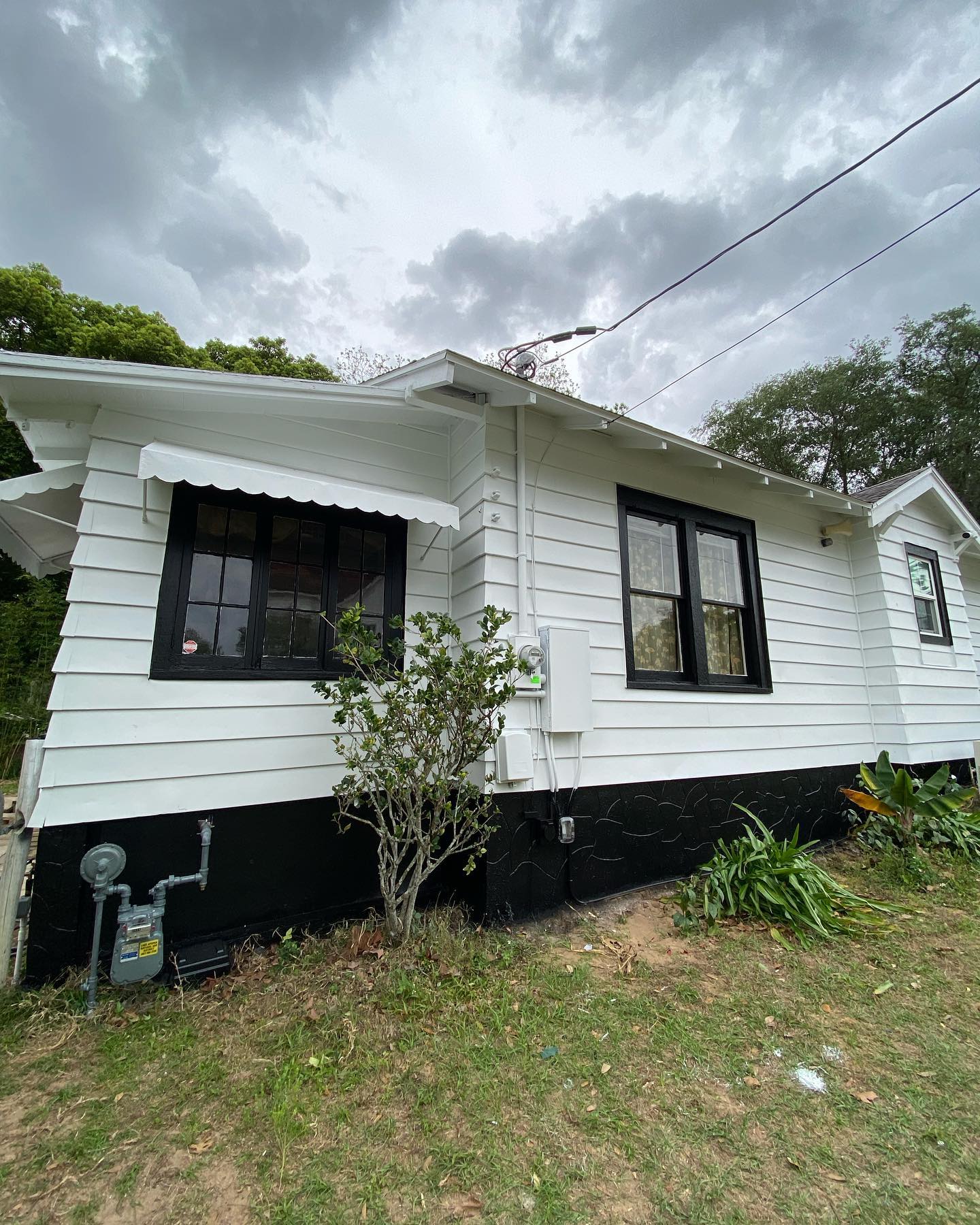
On this side, the original scalloped awning is still there. The original windows are still there. Even the gas meter is still bolted to the house. But because the wall is white and the window frames are black, every detail reads cleanly. Nothing is competing with anything else.
Around to the deck, same three decisions
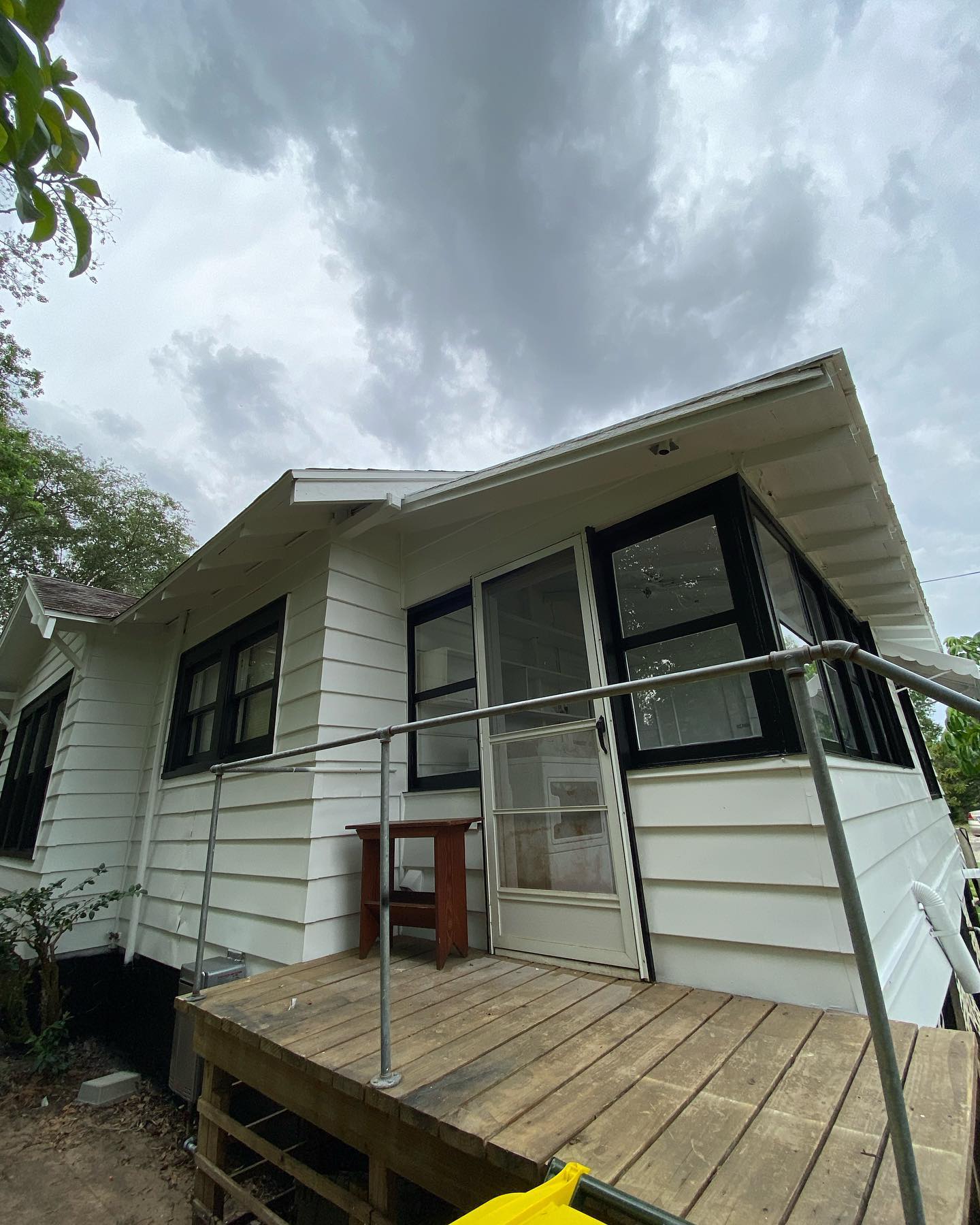
The deck, the pipe railing, the screened door, the little wooden stool, none of it is new. The screened porch door is scuffed and it’s staying that way. That’s fine. It reads as a working house with working stuff in it, not a staged property, and it still looks a hundred times better than it did a month ago.
What any old-bungalow owner can take from this
If you’re sitting on a 1920s or 1930s house that still looks tired after a repaint, it’s almost certainly the foundation. Stand across the street and squint. If the strip of stucco at the bottom of your house is any shade of pink, peach, red, or beige, that’s your biggest single upgrade sitting there waiting for one afternoon.
Paint the foundation a flat deep black. Match the window trim to it. Leave the body color you’ve got, or go crisp white if you’re redoing anyway. One weekend, maybe three cans of paint, and the decade comes off.