There’s a specific feeling you get when a room you used to love starts working against you. Nothing broke. Nothing wore out. The paint is fine, the furniture is fine. You walk in and the whole room just sits there, dating itself in the quietest, most annoying way.
That’s where this master bedroom was. Cherry sleigh bed, matching nightstands, bronze ceiling fan, all solid pieces that cost real money. But the wall behind the bed was pulling the whole room backward in time, and she couldn’t unsee it anymore.
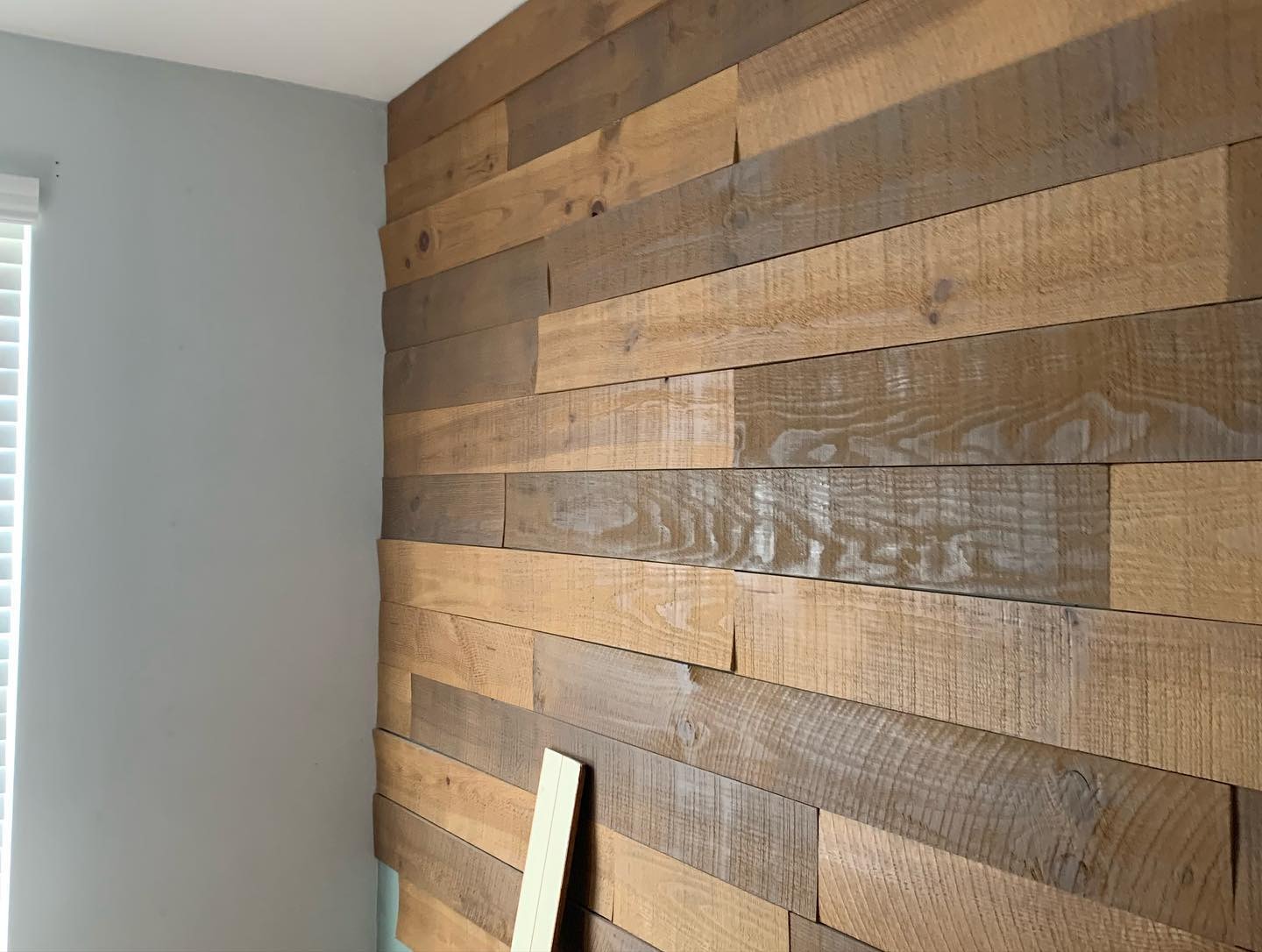
Horizontal pine planks, stacked floor to ceiling, stained in that casual mixed-tone way that owned Pinterest from about 2017 through 2021. Everybody wanted a wall like this for a while. Then everybody had one. Then everybody started quietly looking at theirs wondering when it would stop reading like a cabin rental from six years ago.
Against the raw pine, her cherry furniture looked heavy. The bronze fan looked brown instead of bronze. The whole room was stuck in a mood she’d outgrown. So she made the call most people put off for years. She took every plank down.
What came off with the planks
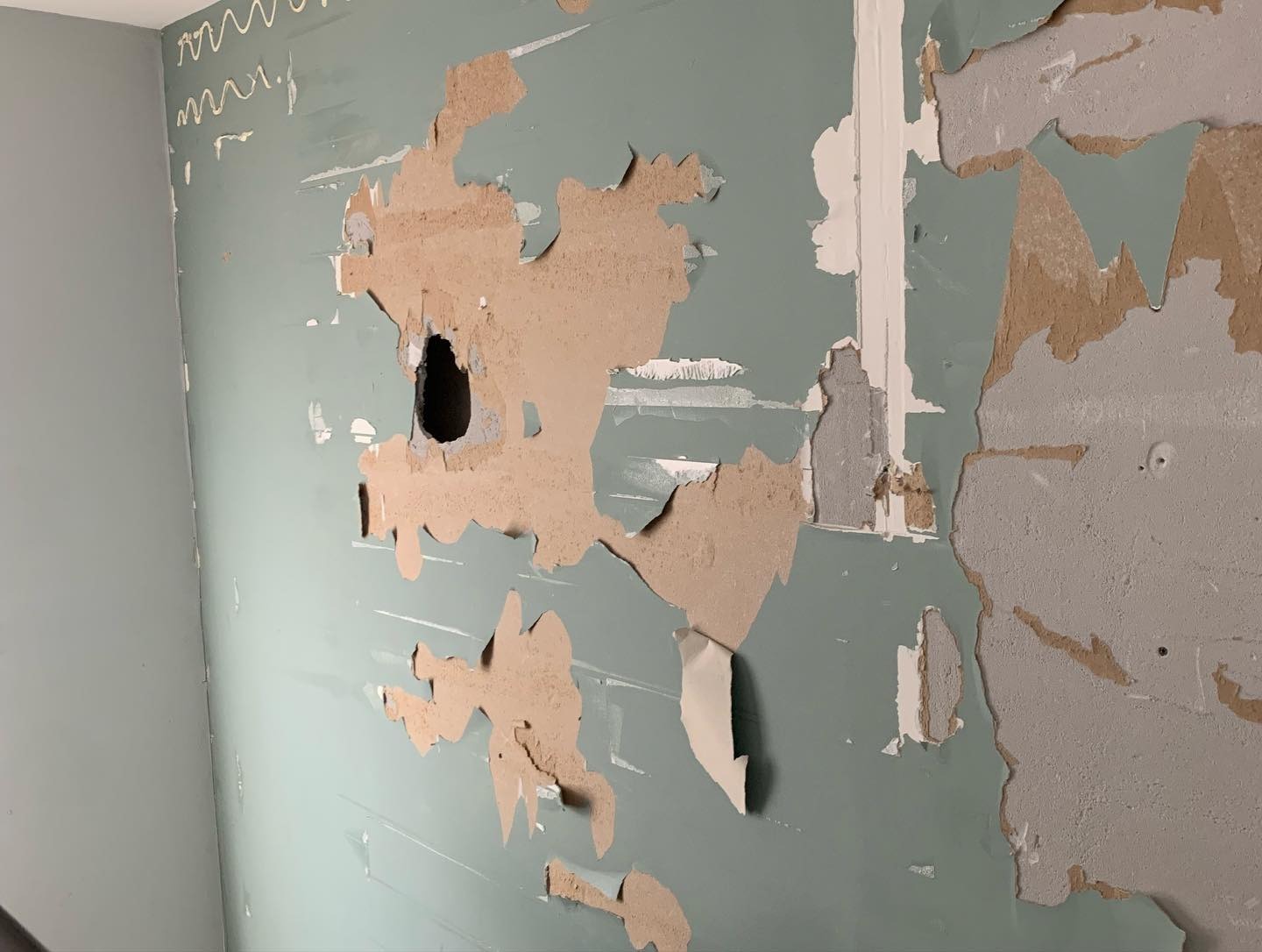
Planks that went up with construction adhesive don’t come off clean. They come off with the drywall paper still glued to the back of them. Big ragged patches of raw brown gypsum board get exposed. Somewhere in the middle of the wall, a hole opened up clean through to the studs.
This is the part most transformation posts quietly leave out. The pretty before, the pretty after, and nothing in between. Keep the middle in and the story stops being magic. It starts being work.
Why she didn’t just patch and paint
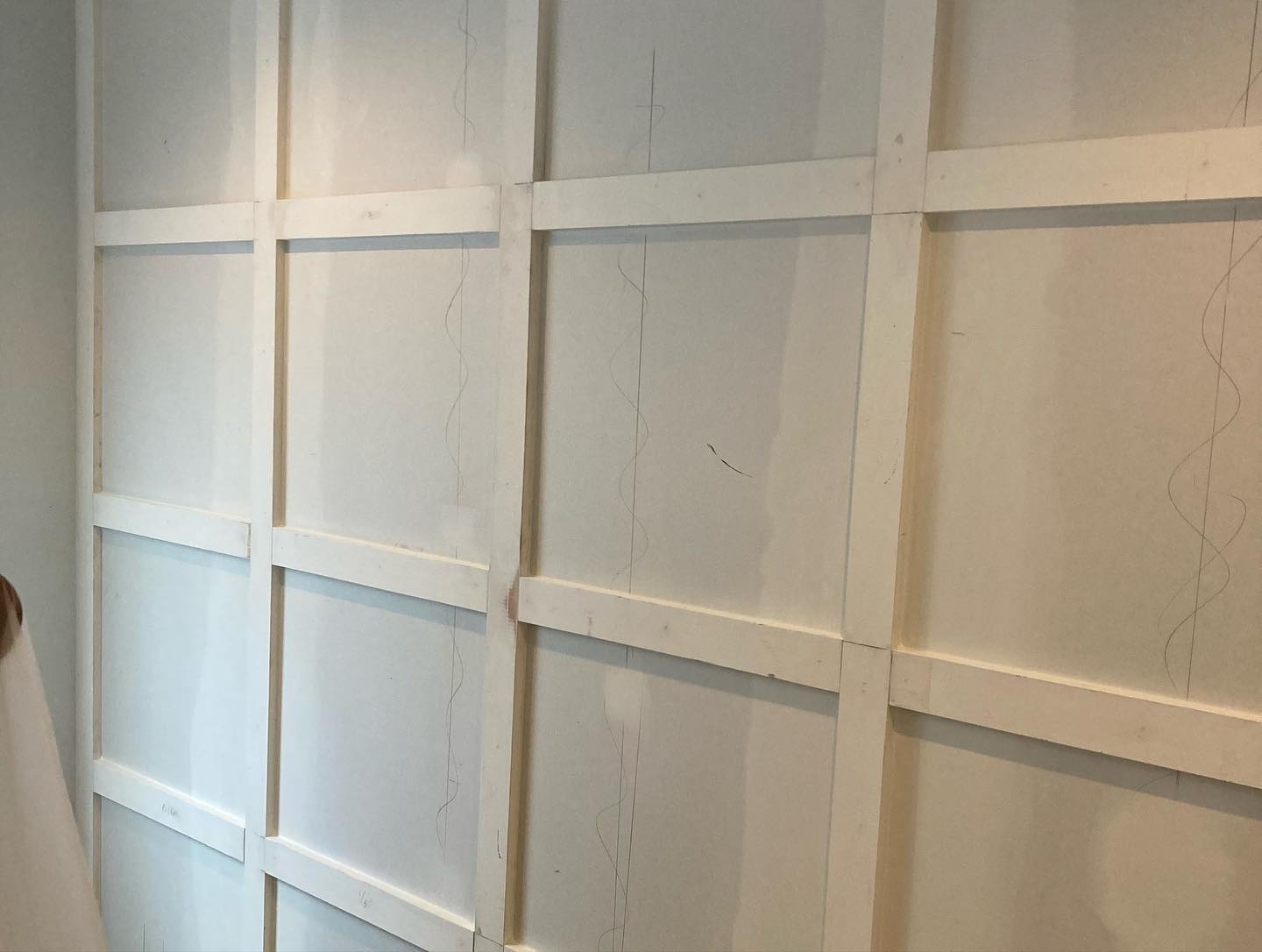
There was an easy move here. Spackle the hole, sand the drywall smooth, prime, paint the whole mess one color. Done in a weekend. The room would look fine. It would also look exactly like it did before the planks went up, minus a wall feature. Nothing added back. Nothing earned.
So she went the longer way. She framed the entire wall in square wainscoting. Five columns across, three rows down, floor to ceiling, every box the same size. Thin MDF trim strips, cut on a miter saw, nailed in with a brad nailer. Every joint caulked. Every nail hole filled and sanded until you couldn’t feel it with your fingertip.
A grid like this takes a weekend just to pencil in the layout and get every line plumb and level. Another weekend to cut, nail, fill, sand, and prime. The math alone eats a few hours. You have to divide the wall height and width into even boxes, account for the trim thickness on each side, and keep the sightlines from the doorway lined up with the bed. Nothing about the build is hard. All of it is slow. And slow is what separates a wall that looks built-in from one that looks like a weekend project.
The color choice that changed everything
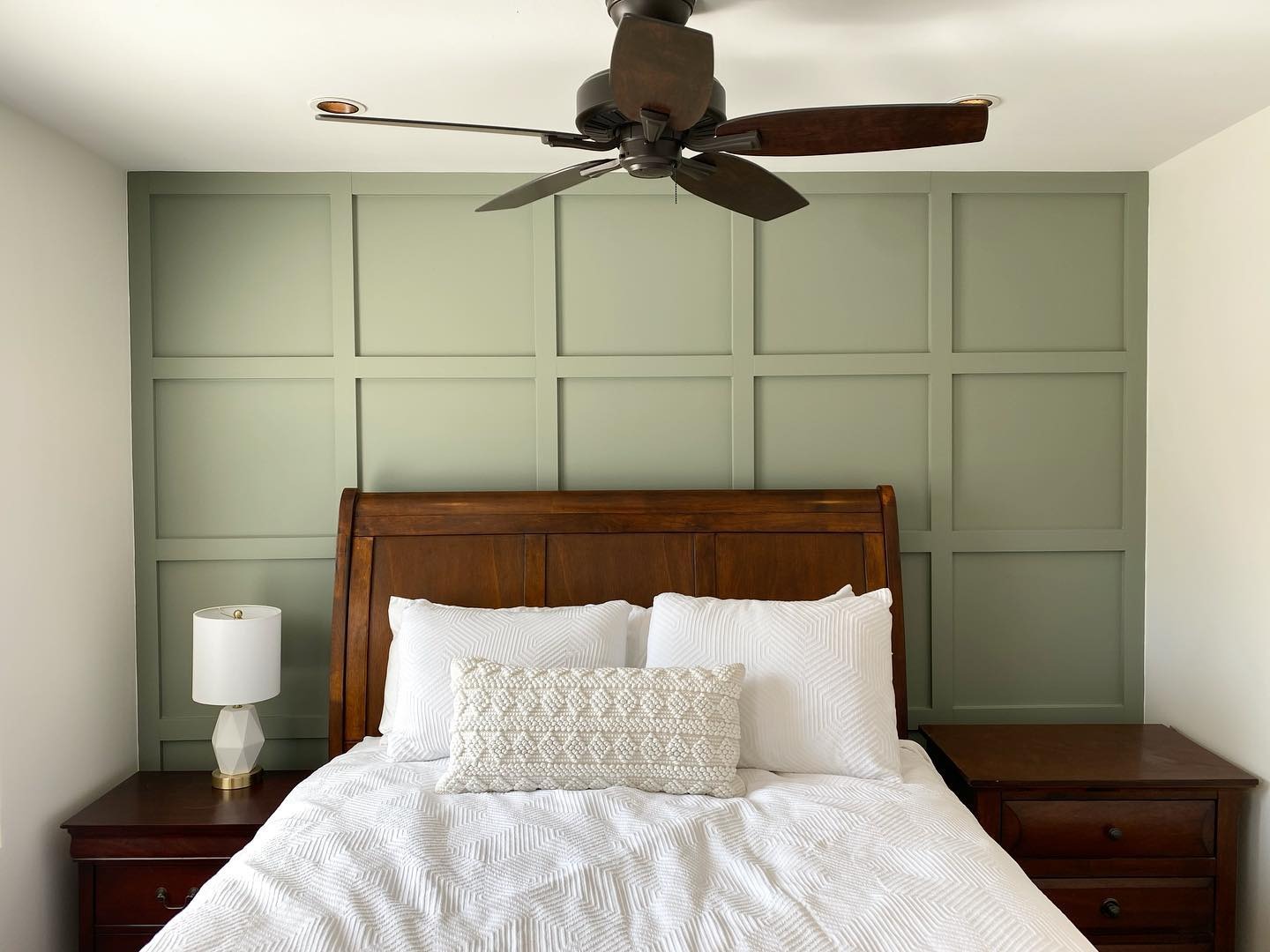
She picked Sherwin Williams Evergreen Fog. It’s a muted sage that reads warm in morning light and almost gray at night. Not a loud green. Not a color that announces itself. The kind of color that looks like it has always been there and always will be.
Here’s the move that makes the whole wall work. She painted the trim strips and the drywall behind them in the exact same color. Same can, same sheen, no contrast at all. When trim contrasts with the wall, you get decoration. When they match, you get architecture. A grid in matching paint reads built-in. A white grid on a colored wall reads like something stuck on top.
Same furniture, totally different room
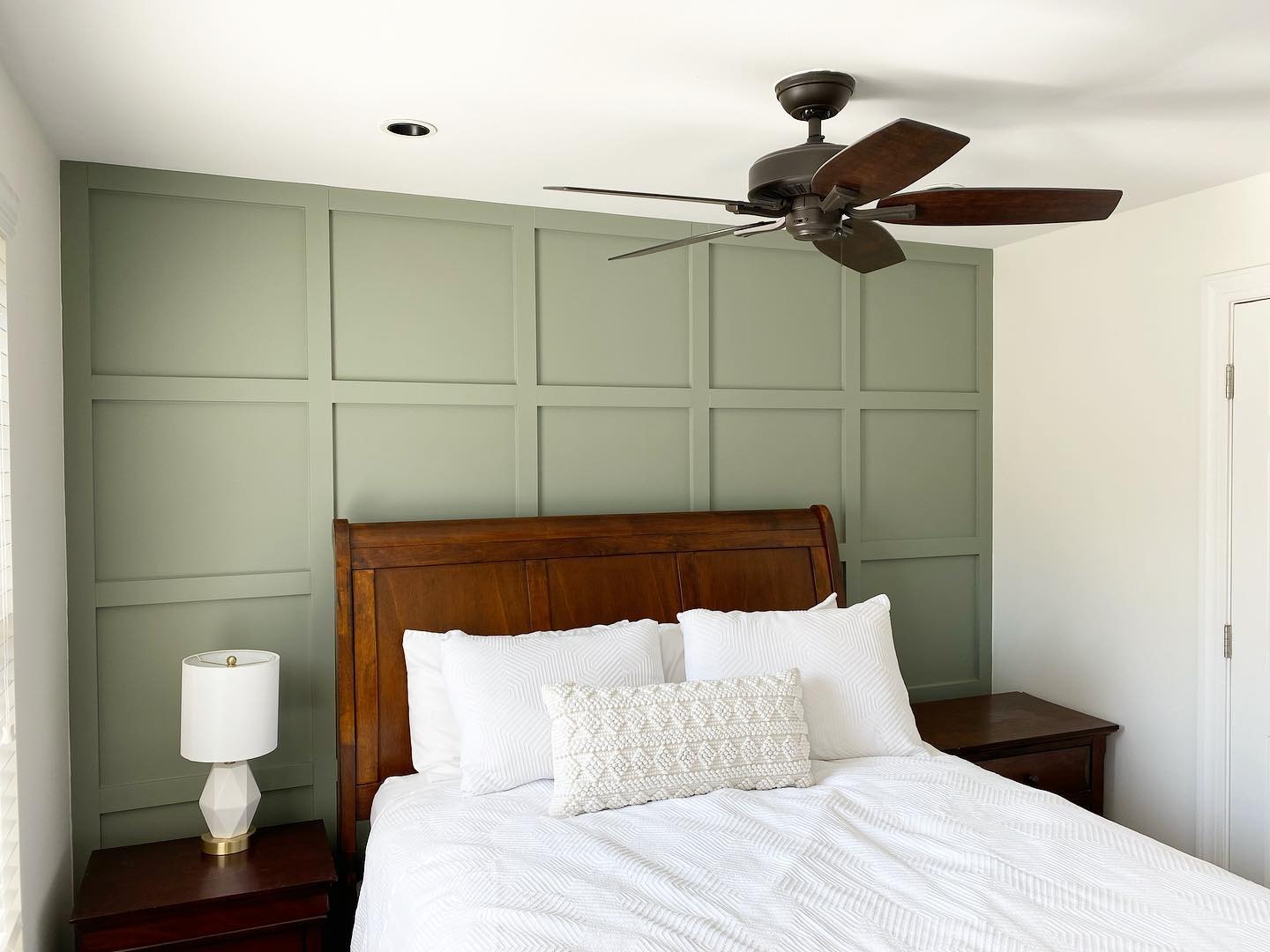
Step back and look at the room now. Same bed. Same nightstands. Same lamp. Same fan. Same white bedding. She didn’t shop for a thing.
But the cherry wood doesn’t read heavy anymore. Against the soft sage, it reads warm and deliberate, like good wood furniture you’d want to keep for a long time. The bronze fan isn’t a brown shape on the ceiling. It’s a dark metal fixture that looks like it was picked on purpose. The white bedding pops harder because it has something quiet to sit against instead of fighting raw pine for attention.
That’s what a smart accent wall does. It doesn’t try to be the loudest thing in the room. It gives everything else permission to look expensive.
If you’ve been living with a plank wall, a shiplap wall, or a stained pallet wall and the room just feels off, the fix isn’t always another coat of paint on the planks. Sometimes it’s pulling them down, dealing with whatever shows up underneath, and replacing them with something quieter and built in.
The planks were a trend. The grid is a style. Ten years from now, the planks will still read 2020. The grid will still read like the room was always meant to look this way.