You already know the joke. IKEA furniture is the stuff you put together with that tiny wrench, swear at for an hour, and leave behind the next time you move. Nobody is supposed to pay real money for it used.
Which is why the past few years at Swedish auction houses have gotten so strange.
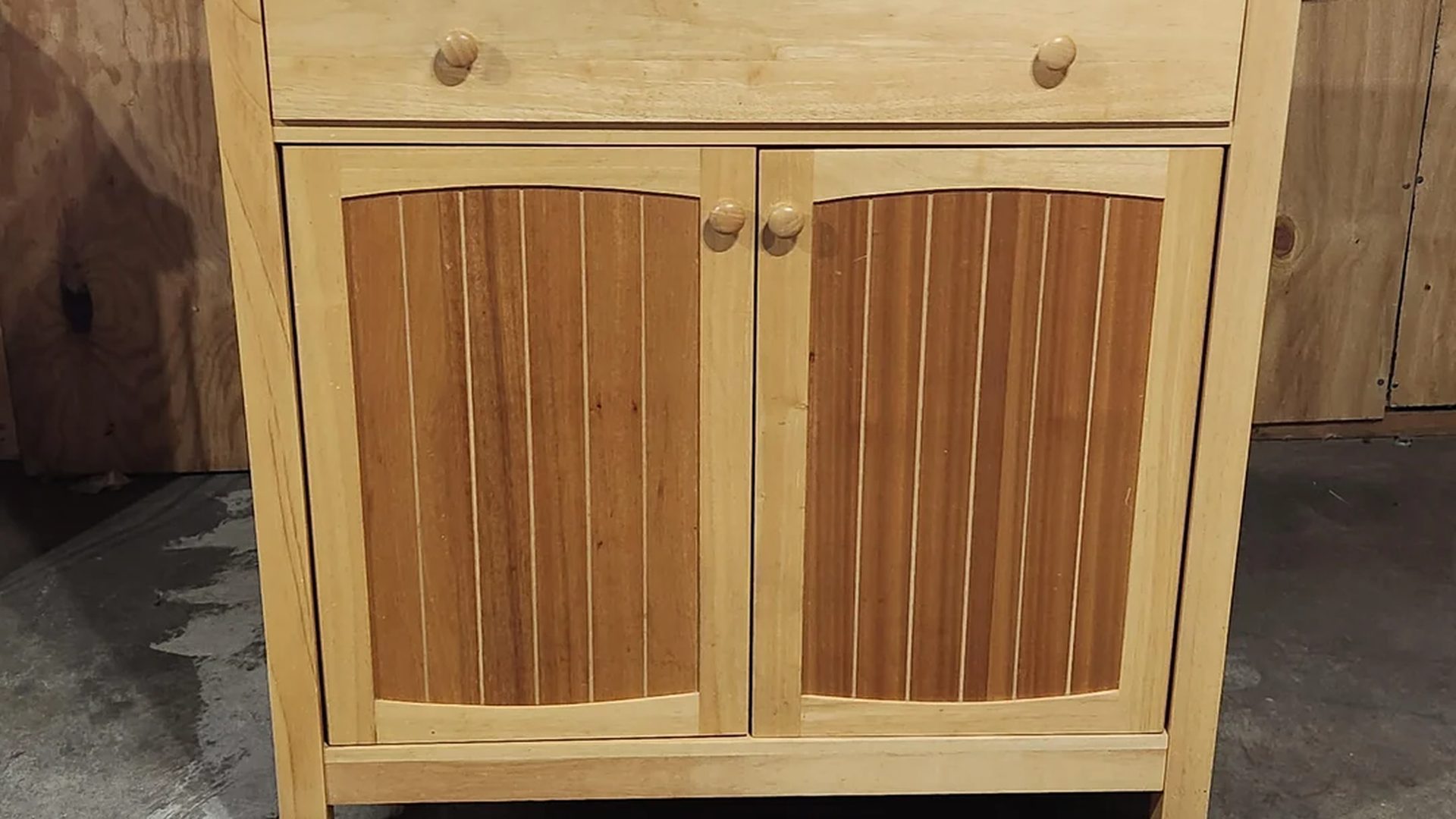
Pieces that once sold in regular IKEA stores for pocket change (the kind of thing a college kid buys for a first apartment) are now selling for the price of a used car. Collectors who used to chase big-name classic designers are quietly sorting through IKEA. People are showing up to these sales with chairs their parents bought decades ago and walking out with four- or five-figure checks.
In 2026, this isn’t a cute one-off. It’s a real market, tracked by the big auction sites, written up by design publications, and (as of this year) backed by IKEA itself expanding its own design museum in Älmhult, Sweden.
If you have older IKEA pieces in a garage, a basement, or your parents’ attic, there’s a real (small, but real) chance one of them is worth serious money. And auction houses, including the IKEA Museum, say a lot of these pieces are still floating around unidentified, mixed in with regular secondhand stuff, dropped off at thrift stores for a few bucks, or sitting on curbs with “FREE” signs.
So which pieces exactly? And why would anyone pay four figures for something designed from day one to be cheap?
The twist nobody expects
The IKEA pieces hitting the biggest prices aren’t the ones that sold well. They’re the ones that failed.
Pontus Silfverstolpe, co-founder of Barnebys (the auction tracking site that follows these sales worldwide), has said it plainly: the most expensive vintage IKEA pieces at auction are almost always IKEA’s flops. Chairs pulled off store floors after a season because shoppers didn’t like them. Short runs that cost too much to make. Early designer collaborations IKEA quietly gave up on. The stuff IKEA shoppers rejected in 1972 or 1993 is exactly what collectors are fighting over now.
The headline sale (the one everyone writes about) is a chair called the CAVELLI, designed in 1959 by Bengt Ruda. According to the IKEA Museum, only five of them were ever made. In May 2022, one sold at Swedish auction house Bukowskis for about $18,900 (190,000 Swedish kroner).
Other names collectors chase, called out in a January 2026 Homes & Gardens feature built with the IKEA Museum and 1stDibs:
- IMPALA chair (1972, by Gillis Lundgren, the designer behind the famous BILLY bookshelf). Sold new for about $40 (€37). A pair recently went for roughly $2,500 (€2,300).
- VILBERT chair (1993, by Verner Panton). Four flat panels bolted together. Sold new for about $22 (€20), flopped, got pulled fast. One sold at Catawiki in 2021 for about $1,400 (€1,300).
- DIANA chair (1972) and SKYE lounge chair (1970s), by Karin Mobring and Tord Björklund.
So if these pieces are sitting in regular houses, how do you tell if yours is one of them?
Five quick checks before you donate or toss anything
- Flip it over and look for the tag. Old IKEA pieces have a printed sticker or stamp underneath, usually with a model name (CAVELLI, IMPALA, DIANA, VILBERT), a four-digit code, a year, and the word “Älmhult, Sweden.” A clean tag is what auction houses need to confirm it.
- Check the designer name. The names worth knowing: Bengt Ruda, Gillis Lundgren, Karin Mobring, Verner Panton, Tord Björklund, Niels Gammelgaard. If any of those is on the tag or tied to the model online, dig deeper.
- Check the year. The sweet spot runs from the late 1950s to the early 1990s. Anything flat-pack and plain from after about 1995 is almost never worth real money. One newer exception is the Virgil Abloh MARKERAD collection from 2019.
- Check if it’s ever been taken apart. Collectors pay extra for pieces that still have the original screws and the original fabric, even if the fabric is faded.
- Look it up in the IKEA Museum online archive. It’s free, searchable by model name, and tells you the year and the designer. If your piece shows up, snap a photo and send it to a vintage dealer before you drop it off at Goodwill.
One honest heads-up: most used IKEA furniture is still worth basically nothing. A beat-up POÄNG is a beat-up POÄNG. But the five minutes it takes to flip something over and read a tag is the difference between a donation pile and a real surprise.
The joke used to be that IKEA was disposable. The auction results are saying the opposite out loud.
Sources: (1) Barnebys: Record for the Most Expensive Piece of Ikea Furniture; (2) Homes & Gardens: The 5 Rare Vintage IKEA Pieces That Are Now Worth Thousands and Where to Look for Them in 2026; (3) IKEA Museum: IMPALA easy chair, 1972; (4) Inter IKEA Group: Museum of Furniture Studies Stockholm moves to Älmhult, 24 September 2026; (5) Camille Styles with Household Quotes UK: 10 Vintage IKEA Pieces That Are Now Worth Thousands.