

A little packet tumbles out of a new shoe box, and you pause before tossing it. Plenty of people tuck it onto a closet shelf instead, hoping it will quietly keep things dry. It can help, but where you put that packet matters far more than how many you save.
The packet you almost threw away
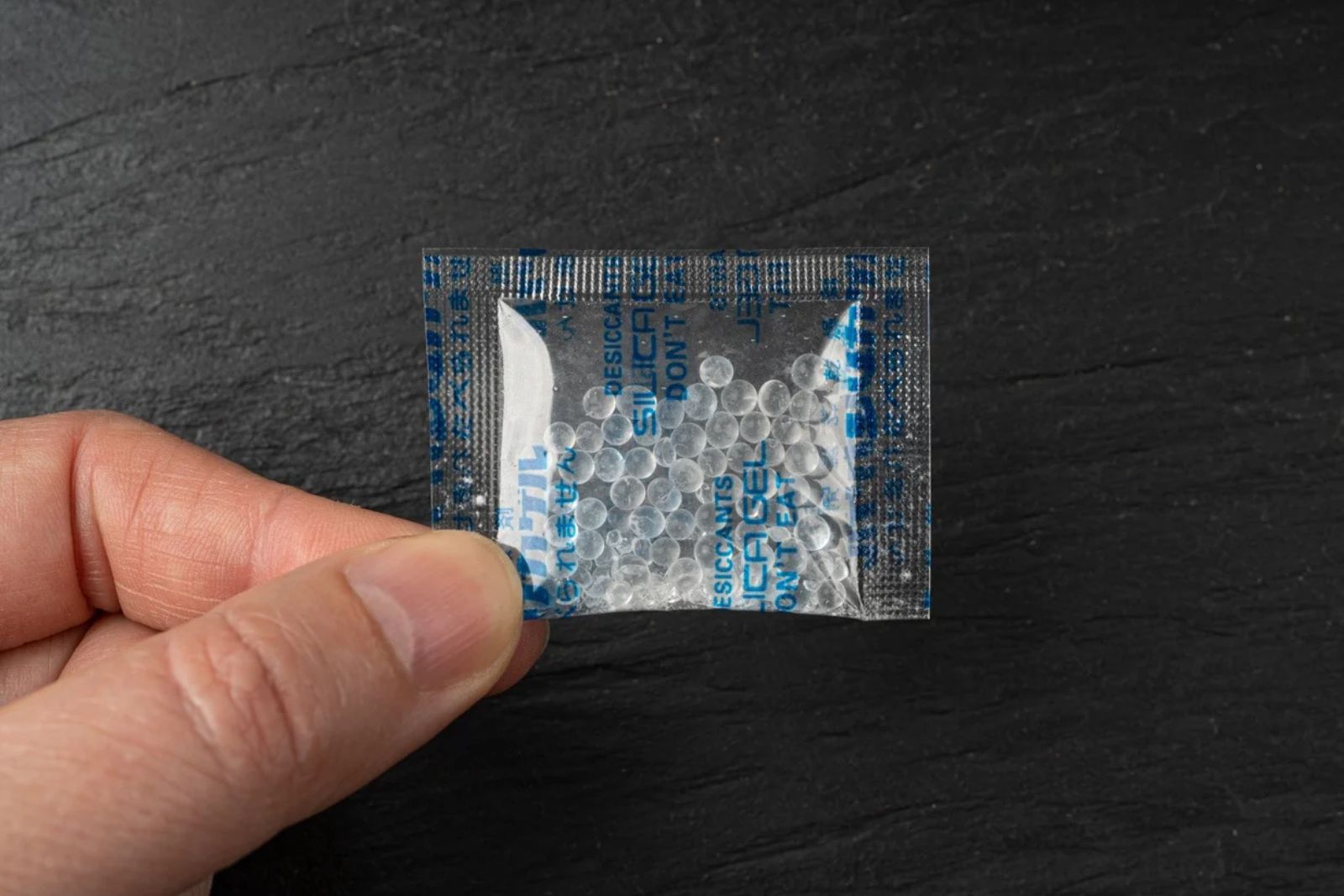
That packet came free, the way they always do, tucked into shoes, handbags and new clothes. Inside is silica gel, a hard, porous form of silicon dioxide. It sits in a paper or fabric pouch that lets water vapor pass through.
Each tiny bead is full of even tinier pores. Moisture clings to the surfaces inside them, which lets the gel buffer humidity inside a closed space. Unlike some salt-based absorbers, it doesn’t leave a puddle behind.
They’re tiny, they cost nothing, and they don’t need plugging in. That’s the appeal. When set near a stored item, they can soften small swings in the humidity around it.
Yet anyone who’s left one on a shelf will know it rarely seems to make much difference.
Why the open shelf works against it
Think about your closet door. There are gaps all round it, and every time you open it, damp air from the bedroom wanders in. One small packet hasn’t a hope of keeping up.
A lidded shoe box is a different matter. It holds only a small pocket of air. Once the gel soaks up some moisture, the tight lid slows the arrival of more. Now it’s a job the packet can manage.
That’s why its real working space is usually a container inside the closet: a lidded shoe box, a sealed storage bin, a camera case, or the zippered pouch around a handbag.
For the closet itself, you need to think bigger. The EPA recommends keeping indoor relative humidity below 60%, ideally between 30% and 50%. If a hygrometer shows the whole closet stays damp, a larger closet moisture absorber is better suited to that much space. If clothes already smell, this smelly-clothes rewash trick addresses a different problem.
Giving each packet a smaller job
Start with clean, completely dry clothes, shoes or bags. Pick an intact packet with its weight printed on it, ideally one with a moisture indicator. Set it beside the item, not underneath something heavy.
How many do you need? A sizing chart for airtight containers matches silica gel amounts to container size. Check the chart against your container. If you only have small packets, a few together will do the same job as one big one.
Close the lid right away. For valuable leather or textiles, slip in a small hygrometer too. That way, you can see what’s happening instead of piling in more packets.
When an indicating packet turns the manufacturer’s “wet” shade, replace it. Packets are a choking hazard, and loose beads can irritate eyes and skin.
Where the little packet gives up
Keep packets away from kids and pets. A packet is a choking hazard, and loose beads can irritate.
Packets won’t kill mold, stop a leak or dry out an open closet. If humidity stays above 60% or mold appears, fix the source with ventilation or a dehumidifier, and if the mould has spread widely, it’s time to call in a professional.