The quote to tear this kitchen out would’ve landed between forty and eighty thousand dollars at 2026 pricing. The homeowner wrote none of those checks.
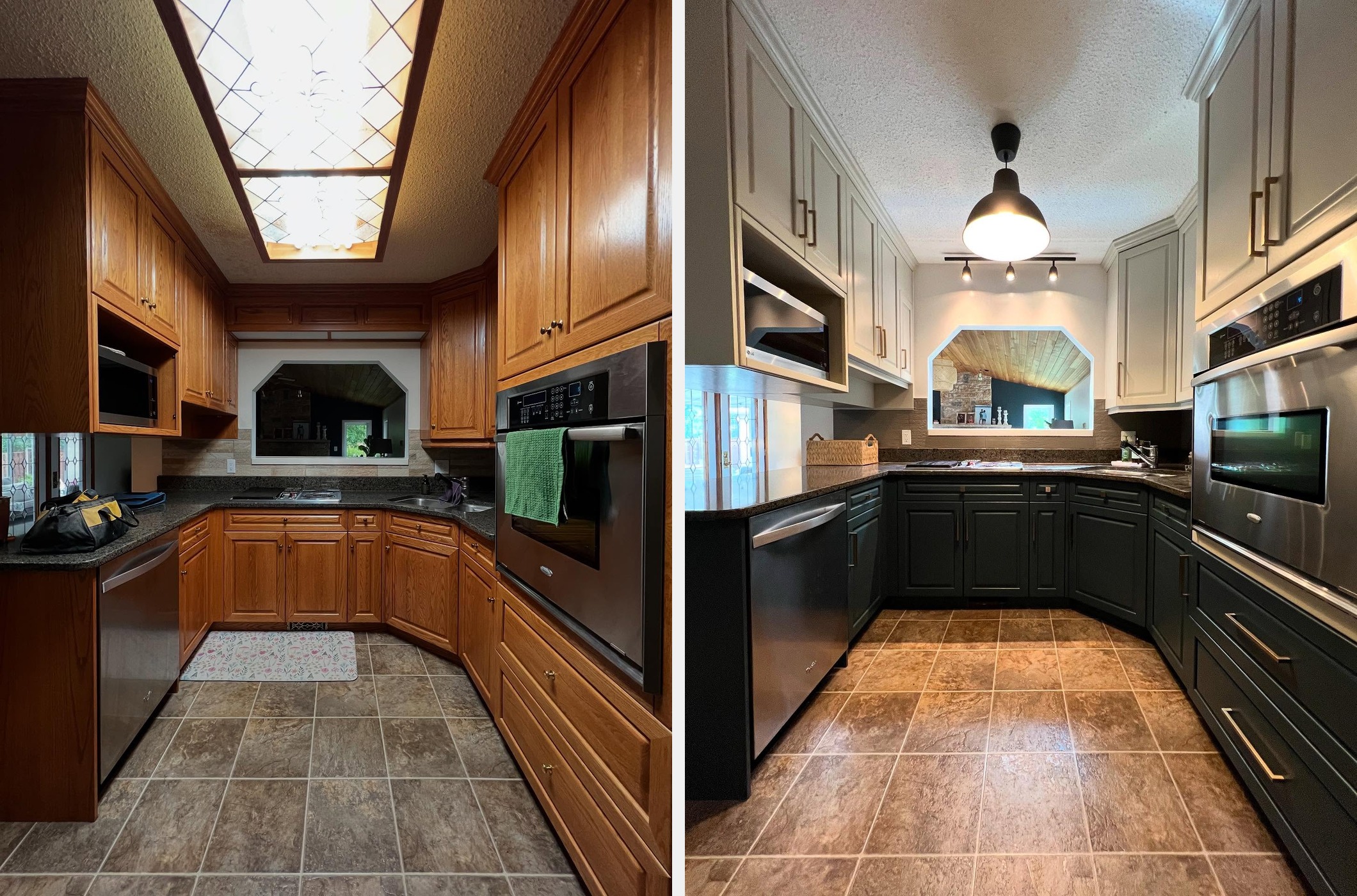
She didn’t take down a single cabinet door. She didn’t rip up a single tile. The granite she inherited stayed, the floor she walked on stayed, and the backsplash stayed too, which is the part that catches people off guard a few scrolls from now. What you’re looking at in the after shots is paint, two light fixtures, and new handles. That’s it. The whole rest of this kitchen was already there, buried under 2001.
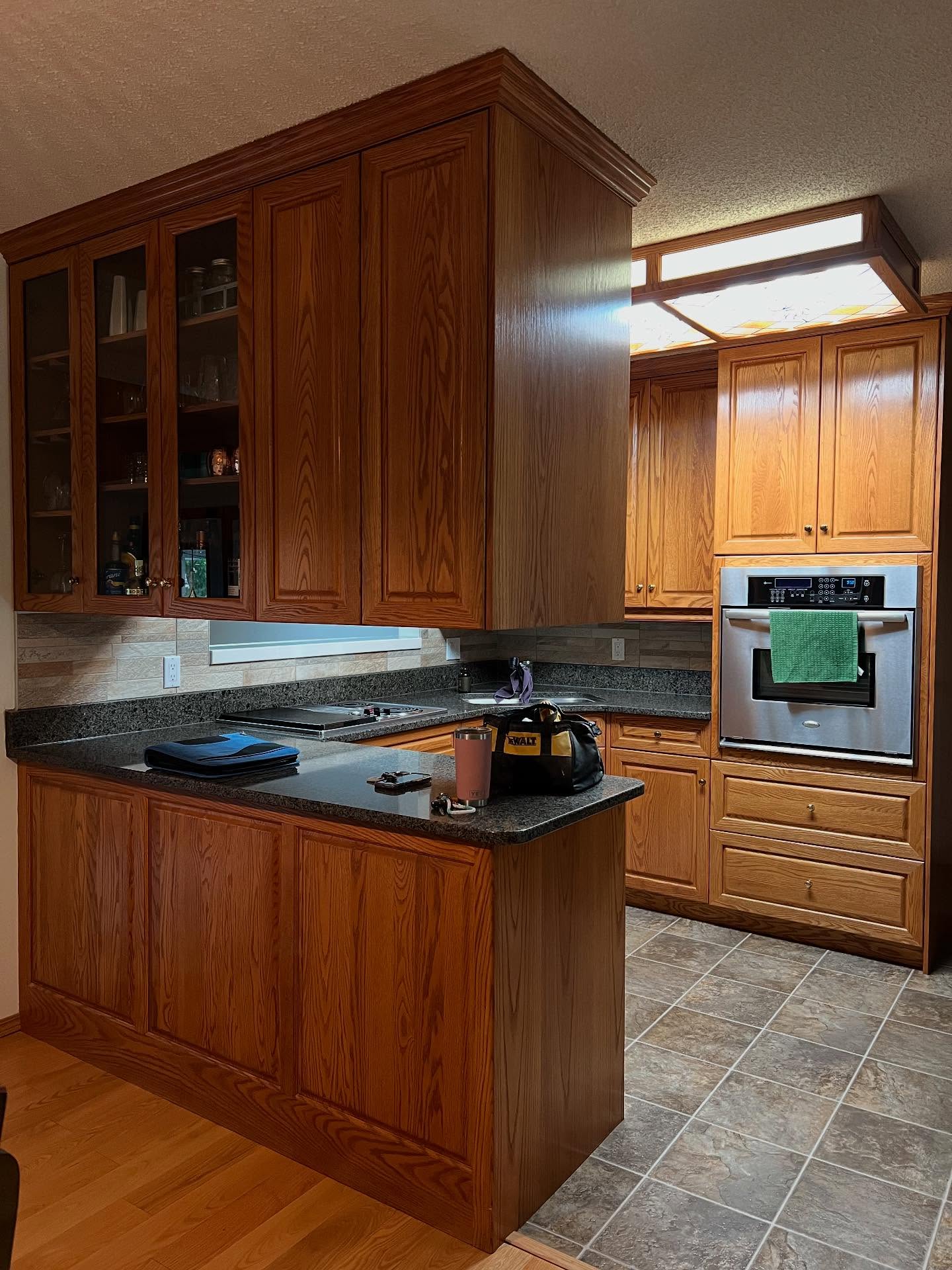
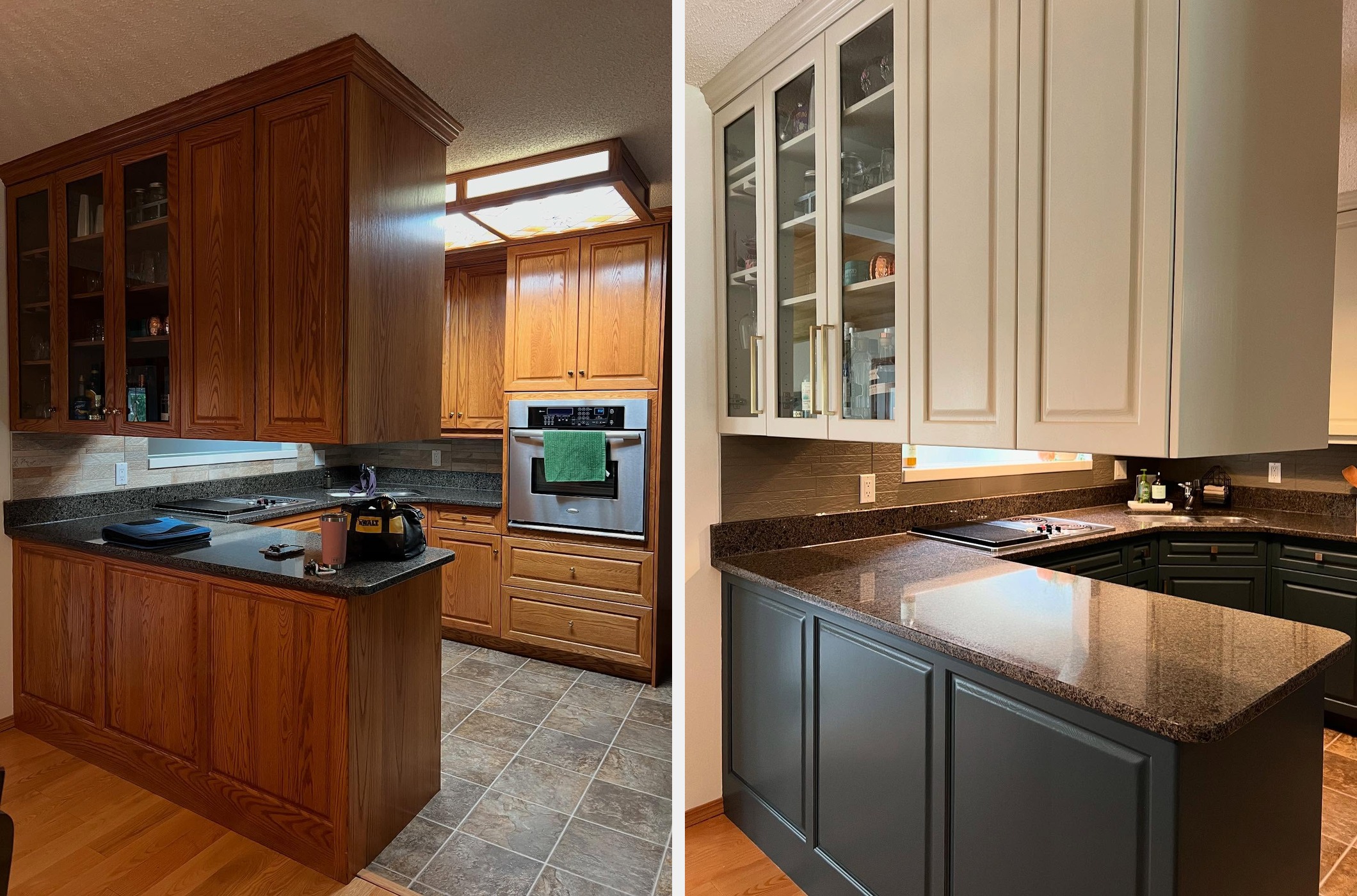
The before is textbook. Orange-brown oak with cathedral arches on every door. A stained glass fluorescent box in the ceiling that must’ve felt futuristic in 1998. Dark speckled granite, warm tan tile, and that classic late-nineties kitchen energy where everything is wood or stone and the whole room reads like a hunting lodge that lost its way to being a kitchen.
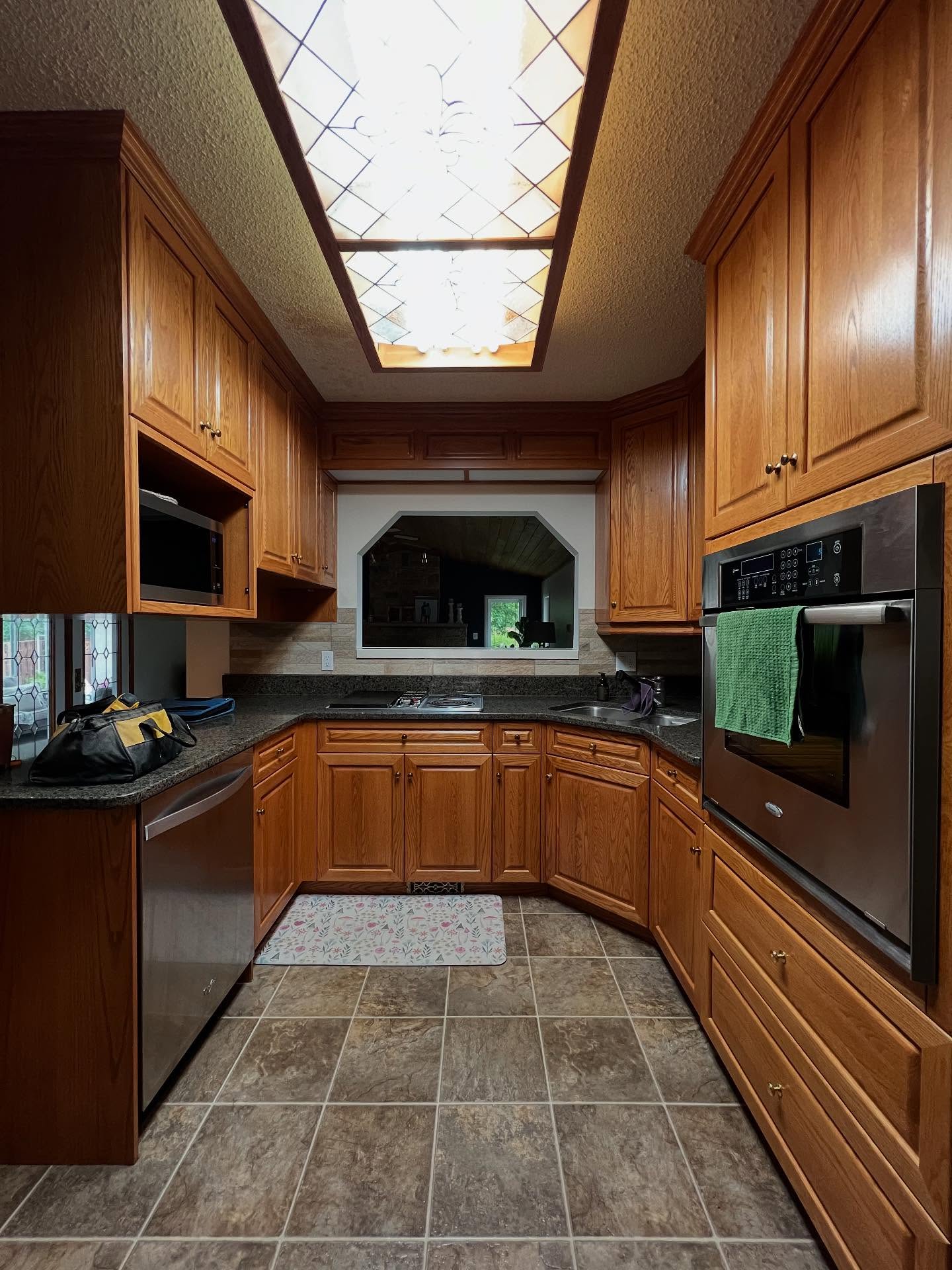
If you’ve ever stood in a room like this and been told the only way out is to gut it, the next few photos are going to feel personal.
Why these two Benjamin Moore colors in particular
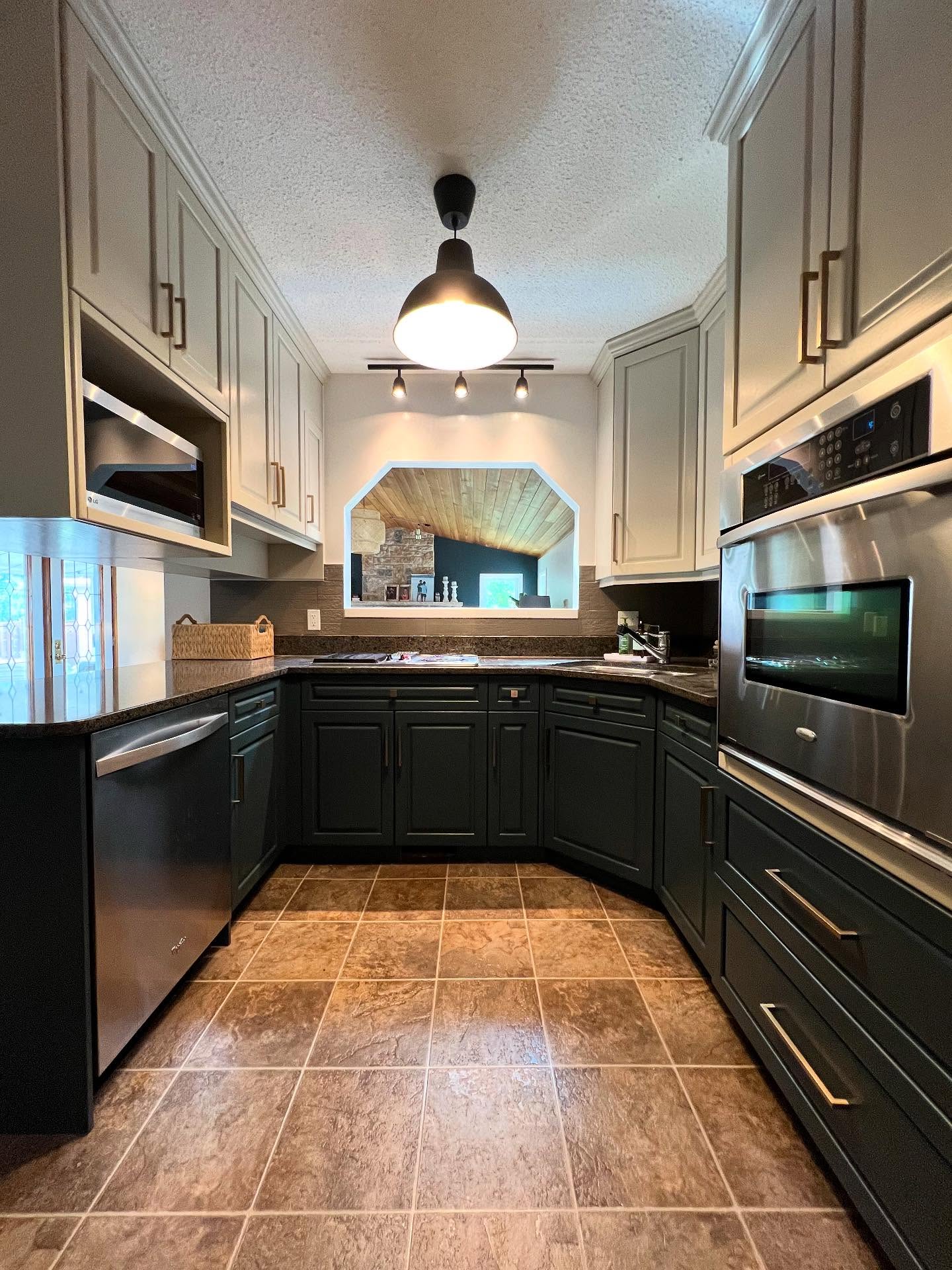
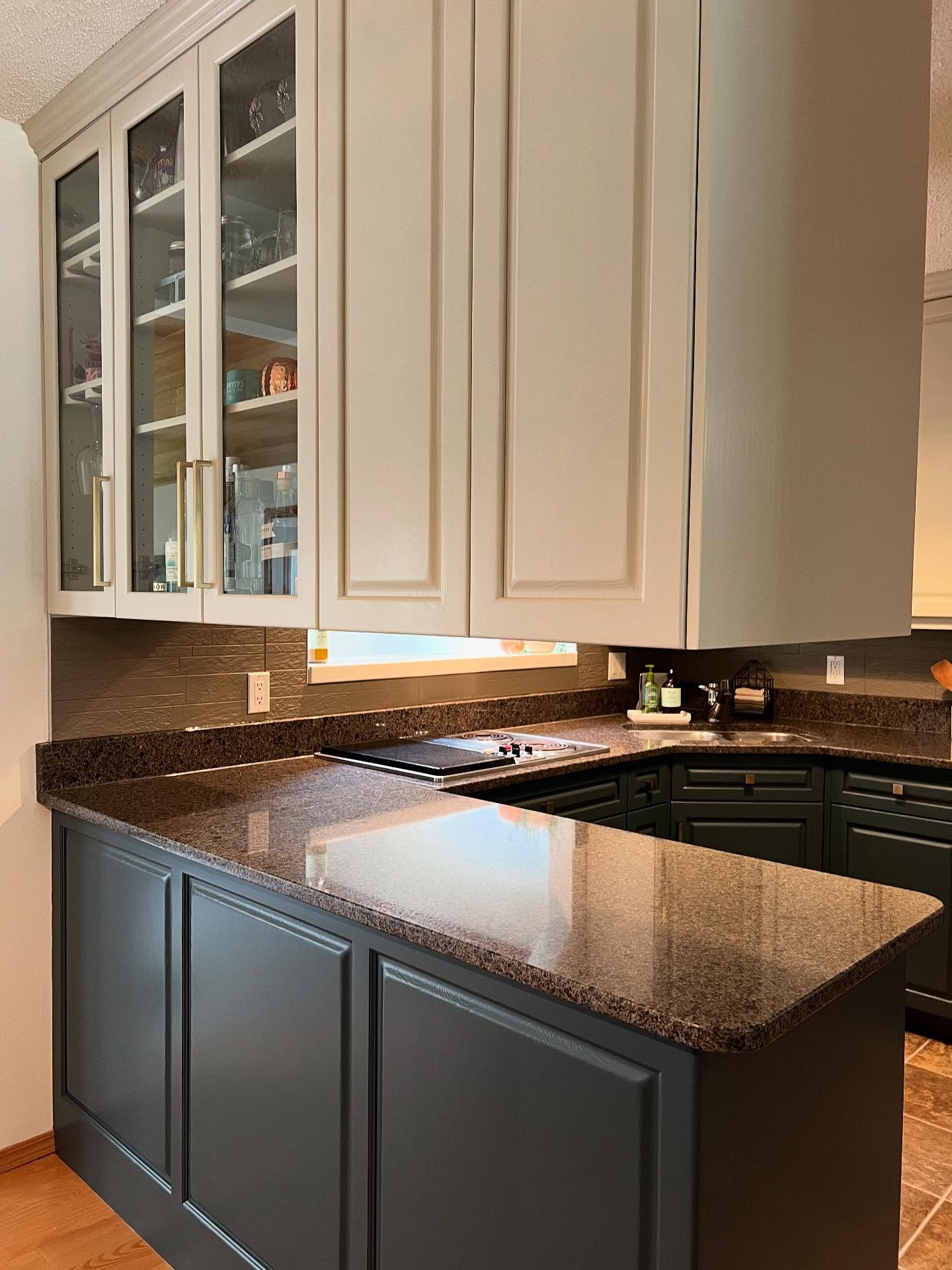
Her sister is an interior designer, and the palette came from her. Hazy Skies on the uppers, a quiet warm sage that lets the ceiling feel taller than it is. Lead Grey on the lowers, which is misleading as a name because the color is really a deep forest charcoal green. Swiss Coffee on the walls.
This wasn’t trend-chasing. It was a problem being solved on purpose.
Think about what wasn’t allowed to change. The floor was staying warm tan. The granite was staying brown-speckled. Any light paint on the bottom would’ve floated above a floor it didn’t belong to. Dark lowers pull the floor in and make it look like someone picked it on purpose. The ceiling is low, so going dark up top would’ve crushed the room. Light uppers open it back up. Those two colors aren’t a mood board. They’re the only answer the existing bones would accept.
The sneaky move most people miss
Look at the backsplash in the after shots. Now flip back to the before.
It’s the same tile. She painted over it.
Same stone-look shape, same grout lines if you squint. All of it got a bonding primer and a darker gray topcoat so it would step back behind the Lead Grey lowers instead of pulling the room orange like it used to. That one surface is doing more work than the cabinets to sell this as a full gut. Replacing it would’ve meant drywall repair, counter protection, a tiler for a day, and fifteen hundred to three thousand dollars before you blinked. Instead it got a weekend and the right paint.
Done properly, with a bonding primer, two coats of a durable acrylic, and a sealer where water hits most, painted backsplash tile holds up for years. The internet mostly won’t tell you that, because the internet makes most of its money from people who sell tile.


What the brass is quietly carrying
Small detail, outsized job: the hardware.
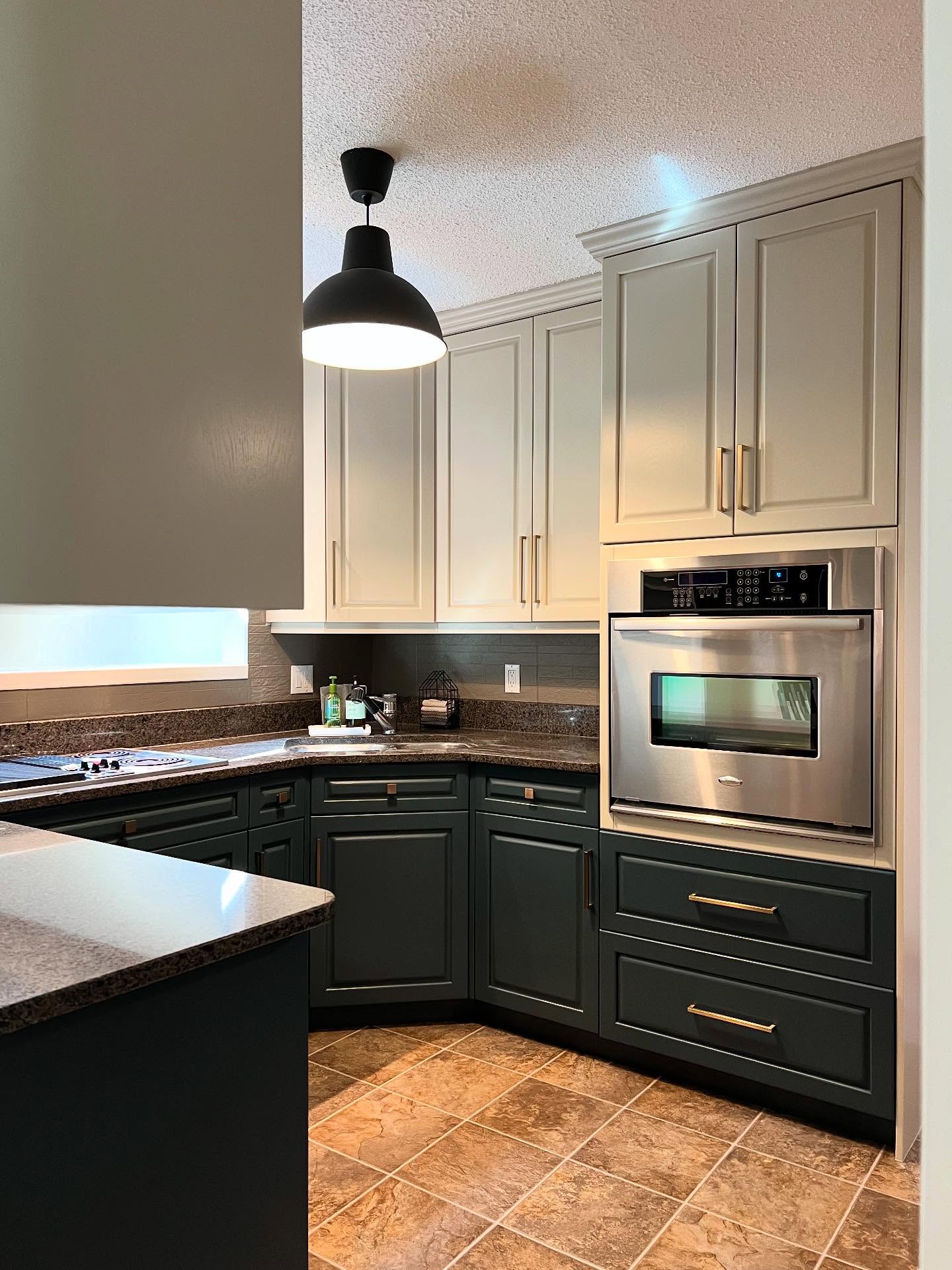
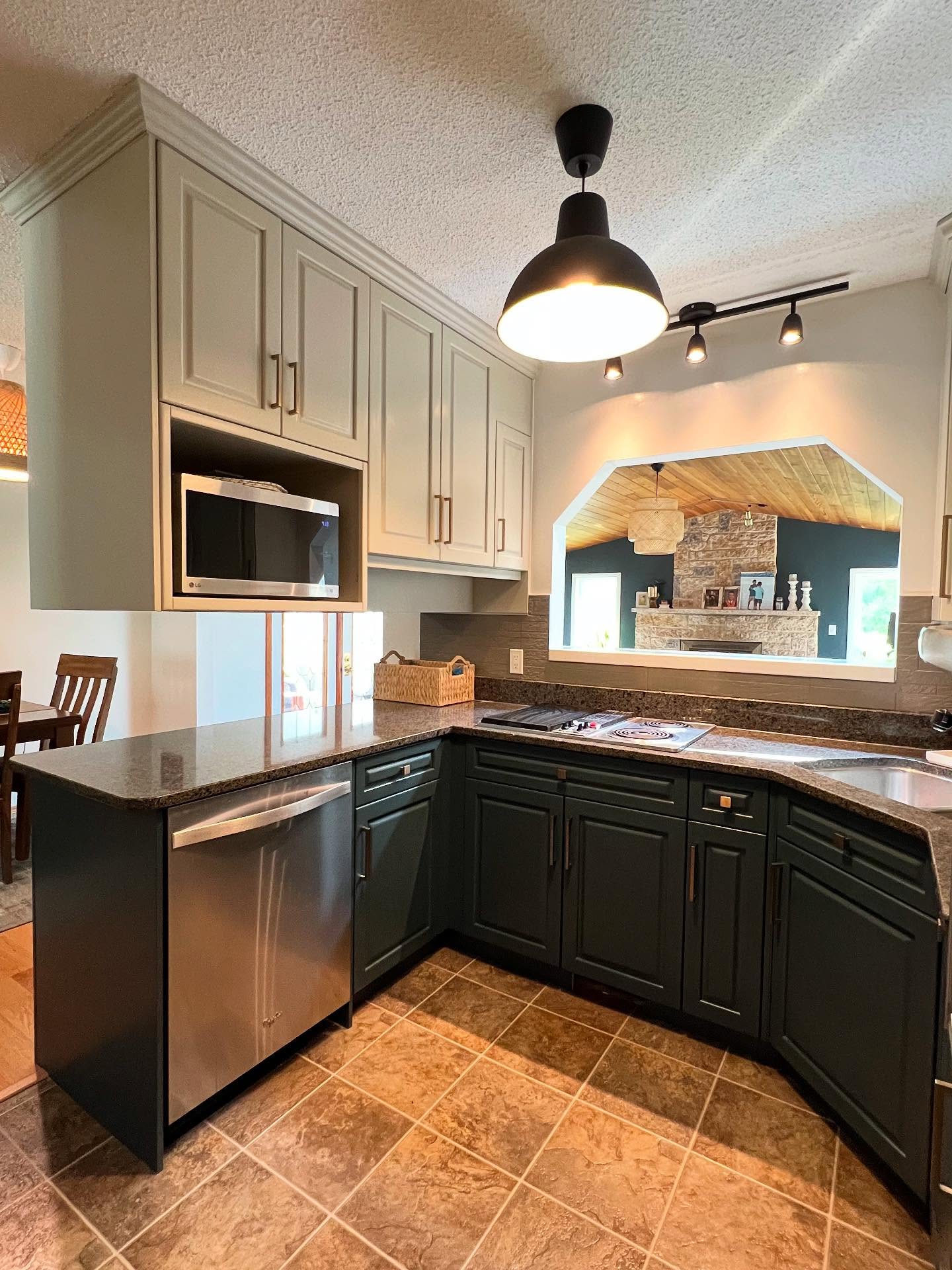
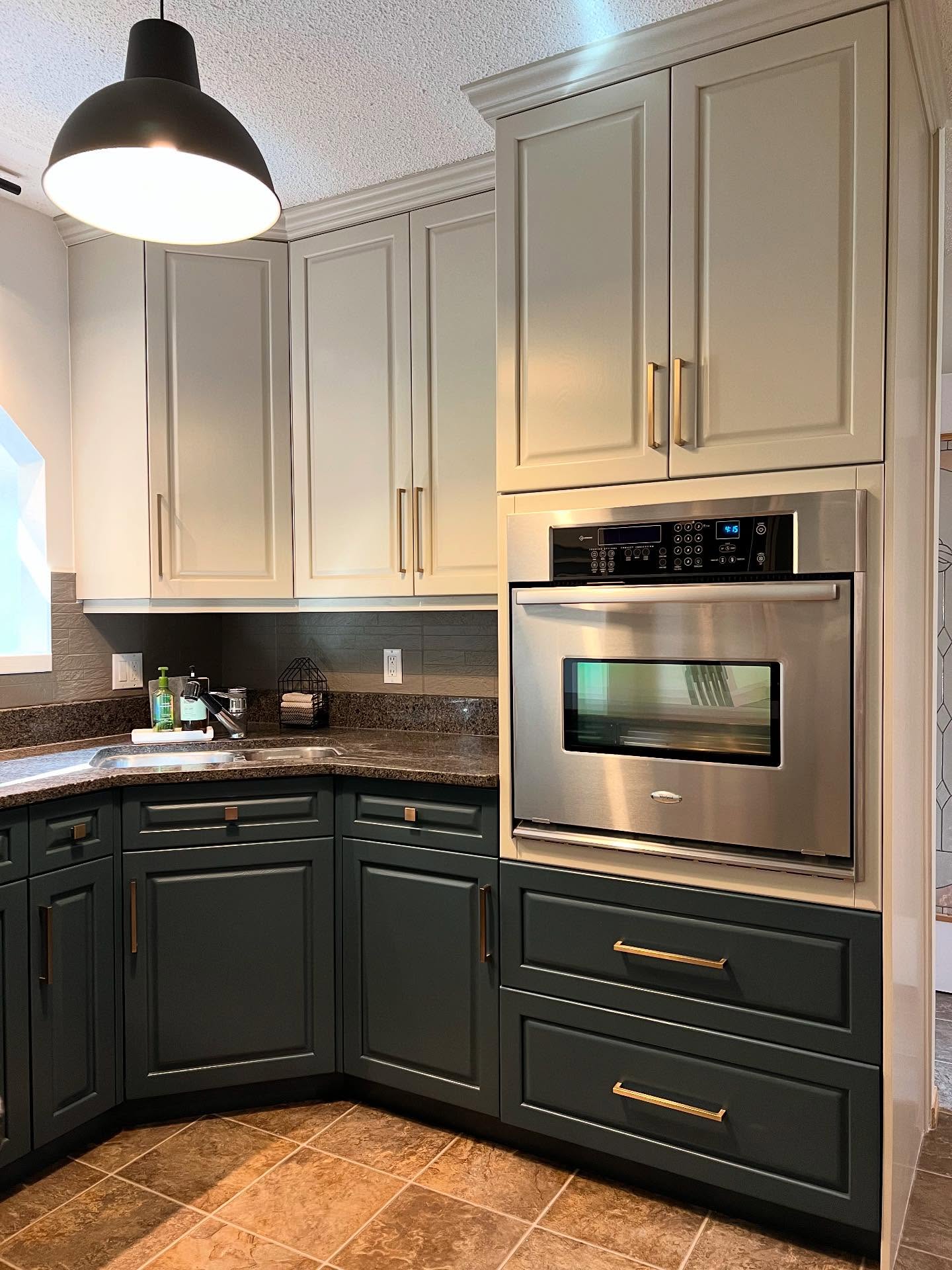
Those long brass bar pulls on the deep green lowers are the reason the whole room reads warm instead of cold. If this project had reached for chrome, the Lead Grey would’ve landed as moody-apartment-rental. If it had gone black, the room would’ve felt heavy. The brass warms the green up and shakes hands with the warm tile on the floor. Three years ago this same project would’ve gone with brushed nickel, and the kitchen would be sitting on the wrong side of serious right now.
The two cheap swaps pulling their weight
Two more things, both cheap, both carrying a lot more than their price tag.
The stained glass fluorescent ceiling box got pulled out entirely. In its place, a matte black industrial pendant and a slim three-head track light. All in, probably two to four hundred dollars of fixtures. That ceiling box was personally responsible for about half the dated energy in the before shots. Losing it bought back a decade in one afternoon.
The ceiling itself got a fresh coat of white. Popcorn texture reads clean when it’s bright and crumbly when it’s yellowed. Nobody notices this one until you point at it, and then you can’t unsee what the old color was doing.
Also still in the wall and completely untouched: the Whirlpool wall oven from roughly fifteen years back. The paint around it does so much work that your eye never lands on it long enough to clock the age.
What this actually cost her
A full gut on this kitchen in 2026, with new cabinets, counters, backsplash, floor, lighting, and appliances, runs forty-five to eighty thousand dollars installed in most US markets. That number is why so many people live in kitchens they’ve been quietly hating for a decade.
This project was paint, hardware, two lights, and labor. Even with a professional painter doing the cabinets properly (sand, prime, two coats, full cure), you’re at three to six thousand dollars total. Call it under ten percent of the gut number.
The thumbnail reads custom. The invoice reads weekend. Every arched cathedral door that someone online would’ve told her to tear off is still right there, holding up a kitchen that looks nothing like the one she started with.