
Most people would have thrown out the whole dining set.
That’s the honest advice you see everywhere online now. Inherited mahogany? Sell it. Ball-and-claw chairs? Donate them. Formal Chippendale table your mother-in-law gave you? Paint it black or list it on Facebook for fifty bucks. The “brown furniture is dead” chorus has been loud for years, and some of it tracks.
She didn’t do any of that. She kept every piece. Then she did one thing that made the same furniture look like it cost three times what it did.
What she started with
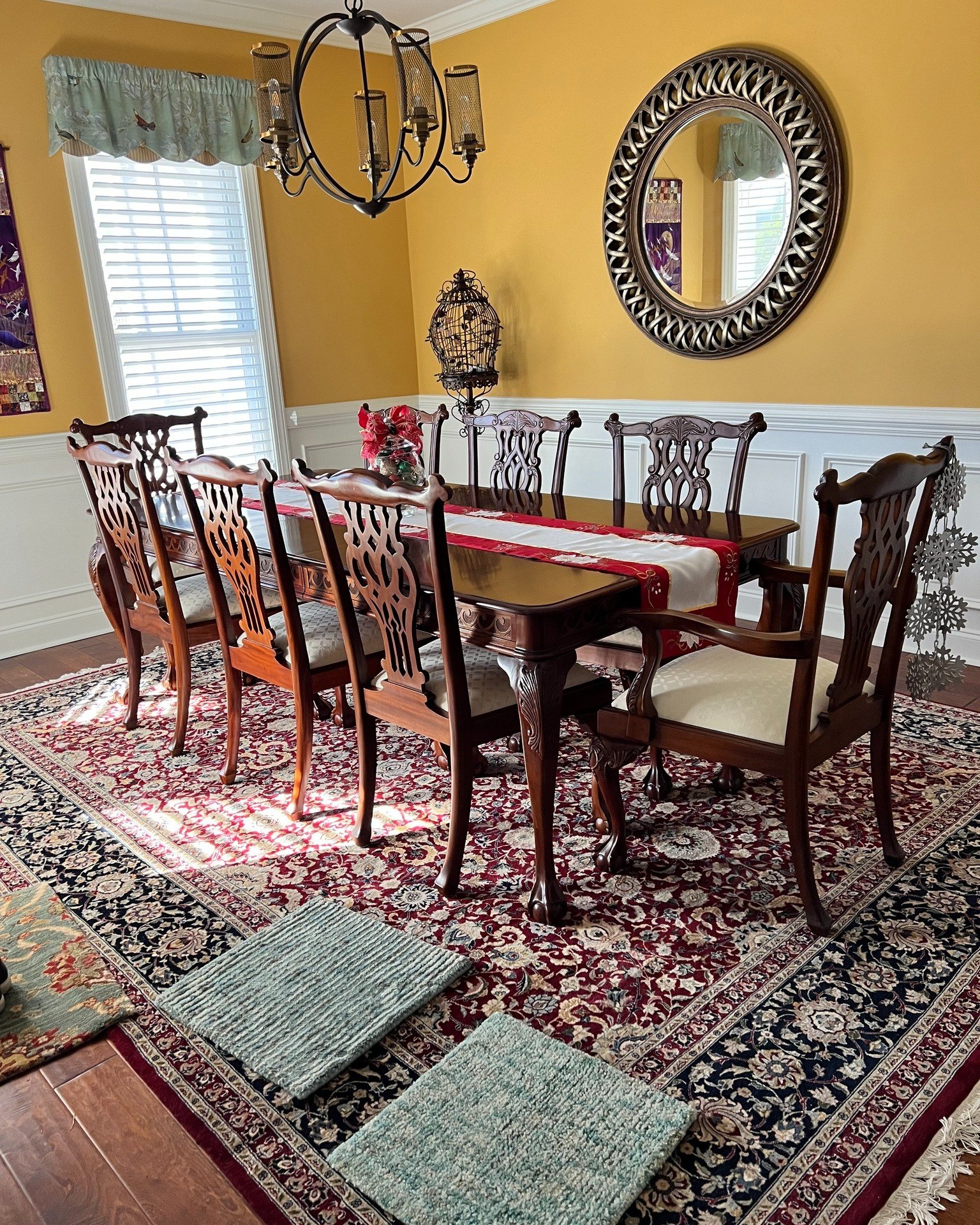
Look at that room for a second. The bones are good. Wainscoting is sharp, chandelier isn’t bad, the table is genuinely nice furniture. But the walls are doing the same thing walls in a million American houses did between 1998 and 2008: that warm, Tuscan-adjacent mustard that was supposed to feel upscale against brown wood. It did for about ten minutes. Now it reads as a specific kind of dated you can’t shake by swapping a rug.
She lived with it a while. You can tell from the layered rugs, the Christmas runner, the little snowflakes hanging off one chair. Someone who actually uses this room.
The one wall that changed the read of the whole room
The thing most people get wrong about dining rooms like hers is treating the furniture as the problem. It isn’t. The furniture is the one thing in there with real craft behind it. The problem is what’s happening behind it.
So instead of touching a single stick of wood, she went after the backdrop.
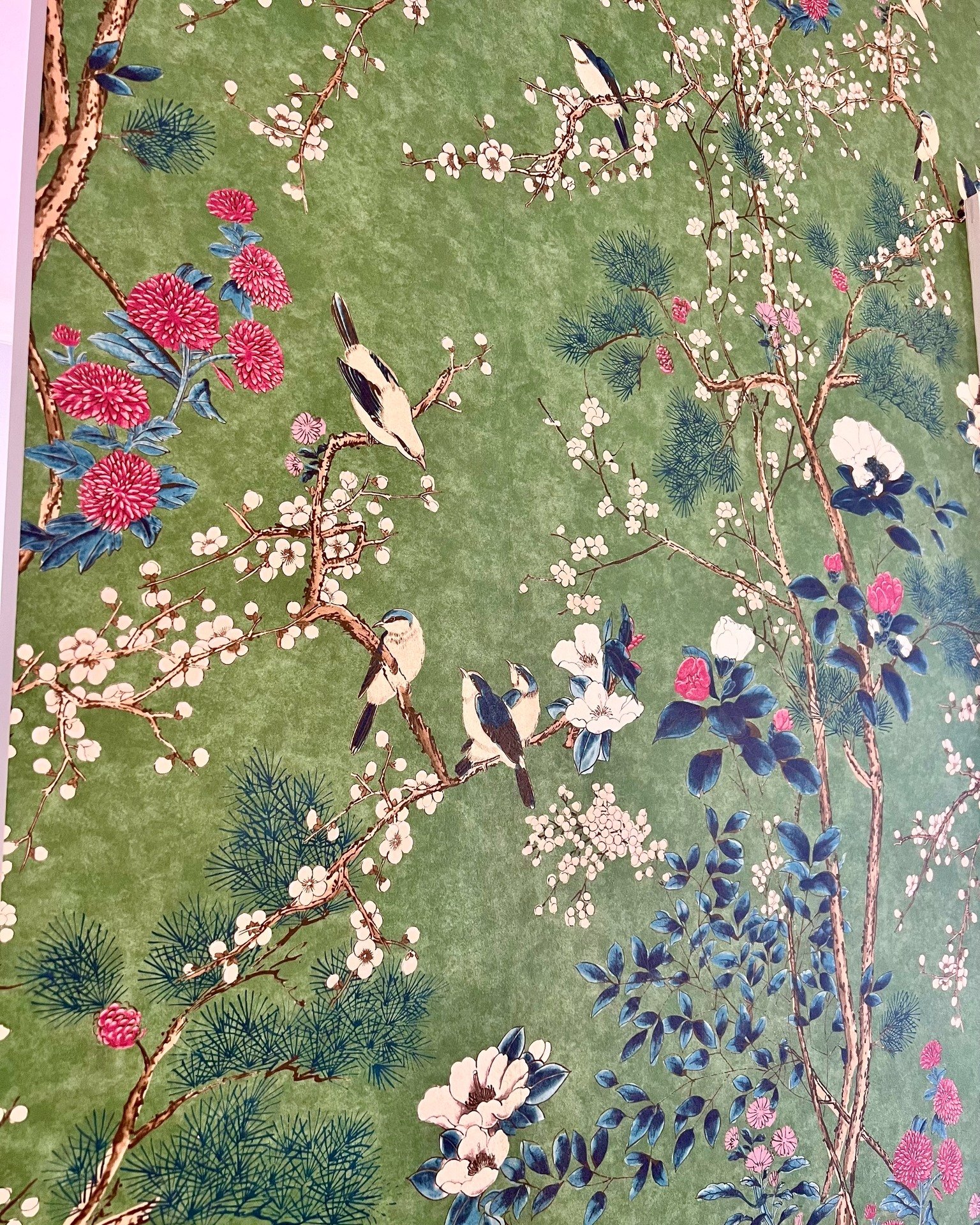
That’s Thibaut Design’s Katsura pattern in Emerald. It’s a chinoiserie print, which just means it’s in the old Chinese-garden painting tradition: flowering branches, songbirds, pine, peonies, layered on a colored ground. You’ll see this exact style in rich people’s dining rooms going back to the 1700s, which matters in a minute.
Why this specific wallpaper fixes this specific furniture
One thing nobody tells you about Chippendale-style sets. Thomas Chippendale, the actual guy, was obsessed with what Georgian England called “Chinese taste.” His 1754 pattern book literally had chinoiserie designs in it. The pierced splat backs on her chairs are his vocabulary. The carved apron on the table is the same era.
So chinoiserie wallpaper behind Chippendale furniture isn’t mixing two random pretty things. It’s pairing the furniture with the design language it was built to sit against 270 years ago. Everything clicks.
What the finished wall actually looks like
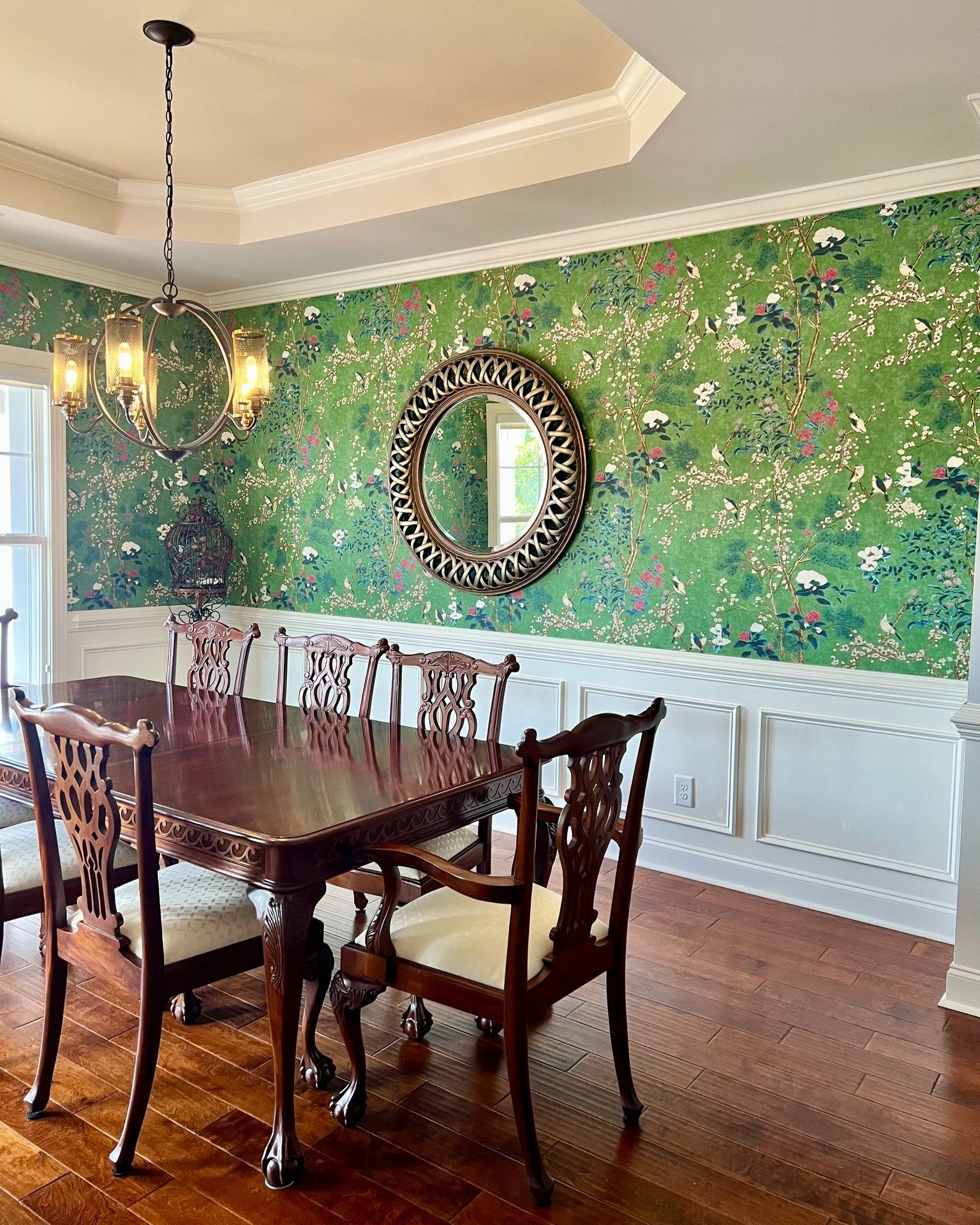
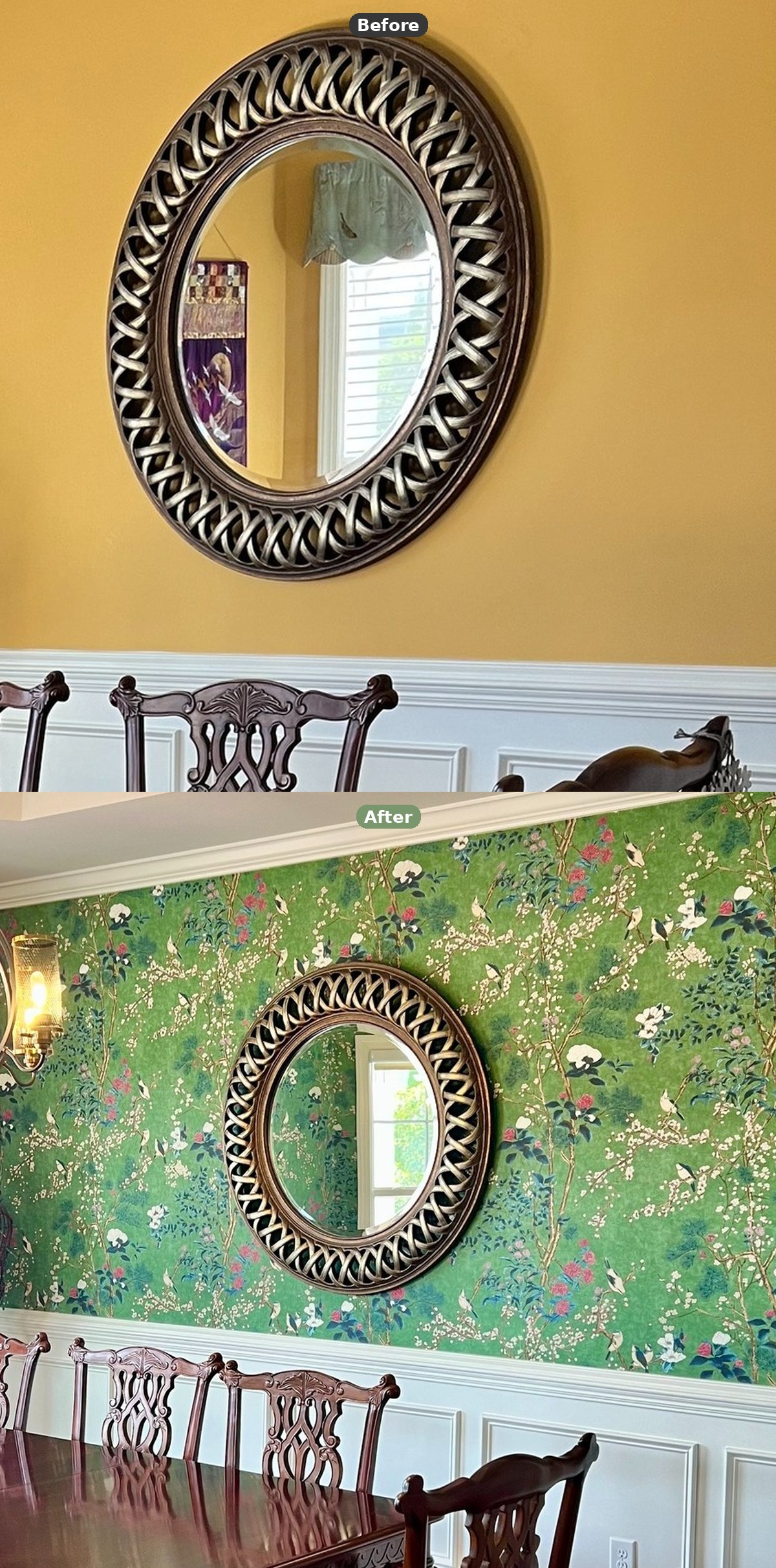
Same table. Same chairs. Same silver mirror, exact same spot. Same tray ceiling, wainscoting, floor, little iron birdcage. The only real change is what color the walls are and what’s on them.
But the mahogany looks completely different. Rich instead of heavy. The silver mirror reads as jewelry instead of décor she bought in 2007. The birdcage, random clutter in the yellow room, now rhymes with the painted songbirds in the wallpaper and earns its place. Even the chandelier looks better.
Look at the mirror wall, before and after
Same mirror, same wall, same hook. Only the backdrop changed.
About that mustard wall
Before you decide this is only about replacing paint with pattern, look at one more piece of the old room.
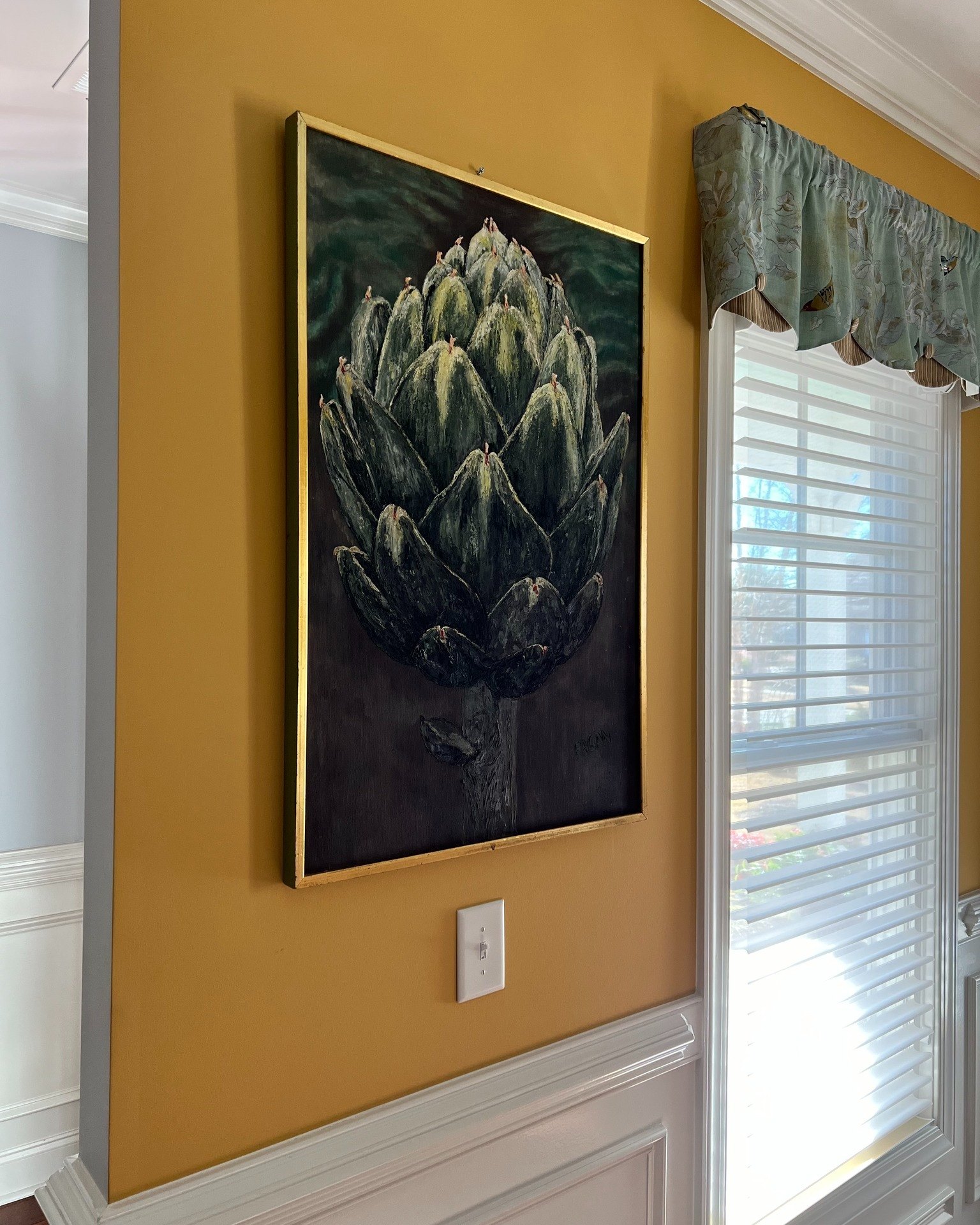
That’s a lovely painting. Good frame. Sharp wainscoting. Fine valance in its day. But put it all on a mustard wall and your eye never knows where to land. Warmth competing with warmth, pattern competing with pattern, nothing winning. The wall isn’t helping the painting. The painting isn’t helping the wall. They cancel each other out.
A chinoiserie wallpaper would have eaten that painting alive, honestly, which is why in the after shots that whole wall gets reset. Different art, different window treatment. One thing gets to be the show.
The bay window is where it really sells
If the first after shot made you nod, this next one is the one that’ll make you save the pin.
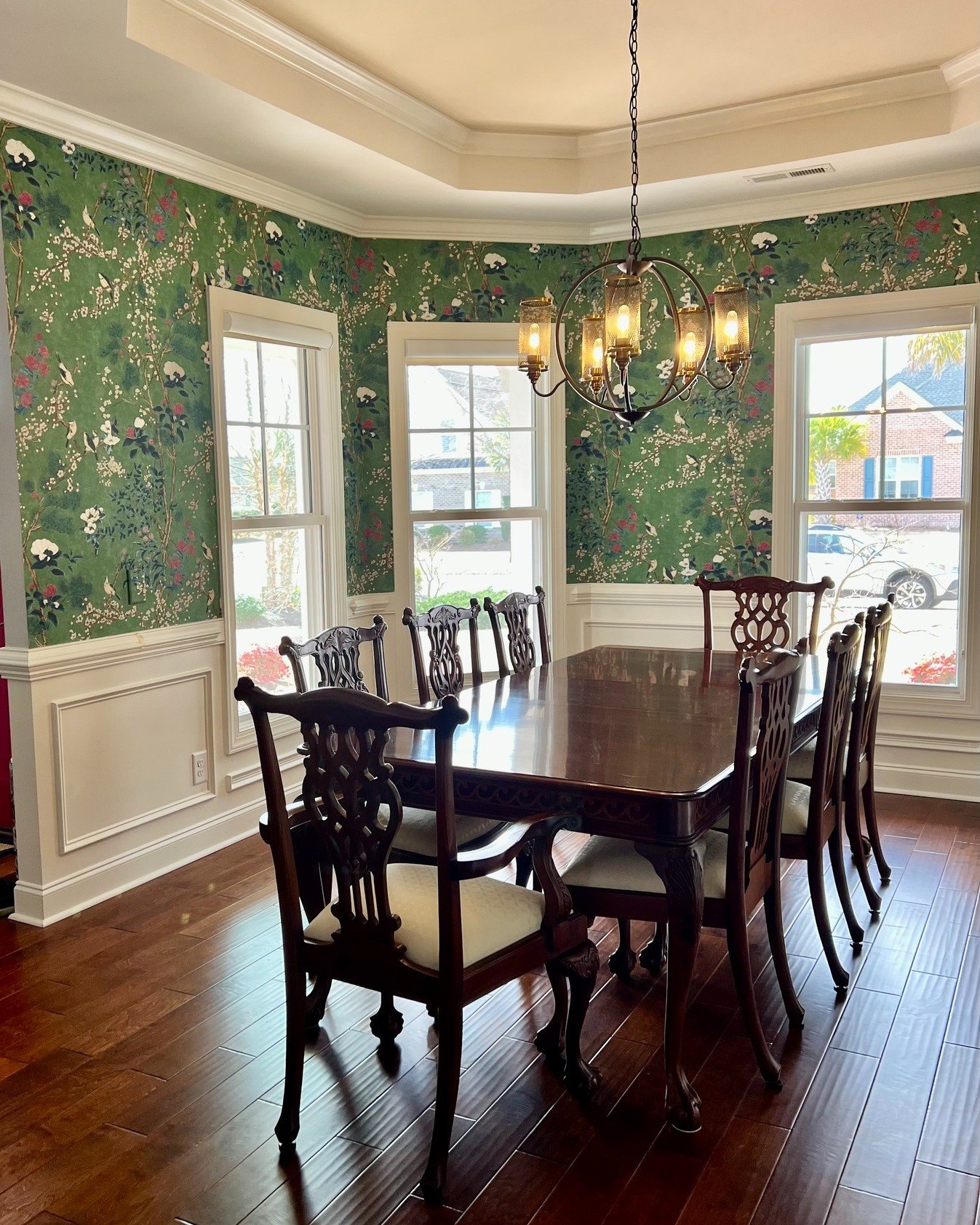
She pulled the valances off. That matters. The old sage scalloped valances were doing nothing but softening the edges and reading as fussy. Stripped bare, those three bay windows now frame the wallpaper like panels in a folding screen. Light pours in, the green reads brighter, and the whole room feels larger than it did when the yellow was swallowing the daylight.
What she said is still coming
Her caption calls this the start, not the finish. A new rug to replace the layered Persian stack. Fresh host chairs for the ends of the table. Window treatments to put something back on those bare bay windows.
But the hard part is already done. The hard part was always the walls. Once those were right, everything else became easy shopping instead of soul-searching.
What to steal from this
If you’ve got an inherited dining set you don’t love, this room is your permission slip to stop apologizing for it. You don’t have to paint the mahogany, sell the chairs, or go modern. You can go in the opposite direction: pick a pattern big enough to match the furniture’s confidence, and let the two meet in the middle.
Thibaut rolls land around $200 each and a dining accent wall usually takes three or four. Under a thousand dollars and a weekend of hanging, and the room stopped looking like it was waiting to be gutted.