
Some hallways age fast. This one had been living in 2016 longer than anyone realized. Here’s what went in, what came out, and the one choice most people would never have made.
That silver-gray crushed-velvet panel was the entryway move for a couple of years. In 2026 it reads the way a popcorn ceiling reads. You clock the decade before you clock anything else.
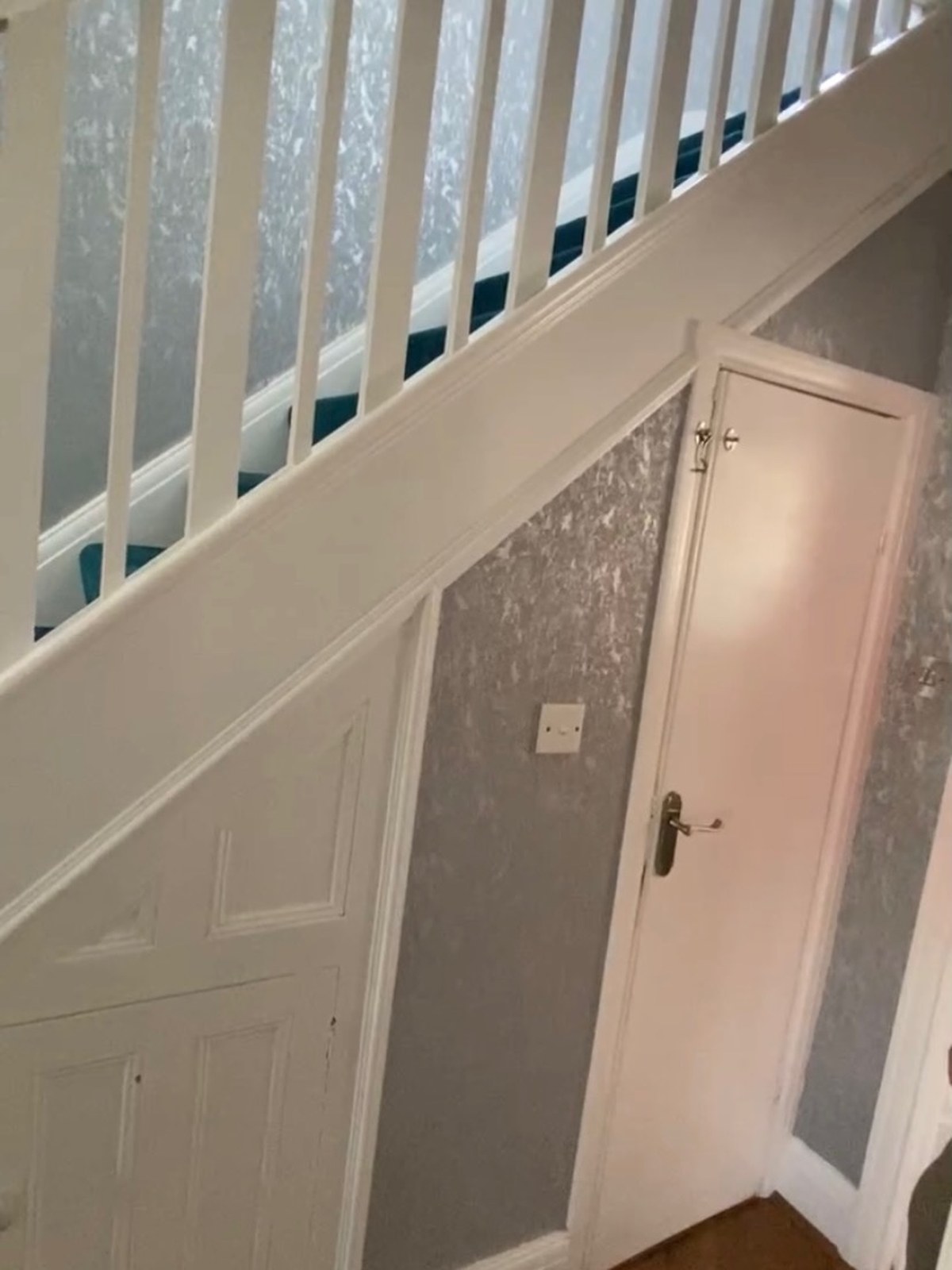
The wallpaper was the obvious problem. The real one was the white gloss on everything else. Doors, trim, banister, spindles, window frame, radiator cover, the panel tucked under the stairs. In a hallway this tight, every white rectangle pulls your eye off the walls and onto a seam. The space reads as a corridor instead of a small room, and you want to walk through it fast rather than stand in it.
Stripped back to bare plaster
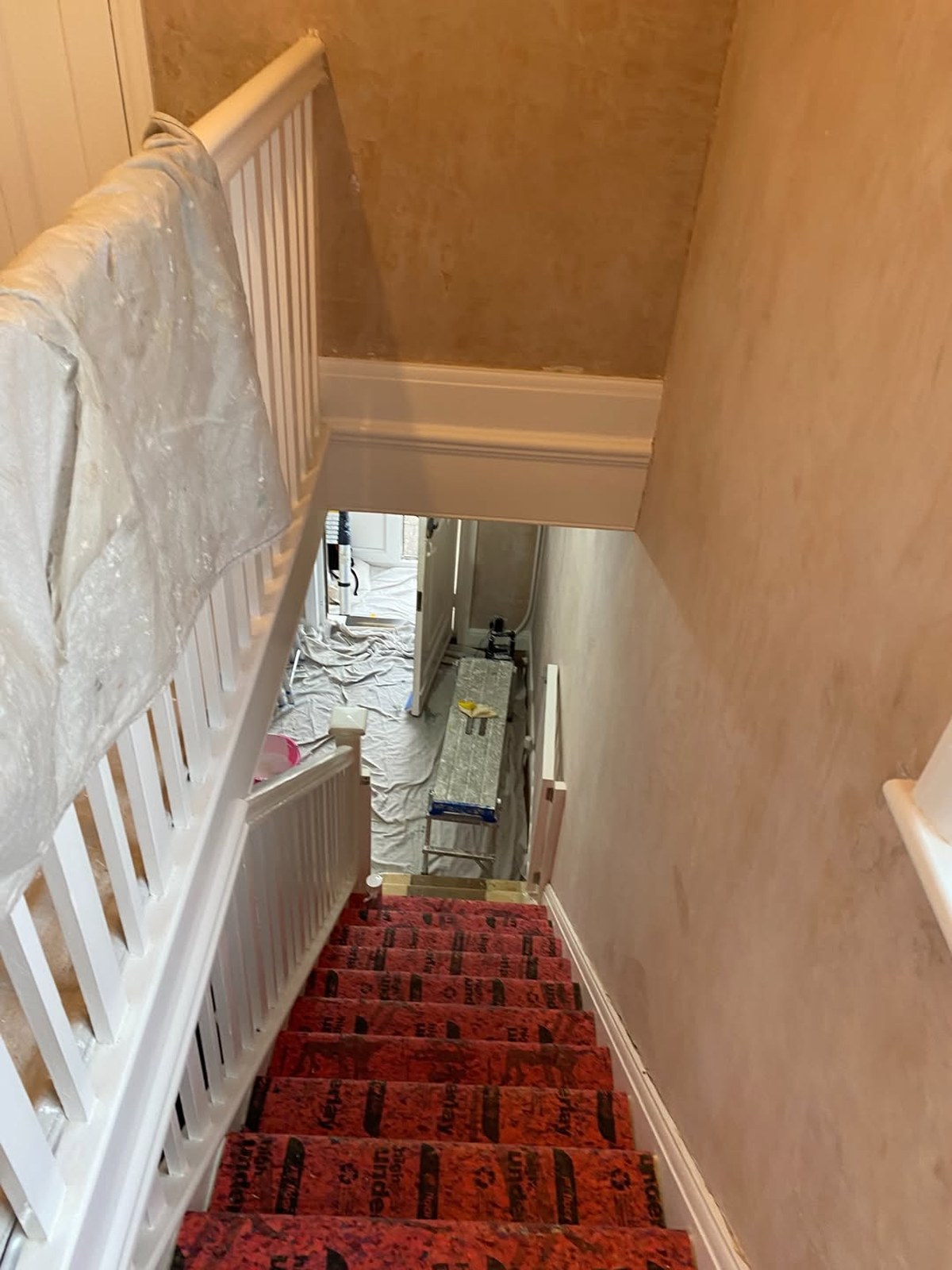
This is the middle of any big repaint, and nobody posts it. Wallpaper scraped, walls sanded, filler patched in. It looks worse than the before. It has to.
The same stairwell, before and after
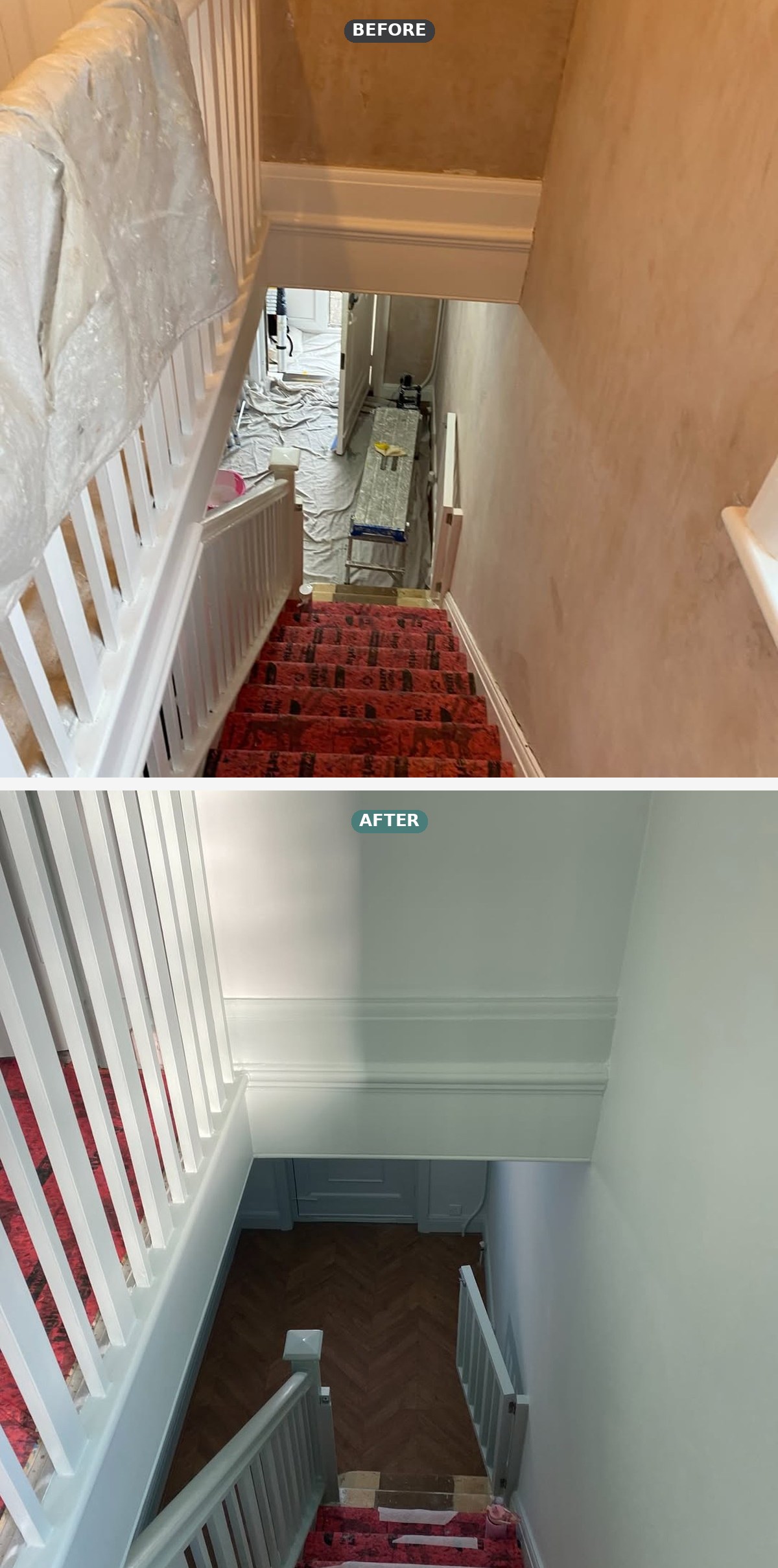
Same angle. Same stairs. The second frame feels three feet wider and ten degrees warmer. Neither of those things is literally true. All that changed is the color on the walls and the woodwork.
Look at the dado rail and the under-stairs paneling. A touch deeper than the walls. That is not a trick of the light.
The paint that did the heavy lifting
The color is Little Greene Aquamarine, in two strengths. Walls are Aquamarine Pale in Tikkurila Optiva 5, a flat matte that does not shine back at you in a dark hallway. Every piece of woodwork is Aquamarine Mid in Scuff X eggshell, a tough interior paint that takes shoes, bags and dog nails for years. The handrail got a clear Polyvine topcoat over the paint, which is the detail nobody tells you about. Skin oils wear painted handrails right through to raw wood if you skip that step.
Two shades of one color is the quiet trick. A single flat drench kills every shadow line and flattens the architecture. Two shades let the woodwork stay legible without bringing back the white-trim chop.
Three white doors in a corner
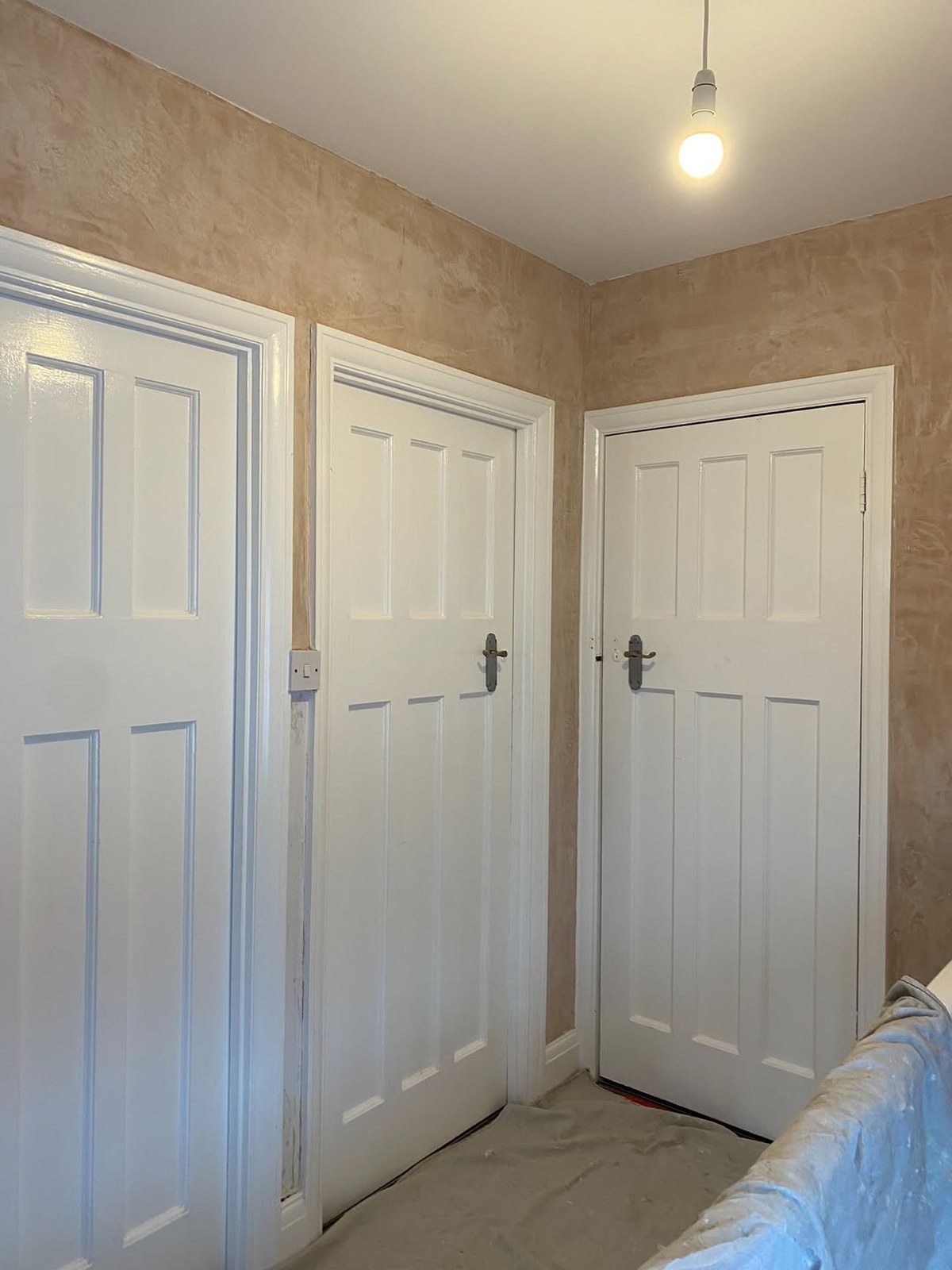
Three doors meeting in a corner is a nightmare on a good day. White gloss on all of them turns a small landing into a hall of mirrors where nothing sits still.
The upstairs landing after
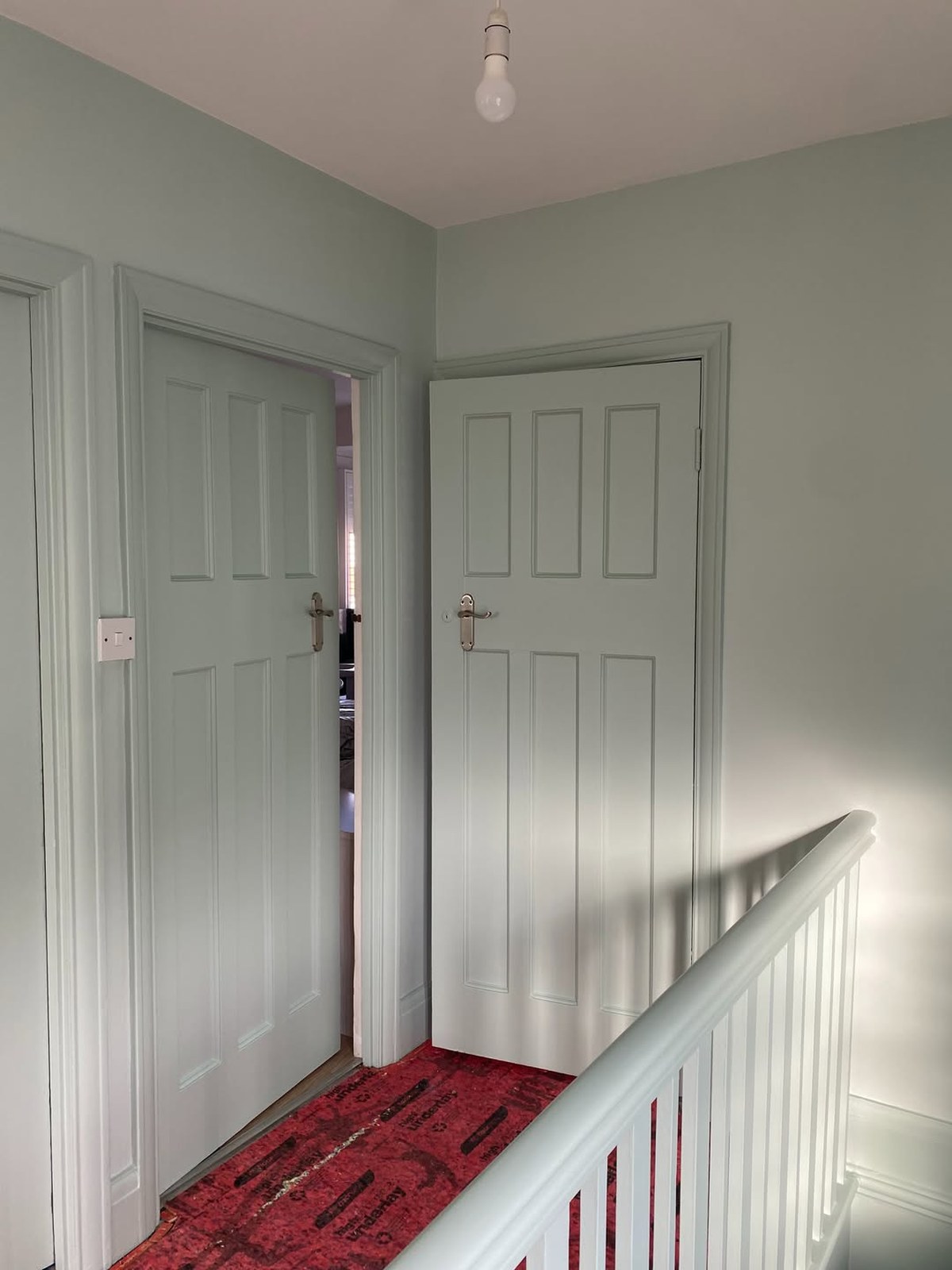
The doors settle into the wall. Your eye lands on the open doorway and what’s behind it, which is exactly what a landing is for.
The bathroom corridor before the paint
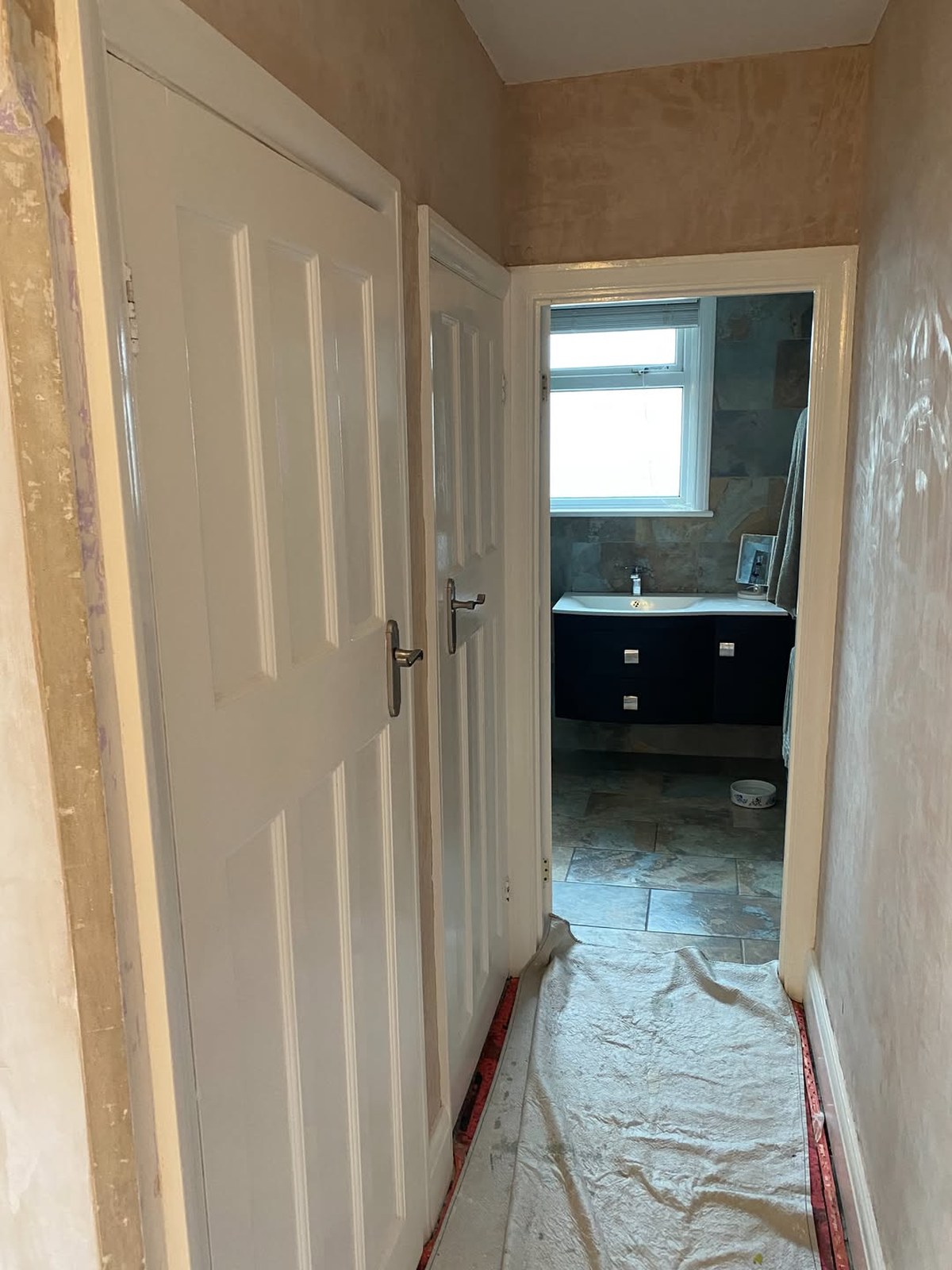
Every period house has one of these. The awkward pinch point where the bathroom opens off a bedroom corridor and nothing lines up.
The small landing in aquamarine
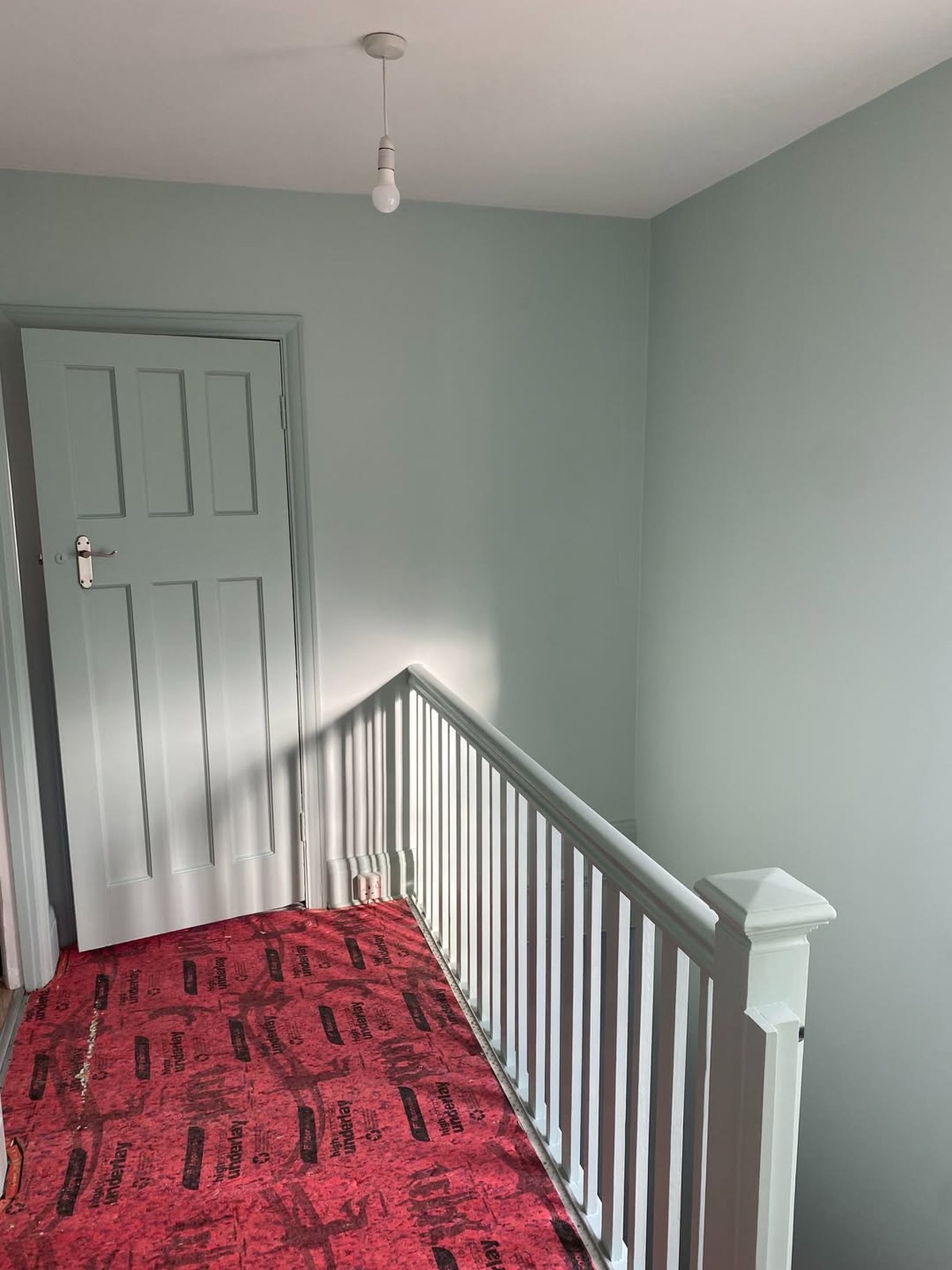
In soft aquamarine, the pinch point becomes part of the envelope. The door stops announcing itself. The walls carry the room instead.
Why aquamarine, not any other green
Aquamarine reads green in daylight and leans blue under warm bulbs. That matters in a hall, which gets lit three different ways across a day. A saturated jewel green would look like a trendy bet. A soft chalky blue-green looks like it was always there, which is the look you want permanent paint to have.
The staircase window before
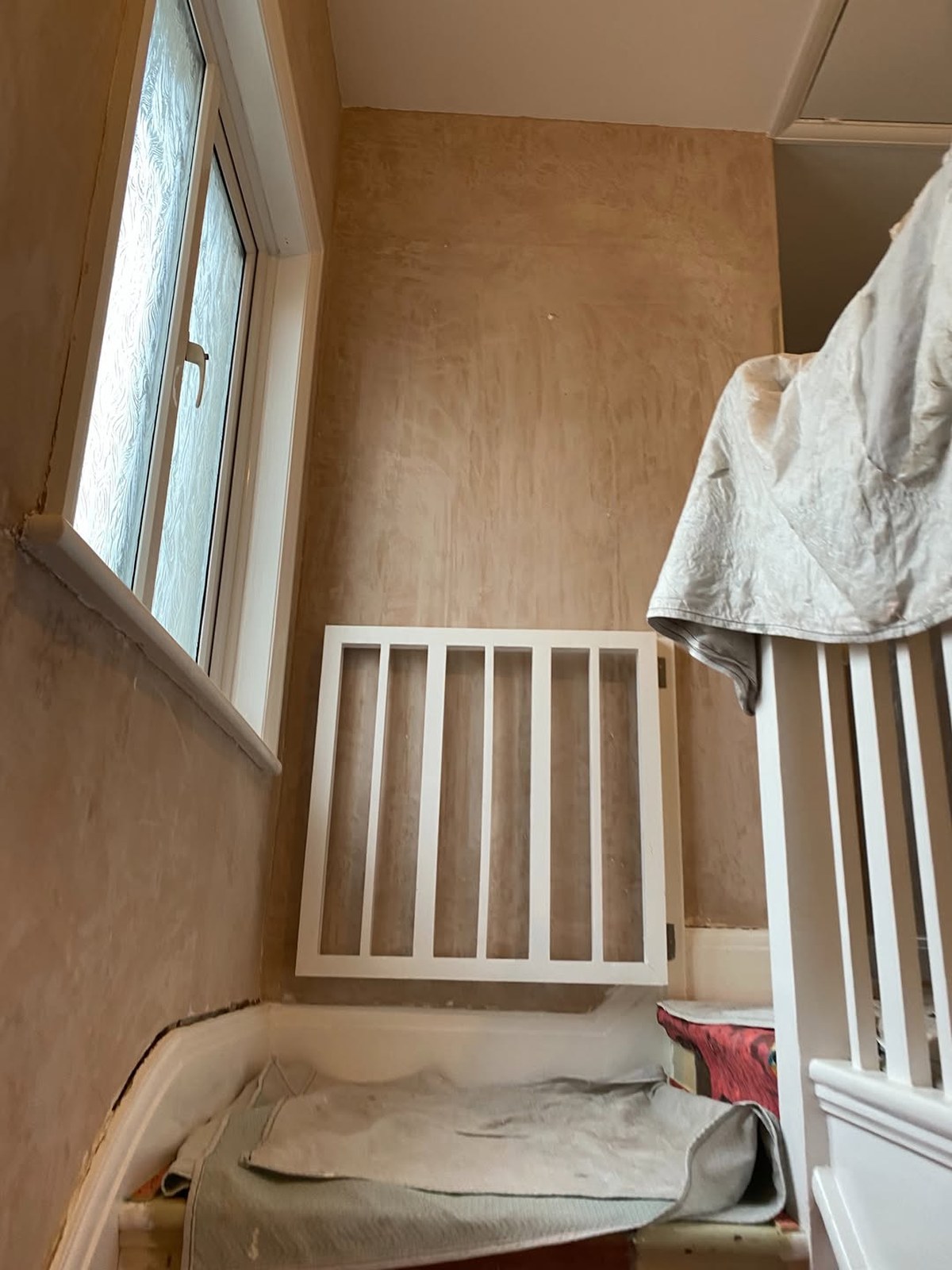
The staircase window was the hardest spot in the house. Odd angles, a radiator cover that was not even installed yet, and only a frosted panel for light.
The hardest spot, before and after
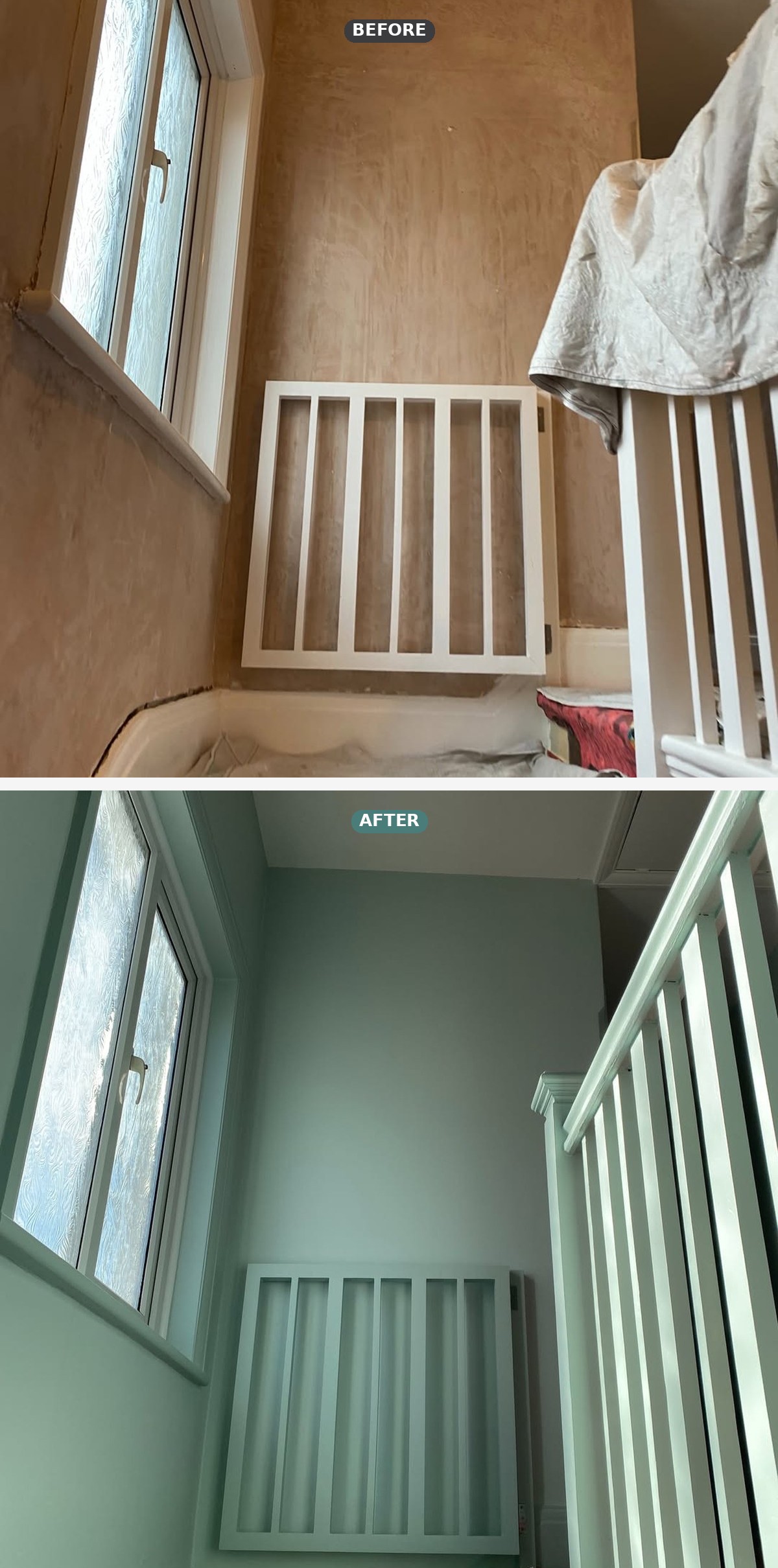
Same window, same radiator cover, same slope of wall. Different conversation entirely.
Painting the radiator cover the same color as the walls is the whole point. It stops being an object sitting against the wall and becomes a piece of paneling. That is a free upgrade from “thing I need to hide” to “architectural feature.”
Looking up from the downstairs hall
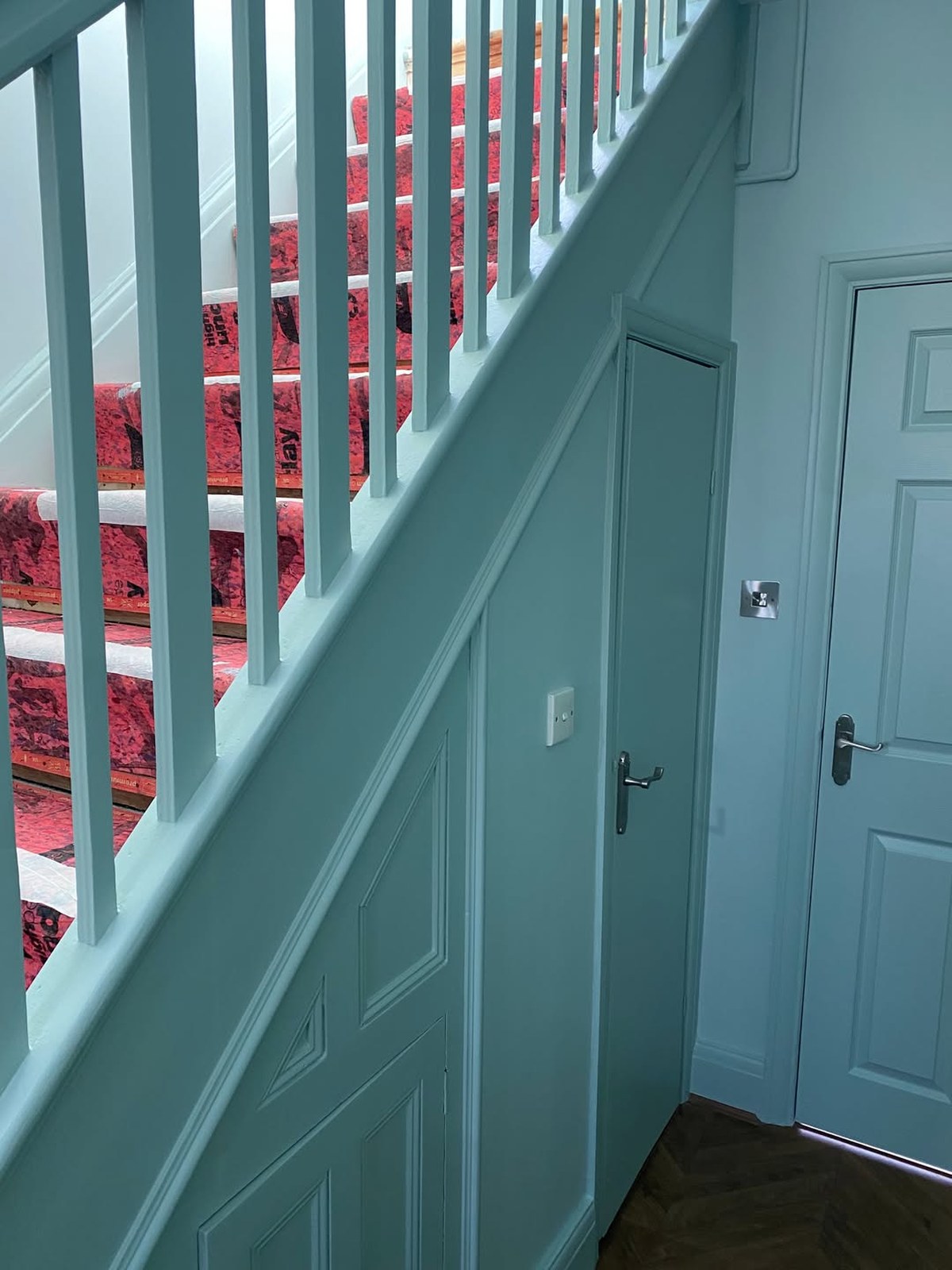
From this angle the under-stairs cupboard door disappears into the panel work. It’s still there. You just stop noticing it, which is the whole idea.
The downstairs hallway, finished
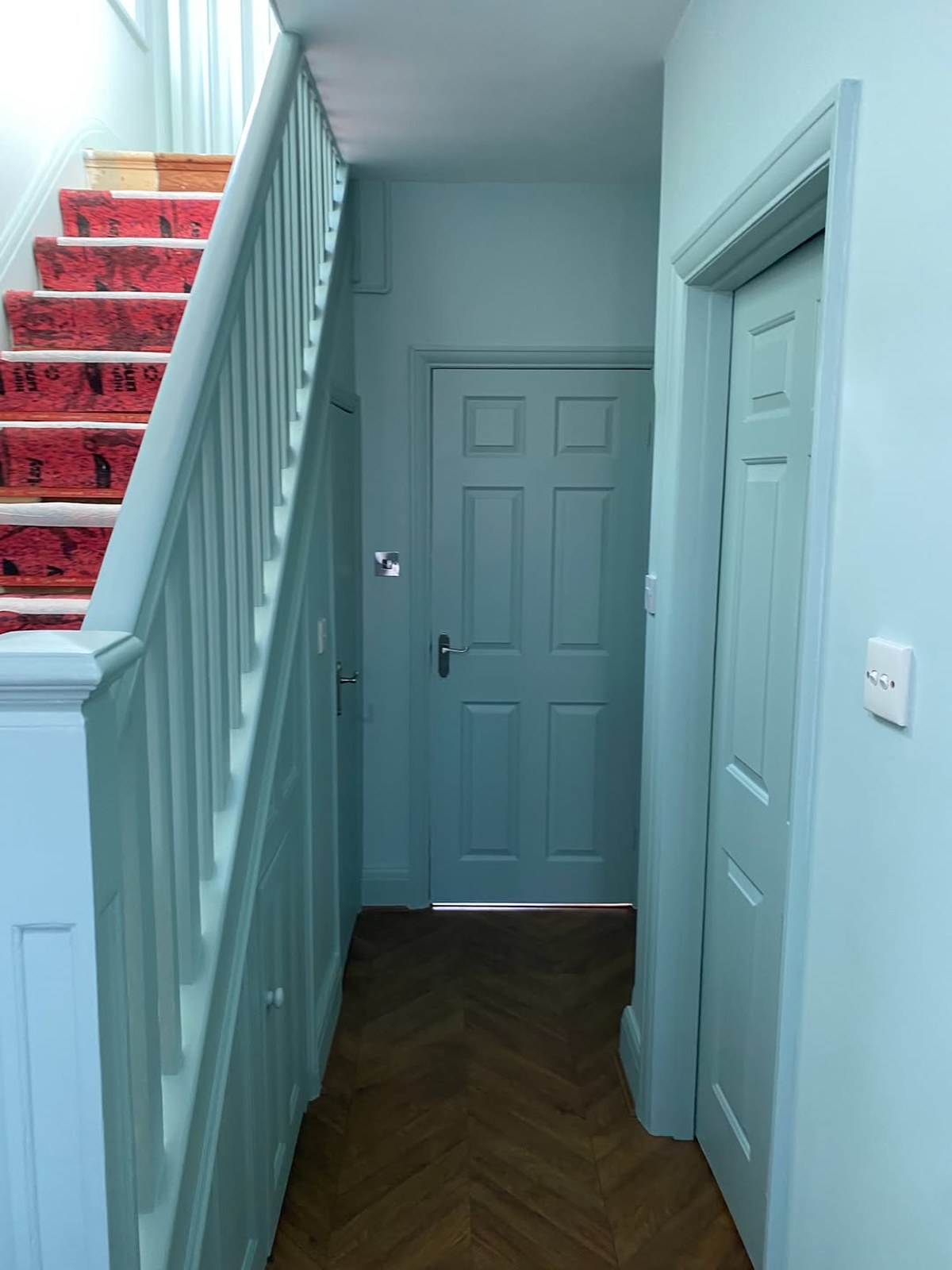
Four doorways lined up and your eye still travels the length of the hall without snagging on anything. That’s the real test.
The front door finally gets the frame it deserves
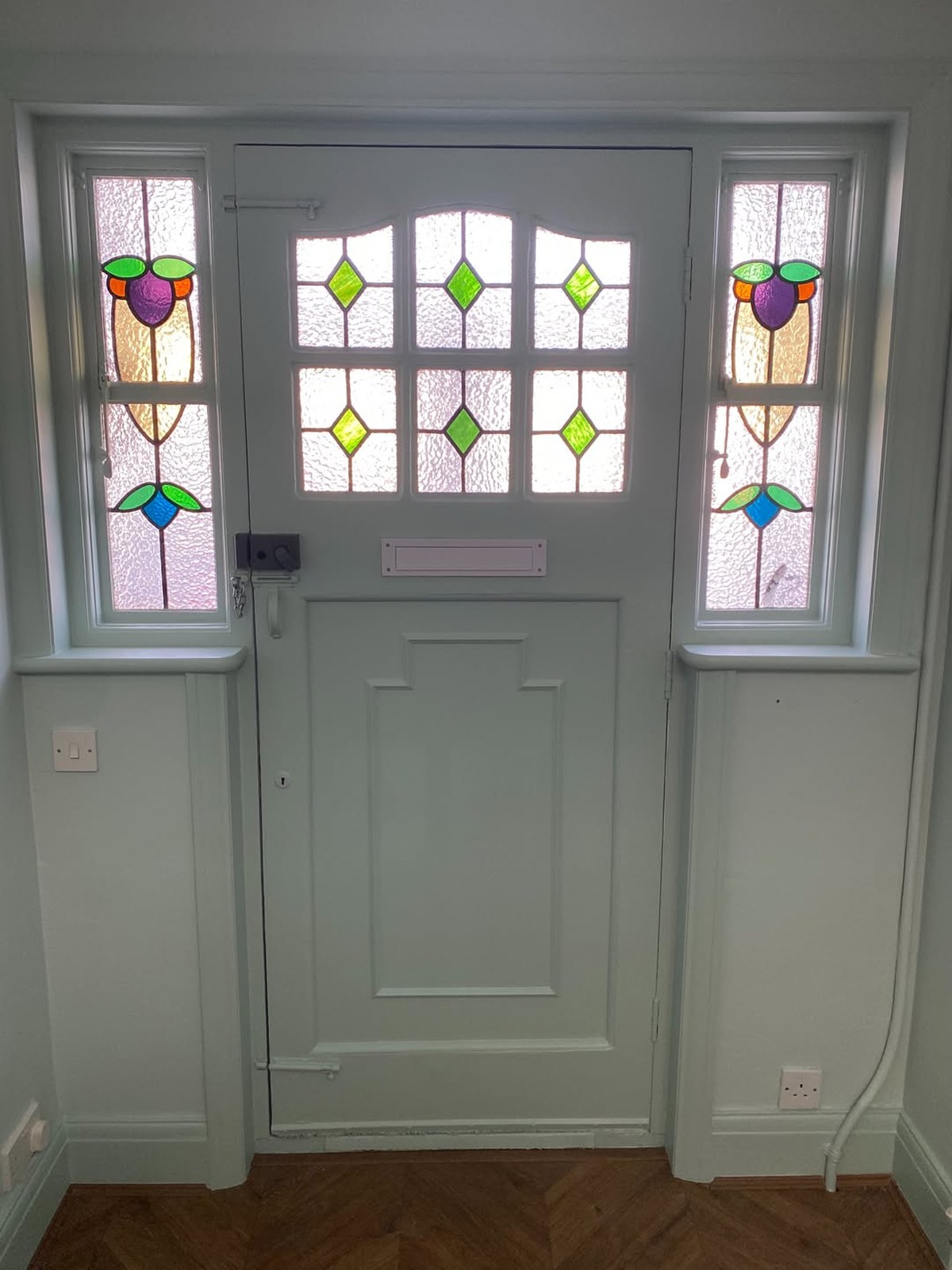
This door was always the best thing in the house. White gloss framing fought every color in the glass. Aquamarine finally lets the purples and greens do their job.
The full view from the front door
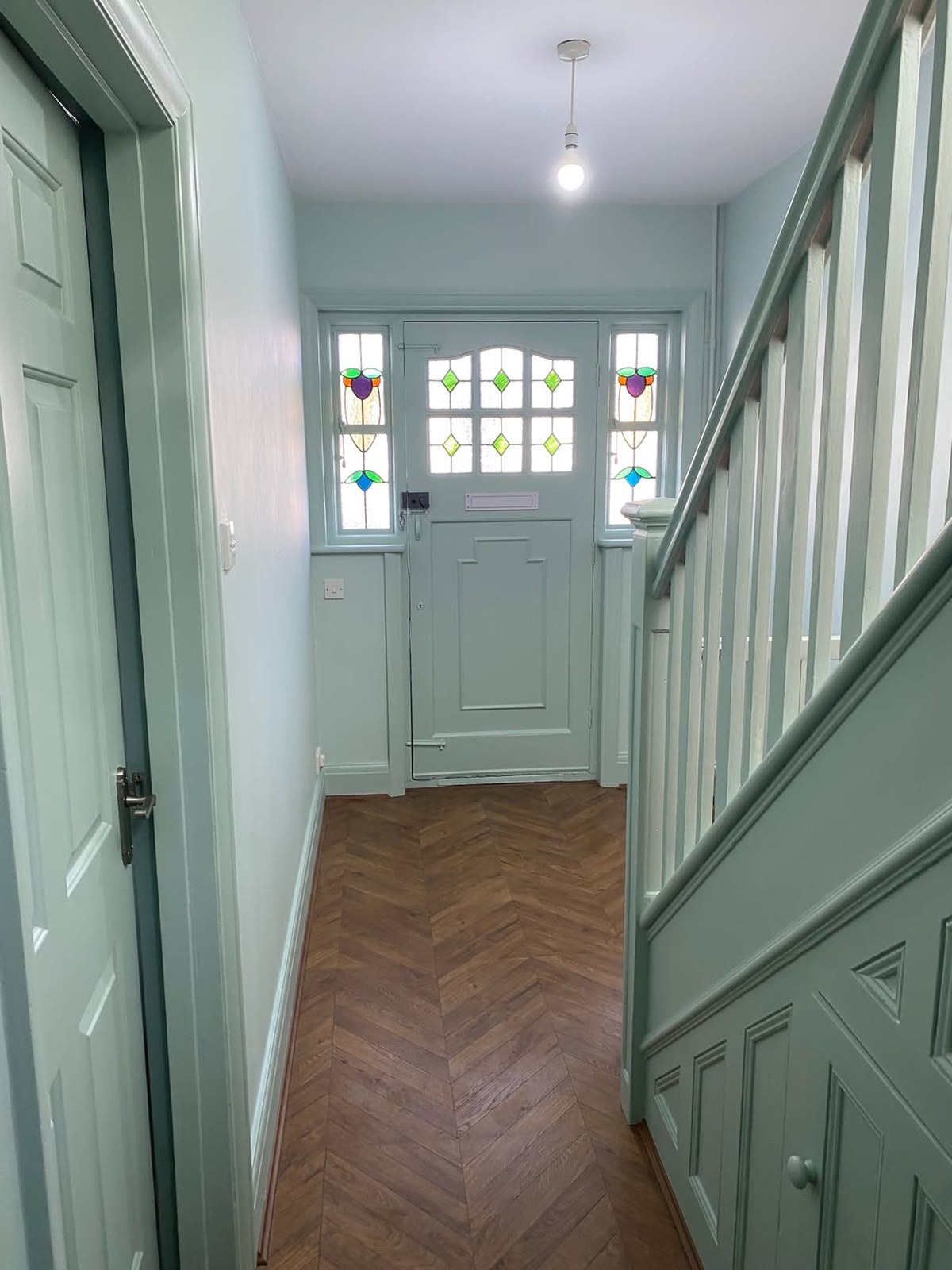
Stand here, drop your coat, and the room holds you for a second instead of pushing you through. That is what a hallway is supposed to do.
What this hall actually teaches you
If you’re staring at a tight period hall of your own, the lesson is not the green. It’s the woodwork. Keep the trim white and you fight your walls for the rest of the paint’s life. Paint the woodwork a step darker than the walls in the same color family, and the whole envelope quiets down. Spend the money on the primer, the tougher eggshell, and the clear topcoat on the handrail. That is the part you will not want to do twice.