Walk into any 1990s UK home and you’ll find roughly the same staircase. Orange pine spindles. Pine handrail. Pine treads. Pine everywhere. By the time all that honey has aged into a yellow-orange glaze, most owners end up with three options: live with it, pay thousands to tear it out, or paint it white and watch the knots bleed through within months.
This decorator went with a fourth option. And the part that makes it all work isn’t the white paint you’d notice first.
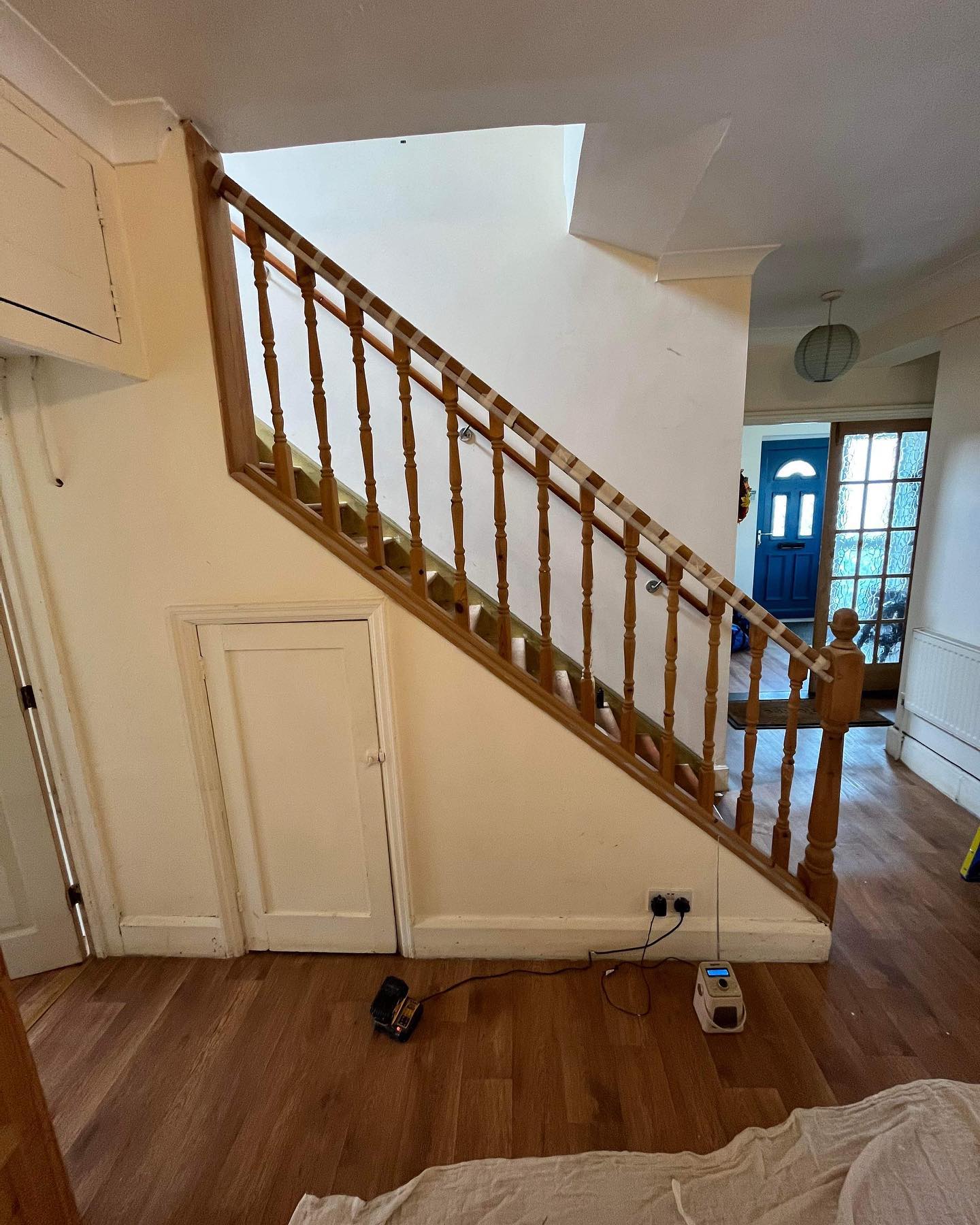
This is where she began. The pine is doing what pine does after a few decades, which is pushing a yellow cast onto every wall and surface near it. Before any paint ever came out, every single spindle got wrapped in masking tape to protect the handrail. That alone took hours, one spindle at a time, with blue tape and patience.
The finish nobody expected
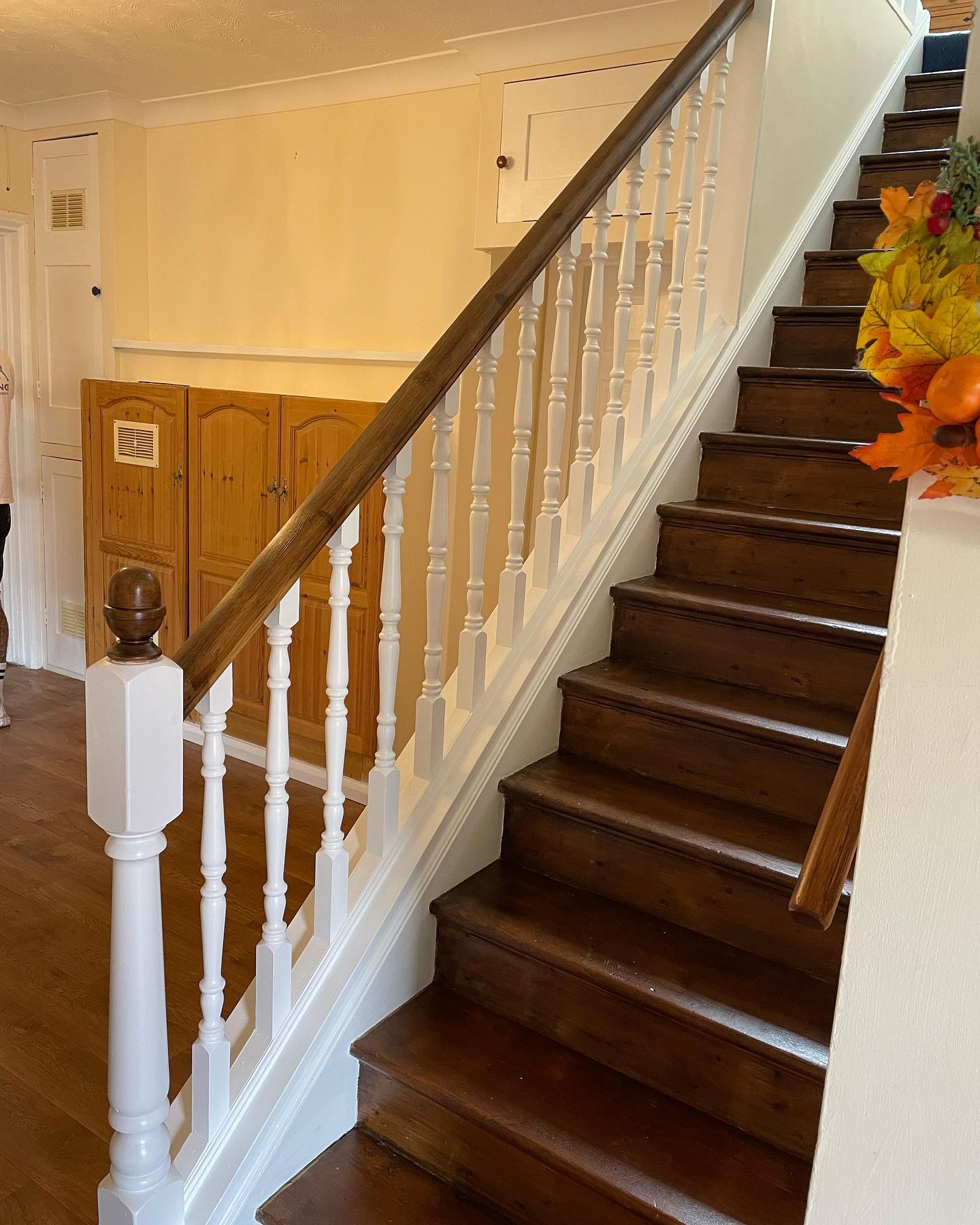
Three decisions, not one. The spindles went crisp white. The treads were stained a deep walnut. The handrail and the acorn newel cap stayed dark. That combination is what pulls this out of DIY-repaint territory and into something that reads like a custom build. Painting the whole stair white would have been the obvious move. It would also have been the wrong one.
Why the steps didn’t go white too
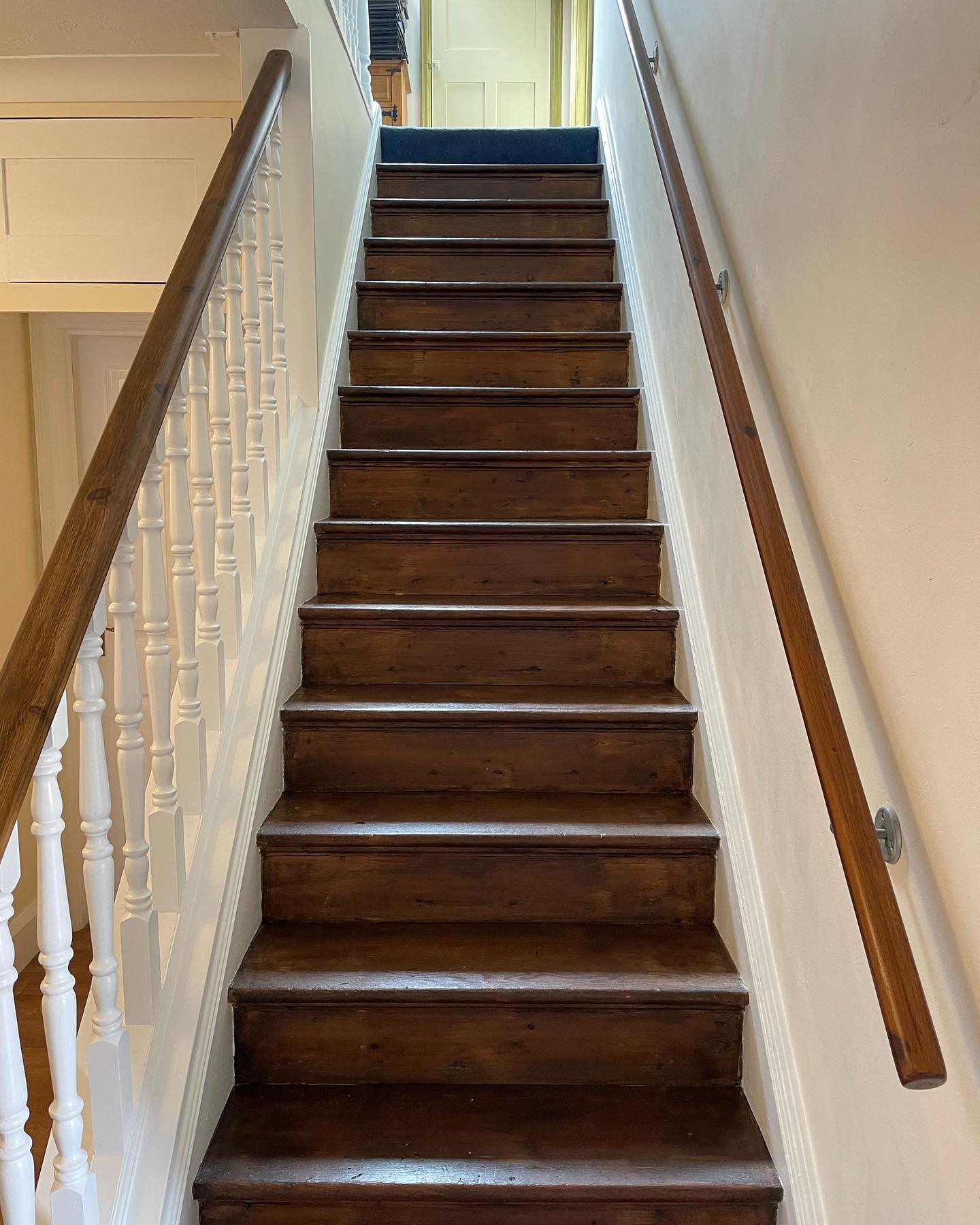
Painted stair treads chip. It’s just physics. Steps take more foot traffic than any other surface in the house, so a layer of white paint on wood survives maybe a year before you’re staring at scuffed edges and chipped risers. Staining the wood dark means the finish wears into the color rather than off the top of it. Four years from now, these treads will still look right.
From the side, the whole thing clicks
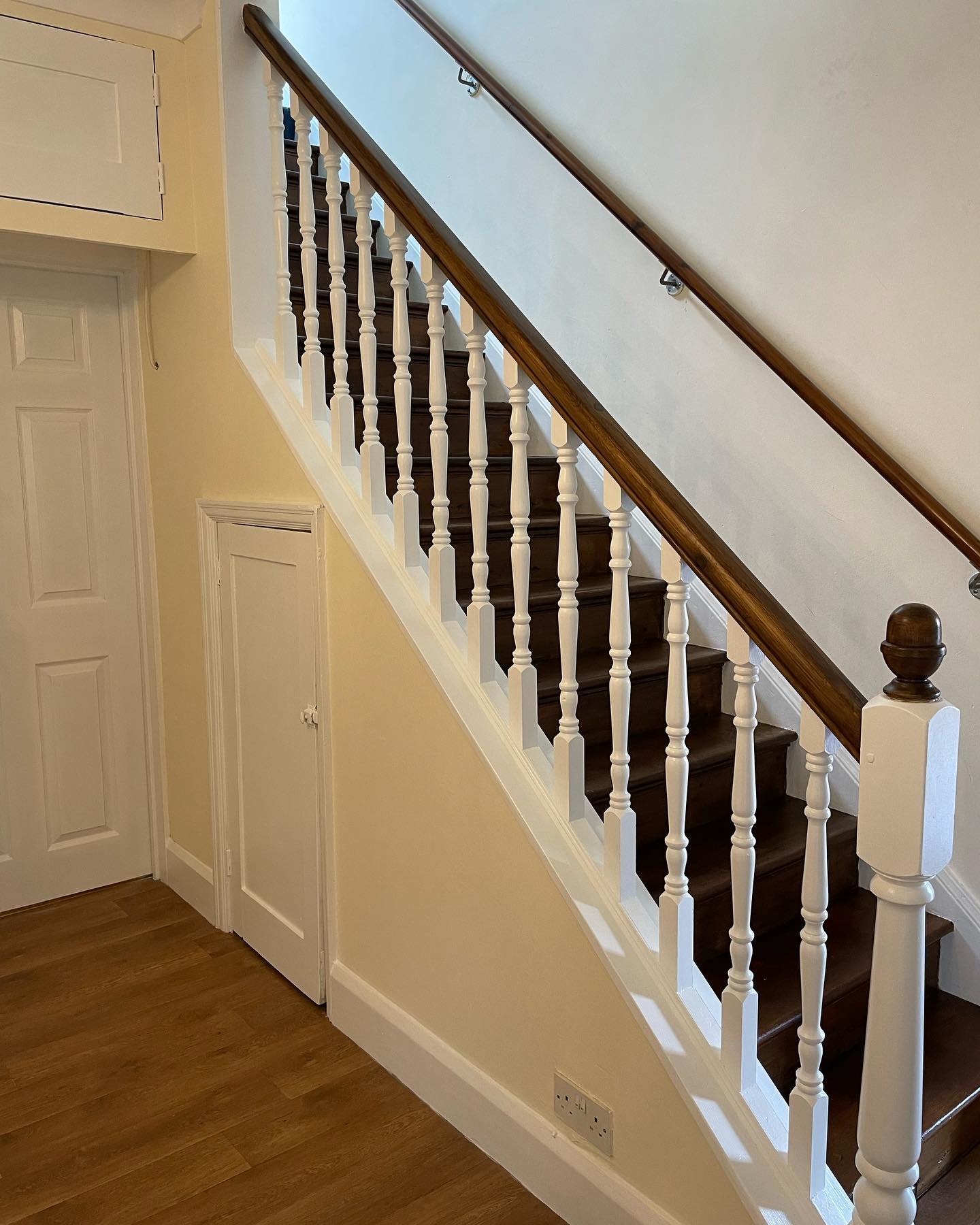
White spindles turn into something like lace. The dark handrail and the walnut treads bracket them top and bottom. If the rail had gone white too, the whole stair would blur into one bright surface, the kind you spot in a rushed rental flip from across the street. The dark gives the eye somewhere to settle.
Same three decisions, one floor up
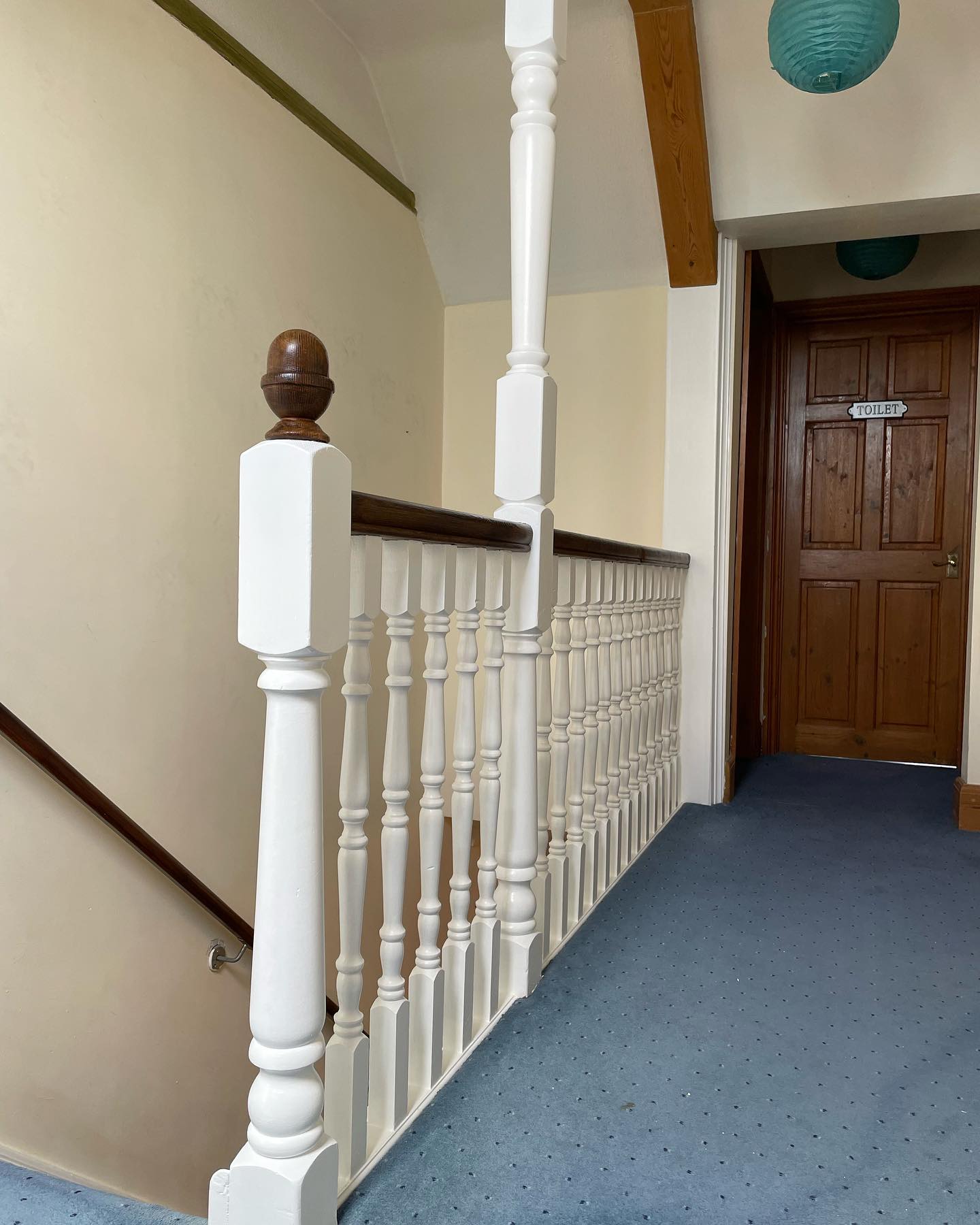
Same pattern on the landing. White spindles. Dark rail. Dark acorn cap on the newel. There’s a quiet reason the handrail stayed dark up here too: people touch handrails constantly. A white handrail shows every fingerprint, every smudge from a ring, every mark from a bag swung past it. Nobody keeps up with wiping that off. Dark finishes forgive the way people actually live.
A frame of dark wood around a bright room
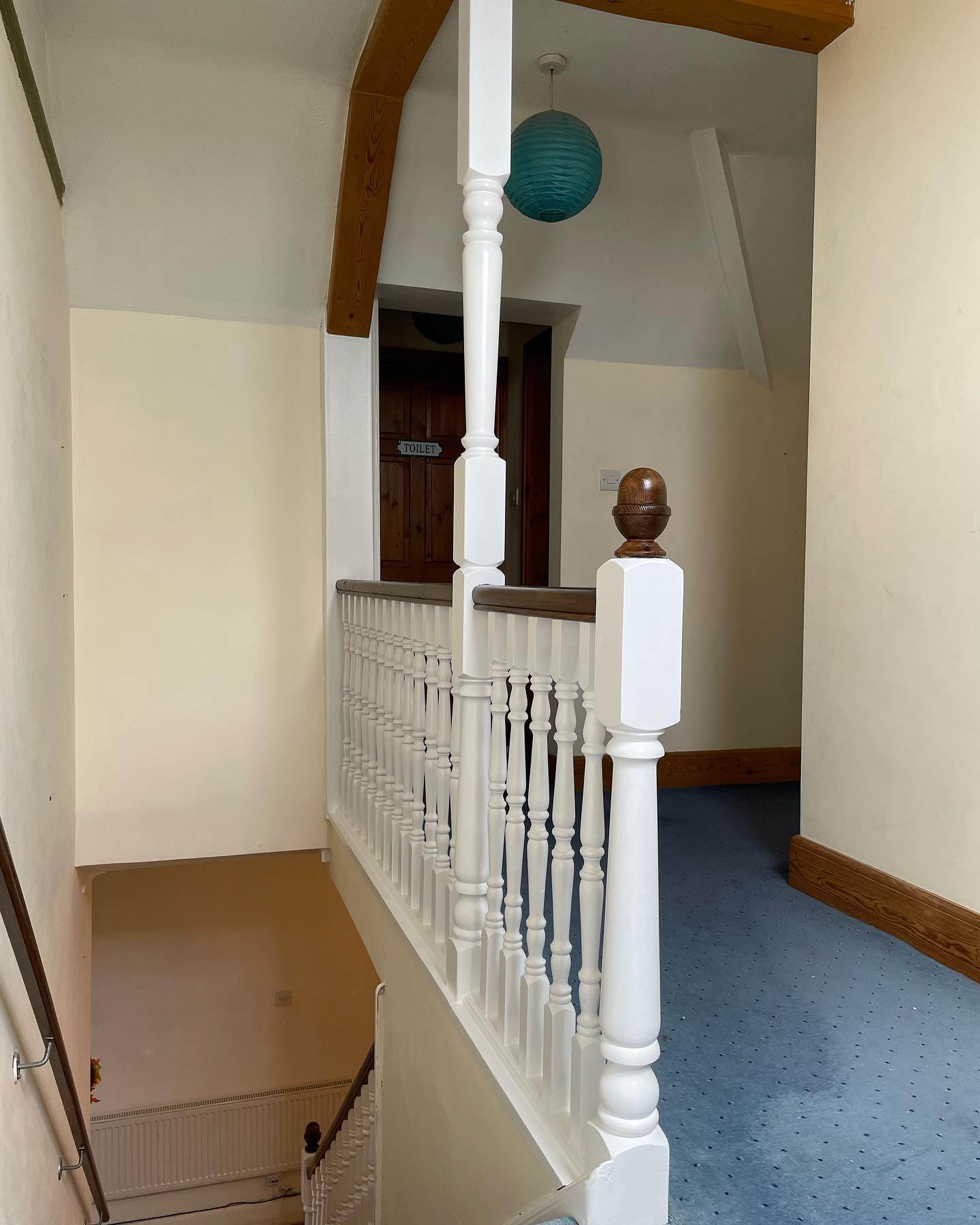
Pull back and you can see how the dark posts and that pine ceiling beam frame the whole landing. Even the blue carpet reads intentional now, instead of looking like something inherited from the last owner. Nothing was added to the room. It just got honest about what it already was.
The part nobody photographs
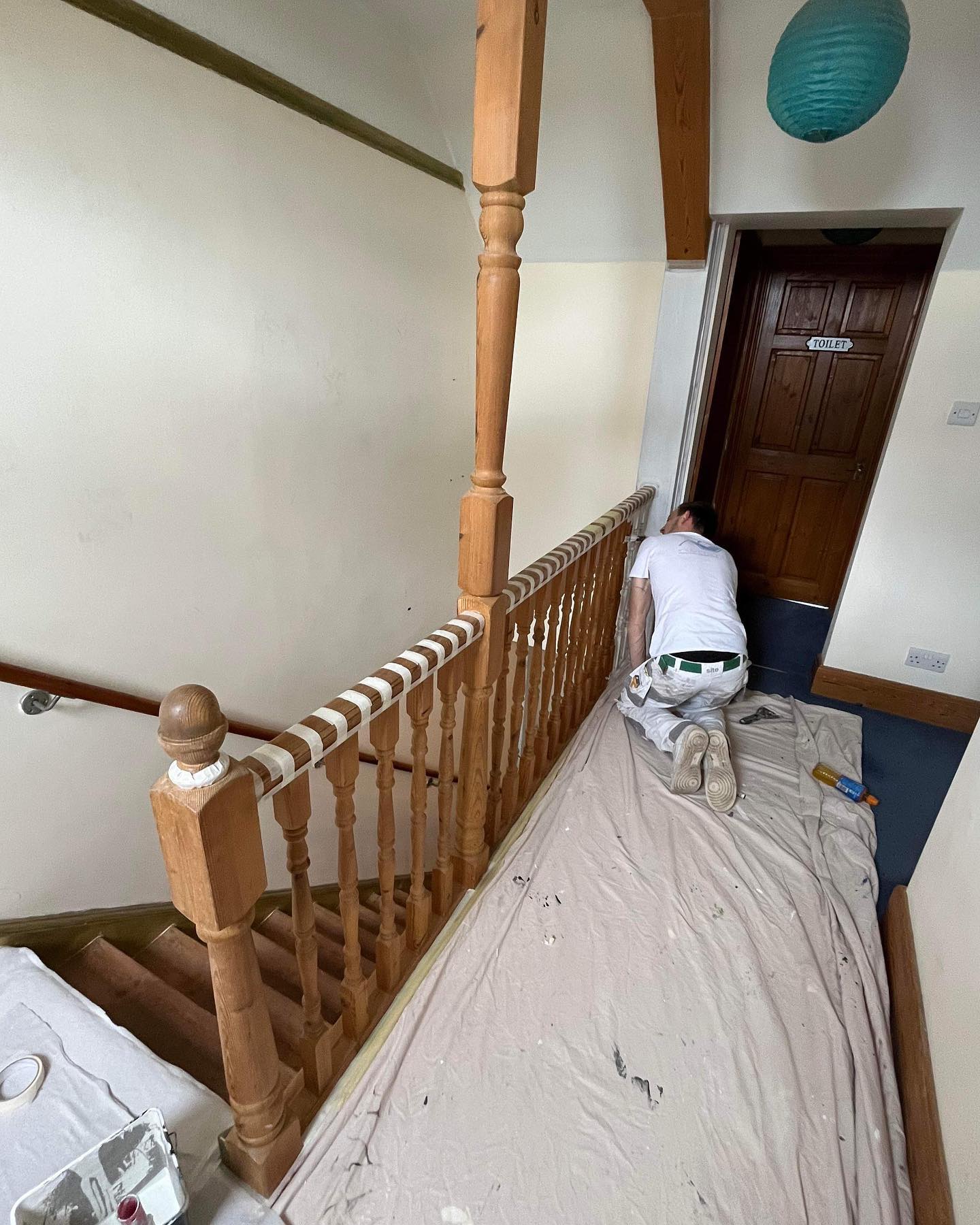
Mid-job. The painter is on his knees cutting in along the skirting while every spindle sits wrapped in blue tape above him. This is the step that doesn’t make it onto Instagram, and it’s the one that decides whether the paint stays on the wood or peels off in sheets within a year.
The real reason it took five coats
Now for the part most how-to videos quietly skip past: the spindles took five full coats of paint. Not because white is thin. Because pine is a nightmare to paint over. Raw pine bleeds tannins and resins straight through regular water-based primer, which is exactly why so many DIY paint jobs on pine yellow within a few months of going on. The fix is a shellac-based primer like Zinsser BIN. Two coats of that first, then three top coats of white. Skip the primer step and no amount of expensive top coat will save the finish from going yellow.
Downstairs, after the dust settled
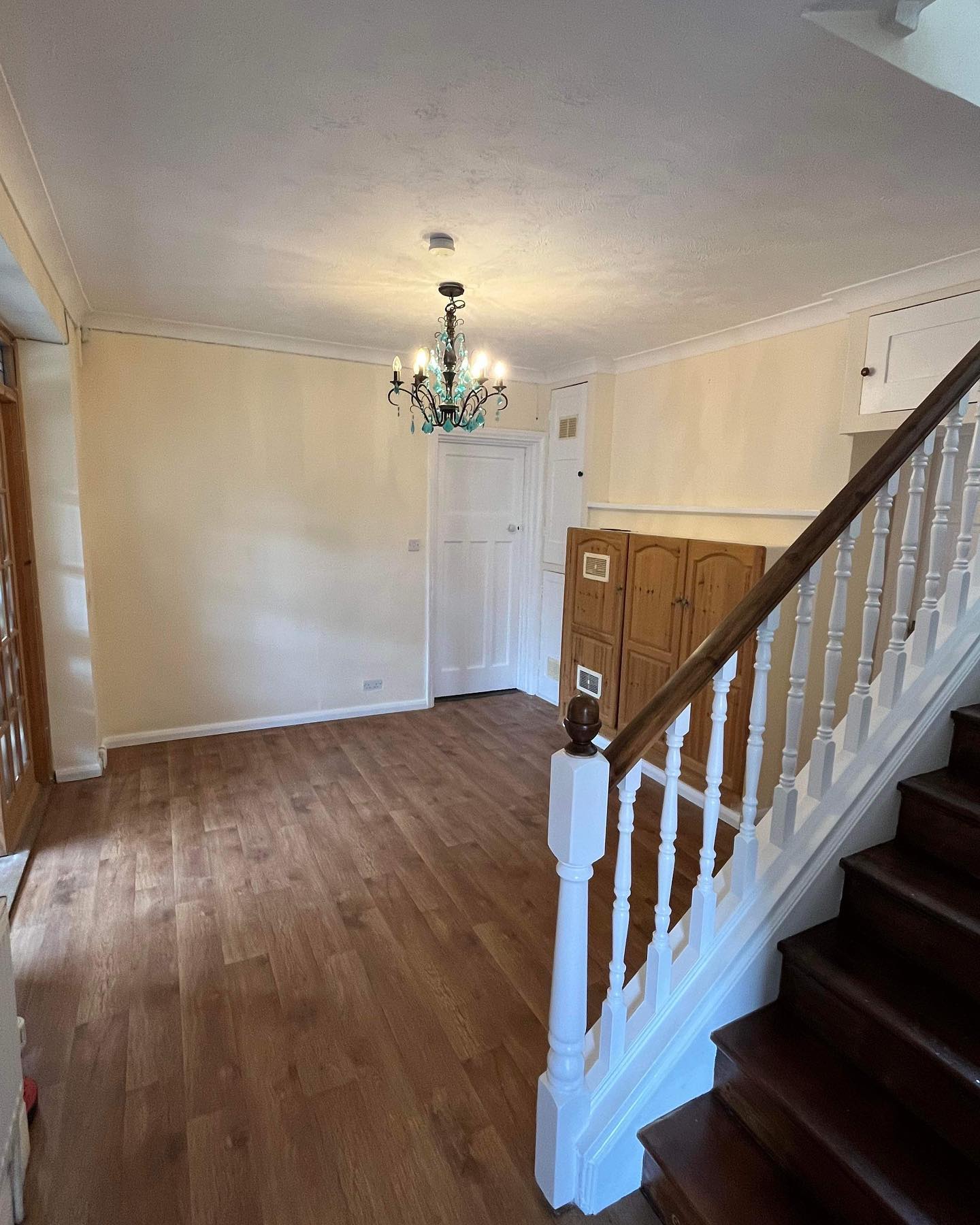
Standing in the hallway now, the whole space reads cleaner and brighter. The teal chandelier finally gets some room to breathe. The pine cabinet tucked under the stairs still fits, because the dark tones in the handrail and the treads carry it, instead of making it look like the one piece that never got the memo.
Halfway through, still a mess
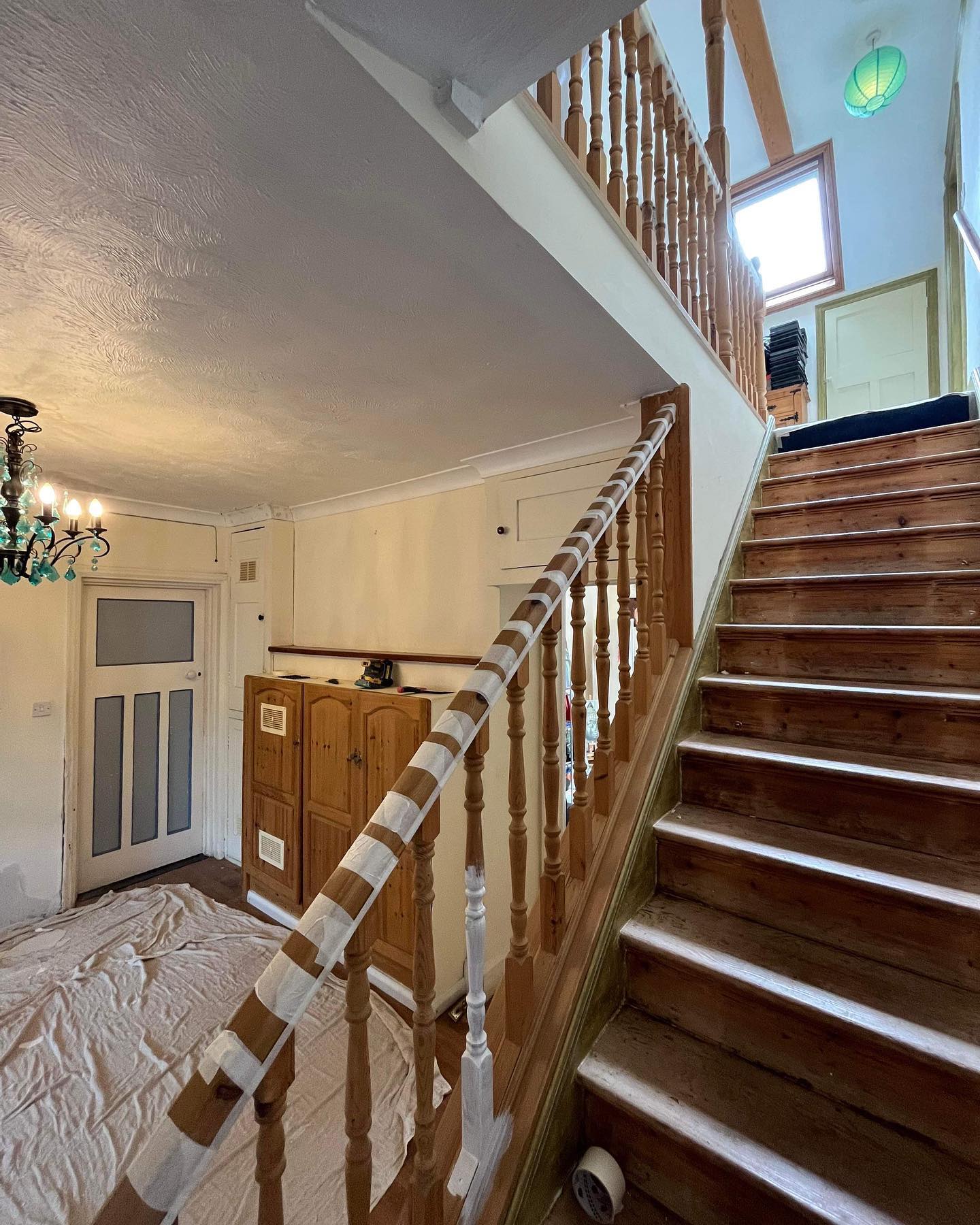
Dust sheets on the floor. Every spindle wrapped. Chandelier still doing its thing above the chaos. You can see the finished room starting to form right through the tape, which is probably the moment she first knew the whole plan was going to land.
Where the whole thing really started
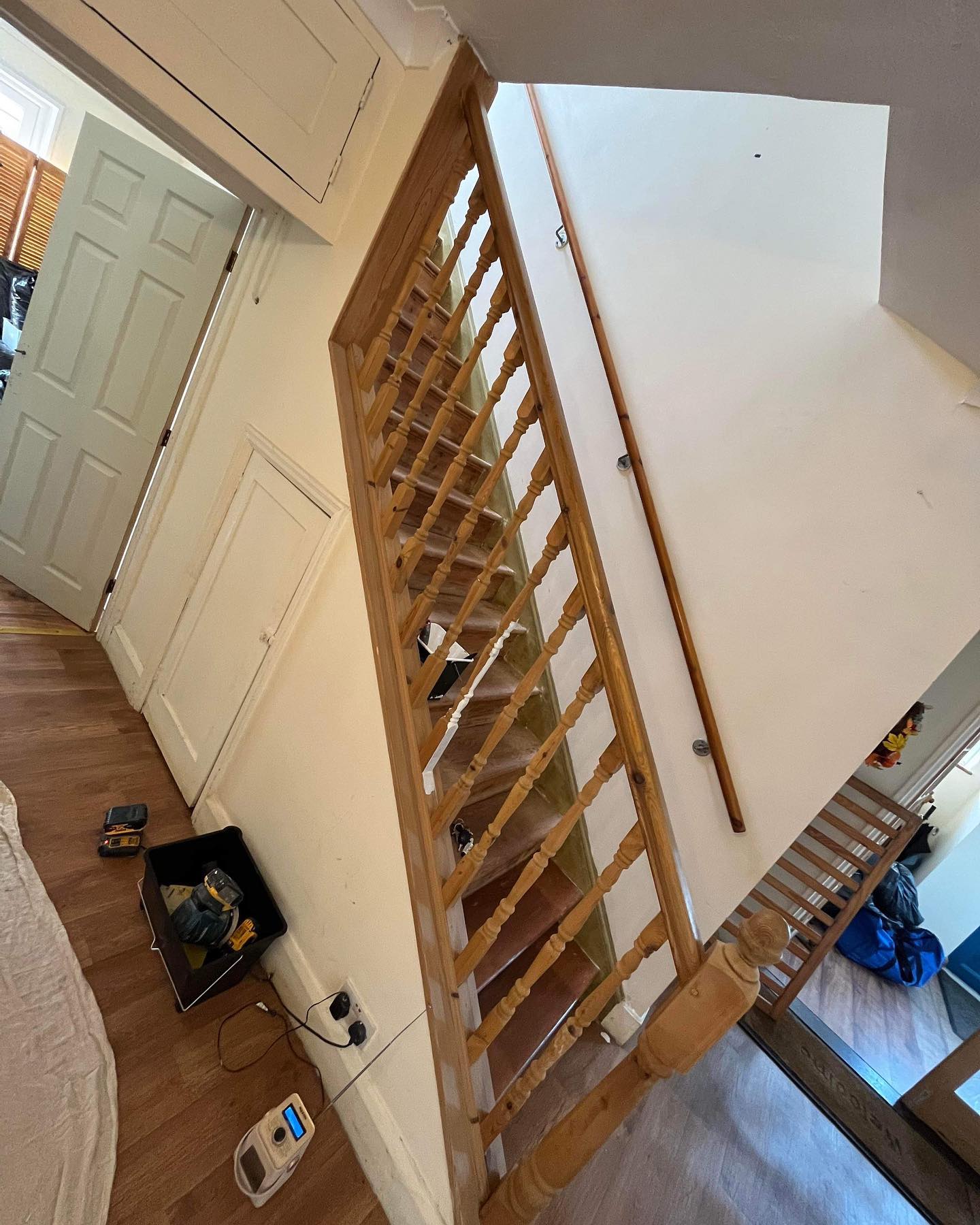
Before any tape went on, those spindles had to be sanded back to raw wood like this. It’s the step most DIYers quietly skip because it’s dusty, slow, and nothing to post about. Painting straight over sealed, varnished pine without sanding it back first is the number one reason paint peels off in sheets a few months later. No shortcut here. Just hours of sandpaper and patience.
What this actually cost
Not a new staircase. Not a builder. A lot of hours with sandpaper and masking tape, the right primer sitting under five coats of white, and three decisions most people wouldn’t have thought to make: dark handrail, dark treads, white spindles. The finished staircase looks like a real feature of the house now. It was there the whole time, just hiding under forty years of orange varnish.
Would you try this on your own orange pine staircase at home, or is this the kind of job you’d pay a decorator to handle the prep on?