Spring arrives, and on the young apple tree you planted two years ago, a long strip of bark on the trunk has turned dark, sunken and cracked. By June it peels away like old wallpaper. You watered it, fed it, protected it from deer. You can’t figure out what went wrong, and the neighbor’s orchard, with its odd white-painted trunks, looks perfectly fine.
This is not your fault, and it isn’t a disease you missed. The damage happened on a sunny day in the middle of winter, and that white paint is the simplest way to stop it.
What The White Coat Actually Does
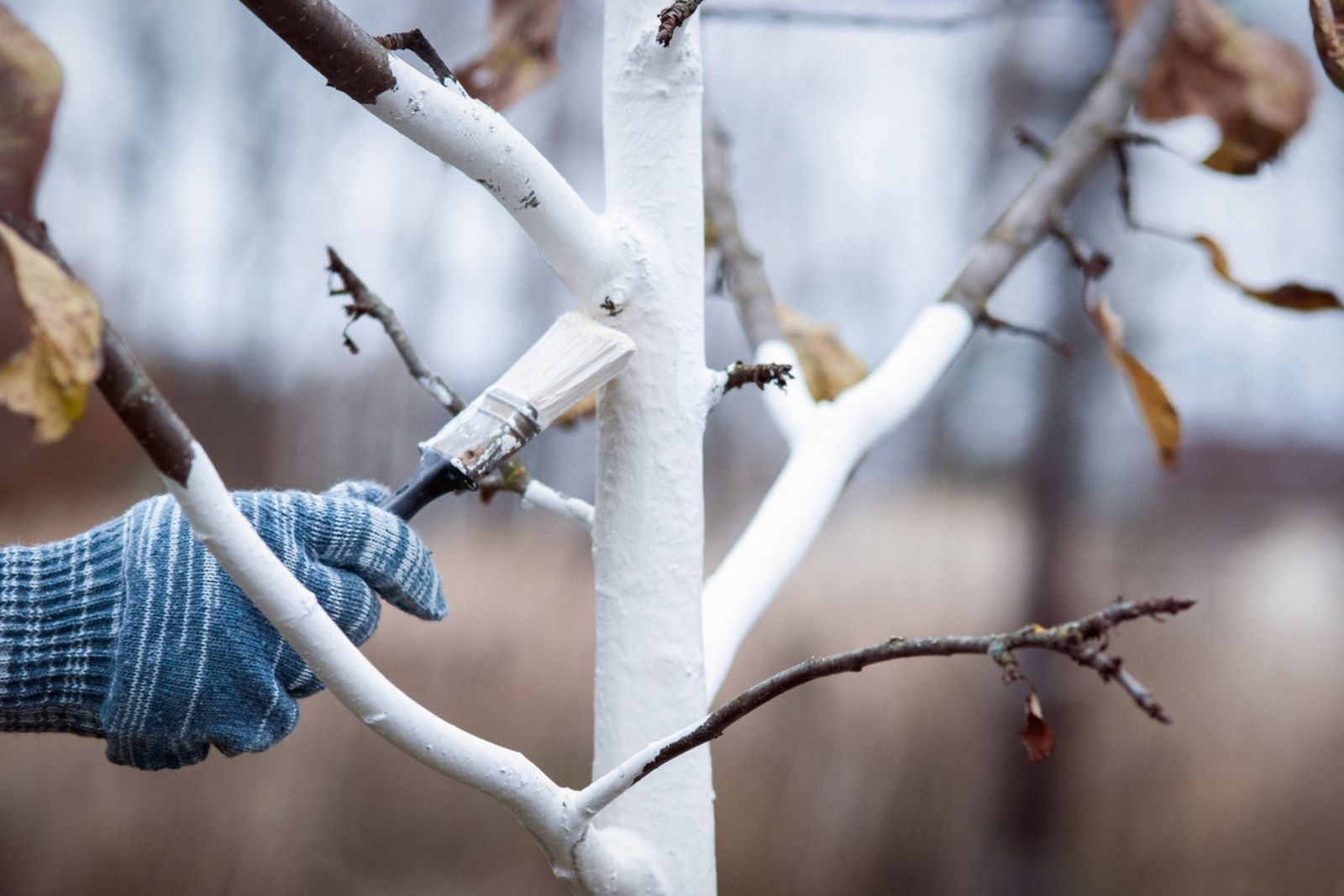
The injury is called sunscald, or southwest injury. On a bright winter afternoon, the sun warms the bark on the south and southwest side of the trunk, and the cells underneath wake up. When the sun sets and the temperature plunges, that warmed tissue freezes and dies. Research on peach trees in Georgia found the southwest side of a trunk can be 40 degrees warmer than the shaded bark. Young trees and thin-barked fruit trees are at greatest risk.
White paint reflects that light and heat, so the bark swings far less between day and night. The extension guides that recommend it present it as a sunscald fix, not as a borer treatment. What they do point out is that sunscald wounds heal slowly and give insects and diseases a way in, so preventing them protects the tree indirectly.
The Right Moment And The Method
Timing is simple: University of Kentucky specialists recommend painting in late fall, before the hard, sunny days of winter. The University of Idaho also allows fall or spring, and adds that fruit trees can stay painted throughout their lives.
- Buy the right paint. The rule from the University of Idaho is blunt: “Use only interior white latex paint.” Enamel and exterior paints may contain chemicals that injure plants.
- Dilute it 1 to 1. Kansas State University Extension recommends one part white interior latex paint to one part water.
- Paint from the ground up to the first branches, with a wide brush, covering the trunk and the major limbs that face south or west. Leave small branches and twigs alone.
- Let it dry on a mild, dry afternoon, and touch up any bare spots next fall.
Plan B if painting doesn’t appeal: wrap the trunk of young trees from the ground to the first branches with a light-colored tree wrap, starting in November and removing it in March. Leaving a wrap on all year can hide pests and damage.
What It Won’t Do, And One Bonus
Whitewash isn’t a fix for a tree already scarred. A damaged trunk mostly needs time and steady watering in dry spells, since part of its water transport system is gone. And if large patches of bark are dead or cankers are spreading, have a certified arborist look at it.
The bonus: painted trunks may delay budbreak by a few days, which in some plantings can reduce losses to a late spring frost. While you’re out there, the branches you prune off later in winter can become free mulch instead of a trip to the dump.
Interior latex, half water, south side first, before winter sets in. That’s the trick.