You load the dishwasher after dinner, press Eco and watch the display jump to nearly three hours. That can’t be efficient, you think. So you cancel it, pick the quick wash and feel a little better about the electric bill.
This is not your fault. A longer cycle looks like a machine working harder. But in a dishwasher or a washing machine, the expensive part isn’t time. It’s heat. Bosch explains that because its Eco cycle runs longer, “the water does not have to be heated up as much as with programs with a shorter running time.” The dishes also soak longer, so the machine needs less water to get them clean.
Why a longer cycle can cost less
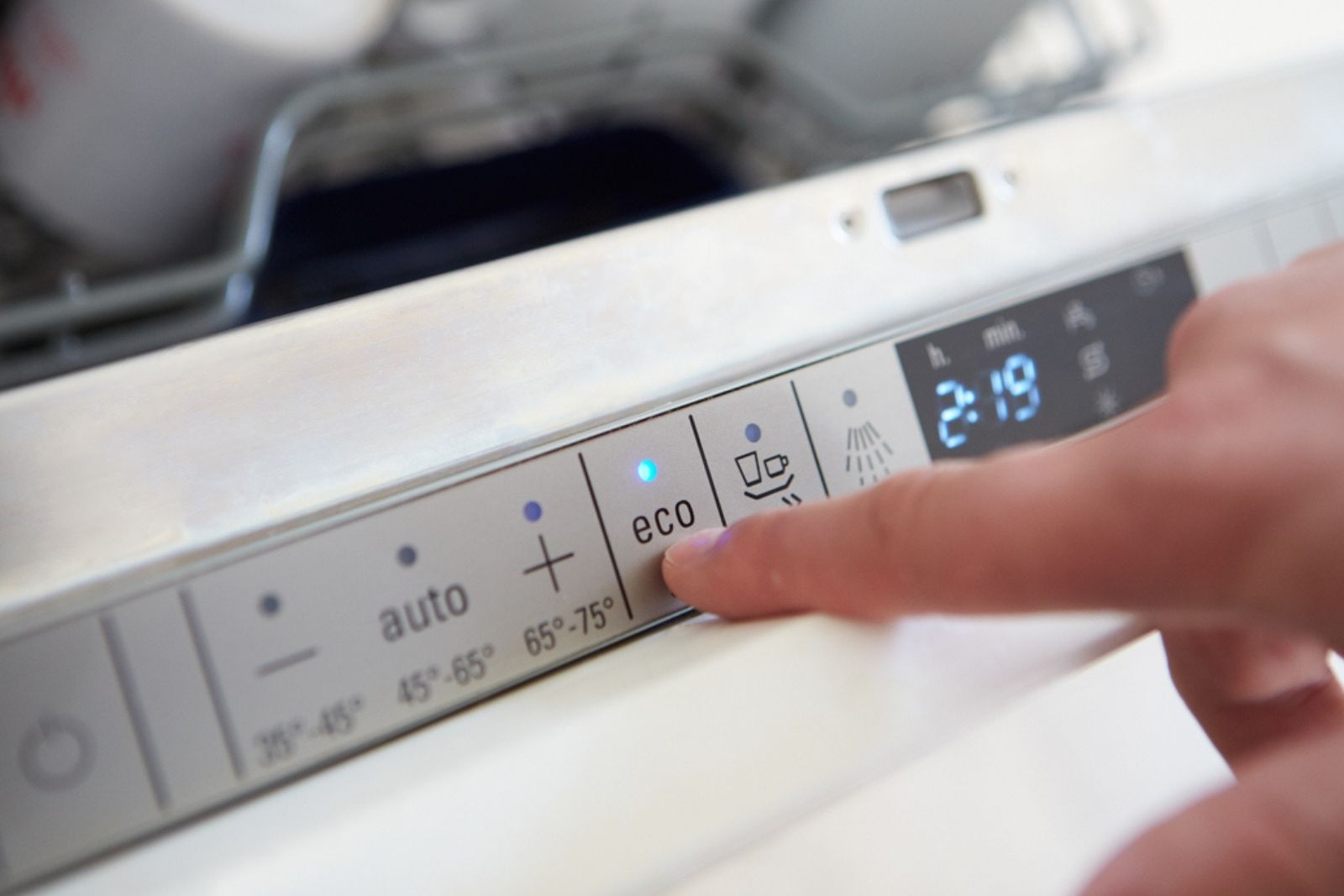
Heating water takes a lot of energy. Whirlpool notes that a dishwasher pauses two or three times during a cycle to heat the water, and that Eco or Light cycles may use “longer, lower-energy wash segments”, so the total time goes up while energy use drops. Bosch says one of its Eco programs can use up to 50% less electricity than its Auto program, depending on the model.
You can see the trade-off in a real manual. On one Bosch dishwasher sold in the US, the Normal cycle runs 130 to 135 minutes at a 113 to 131°F wash, while the Heavy cycle runs 110 to 135 minutes but heats the wash to 150 to 160°F. Whirlpool says Normal cycles usually run roughly 2 to 3 hours.
The laundry room works on the same principle. ENERGY STAR says water heating consumes about 90% of the energy it takes to run a clothes washer, and that switching from hot to warm can cut energy use in half. Cold uses even less.
How to get the most out of it
- Scrape, don’t rinse. The Department of Energy advises scraping dishes and loading them instead of rinsing them first.
- Run full loads. The DOE says to run the dishwasher only when it’s full, not overloaded. ENERGY STAR notes that a clothes washer uses about the same energy regardless of load size.
- Use Eco or Normal for everyday loads. Save the heavy cycle for cookware and baked-on food.
- Skip the heated dry. The DOE recommends letting dishes air dry. Cracking the door after the cycle helps, which is why opening the dishwasher door right after the cycle has become a built-in feature on some models.
- Lower the laundry temperature. Warm instead of hot, or cold, for everyday clothes. ENERGY STAR says to use the super-hot sanitary cycle only when necessary.
If you can’t wait three hours, start the cycle before bed or before you leave the house, so the long run time doesn’t matter.
When to skip the ECO cycle
Eco isn’t for every load. Whirlpool recommends the Heavy cycle for baked-on food or heavily soiled cookware, and a quick wash for lightly soiled loads when you need a fast turnaround. Bosch also advises choosing a program based on the load rather than defaulting to Eco, and running a hot-water or machine-care program regularly to keep residue and bacteria from building up.
For everything else, start it, walk away and let the machine take its time. That’s the trick.