
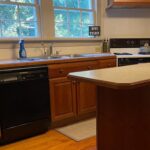
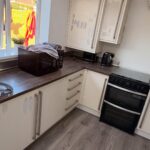
The before shot of this kitchen is the kind of image most people would look at and say “rip it out.” Cream cabinets, beige tile, dark wood doorway, a TV wired across the backsplash. Nothing structurally wrong. Just tired. The kind of room that stopped feeling like anything around 2003.
Then paint went on. Not shaker fronts, not a new layout, not a skip bag outside the door for three weeks. Just paint, a resealed worktop, and new handles. Every cabinet stayed on its hinges. The tile stayed on the wall. The slate stayed underfoot. And the kitchen stopped looking dated and started looking like it belonged in a Cotswolds manor house.
Look at what the cream was hiding the whole time.
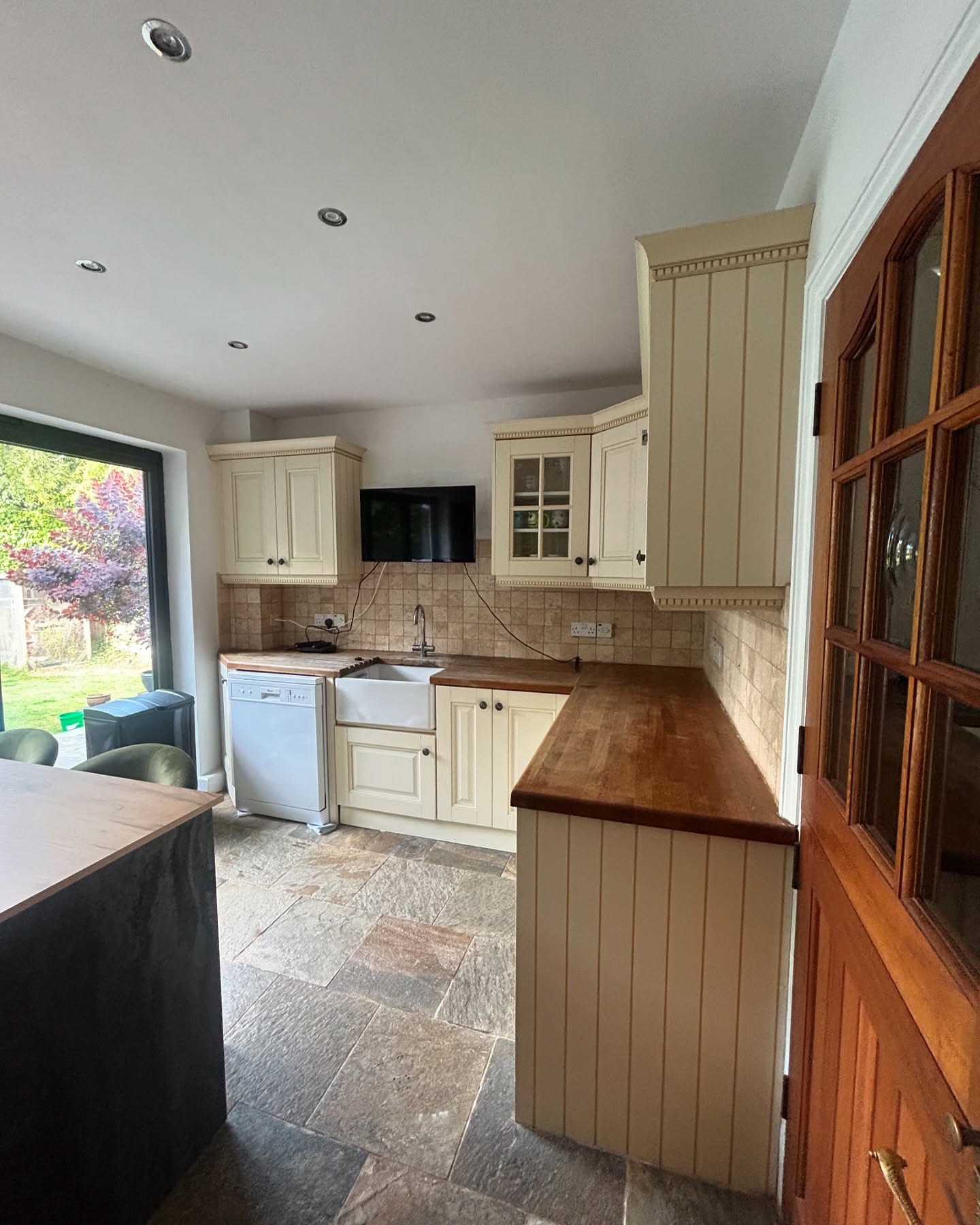
The same room reads like a different kitchen
Here’s the opposite end of the same kitchen after the paint went on. Same window frame, same worktops, same floor, same joinery. The only things that moved were the cabinet doors, and only because they had to come off to be painted properly.
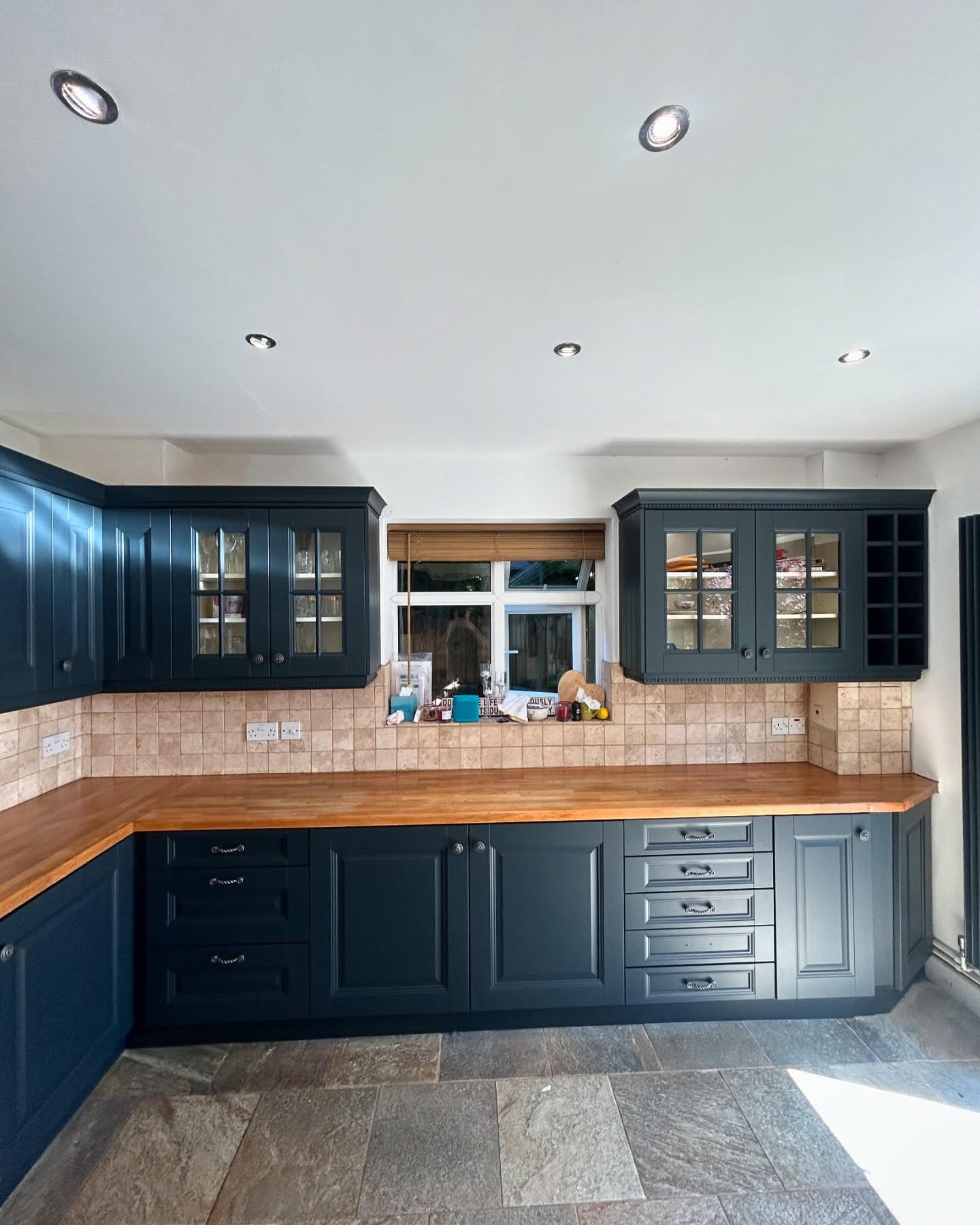
The oak worktops look richer, but that isn’t new wood. It’s a fresh satin finish over the slab that was already there. The slate underfoot looks darker because the cabinets finally match its weight. Even the beige travertine tile, which was a problem against cream, reads as warm texture against the deep blue. The tile didn’t change. Its neighbors did.
What the cream was hiding
If you own a cream kitchen that feels dated, this is the part worth paying attention to.
Look along the top of the dark cabinets. Those tiny repeating teeth running under the crown are called dental molding. The doors have raised panels with real bevels cut into each frame. The sides of the end cabinets have long parallel grooves, which joiners call fluting. The glass-front uppers have real wood mullions between the panes, not stick-on grilles. This is the exact visual vocabulary of bespoke English kitchens from the DeVOL and Plain English school, where a build with this much millwork starts around £40,000.
Cream paint buried every bit of it. Pale colors don’t throw shadows, so all that carved detail collapsed into one soft surface and the whole kitchen read as “generic beige.” A dark, shadow-holding color does the opposite. Every tooth, bevel and groove gets a dark line next to a lit one, and that contrast is what makes cabinets look expensive. Nothing was added. The woodwork was always like this. Cream just refused to let anyone see it.
The range wall tells the whole story
If you need one clean side-by-side to show someone who doesn’t believe you about paint, this is the wall to point at.
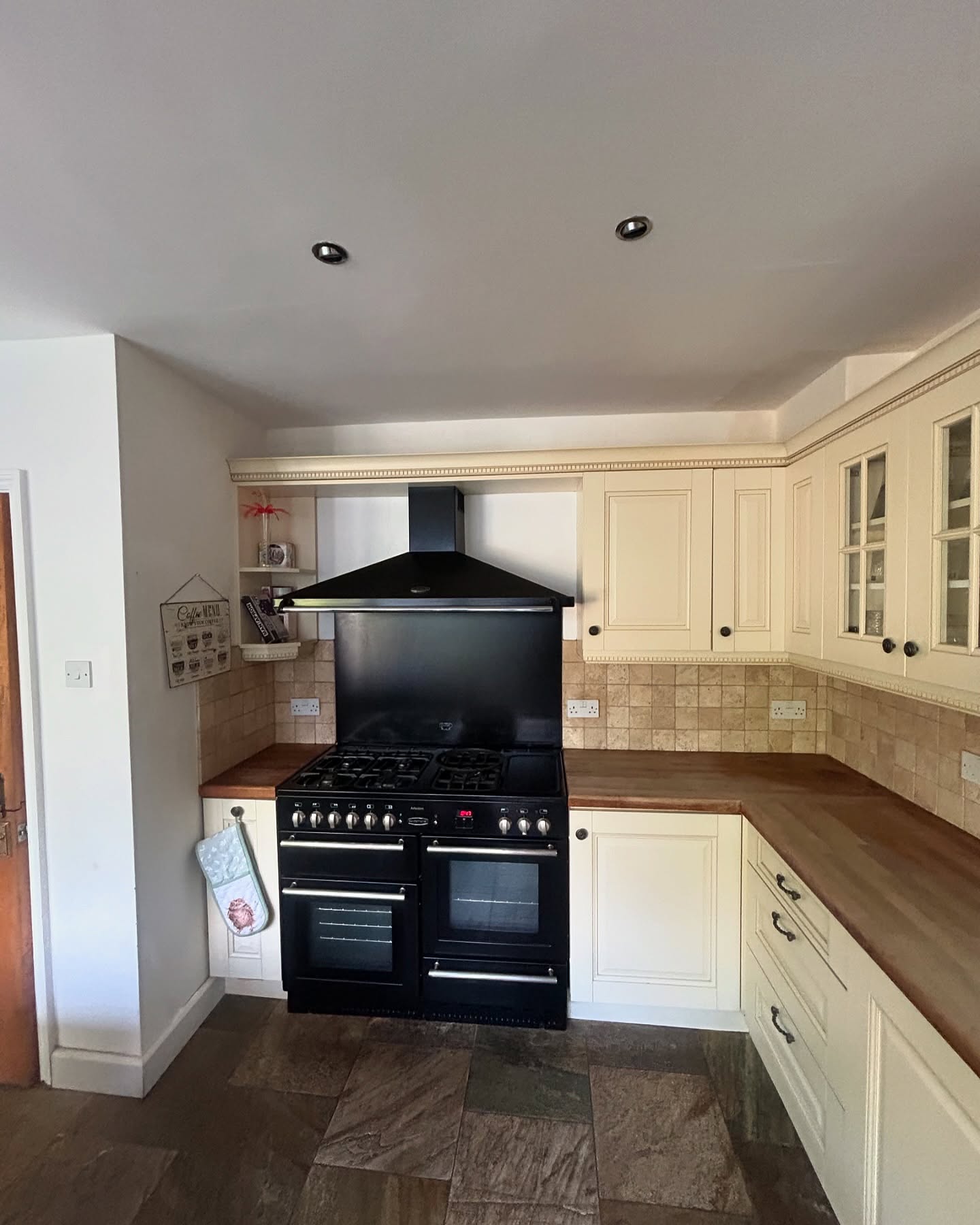
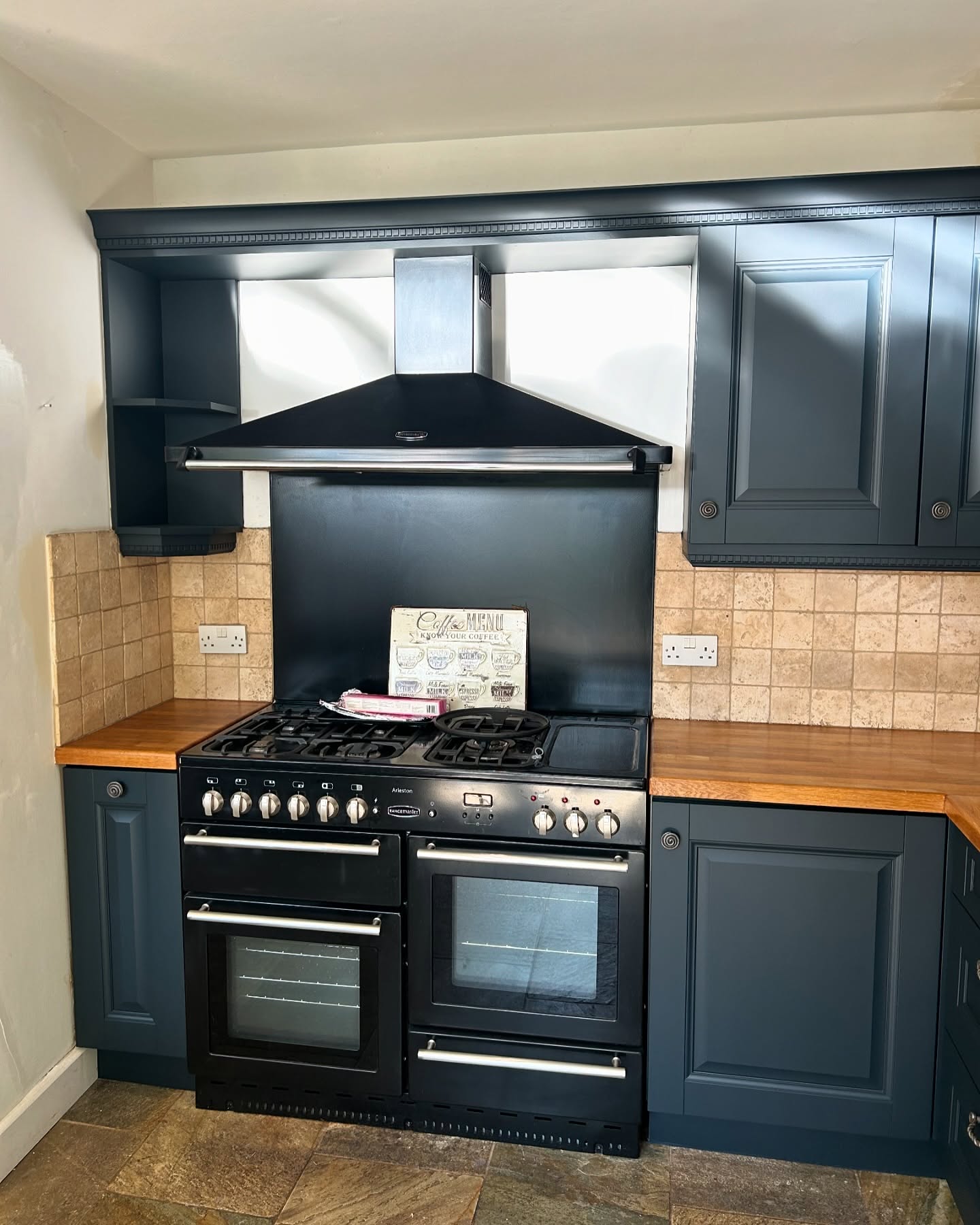
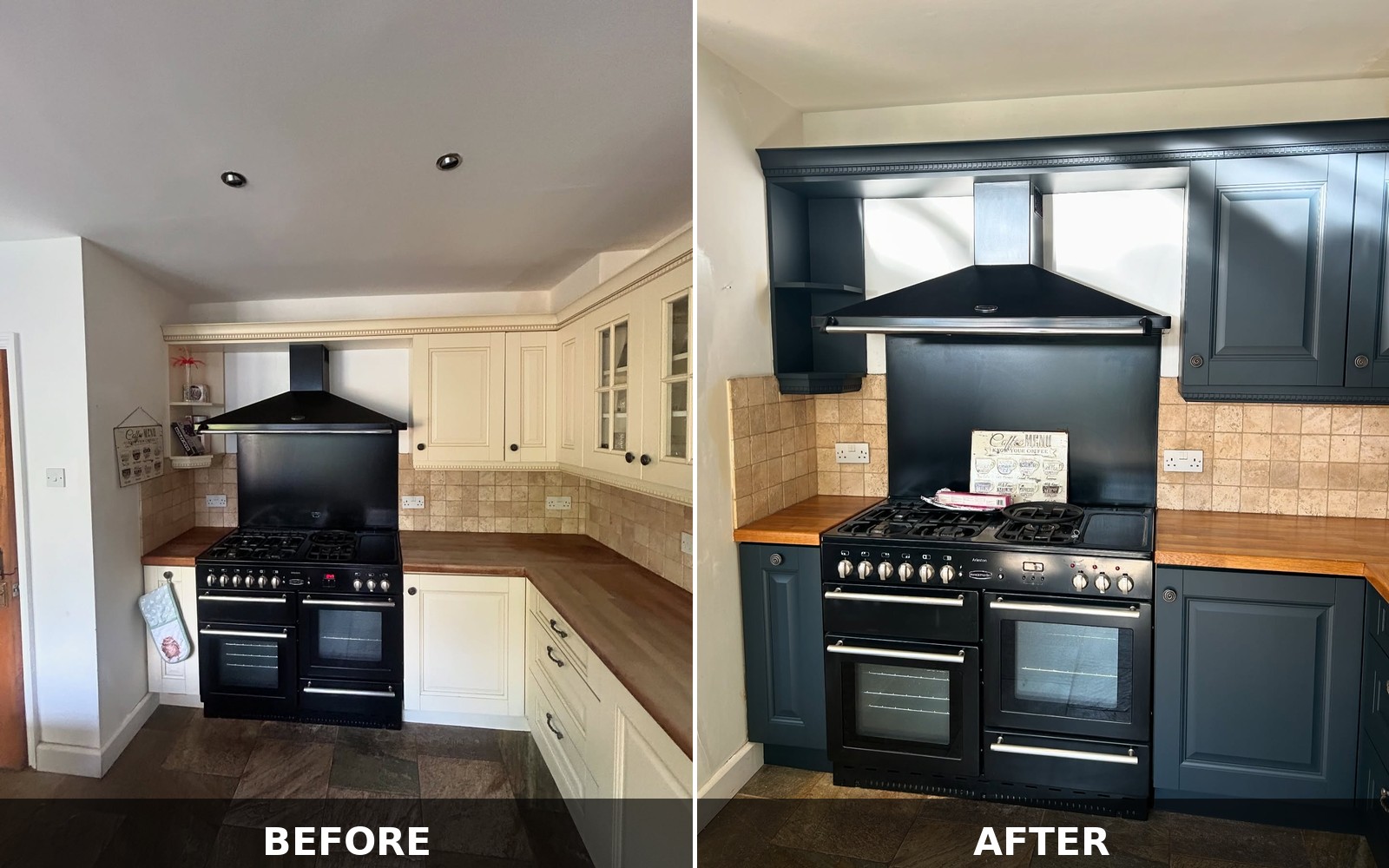
Same range. Same chimney hood. Same tile. On the cream side, the black Rangemaster looks like a heavy appliance awkwardly parked in a soft beige room. On the dark side, the range stops feeling like the problem child and starts looking like the wall was designed around it. Black appliances need something with weight to sit against. Cream has none. Deep blue does.

Count the teeth on the corner cabinets
The corner wall cabinets are where the paint pulls off its most dramatic trick.
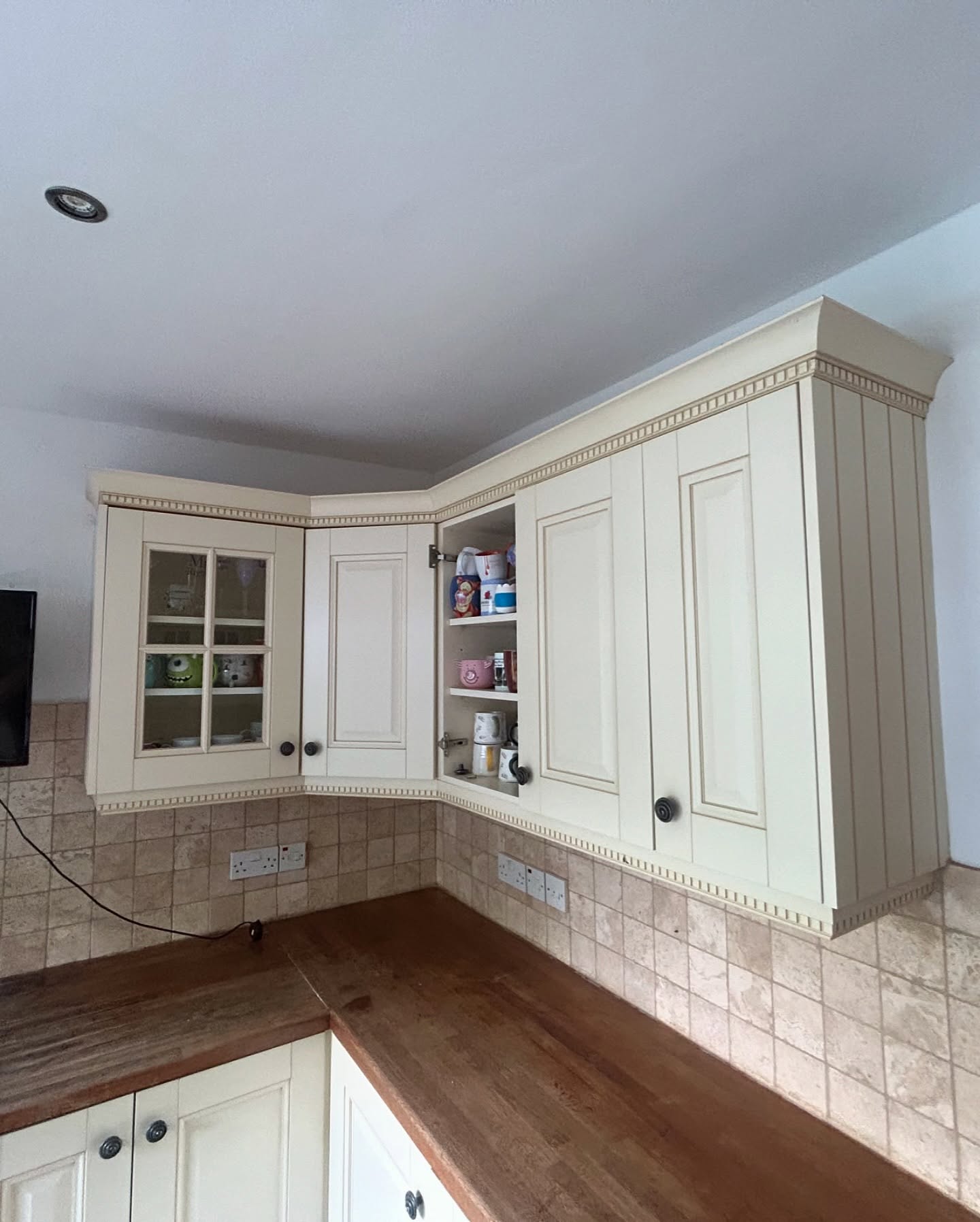
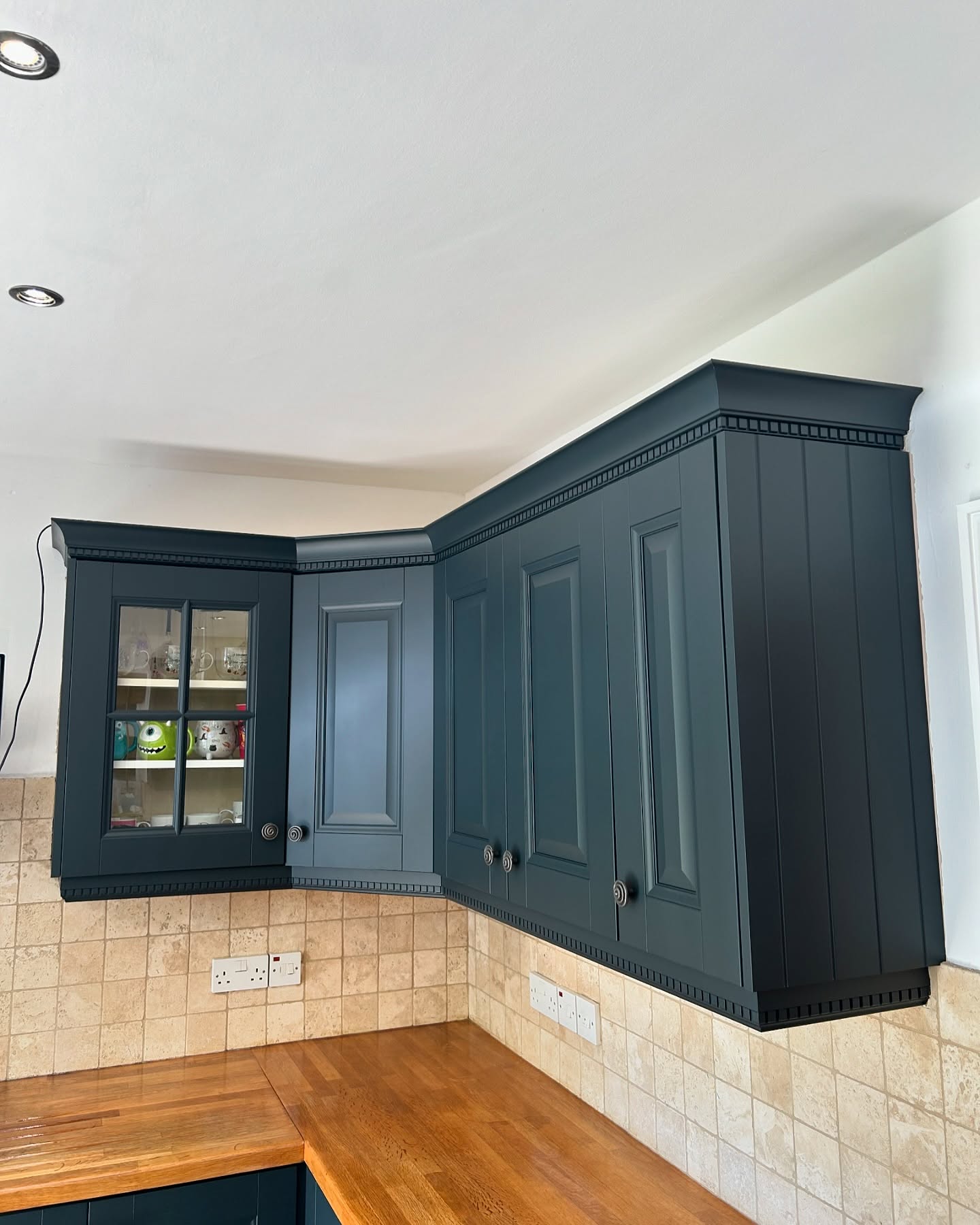
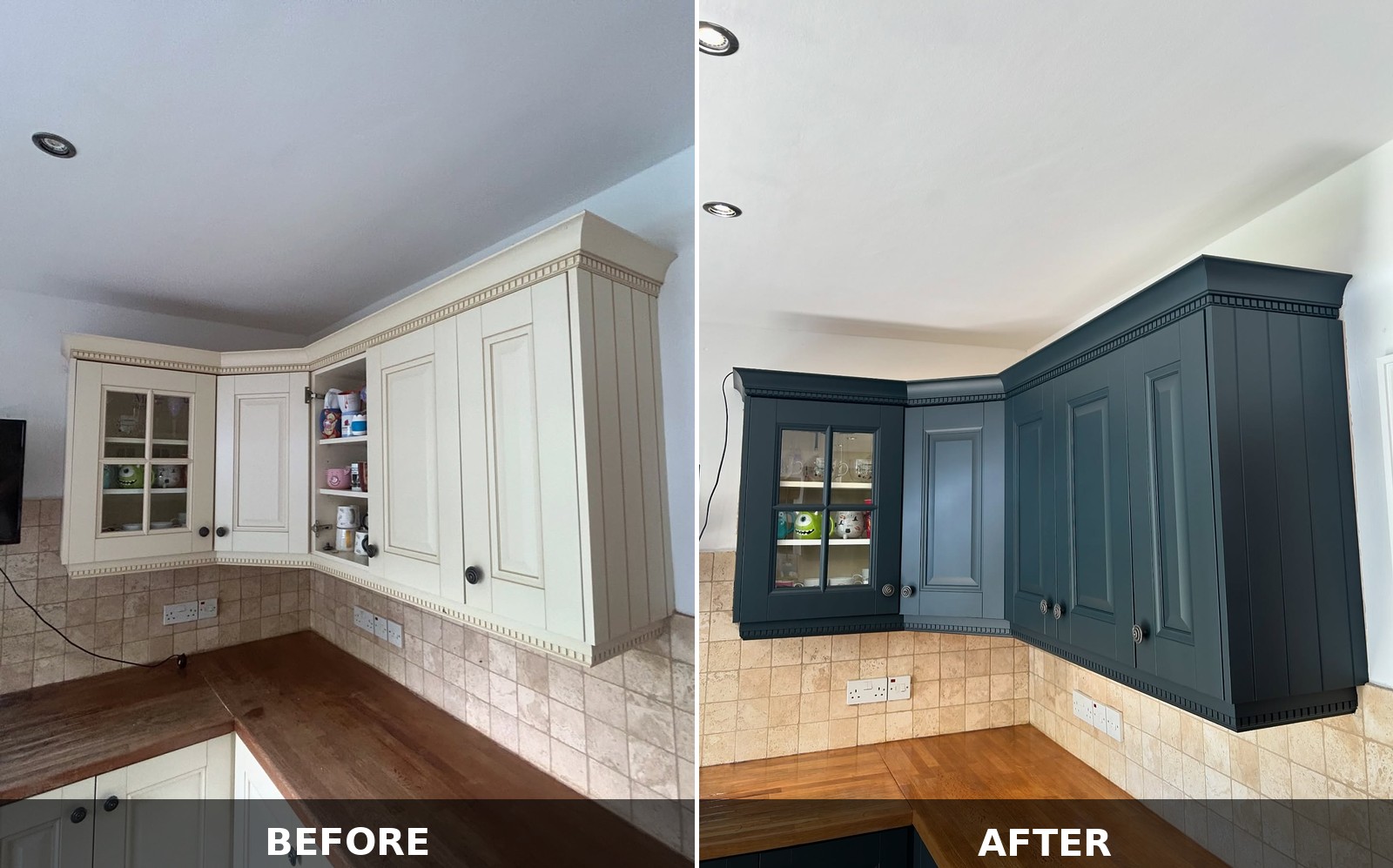
In the cream shot you can barely tell the dental molding is there. The teeth top and bottom read as faint beige stripes you’d have to lean in to notice. In the dark shot, each tooth throws its own shadow and you can count them from across the room. Same stacked crown, same fluted sides, same raised doors, finally doing the job they were built to do.
The hardware swap did more than you’d think
The handles look like a small detail next to all that paint. They aren’t.
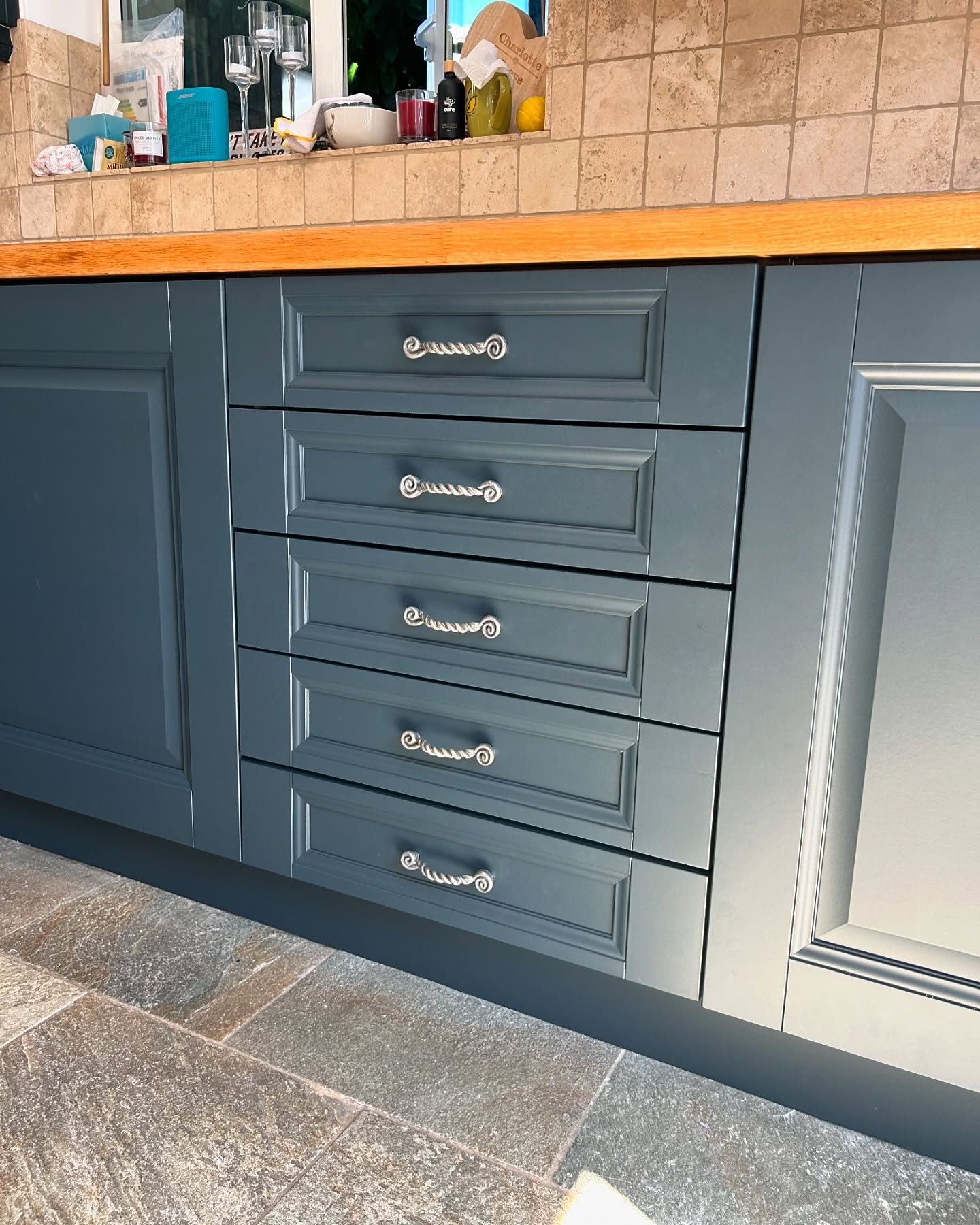
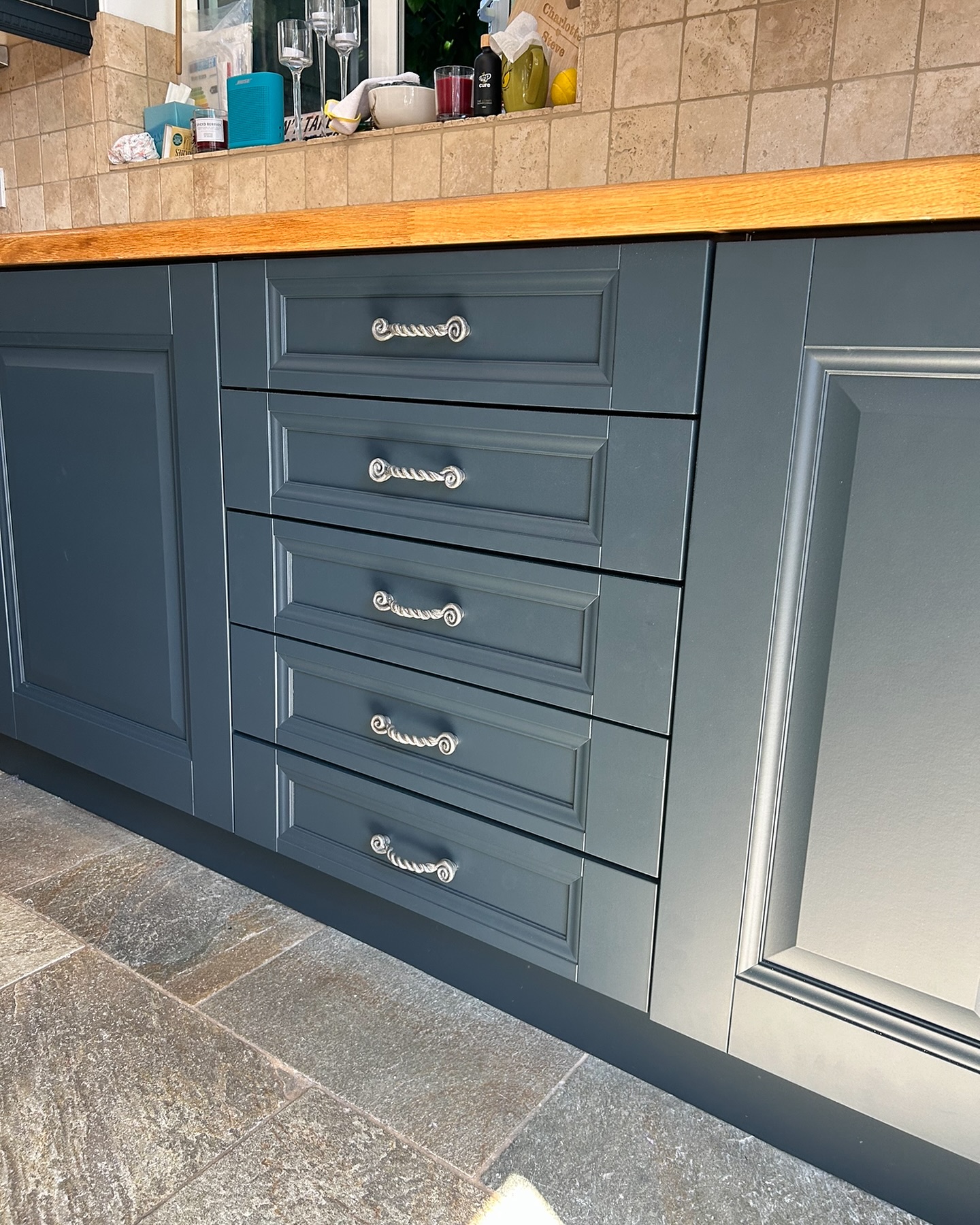
The old hardware was small black knobs, the country-cottage look you can buy at any DIY store for a couple of pounds. The new ones are brushed silver pulls with a twisted-rope shape, the kind of hardware you find on heritage ironmonger sites. Swapping a knob for a pull does two things at once. It gives your eye a line to catch instead of a dot, and shifts the kitchen’s accent from “farmhouse” to “manor house.”
Even the awkward spots finally earned their keep
Every old kitchen has those spots that never quite worked. A corner where the cabinetry had to bend around a sink. A dresser unit that ate too much wall. A random little cabinet floating above dead space. In cream they stuck out as mistakes. In a confident dark color, they stop apologizing and start looking deliberate.
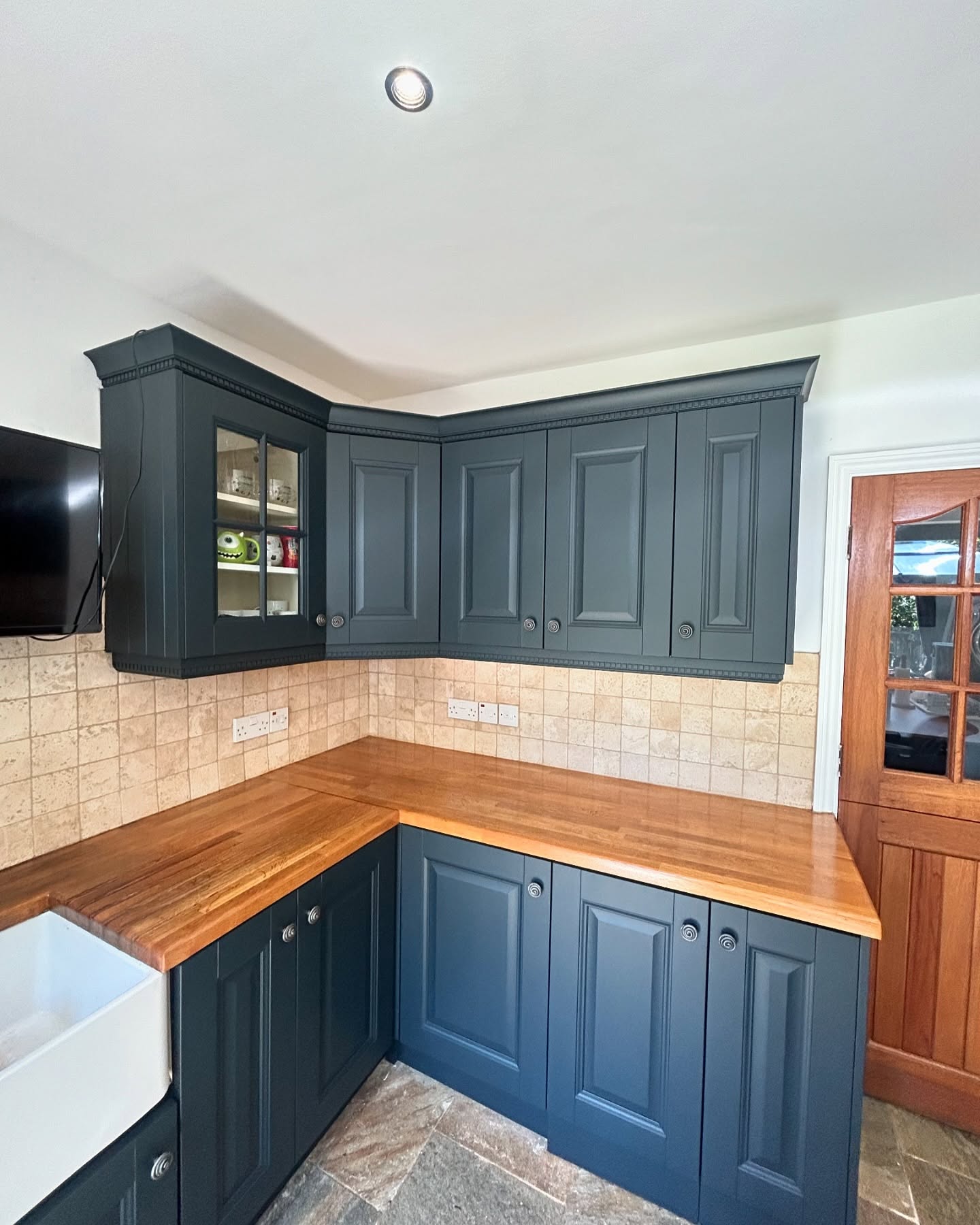
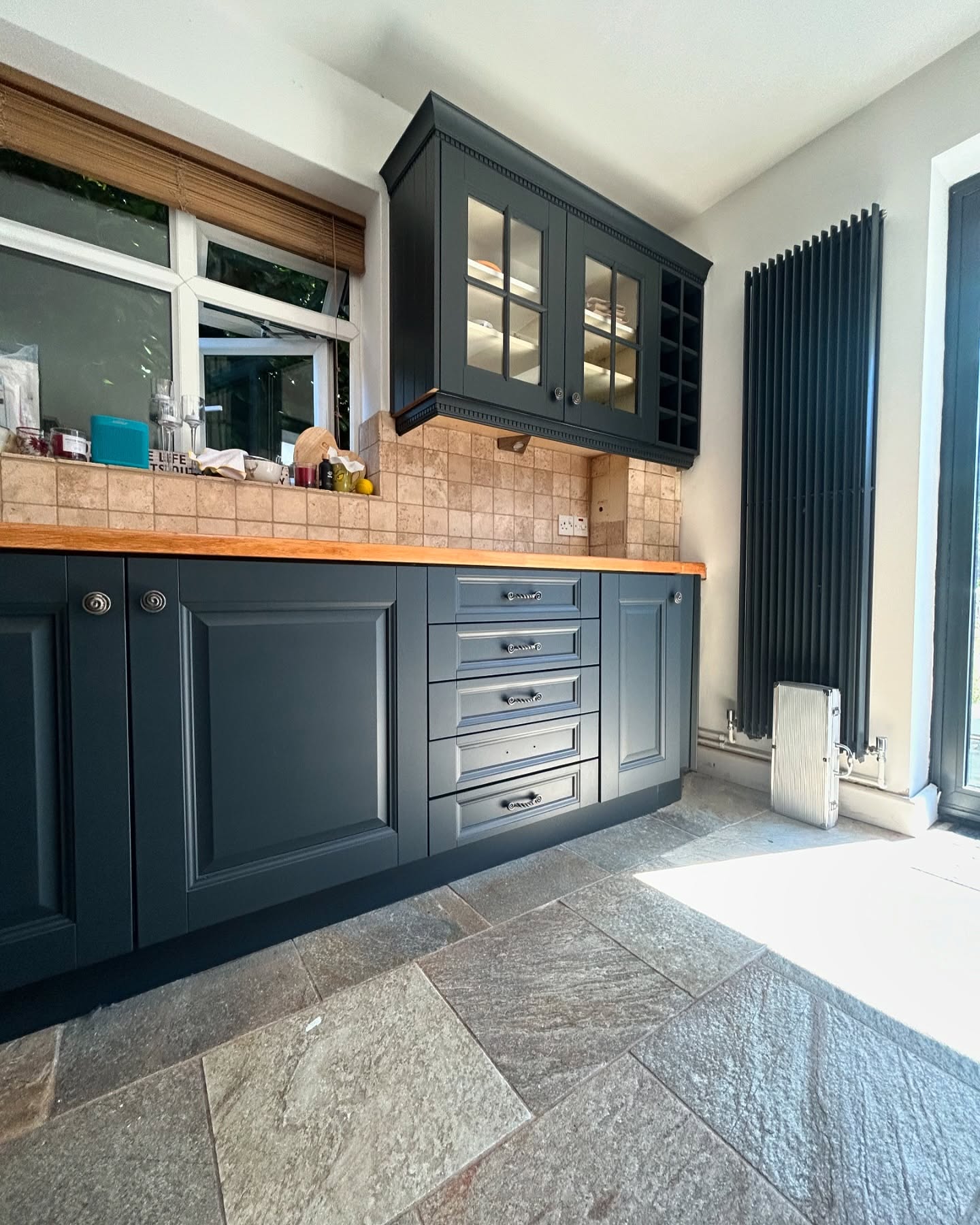
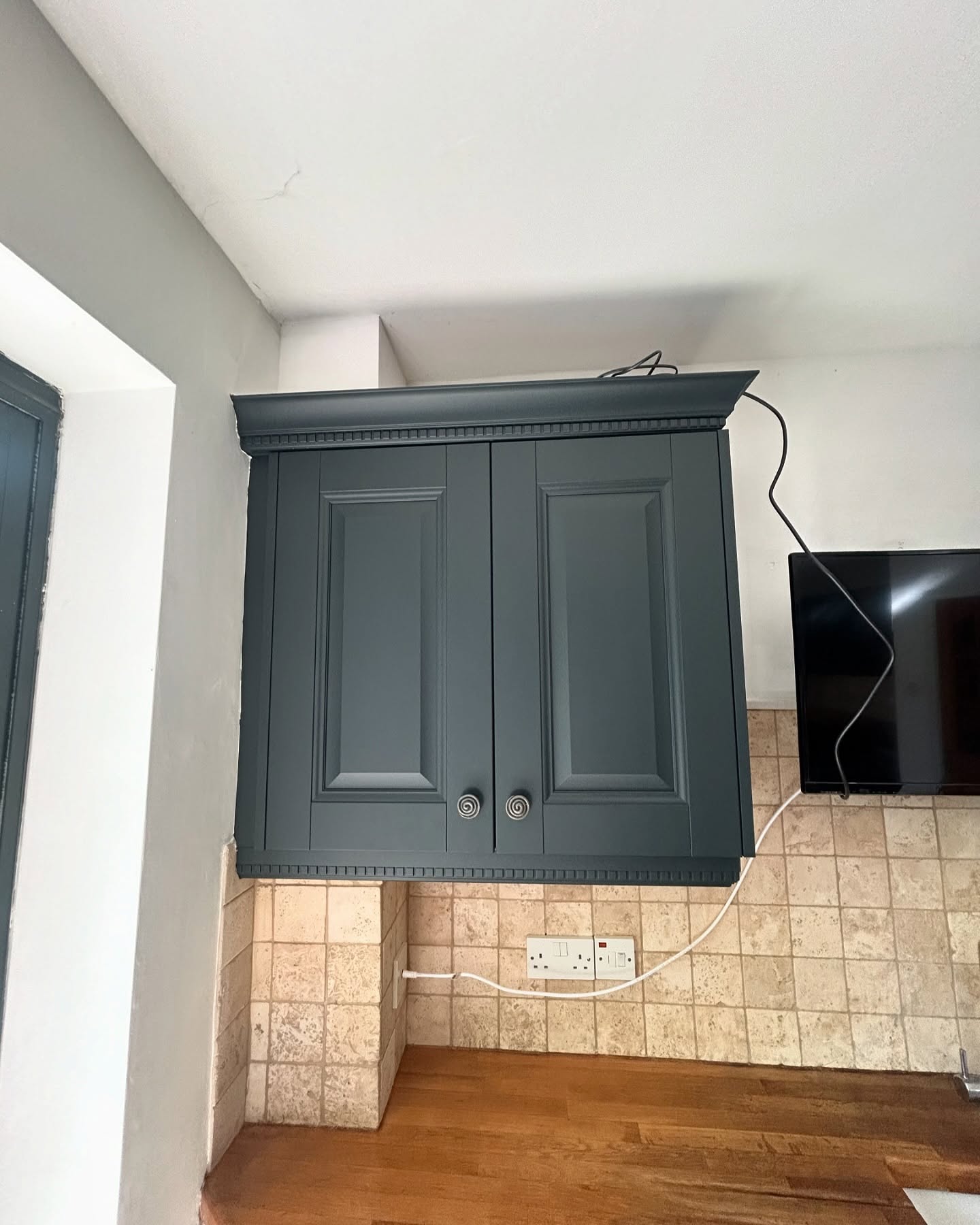
The sink corner now reads like something a food magazine would style a shoot around. The dresser with the built-in wine cubby reads as a proper piece of furniture, not a busy wall of cream details. The standalone cabinet by the TV would normally look like the builder ran out of plan. In deep blue it ties into the rest of the room and finally looks intentional.
What they kept matters as much as what they changed
The real cheat sheet is the list of things not touched. The slate floor, the travertine tile, the Belfast sink, the Rangemaster, the mahogany interior door, all stayed. The oak worktops got resealed in clear satin.
That’s the lesson worth taking away. Plenty of homeowners are quoting full rip-outs for kitchens that only need paint, new handles, and a top coat on the wood. If your cabinet boxes are solid, the doors close properly, and there’s any kind of carved detail on them, you probably don’t need a new kitchen. You need a darker color and a painter who knows what they’re doing.

Brass pulls would have looked great and that backsplash still needs to go. And it’s “dentil” molding, not “dental”, lol.
It’s sooo BEAUTIFUL my gosh.
I don’t even want to go into my kitchen now.
To have the means would be great. But at my age it’s not the best thing to do since I’ll probably have to sell my home because my husband who’s been handicap for 40yrs is going into long term care.
Whomever you are you do wonderful work.
I love the deep blue colour, wish I knew what the name of the colour it is ? Its lovely
The sink should be under the window, where is the fridge?
I certainly hope they take down the awkwardly placed TV. It ruines the whole look.
Love the new color with that floor. But the backsplash does need changing, and it should go all the way up behind the range.
Is there a paint manufacturer and paint code