A cabinet painter in Sheffield, UK posted a before and after that keeps making people look twice. Two photos of the same kitchen, taken a few days apart. Nothing in the room was replaced. The counters, the floor, the appliances, the backsplash, the handles, every cabinet box and hinge, all exactly where they were. One thing changed, and the room reads like a different house. The job happened across the pond, but the lesson tucked inside it is pure gold for American homeowners staring down a $25,000 kitchen quote.
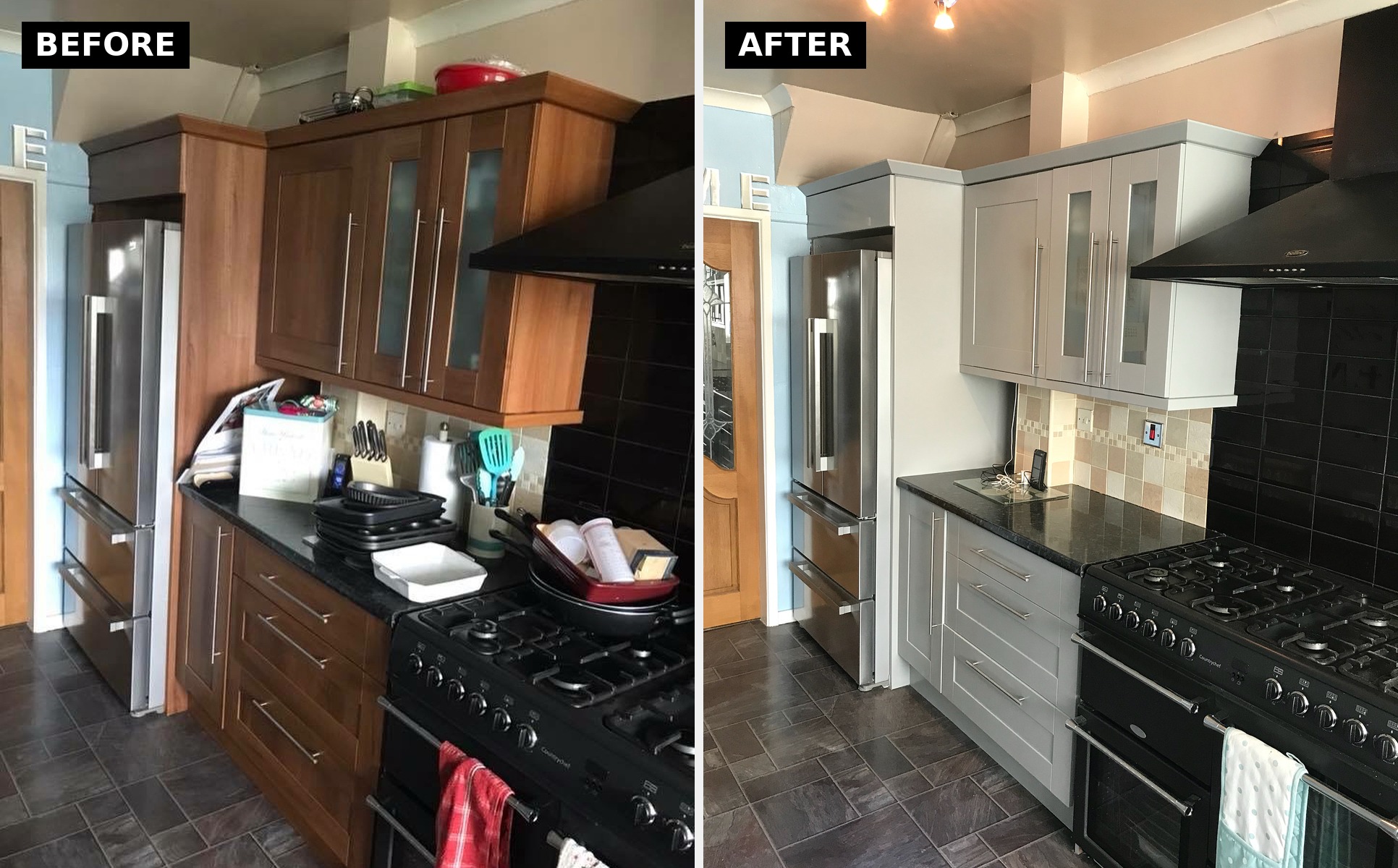
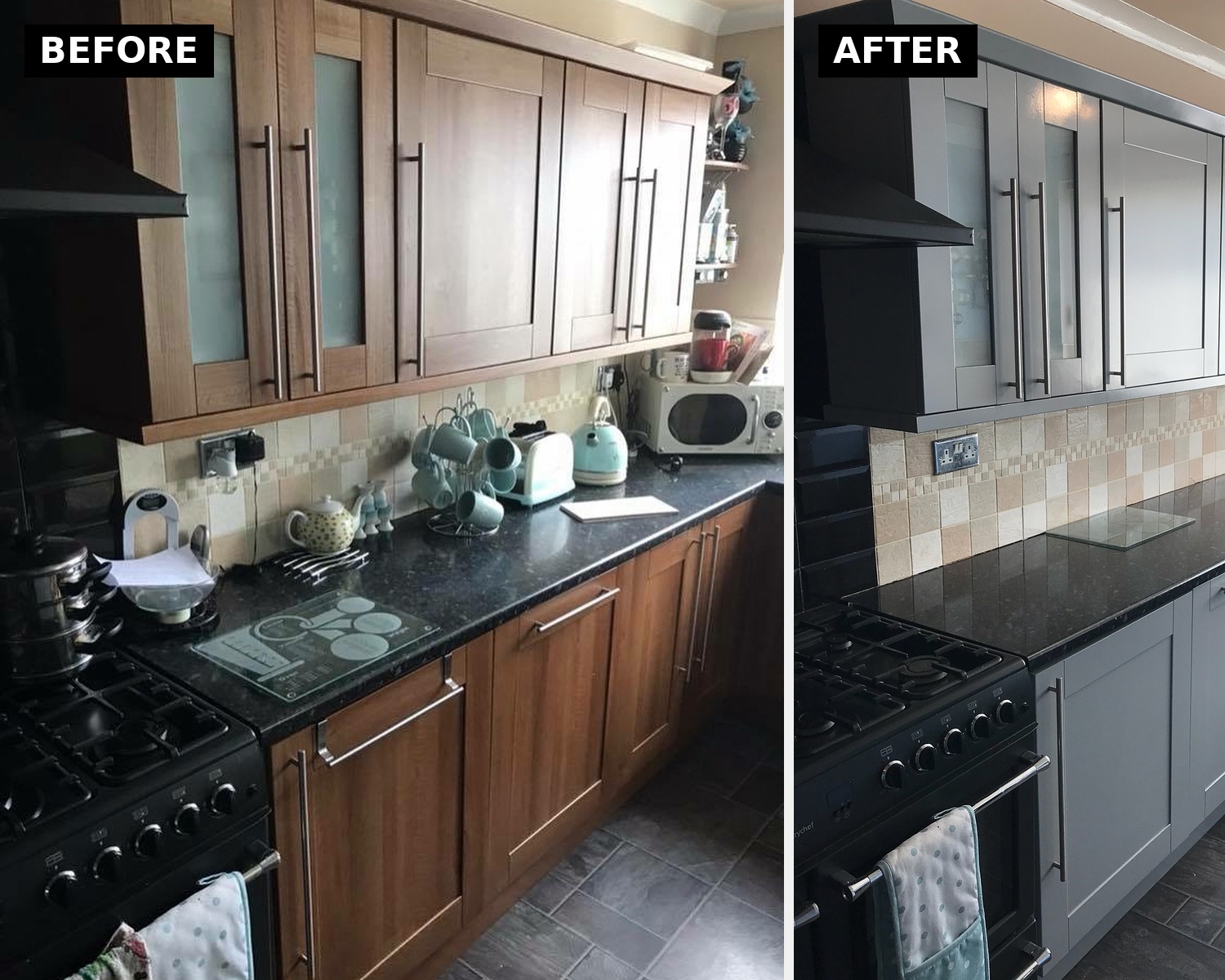
If you flick between the two sides of that photo, your eyes do a strange thing. They keep looking for the thing that moved. A different backsplash. A new range. Fresh counters. A rebuilt wall somewhere. Nothing moved. The painter even left the little HOME letters hanging on the wall by the door. The only reason the two sides look like different kitchens is a different finish on the cabinets, and that one change kept the owners from spending anywhere between $10,500 and $20,000 (£8,000 to £15,000).
That gap, between what the job cost and what it would have cost, is why the post is worth sitting with. The mistake the owners almost made is the same one most people make when a kitchen starts to feel dated. They assume the fix is a whole new kitchen. They get quotes, flinch, then either live with it another five years or hand over serious money. Neither option turns out to have been necessary here, and the reason why starts with a question nobody thought to ask them.
A kitchen that looked older than it was
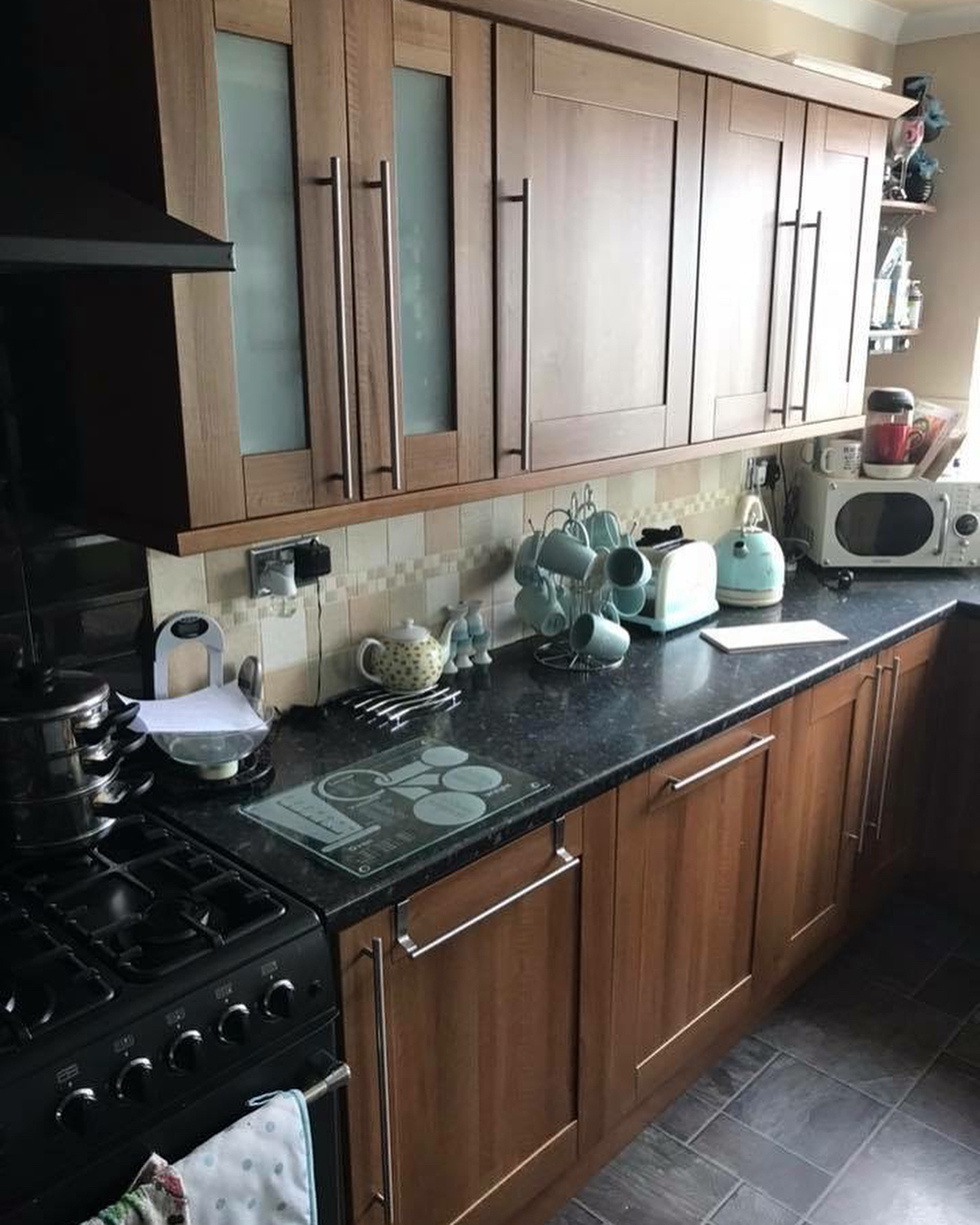
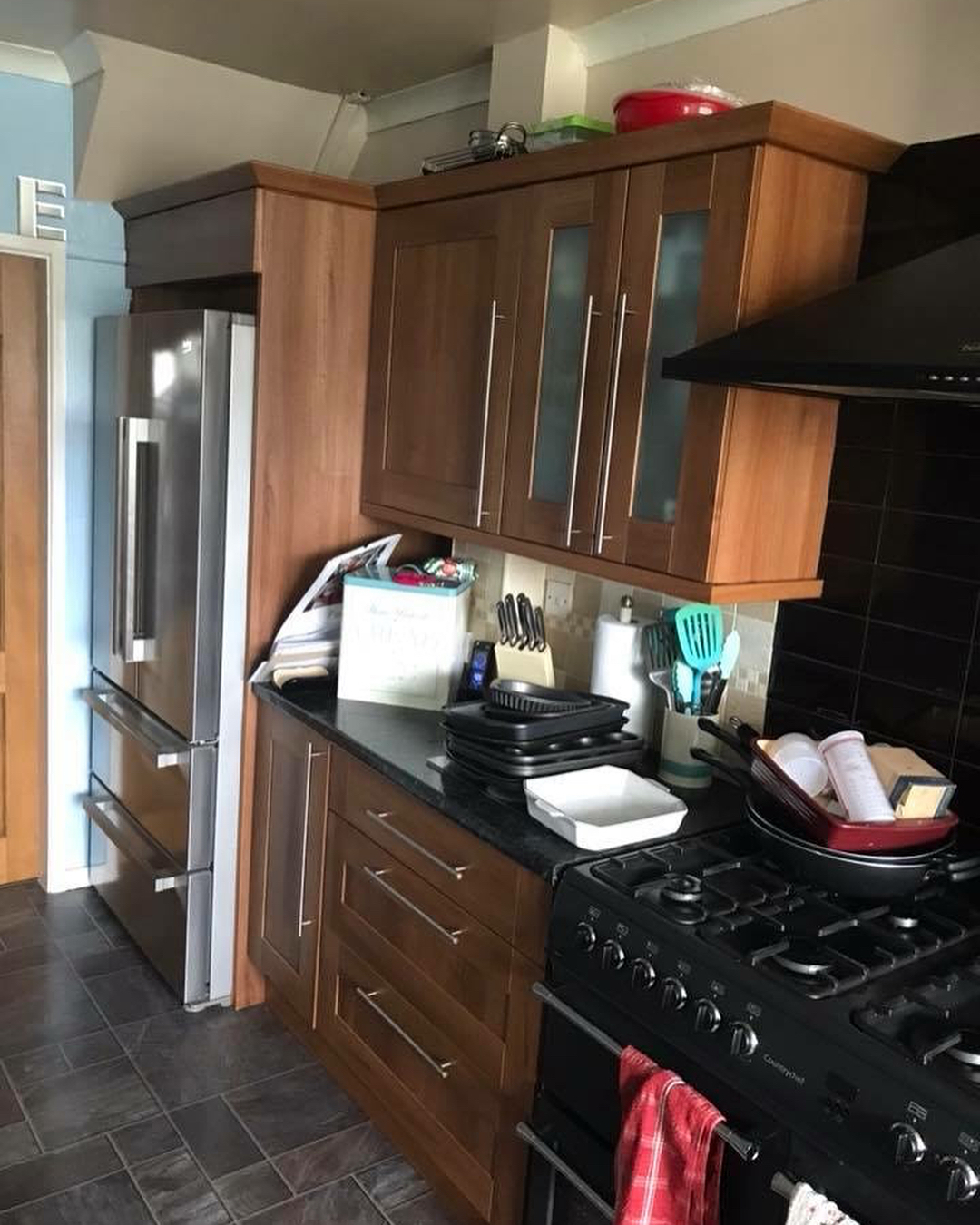
The owners had been cooking in a 15-year-old walnut Shaker kitchen. Back when it was installed, around 2005, walnut was the finish people picked when they wanted their kitchen to feel like a real upgrade. Same story in US homes from that era, where cherry, dark maple, and espresso-stained wood ruled the showroom floor. By 2018, those finishes had all turned into the quickest way to date a room. Buyers walked in and knocked years off their offer. Nothing about the kitchen was actually broken. It just looked tired in a way that felt like it needed serious money thrown at it.
The quiet question that saved the kitchen
Contractors came out and quoted the rip-and-replace. Pull the cabinets, pull the counters, start from scratch. The numbers landed between $10,500 and $20,000 (£8,000 to £15,000), and that was before anyone touched the floor or the appliances. For context, a typical US kitchen remodel in 2026 runs $25,000 to $50,000 for a project of this scope, so the gap only gets wider on American soil. The owners sat with the quotes for a while, then started asking a different question. Not “what should we replace?” but “what in here actually looks old?”
The honest answer caught them off guard. The granite still looked expensive. The Shaker door profile was a 200-year-old design, so it wasn’t going to date. The slate-style porcelain floor was fine. The brushed steel handles were fine. The layout worked. The mosaic strip in the backsplash was neutral enough to live with. Only one thing in the room had actually gone out of style, and it was the wood tone itself.
Why they called a sprayer, not a contractor
This is where the money story shifts. Instead of calling another kitchen contractor, they called a cabinet sprayer. The two trades do different things. A contractor rips the kitchen out and starts again. A sprayer treats your cabinets the way an auto body shop treats a car. He takes the doors off, sprays them on racks, masks the cabinet boxes in place, sprays those too, and rehangs everything. The kitchen is back in use inside a long weekend, and the bill comes in at a fraction of a full replacement. Cabinet painting services exist in every major US metro now, usually marketed as “cabinet refinishing” or “cabinet spraying,” and most will quote a job this size inside a day.

Behind the plastic sheeting
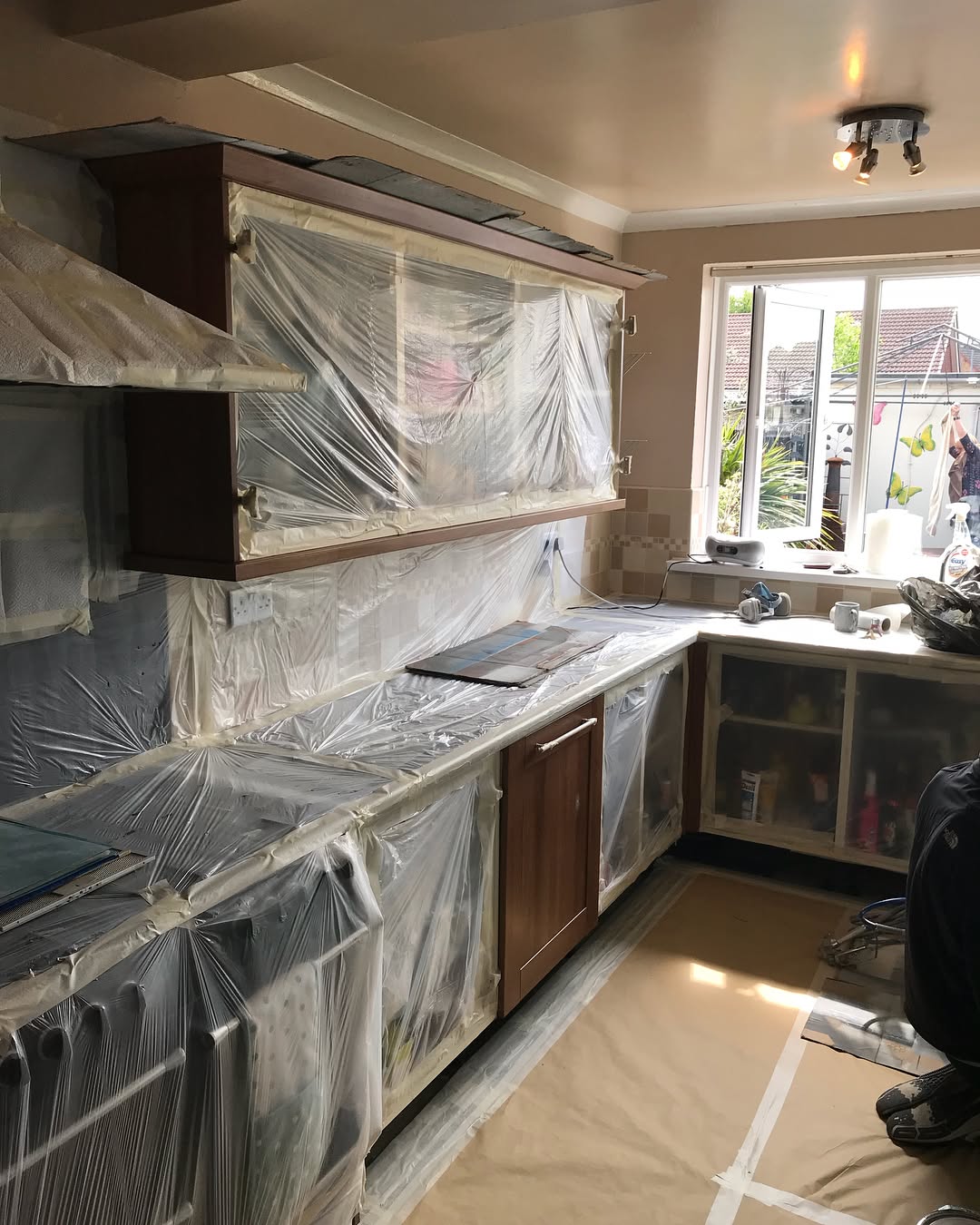
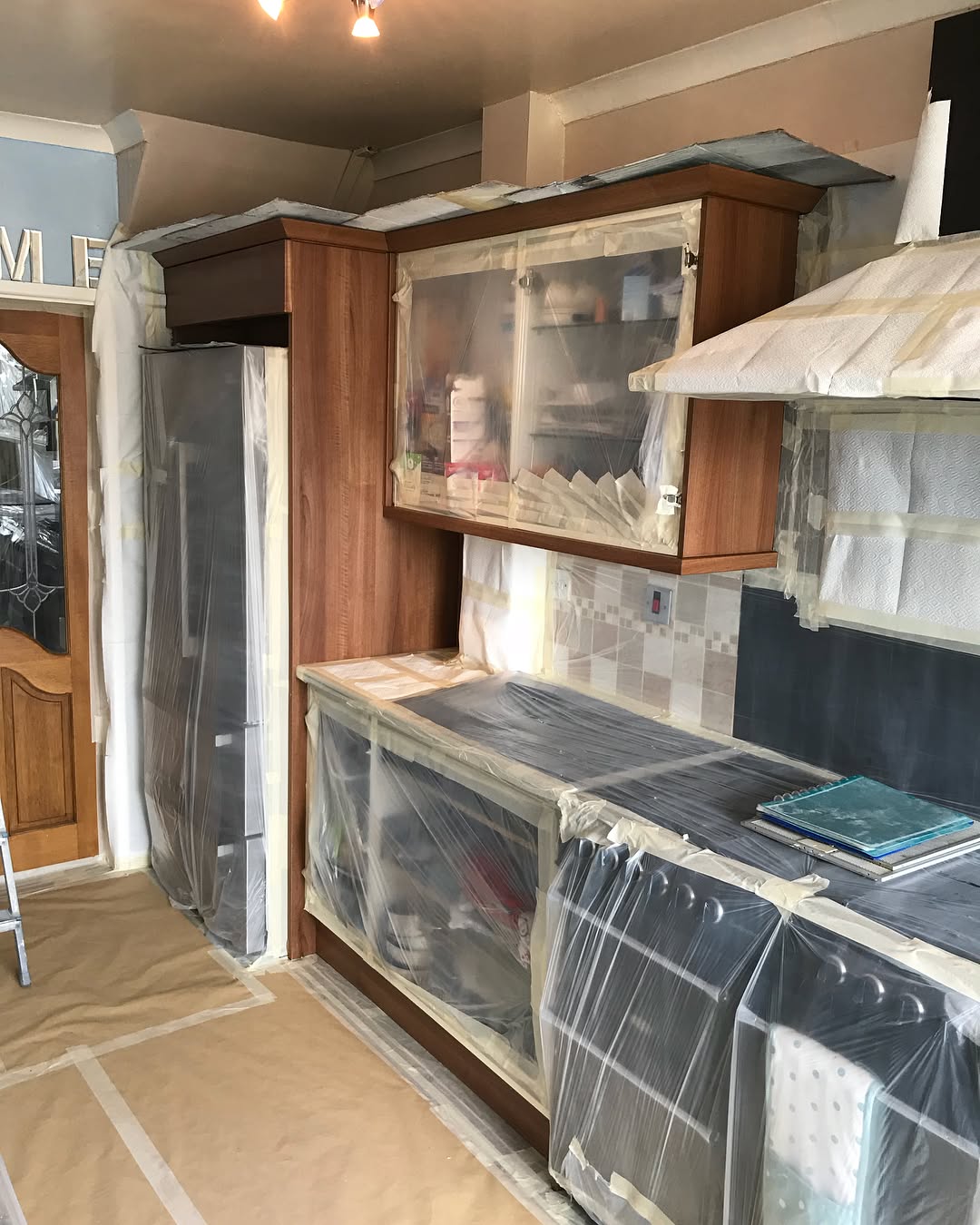
The prep photo is the part most people don’t see. Plastic over the counters. Masking paper taped across the floor and ceiling edges. A respirator sitting on the windowsill. Every tile line, socket, and hinge covered. This is the invisible work that separates a professional spray job from a paint-the-doors-yourself weekend. If the masking is sloppy, overspray gets everywhere and the finish looks amateur. If the masking is tight, the paint lays down like it came from a factory.
The color was doing all the work
They picked Farrow & Ball Manor House Grey 265 in a gloss finish. The color choice is doing more heavy lifting than it looks. Manor House Grey is a mid-tone gray with a warm undertone, which means it sits comfortably next to a black granite counter instead of fighting it the way a colder, bluer gray would. US readers can grab the exact same color at any Farrow & Ball stockist, or match it closely with Benjamin Moore Chelsea Gray HC-168 or Sherwin-Williams Dovetail SW 7018. The gloss finish is the detail most people get wrong. The usual advice for Shaker cabinets is eggshell or satin, but gloss catches light along the panel edges and gives the doors a crisper, more designed look. It is the finish that fools the eye into reading the whole kitchen as new.
What the reveal shot proves
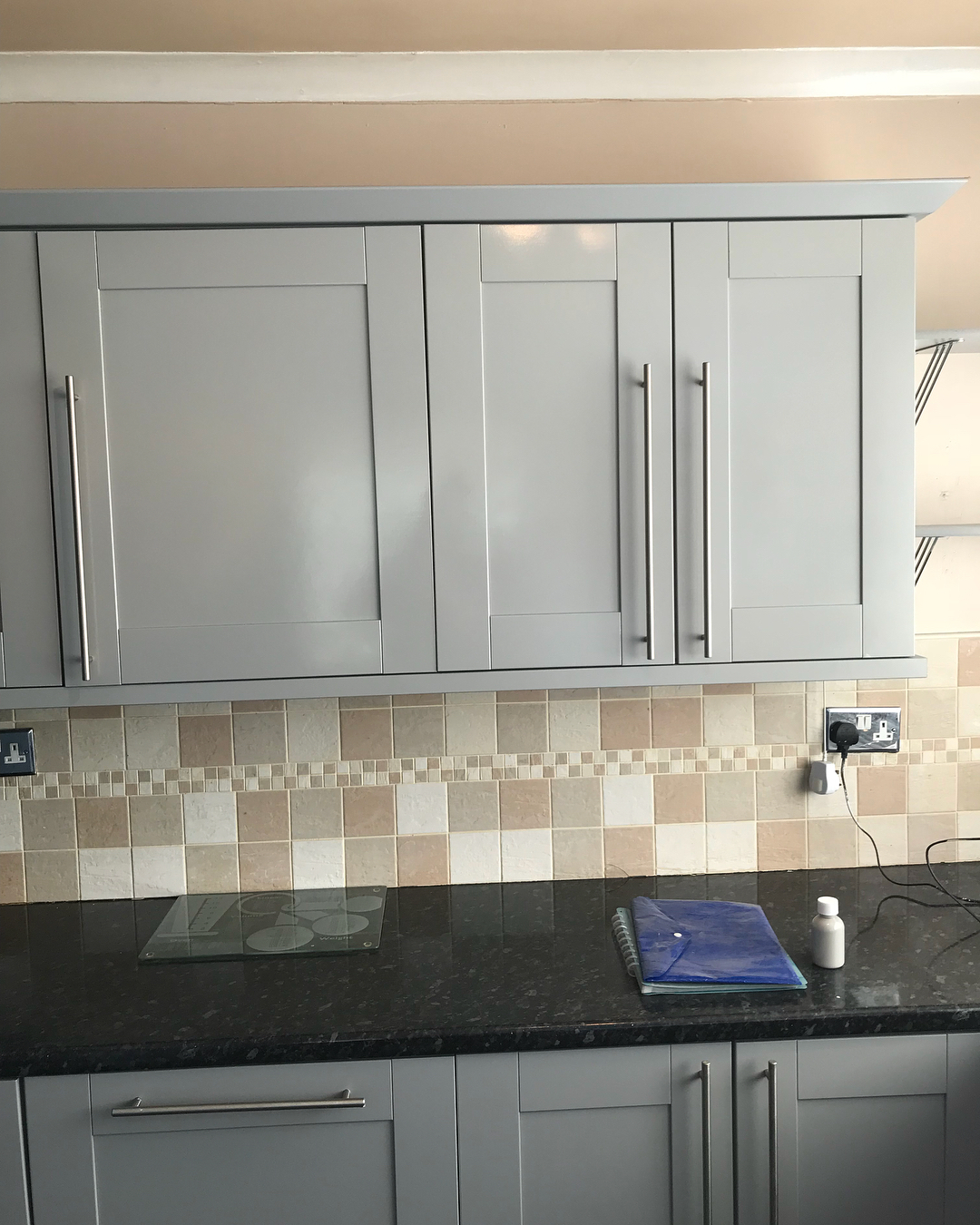
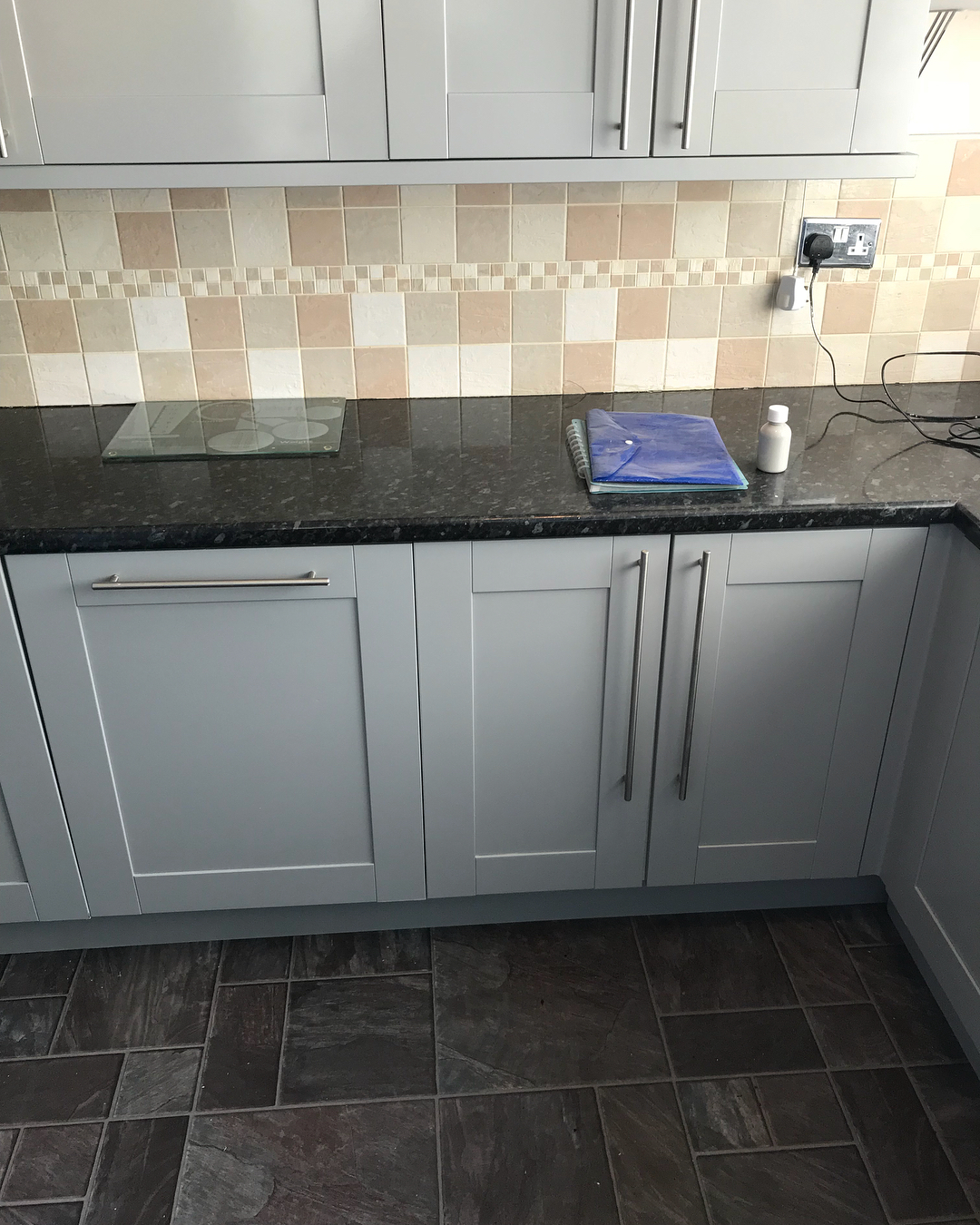
The second comparison is the one worth sitting with. Same cabinets. Same mosaic backsplash. Same granite. Same hardware. Same floor. Even the same pro-style range. The only variable that changed is the color on the doors, and suddenly the room reads as one coordinated color story instead of three competing finishes. The granite looks more expensive against gray than it ever did against walnut. The backsplash, which felt a bit dated in the before shot, now reads as warm and intentional.
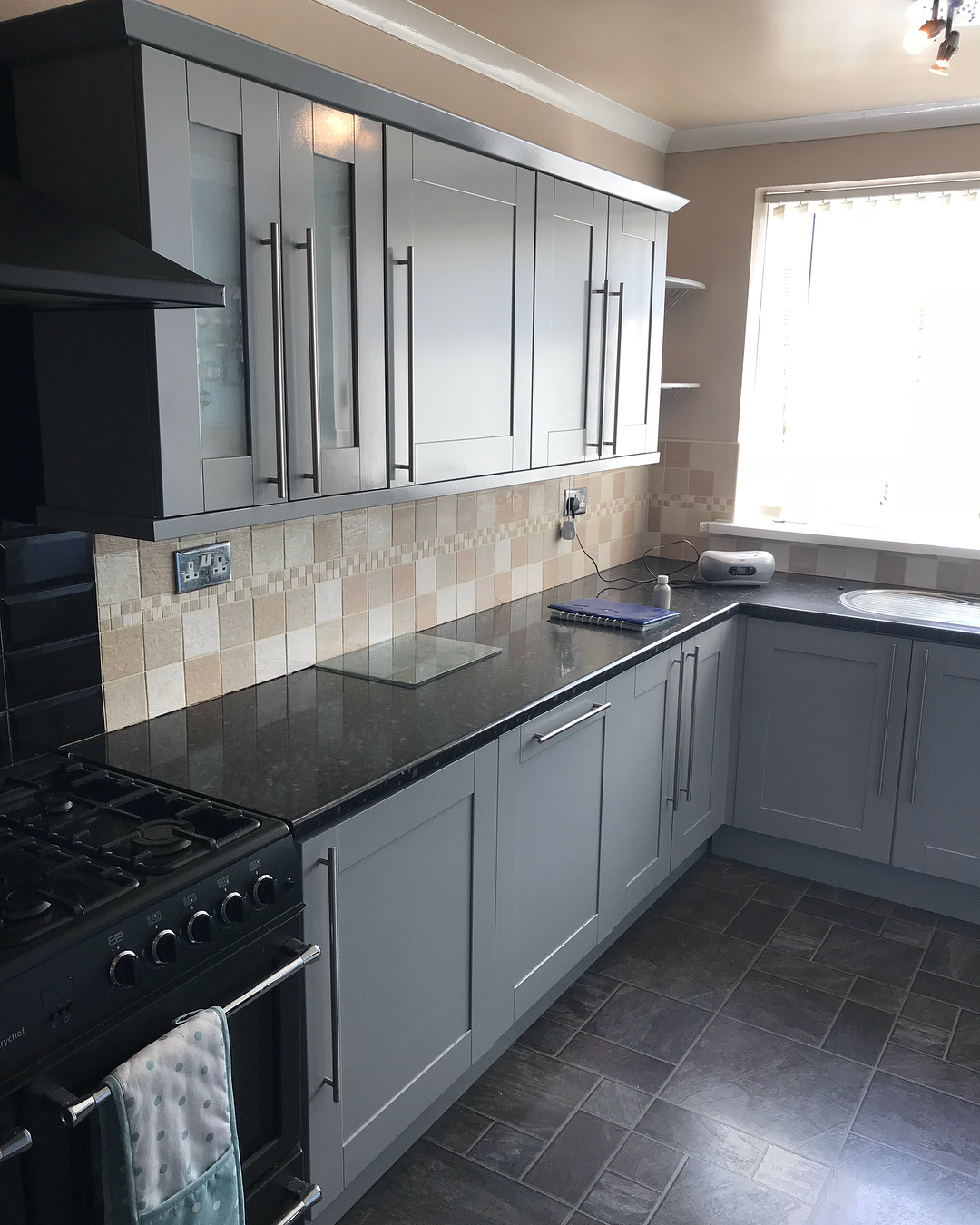
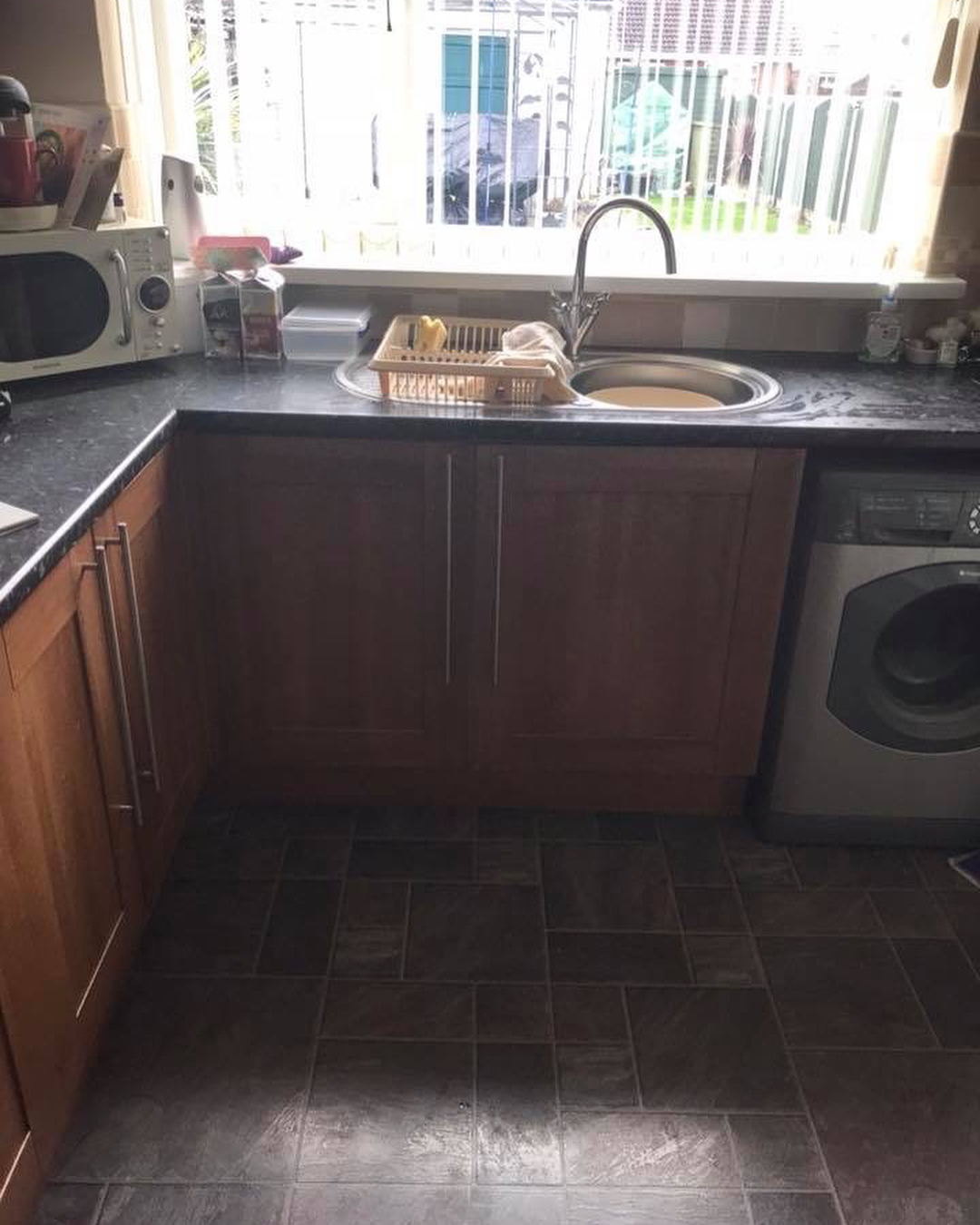
Pulled back to the full L-shape, the room feels bigger. Gray throws light around in a way walnut absorbs. The window on the right, which was there the whole time, suddenly has somewhere to send its daylight.
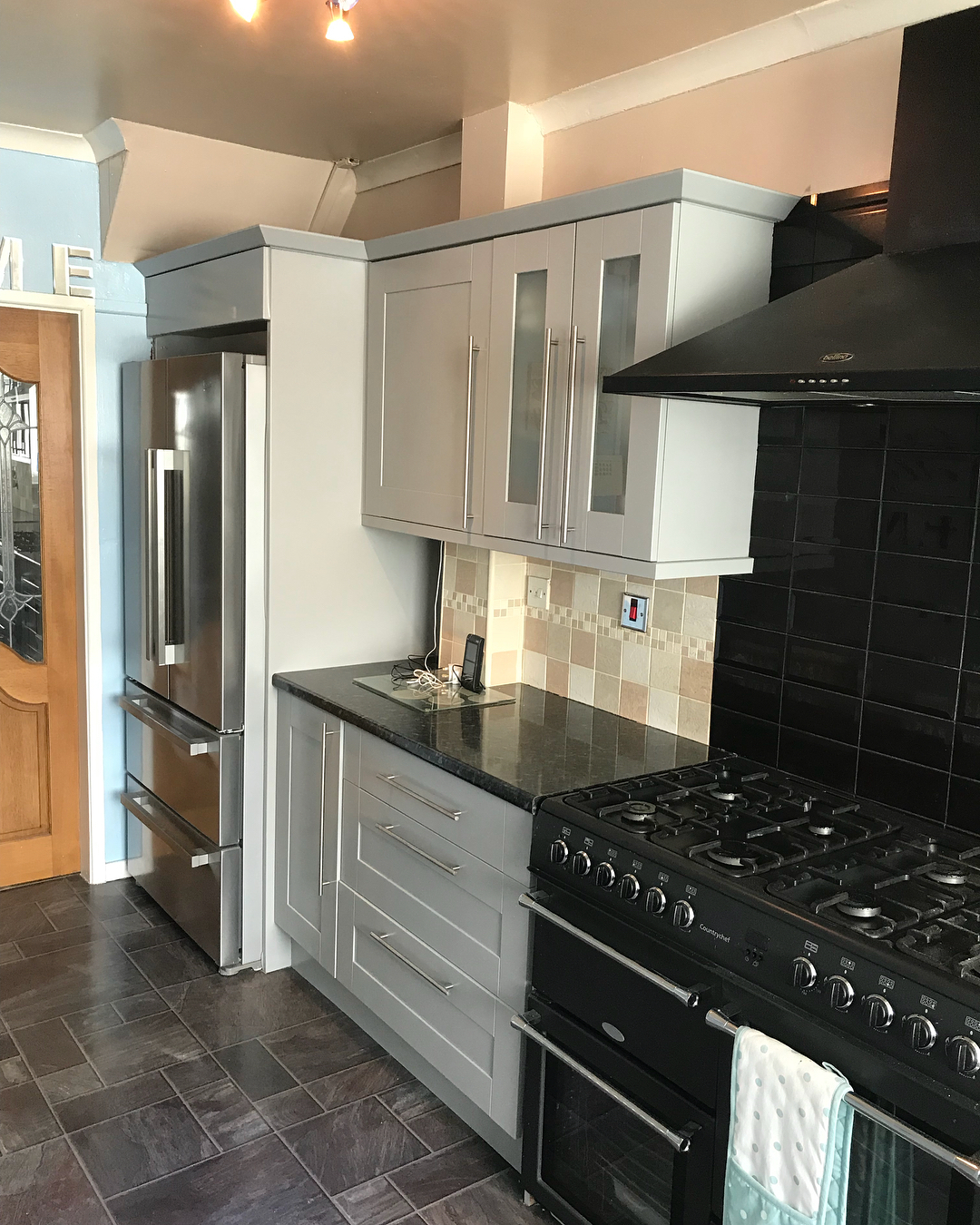
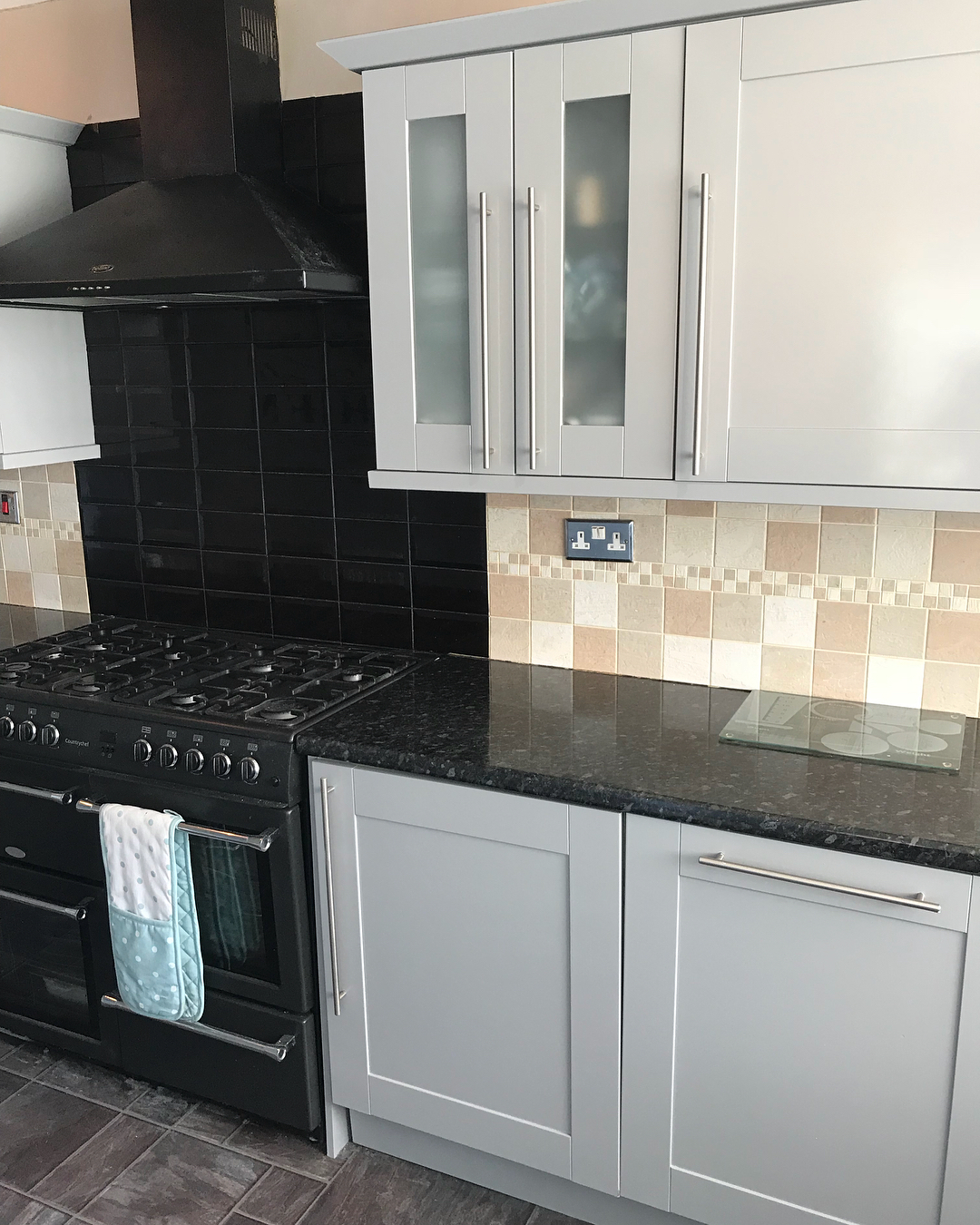
Up close, the gloss is where the money shows. The light catches the frame of each Shaker panel and gives the doors depth that walnut was flattening out.
What one weekend actually cost them
For a kitchen this size in 2018, this professional spray job landed somewhere between $2,000 and $4,500 (£1,500 to £3,500). The lowest replacement quote they had been looking at was more than double that, and that was before new counters, new floor, or new appliances.
In today’s US market, expect roughly $2,500 to $6,000 for a comparable cabinet spraying job, still a fraction of what Home Depot or Lowe’s would quote you for a full install. They kept everything they already owned, lost no storage, lost no counter space, and woke up Tuesday morning to a kitchen their visitors assumed had been installed that year.
If your own kitchen feels dated, that is the quiet question worth asking first. What in this room has actually gone out of style? Nine times out of ten the answer is a finish, not a kitchen. And a finish is a weekend of masking and spraying, not a month of contractors in your house.