You’re settled on the couch when your dog rests a paw on your knee and looks up at you. You might reach for the toy basket out of habit, especially if that’s how your evenings usually go. Yet the toy stays put, and your dog’s paw remains on your knee.
In short
- A paw resting on you is usually a message, not a request to play.
- Your dog is seeking your attention or asking for something, such as dinner or a trip outside.
- A paw during cuddling shows comfort and affection.
- Pawing with a low tail and heavy breathing signals worry.
That paw is a way to get your attention
View in gallery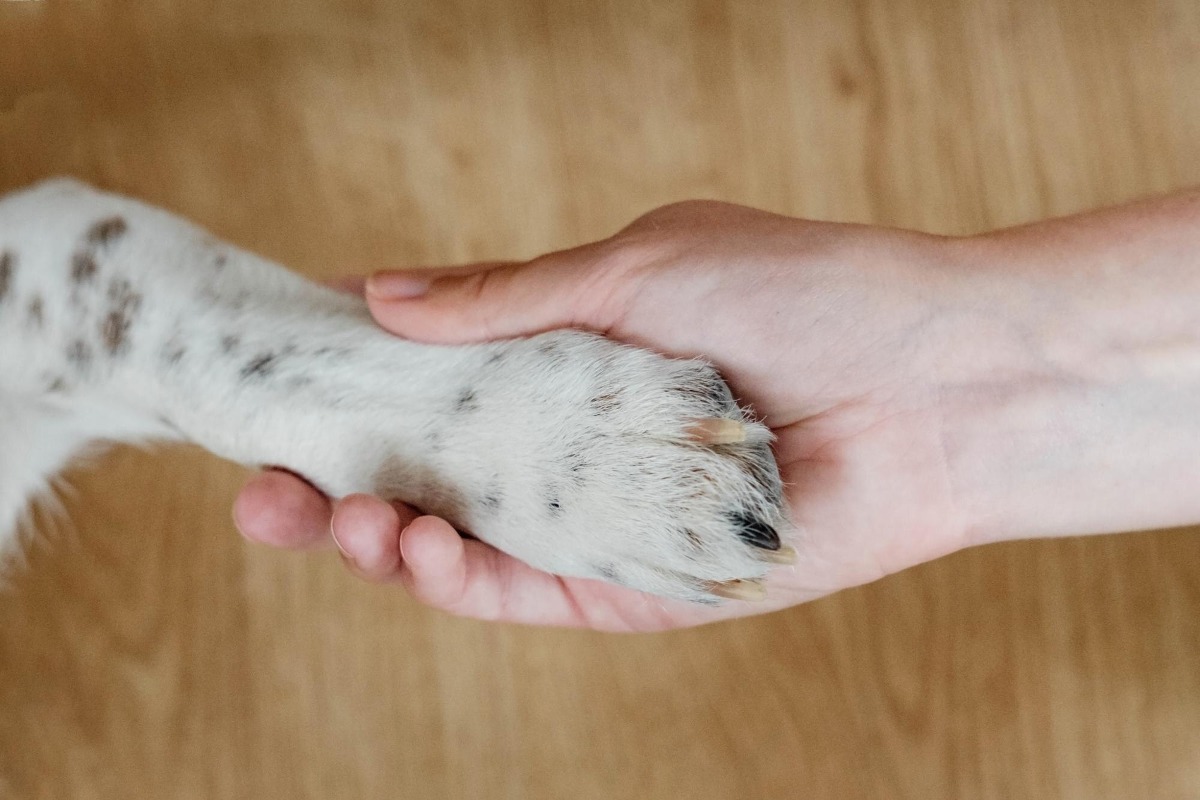
You are settled on the couch when your dog places a paw on your leg. You look down, and suddenly the two of you are having a conversation without words. The paw has your attention. Now the rest of the moment helps you understand why your dog wanted it.
Dr. Mary Burch, who directs the American Kennel Club’s Family Dog Program, says a paw on you is most often communication. At dinnertime, your dog could be reminding you about food. Near the door, the message could be a need to go outside. Those familiar moments give you more to go on than the paw alone.
The gesture starts early. Puppies instinctively paw at their mothers for milk, and dogs continue using their paws to express a need as they grow. So when your dog reaches for you, think first about what they are trying to tell you, rather than assuming they want a game.
Cuddling gives the paw another meaning
Picture your dog beside you while you rub their ears. A paw comes to rest on your arm, and your dog stays close. That quiet touch fits the moment: veterinary behaviorist Dr. Isabelle Bazin describes pawing for petting and resting a paw on someone during cuddling as signs of comfort and affection.
It is a personal gesture, too. Bazin says that level of ease is not something a dog would ordinarily show a stranger. Your dog is comfortable enough to reach toward you and stay there, enjoying the attention you are giving them.
Sometimes the paw is a request for more of that attention. If you pause your petting and your dog reaches toward you again, notice what has been happening between you. The meaning is in the whole exchange: where your dog is, what you were doing together, and how their body looks.
The rest of their body speaks, too
A paw can land on your arm when your dog feels uneasy. The American Kennel Club notes that worry can come with heavy breathing, a low tail, or a generally unsettled manner. In that moment, the paw deserves a different reading from the one you give a relaxed dog cuddling beside you.
Pet behaviorist Susan Nilson points to other signs you can notice together: panting, yawning, tongue flicking, and ears pinned back. A relaxed body, neutral ears, and a happy tail paint a friendlier picture. Look at your dog from nose to tail, not just at the place where their paw touched you.
The situation matters as much as the gesture. A dog pawing while you pet them is sharing a different moment with you than a dog pawing while looking uneasy. Taking in both the setting and the body language brings you closer to the message behind the touch.
The limit
A paw does not carry one fixed meaning: dogs also use pawing to initiate play, and repeated pawing can become an attention-seeking habit when owners inadvertently reward the behavior. Excessive pawing can also be linked to anxiety. If you cannot tell whether a held-up paw is asking for attention or reflects an injury, veterinarian Dr. Caroline Wilde advises talking to your veterinarian.