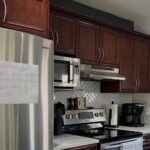
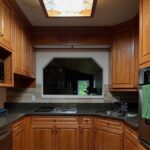
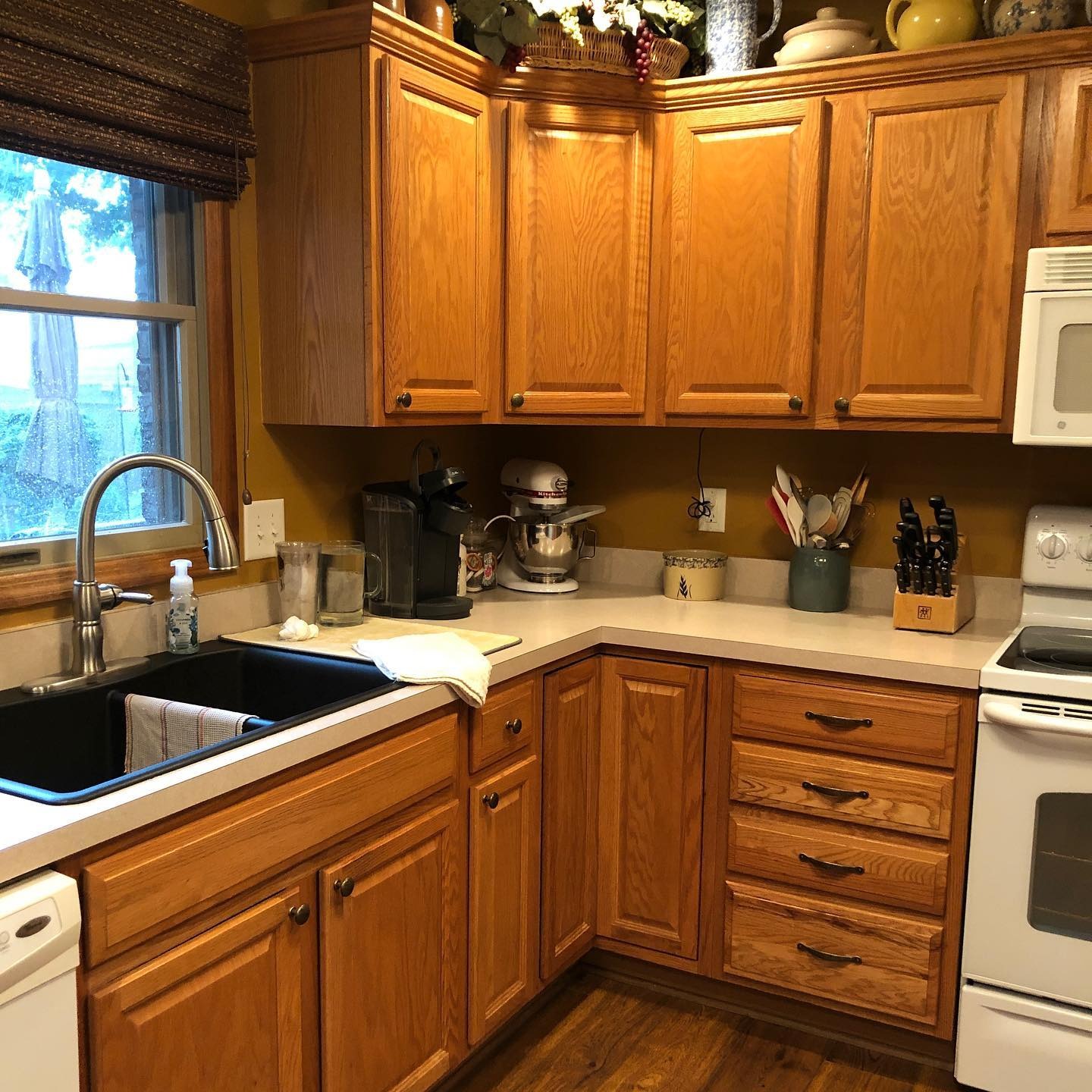
The homeowner was tired of her kitchen. The layout was fine. Nothing was broken. She was tired because every time she walked in, the first thing she saw was that orange glow on every door, drawer, and piece of trim.
Honey oak. Builder-grade. Installed around 1998 and still bouncing warm orange light onto mustard walls and beige counters twenty-plus years later.
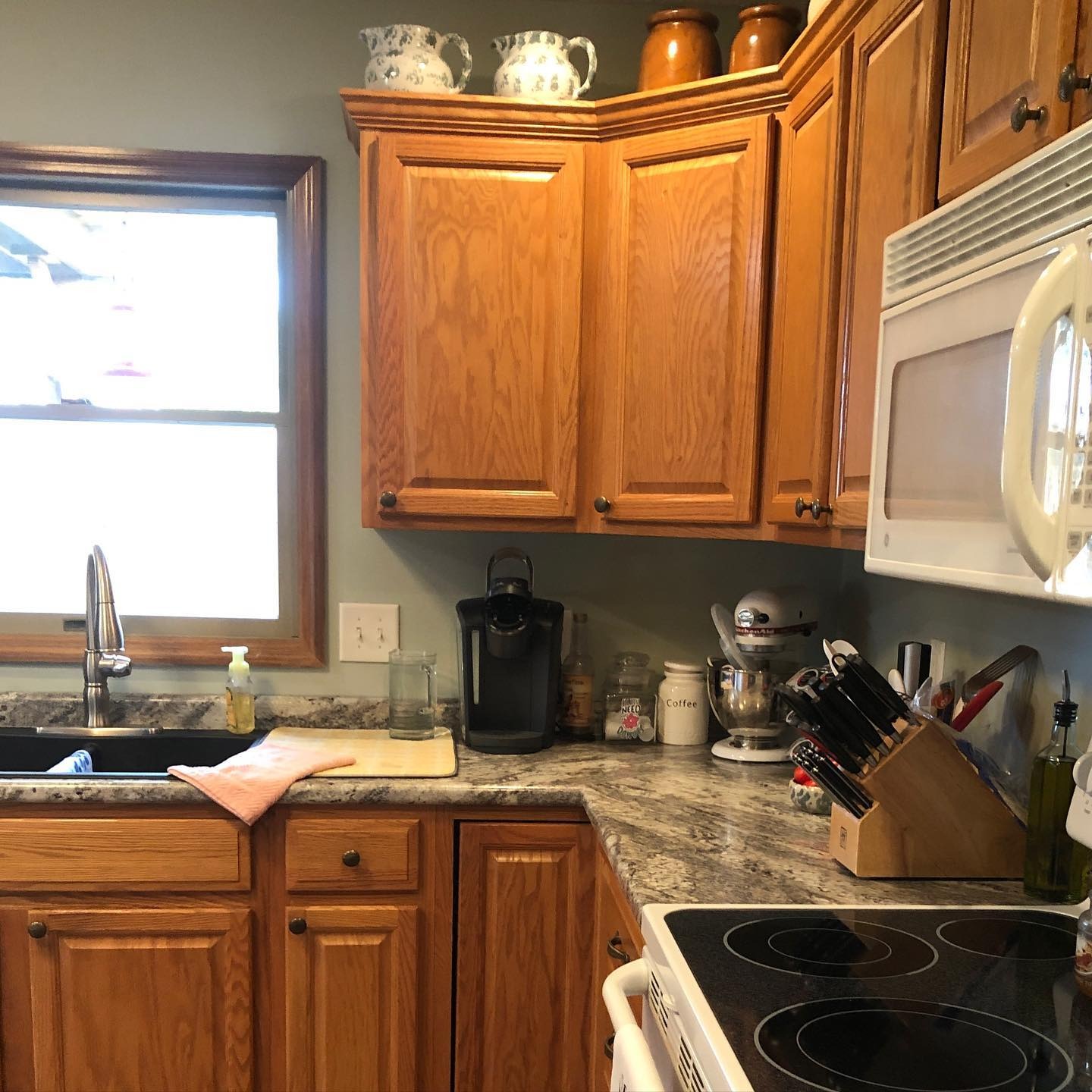
She wanted it gone. But every design blog she opened kept telling her the same thing.
The advice she’d heard a hundred times (and finally ignored)
Paint them white. Simply White. Chantilly Lace. Alabaster. Add white subway tile. New white quartz counters. Call it done.
She didn’t do any of that. Because the catch nobody mentions when they push an all-white kitchen is this: white cabinets don’t actually fix orange oak when you’re keeping any of the surrounding oak, and most people are. Keep the window trim or the floors, and crisp white cabinets end up fighting warm orange trim, making the orange look even more orange than before.
Orange cabinets, white appliances that hide nothing, counters that disappear. That’s the problem most suburban American homes still have. The default answer is white paint. She went the opposite way.
The one color that cancels the orange
She picked Benjamin Moore Rushing River (1574). A muted, dusty sage green on a soft gray base. Not a trendy saturated green, not a safe greige. Chosen for one reason.
Green sits straight across from orange on the color wheel. Put them next to each other and they cancel out instead of competing. The gray in Rushing River keeps it quiet. And because it’s a mid-tone instead of a pale pastel, it still feels warm next to the oak window trim she kept.
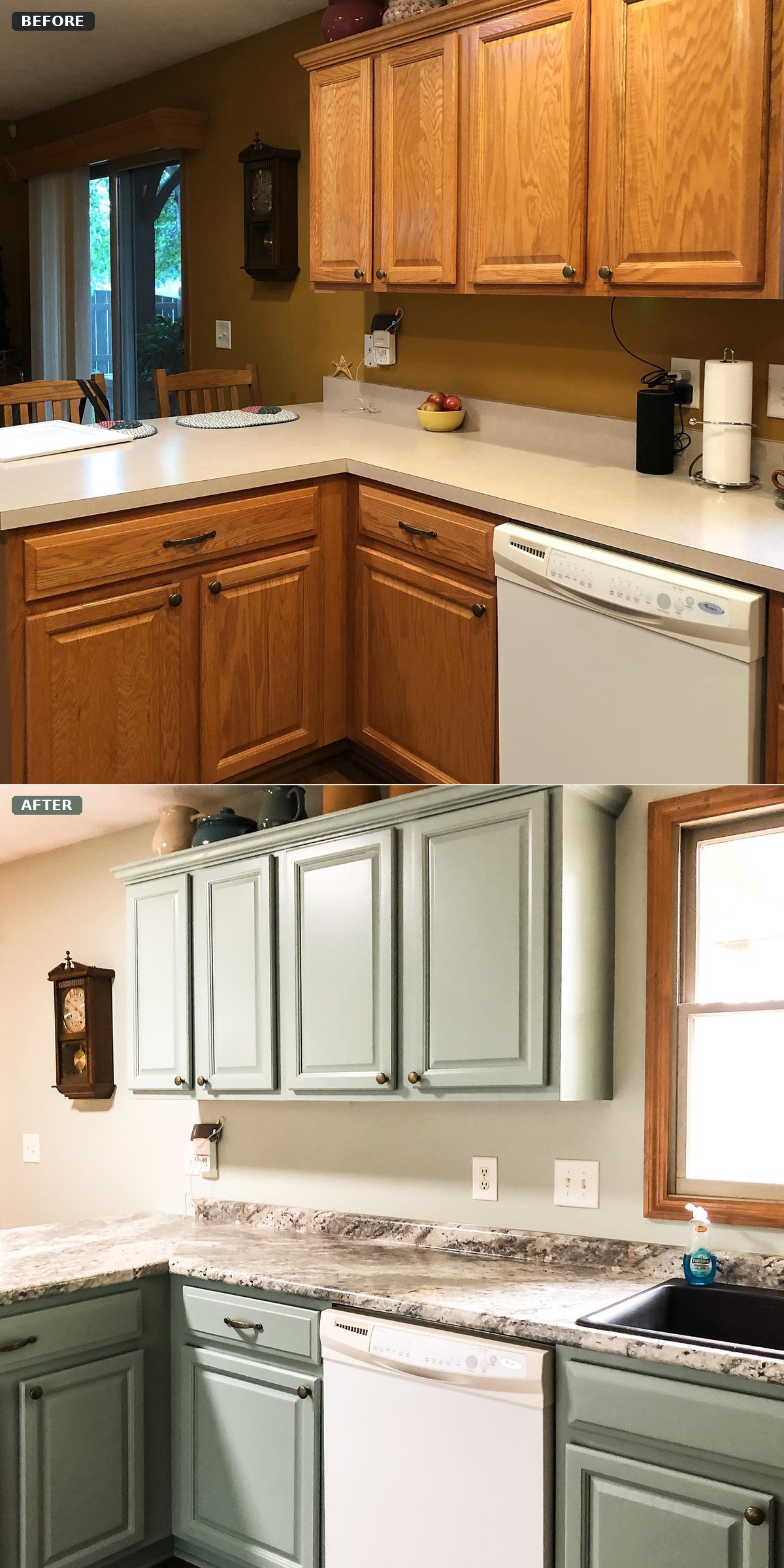
Same clock. Same wall. Same dishwasher. The oak window trim on the right didn’t move. Only the paint and counters changed, and suddenly that trim stops shouting and starts reading like an intentional wood accent.
What stayed, what changed, what it cost
The part that matters if you’re staring at your own oak kitchen and doing the math:
What stayed: every cabinet box, every door, every brass knob and cup pull, all the white appliances, the sink, the faucet, the window, the oak window trim.
What changed: paint on the cabinets, paint on the walls, new grey-and-white veined laminate, dark wood plank floors.
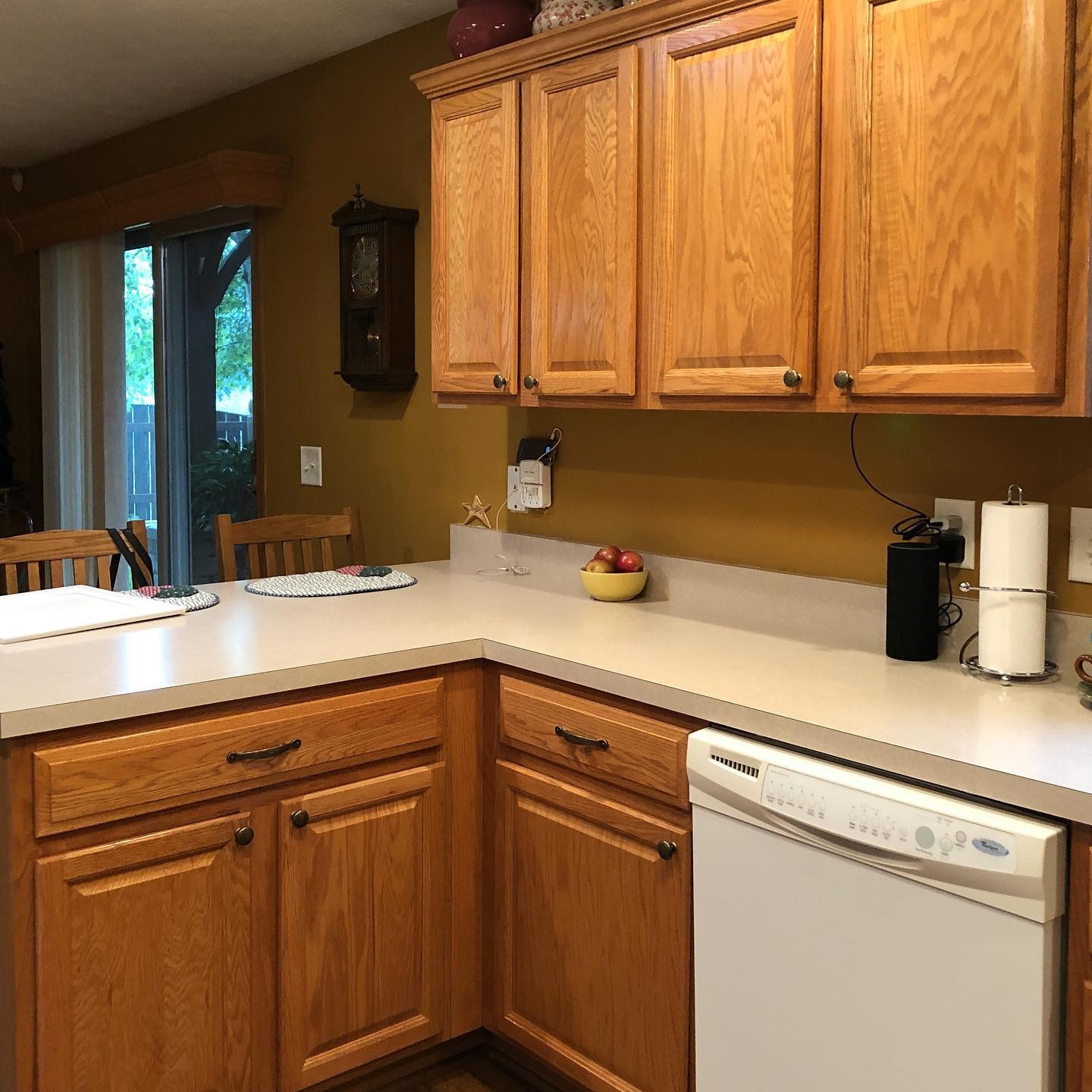
A full kitchen gut in 2026 runs $25,000 to $60,000 depending on where you live. This came in at a fraction of that. Under $5,000 DIY, maybe $10,000 with a pro painter and a counter installer.
The brass is doing more work than you think
Nobody replaced the hardware. Same brass knobs on the uppers, same brass cup pulls on the drawers. Against orange oak, those pulls read as dated country hardware. Put the exact same brass against Rushing River sage, and it reads as warm vintage brass. One finish didn’t change. The backdrop did all the work.
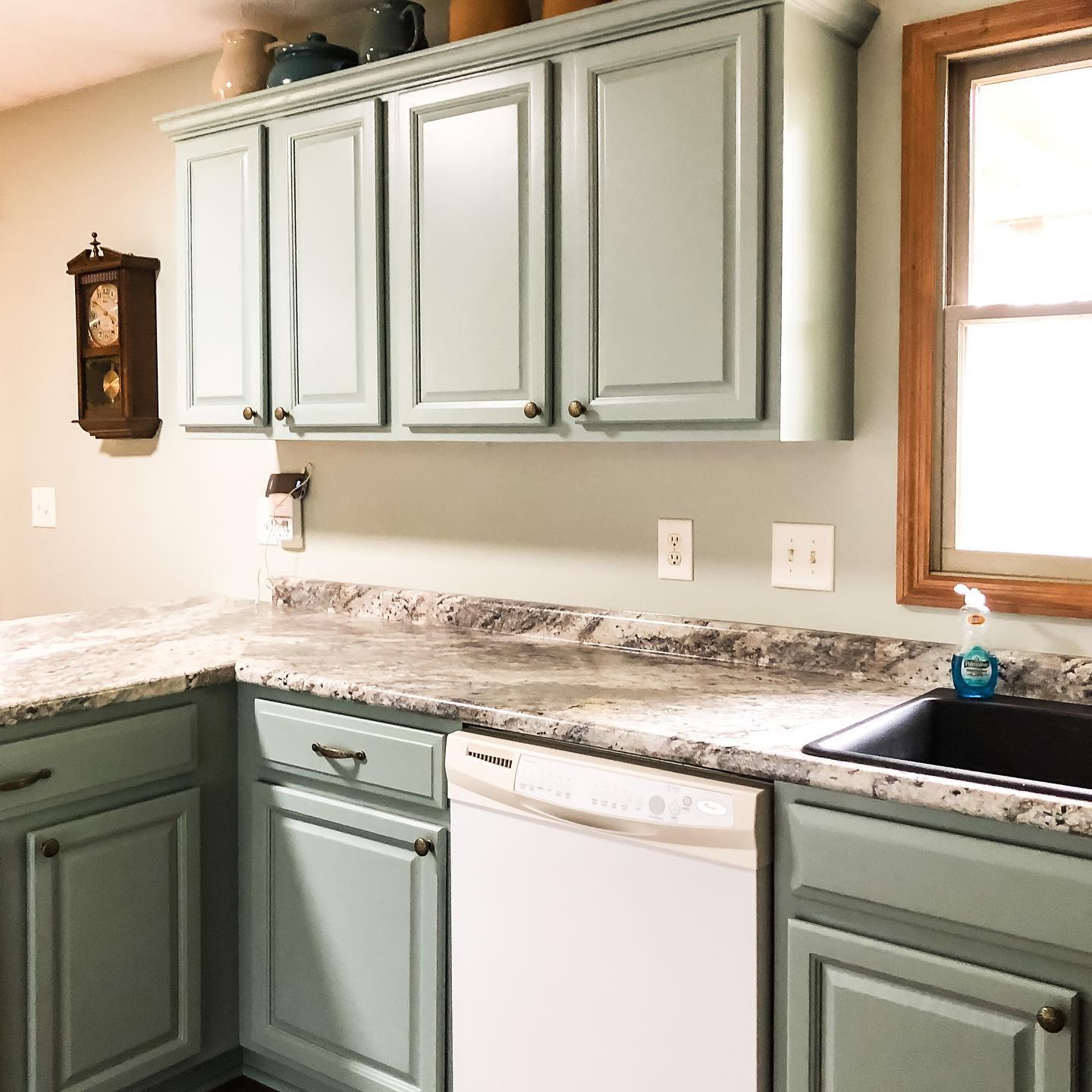
The brass wasn’t the problem. The orange cabinets were making the brass look cheap.
Why the counters matter almost as much as the paint
The old beige laminate disappeared next to orange oak. The new grey-and-white veined laminate pulls the sage forward, and the white in the veining ties into the appliances so they stop looking like holdovers.
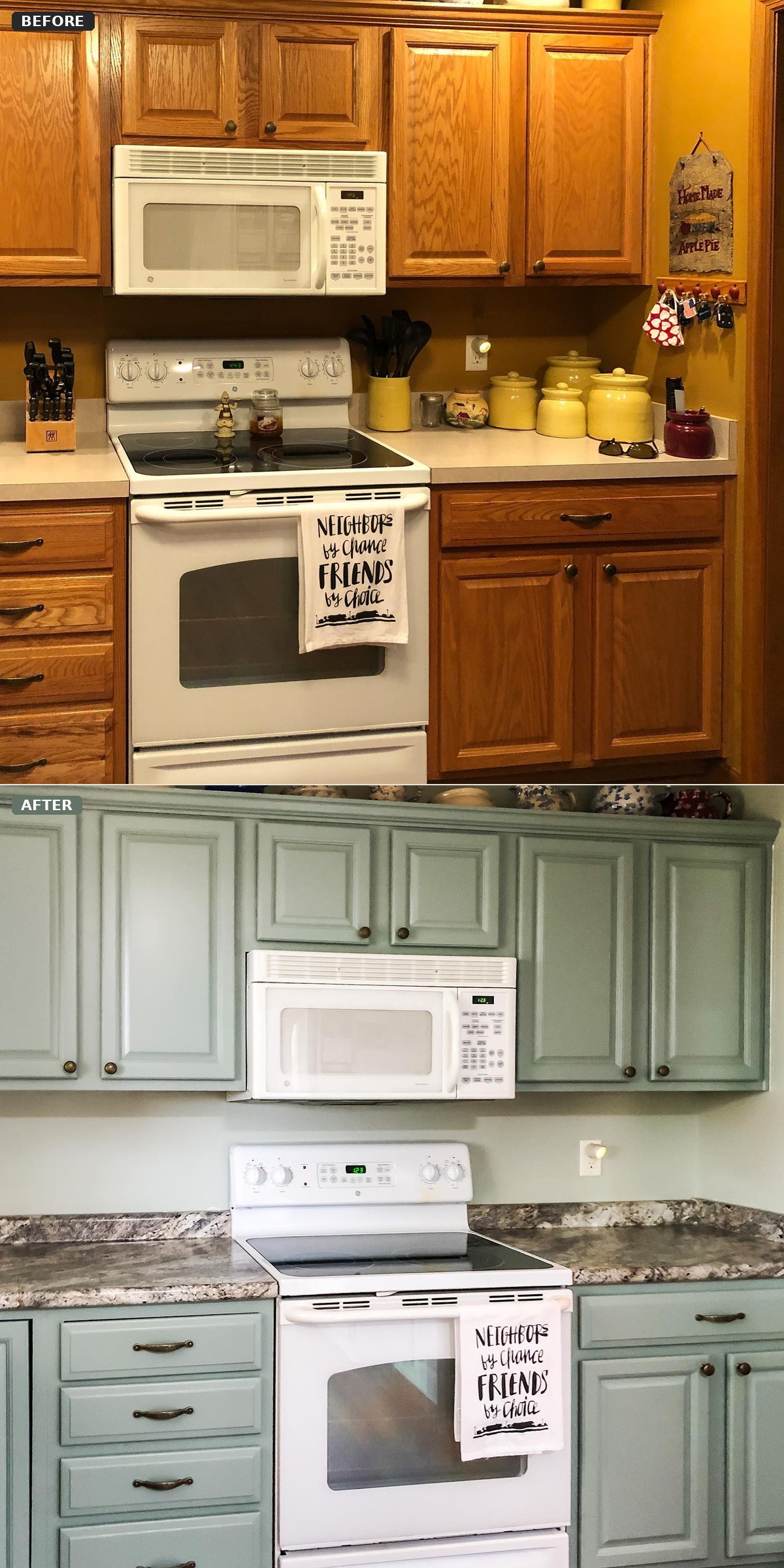
Same stove. Same microwave. Same towel. The whole wall just stopped fighting itself.
The sink corner proves the point
If you only look at one frame to understand what paint can do here, make it this one.
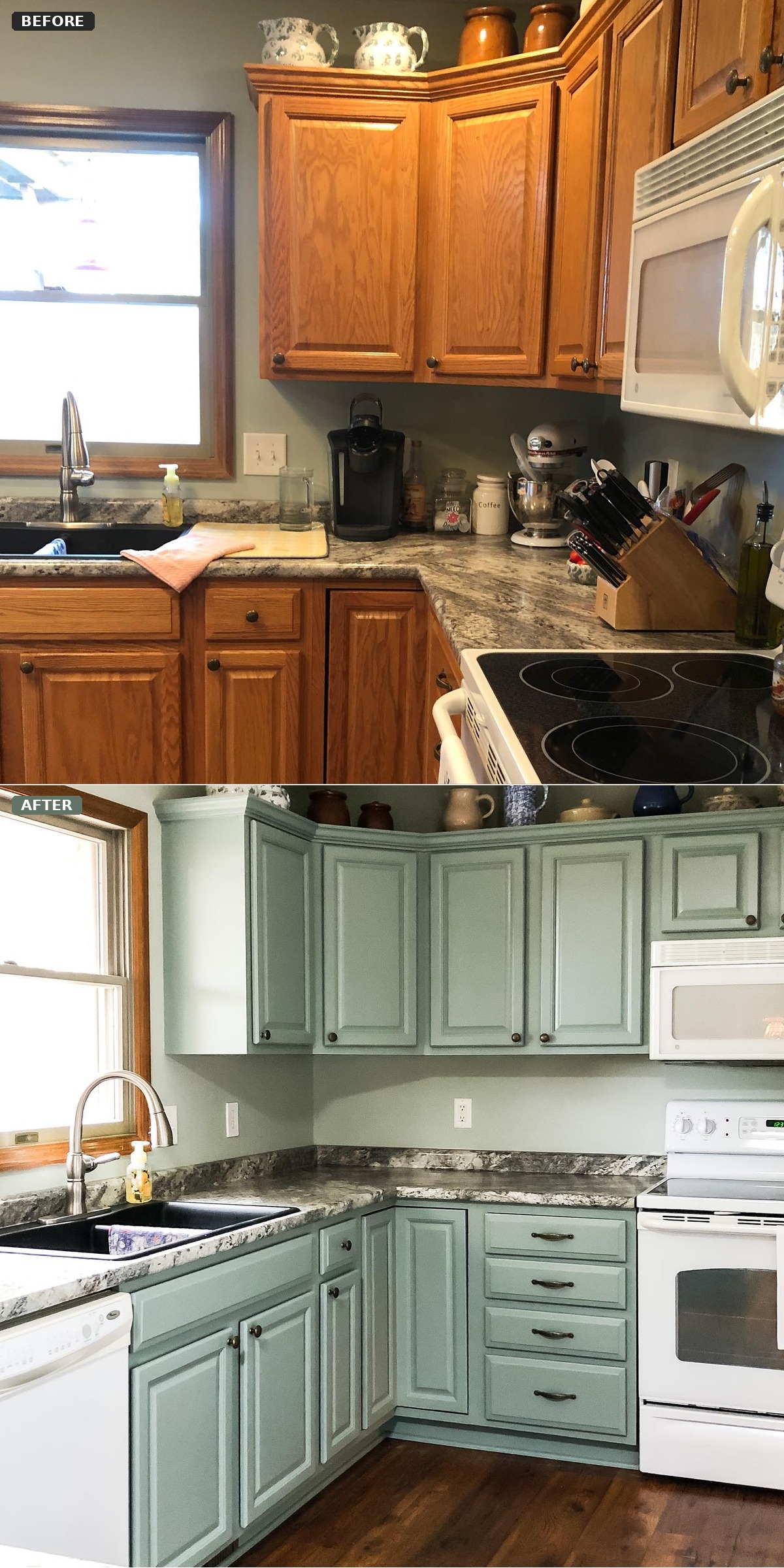
The oak window trim didn’t move. In the before, it’s one more piece of orange in a room already drowning in it. In the after, with sage wrapping around it, that same trim reads as a warm wood frame around the view outside.
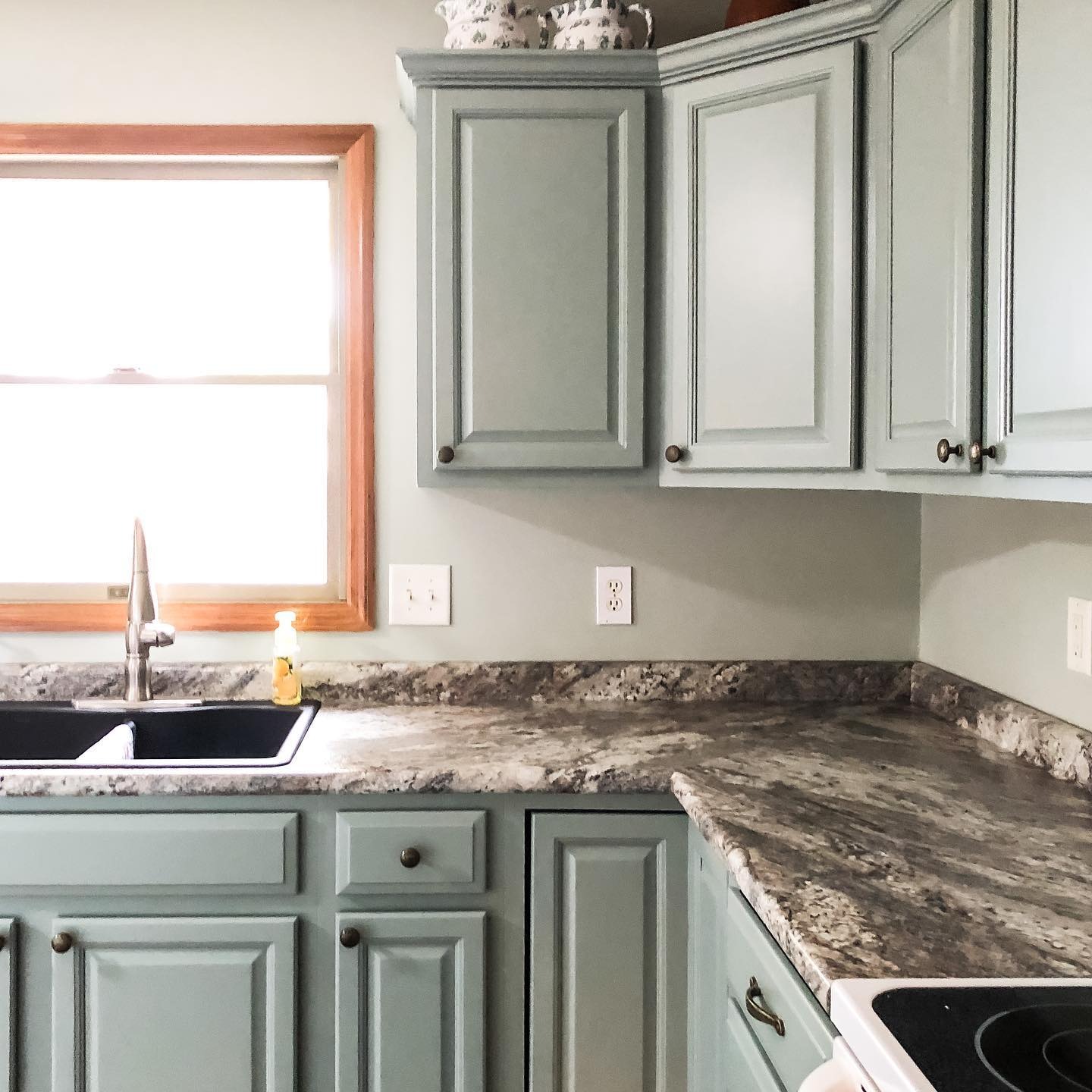
Up close, the sage pulls the softer brown tones out of the oak trim instead of amplifying the harsh orange ones. That’s the whole trick.

The stove wall tells you what she was living with
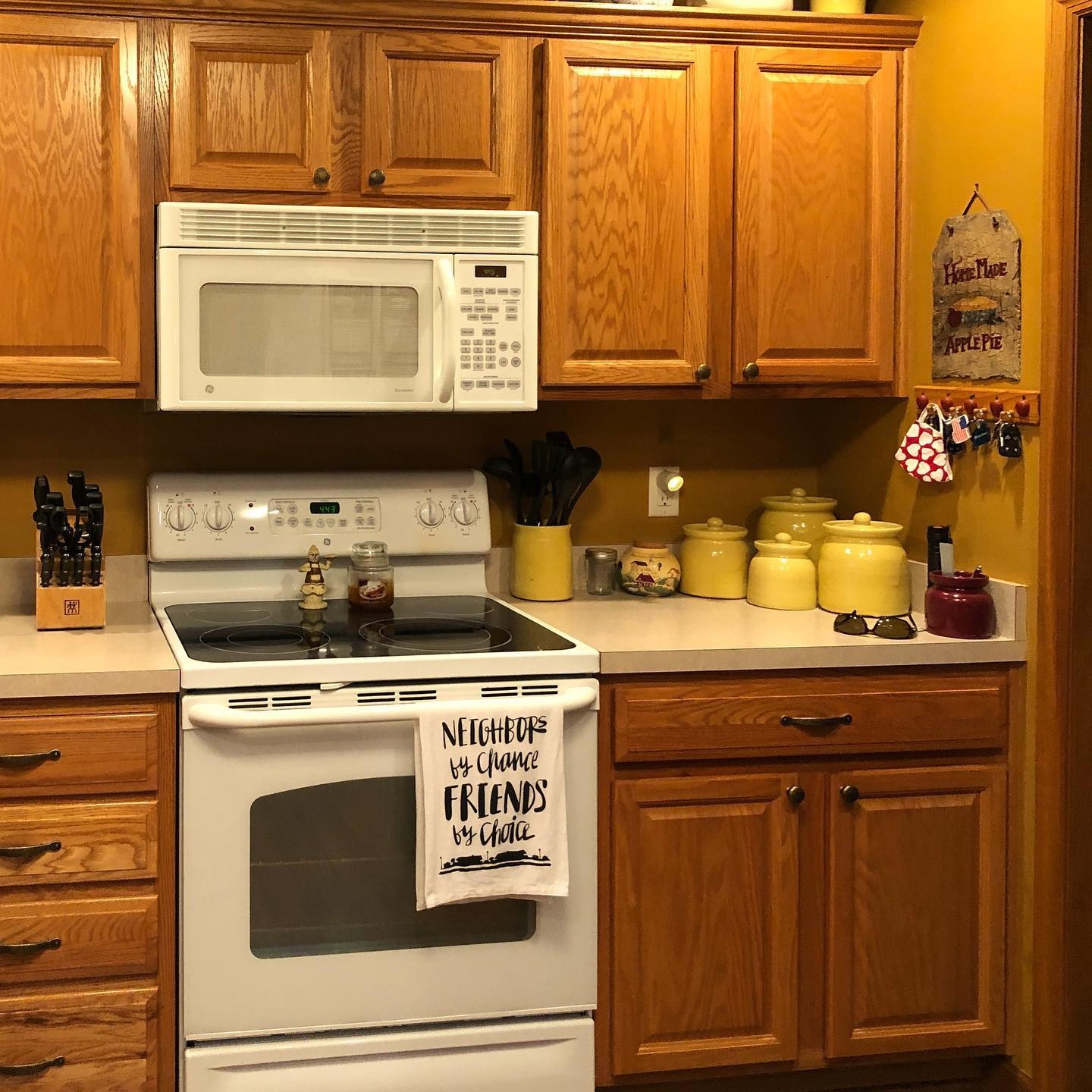
Yellow canisters, mustard walls, orange cabinets. Everything competing, nothing winning.
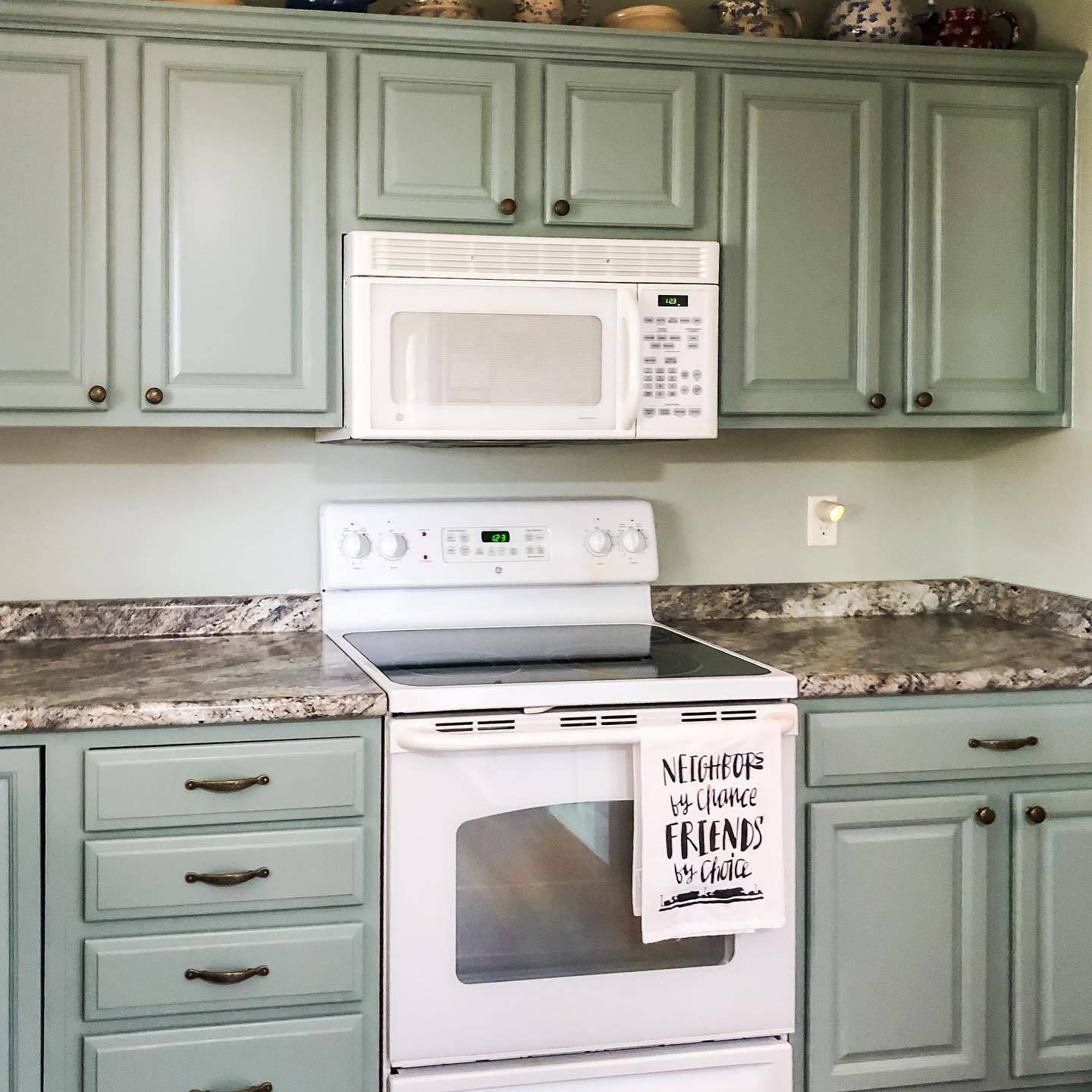
Same appliances. They suddenly look current because they’re sitting against a color they belong with.
The wide shot that ties it together
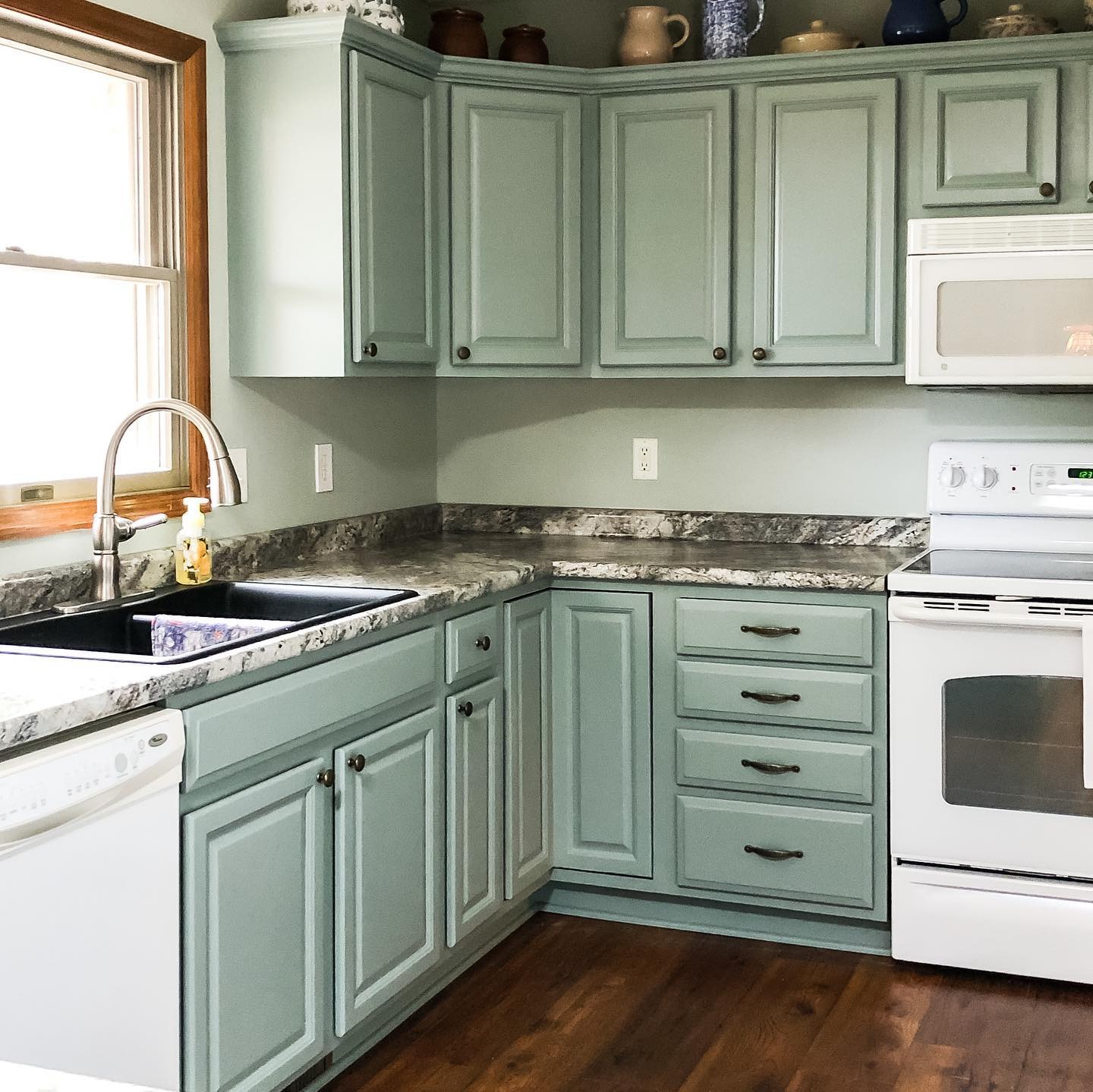
Pull back and look at the whole room. Oak trim kept. Brass kept. White appliances kept. Even the display pieces on top of the cabinets stayed. Paint, counters, floors. The whole project.
If your kitchen looks like the before photos
Don’t start with white. Start with the opposite of what’s bothering you. If orange oak is the problem, your color needs green in it. Rushing River is one option. Other muted sages with a gray base work too, like Benjamin Moore Saybrook Sage or Sherwin-Williams Evergreen Fog. A mid-tone green with enough gray to stay quiet and enough green to cancel the orange.
The second move: counters with real contrast. Beige-on-beige disappears every time. Give the cabinets a counter with movement and darker tones, and the room gets structure.
Everything else stays. Brass. Appliances. Sink. Window. The oak trim you can’t afford to rip out. You’re not erasing the oak. You’re giving it something to sit beside that stops making it look like the villain.