Your black-and-white cat is stretched across a kitchen chair until you bring out the carrier. As you coax her toward it, you might wonder whether her reaction has anything to do with her coat, or whether she simply remembers the last trip to the vet.
In short
- Veterinarian Carlos Gutiérrez says black-and-white cats get overwhelmed more easily.
- In a UC Davis survey, owners reported small differences in aggression among cats with different coat colors.
- Your cat’s environment and relationship with you shape its behavior.
- A tuxedo coat is a genetic pattern, not a personality type.
Black-and-white cats seek quiet
View in gallery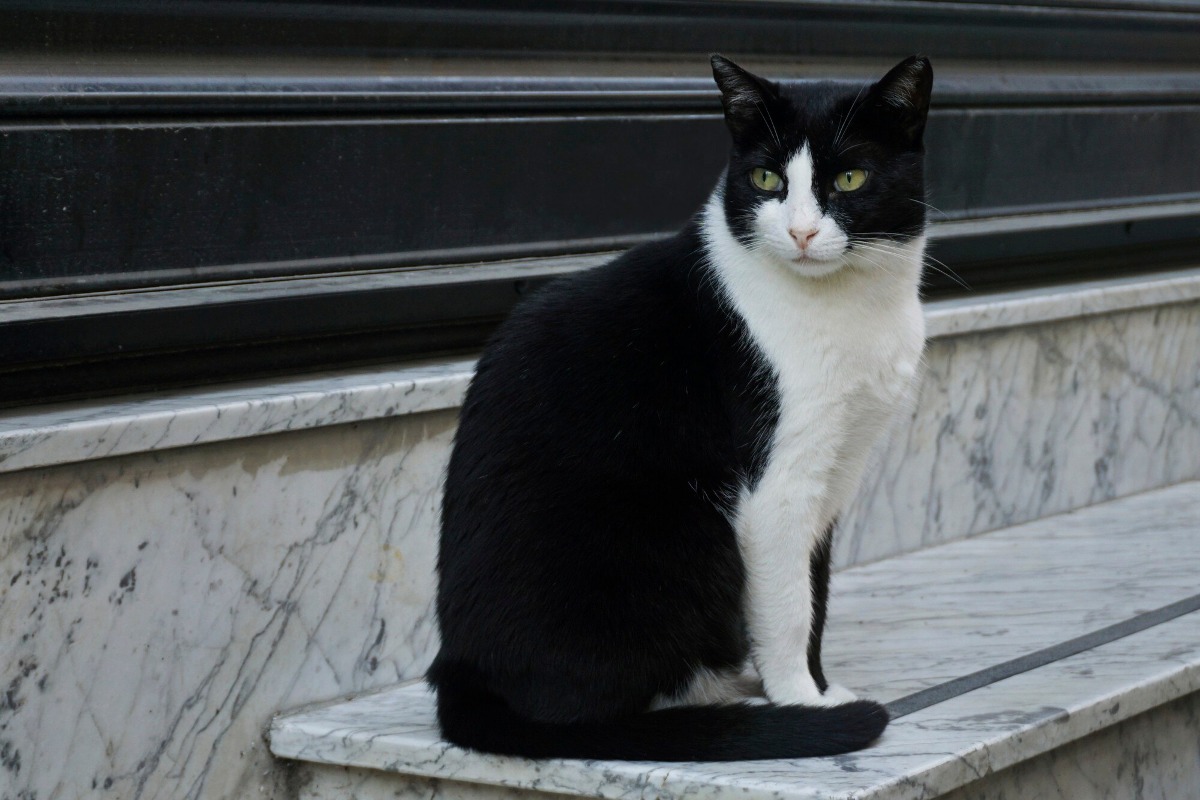
You know the cat who leaves the busy kitchen and finds a quieter room. When that cat wears a black-and-white coat, Gutiérrez sees a possible pattern in the retreat. The Spanish veterinarian, who has a master’s degree in animal behavior and welfare from the University of Zaragoza, puts his observation plainly: “The black and white ones get overwhelmed more easily.”
His point gives you a way to think about the tuxedo cat in your home. The name describes that striking coat, with its patches of black and white. Gutiérrez has also described black-and-white cats seeking their own quieter surroundings when they feel stressed. From your side of the kitchen, the useful detail is where your cat chooses to go when it has had enough company.
Owners noticed a difference during handling
There is a piece of research behind the wider conversation about coat color and behavior. In 2016, UC Davis researchers studied answers from 1,274 cat owners. They compared reports of aggressive behavior across 13 coat-color groups, including black-and-white cats.
Owners reported slightly more aggression from black-and-white cats toward people during handling and veterinary visits than from solid-colored cats. Those are moments when a cat is being touched or examined, so they give the veterinarian’s comment a familiar setting. You may recognize the difference between a cat resting comfortably at home and that same cat being handled at a veterinary visit.
The survey also recorded similar or higher scores for gray-and-white, calico and tortoiseshell cats. Its focus was aggression, a different behavior from feeling overwhelmed. That distinction matters when you put the research beside what Gutiérrez has observed.
A tuxedo coat is a pattern
Your black-and-white cat might look dressed for a special occasion even while sprawled across the laundry. That coat has a straightforward explanation: white spotting creates the contrasting patches. “Tuxedo” describes a pattern, not a breed.
What you see in daily life comes from more than those patches. A cat’s individual temperament, breed and socialization all belong in the picture. Gutiérrez also points to its surroundings and its relationship with its caregiver. Those are things you come to know by living with your cat, not by looking at its fur.
So notice the moments around your cat’s choice to leave a room or stay close. Its coat catches your eye first. Its habits tell you more about the animal sharing your home.
The limit
Gutiérrez is describing a tendency, not a rule for every black-and-white cat. The UC Davis findings came from owner reports rather than direct observation, and the differences between coat-color groups were small. The survey did not measure whether cats felt overwhelmed, and it did not show that coat color determines personality. Your cat’s behavior is still its own.