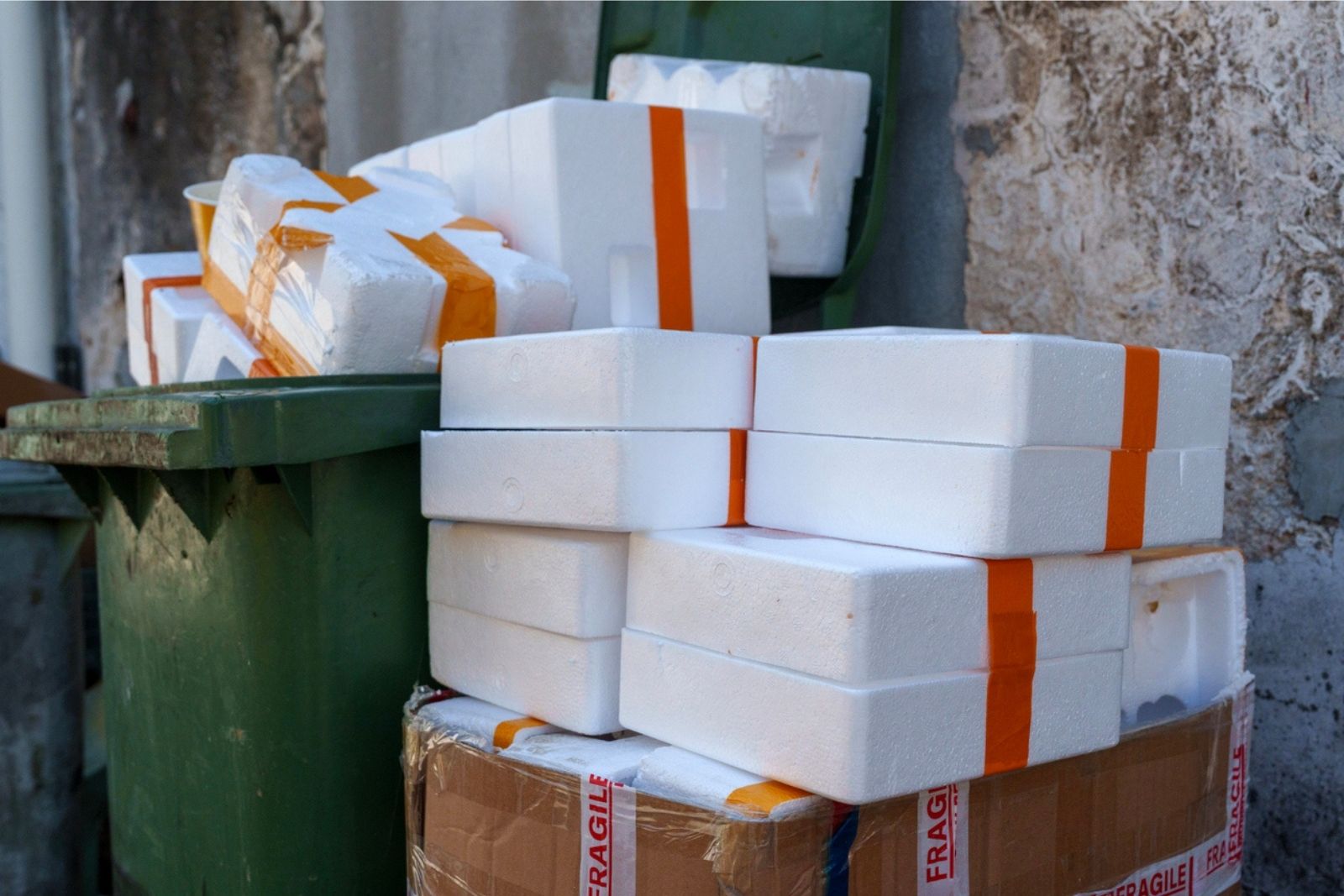
An appliance box leaves a white foam block on the floor, or dinner leaves a squeaky takeout tray beside the sink. You spot the chasing arrows, hesitate, then drop it into the blue bin with the bottles and cans. It’s an understandable reflex, and in most homes, it sends the foam to the wrong place.
Those little arrows don’t mean what you think
That moment of hesitation is worth listening to. The symbol on the foam only tells you what kind of plastic it is. It doesn’t promise that your town will take it.
The equipment and the rules serving your address decide that, and very few localities accept polystyrene foam in curbside recycling. What we all call Styrofoam is usually expanded polystyrene, or EPS. It’s the light white material that cushions packages and holds takeout. And it tends to cause trouble once it leaves your kitchen.
What happens after the truck drives away
EPS is light, bulky and brittle. On a sorting line, it breaks into tiny pieces that standard systems struggle to recapture.
In Frisco, the city has no foam densifier, so foam tossed in the blue bin ends up landfilled. A specialist, on the other hand, can shred and compact it into dense logs used for manufacturing.
So here’s the honest part: foam can be technically recyclable and still belong in the trash. A regular sorting line and a dedicated foam drop-off are two different destinations. The real question is which one is open to you.
The bend test, before it leaves the house
Back to that foam block on the floor. Before it goes anywhere, look up your own program, not a national rule. Search your city, county or hauler’s page for “foam” and “expanded polystyrene.” If curbside foam isn’t named, keep it out of the blue bin. A dedicated drop-off is the better route.
If you find one, read the details before you load the car. Check which kinds of foam it takes, its current hours, whether you need to be a resident, and whether it accepts food containers or packing peanuts.
Then pick up the piece and bend it. Nashville describes accepted foam as rigid and able to snap when bent. Soft foam, bubble wrap, gel packs, pool noodles and construction board go in a different pile.
That takeout tray needs one more step. Rinse away the food and let it dry. Then remove every strip of tape, film and cardboard, plus every label. Frisco Environmental Services and Cook County reject contaminated material at their foam drop-offs, so this part matters. Once it’s clean, take it to the site you found.
Foam isn’t the only thing on the sorting shelf that deserves a second look. Some household items need special disposal too.
Chemical & Engineering News explains why this familiar foam is difficult to recycle in ordinary systems.
When Your Town Says Trash
Foam rules change from one place to the next. Cook County takes clean food-service foam and packing peanuts, while Nashville excludes peanuts, flexible foam and insulation board. Don’t borrow a nearby community’s rules, even when the package shows a recycling symbol.
If no verified drop-off takes your piece, regular trash is the right call. Bag loose pieces first so they can’t scatter.