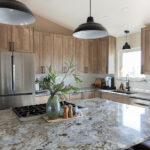
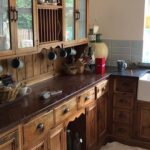
Walk into a kitchen with a traditional range hood, and one of the first things you may notice is the bulky canopy hanging over the cooktop. Some designers are choosing a less visible alternative. The ventilation stays, but the equipment moves somewhere far less obvious.
A clear view across the island
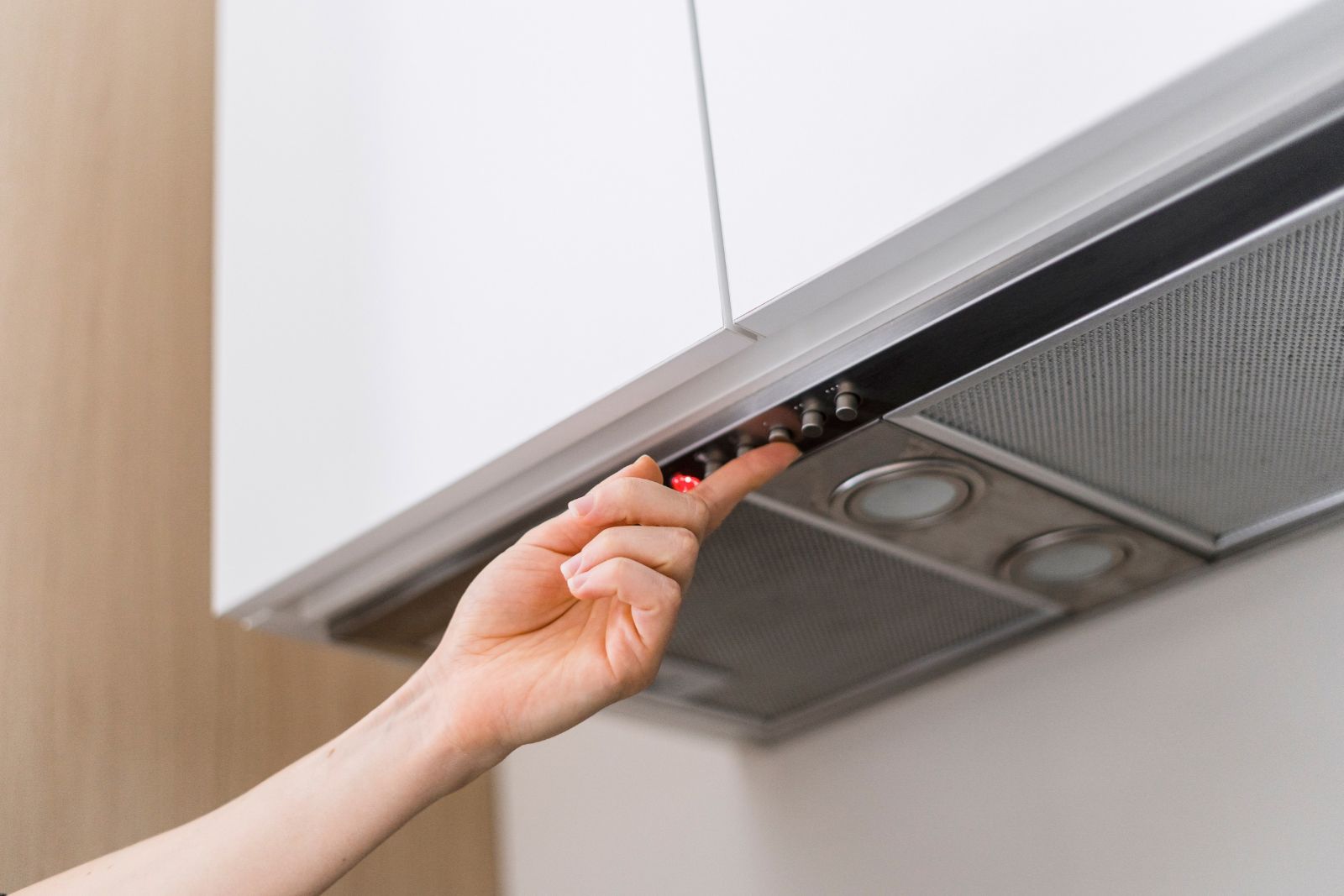
One alternative is an induction cooktop with integrated downdraft ventilation, sometimes called an extractor cooktop. Look closely and you’ll see a slot or grille built into the cooking surface, often between the cooking zones. It draws cooking fumes toward filters and ductwork beneath the countertop.
Another version uses a separate extractor that rises behind the cooktop while you’re cooking, then retracts when it’s no longer needed. On a kitchen island, either approach can eliminate the canopy hanging between the cook and the rest of the room.
At Design & Construction Week 2026, Signature Kitchen Suite demonstrated a prototype with an induction cooktop hidden beneath a stone countertop and a downdraft vent that rose from the surface. The concept illustrates the appeal of less visible kitchen equipment, although a prototype does not establish how widely the technology is being installed.
It’s part of the same design approach as appliances moving off the counter: the equipment remains functional while becoming less visually prominent.
But if steam naturally rises, how does an extractor at counter level capture it?
What happens when you lift the lid
Cooking emissions generally rise with the warm air above a pan. Frying and searing can release grease droplets, fine particles and odors, while boiling adds water vapor. A conventional overhead hood is positioned to capture that rising plume.
A downdraft extractor works differently. Its fan draws air sideways and downward toward an opening at or near the cooking surface. How much it captures depends on the extractor’s design, airflow, pan height and cooking activity.
That last point matters when you lift a lid. A sudden cloud of steam can rise above the effective capture area before a downdraft system removes it.
Induction can make the arrangement more appealing because it produces heat directly in compatible cookware without burning gas at the cooking surface. However, induction cooking still generates particles, grease and moisture from food preparation.
So even without gas combustion, effective ventilation remains important. And that makes the installation plan more important than the showroom appearance.
Planned before the counter is cut
This choice starts with the floor plan. Select the exact cooktop and extractor model before ordering cabinets or cutting the countertop. Have qualified installers determine the required clearances, electrical supply, ventilation route and access for filter maintenance.
Integrated downdraft systems can occupy substantial space beneath the counter, potentially limiting drawers and storage. Duct dimensions, bends and installation restrictions also affect airflow, so the manufacturer’s instructions and applicable building codes need to guide the design.
When possible, choose a system that exhausts outdoors. A ducted extractor removes captured cooking air from the home. A recirculating model passes air through filters before returning it to the kitchen.
Recirculating filters can capture some grease and odors, depending on their design and condition, but they do not provide the same removal of moisture and indoor pollutants as outdoor exhaust.
Once installed, use the extractor whenever you cook. Select a higher fan setting when preparing foods that generate more smoke or grease, following the appliance’s instructions.
The U.S. Environmental Protection Agency recommends leaving an outdoor-vented range hood running for another 10 to 20 minutes after cooking. This is a useful ventilation principle, although the appropriate operating time for a particular downdraft unit should follow its manufacturer’s guidance.
Clean grease filters and replace any charcoal filters according to the manual. Poorly maintained filters can reduce performance and allow grease to accumulate.
When the old hood still earns its spot
If you cook frequently with gas, use tall stockpots or regularly sear food at high temperatures, an appropriately sized overhead hood that vents outdoors may be the better choice.
The Home Ventilating Institute explains that downdraft extractors generally require greater airflow and air velocity to capture contaminants. Their performance cannot match that of a properly designed canopy positioned above the rising cooking plume.
That doesn’t make downdraft systems useless. They can be a reasonable option when preserving sightlines or accommodating a particular kitchen layout is a priority. But their limitations should be understood before choosing one.
Installation may involve electrical work, cabinetry changes and ductwork beneath the floor or behind cabinets. Follow the manufacturer’s instructions and local requirements, and consult a qualified ventilation professional before committing to the design.
If smoke routinely lingers or grease accumulates around the kitchen, have the system’s performance assessed. A cleaner-looking kitchen should never come at the expense of effective cooking ventilation.