

You settle into your favorite chair by the hearth, expecting the fire to warm the living room, yet the hallway still feels chilly. Between hauling logs, cleaning ashes, and watching your winter heating bill climb, that familiar glow can start to feel like an expensive habit.
In short
- An open wood-burning fireplace sends more than 90% of the fire’s heat up the chimney.
- A natural gas fireplace insert costs about $0.35 to $0.70 per hour to run.
- An electric fireplace costs about $0.11 to $0.44 per hour on its high setting.
- Both options let you enjoy a fire’s glow without burning wood in the fireplace.
The open fire sends heat up the chimney
View in gallery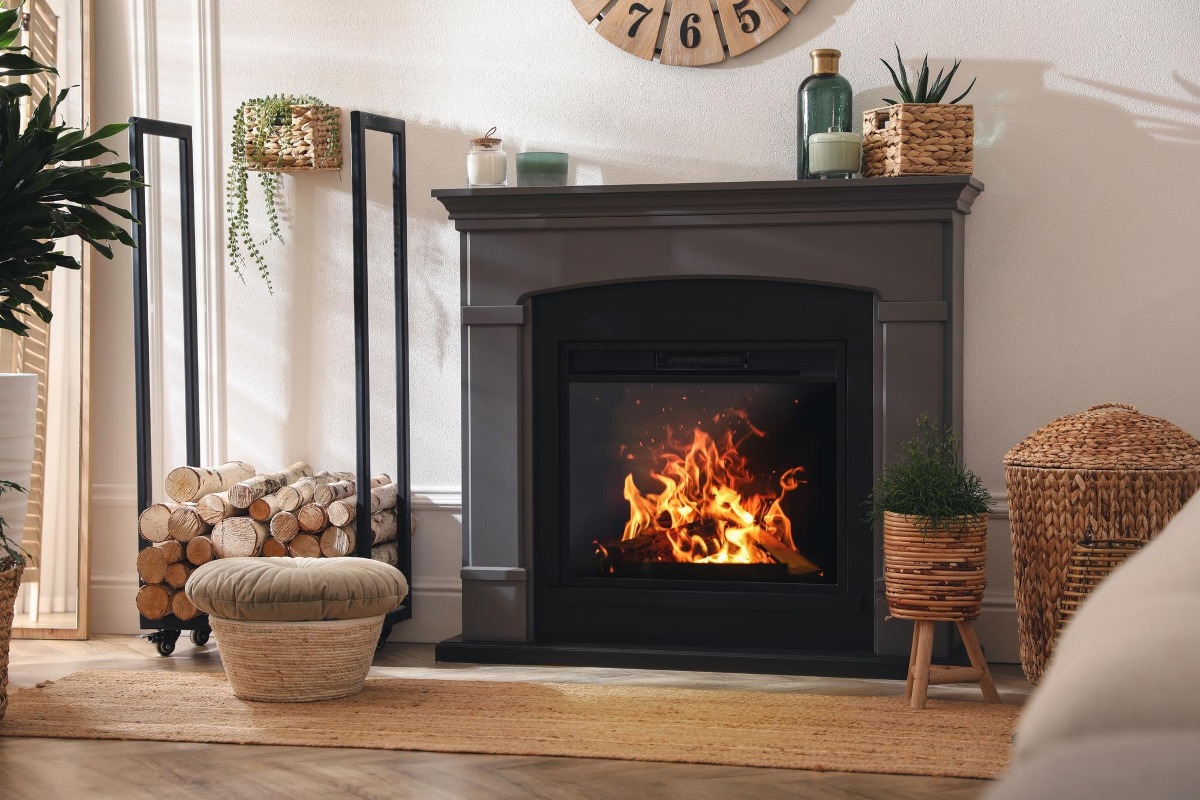
Here’s the problem with that cosy glow of a traditional open fireplace. It sends more than 90% of its heat straight up the chimney, and takes some of your already-warm room air with it.
That’s why you can feel warm right beside the hearth while the rest of the room stays cool. In some homes, the heat escaping through the chimney outweighs what the fire adds to the room. So the fire looks like it’s heating the house, but it can actually be making it colder.
There’s the smoke to think about, too. Wood smoke contains gases and fine particles that can affect your health. Children, older adults, and people with heart or lung conditions are especially at risk. Replacing an open wood fire with a gas or electric model changes more than the look of the hearth, it removes the smoke too.
A gas insert keeps more warmth inside
A gas insert slots into your existing fireplace opening, so you keep the fireplace but lose most of the heat loss. Instead of tending a wood fire and watching much of its heat leave through the chimney, you have a fireplace designed to heat your living space more efficiently.
For a natural gas insert, the running cost is roughly $0.35 to $0.70 per hour. While a three-hour evening by the fire costs you roughly $1 to $2. Average yearly running costs for a natural gas fireplace fall between $400 and $640.
The appeal isn’t just the number on a bill. You keep a fire as part of the room without feeding logs into an open hearth. If your favorite chair faces the fireplace, that corner can still feel like the place to settle in at the end of the day.
Electric gives you another way to get the glow
Maybe what you love most is seeing the fireplace lit while you read or watch a show. An electric fireplace gives you that glow without burning wood. Its running cost is lower than the natural gas range: about $0.11 to $0.44 per hour at a typical 1,500-watt high setting.
Run it for about 4 hours a day, and the estimated monthly electricity cost is $13 to $52. That’s less than some streaming subscriptions.
It also changes the rhythm of using the hearth. There’s no wood fire to build and no wood smoke from the fireplace. You can still have a bright focal point in the room, with the heat coming from an electric appliance instead of an open flame.
The limit
Neither option recreates the scent and feel of burning logs. A gas insert typically costs $2,000 to $5,000 installed, so its hourly running cost is not the whole expense, but you still get a real flame, without hauling logs or sweeping ash. Electric running costs depend on the setting and how long you use it plus there’s no logs to build, no ash to clear, no smoke. And the poor heat performance described here applies to traditional open fireplaces, not every wood-burning appliance, because EPA-certified wood inserts are a cleaner, more efficient wood-burning option.