
You reach for a coffee mug, and the cabinets over your counter seem to take up more of the room than you remembered. More homeowners are rethinking that familiar wall, which leaves a practical question for your own kitchen: where would you put the mugs, plates, and cereal bowls you use every day?
In short
- Homeowners are replacing upper cabinets with open shelves and clear walls.
- Pantries, islands and drawers take over much of the storage.
- Clearer walls make room for windows, natural light and standout finishes.
- The result is a kitchen that feels open while keeping everyday items close.
The walls are opening up
View in gallery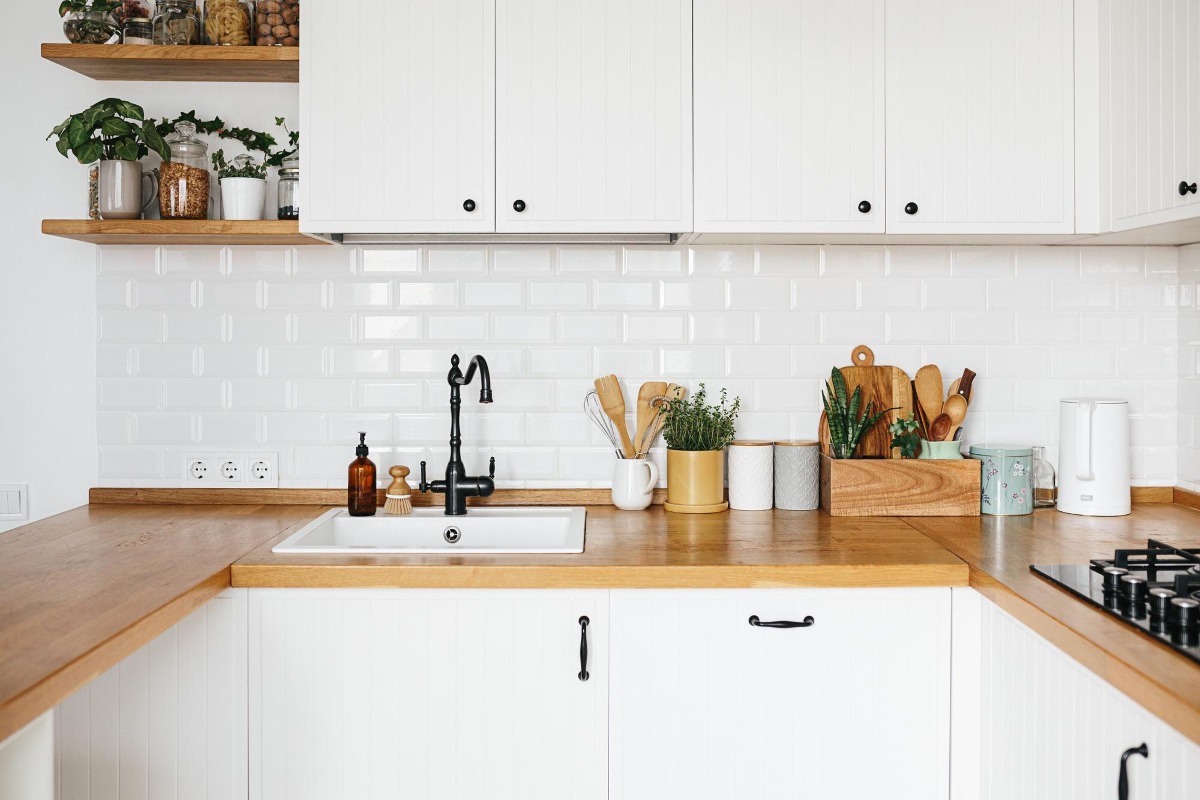
Picture the wall above your kitchen counter. Instead of a row of cabinets, you see a window, a stretch of stone or a simple shelf holding the dishes you reach for most. The room feels different before you move a single appliance.
That look is showing up in kitchen plans. Bertch Cabinet Manufacturing has tracked a growing move toward kitchens with base cabinets and few or no upper ones, often paired with open shelving. In the NKBA’s 2027 Kitchen Trends Report, 27% of designers expect to use fewer upper cabinets in their designs over the next 3 years.
Designer Kathryn Murphy says taking away some of the cabinetry above the counter gives a kitchen room to breathe. It also leaves space for more windows and light. You still have a working kitchen, only with less cabinetry filling your view.
Light gets a place to land
Think of the part of your counter where you set down your coffee cup each morning. Upper cabinets can make that spot feel closed in. Designer Stephanie Mahaney says they can also cast shadows on the counter below.
With that wall opened up, a larger window becomes part of the design. Jeanne Barber of Camden Grace Interiors says fewer upper cabinets can make a kitchen feel larger while allowing more natural light inside. The change is as much about what you see across the room as what you store along the wall.
A clear wall can also bring the kitchen’s finishes forward. Designer Marie Flanigan points to windows, plaster walls and statement stone as features that stand out when upper cabinets are gone. An open shelf gives you another way to keep a few everyday pieces in view, rather than lining the whole wall with cabinet doors.
The storage finds a new home
That stack of plates still needs a place to go. In kitchens without upper cabinets, dishes can move into drawers, while an island takes on more storage. Floating shelves keep some things within reach without covering the wall.
A pantry can do even more of the heavy lifting. Walk-in and butler’s pantries are common alternatives for storing what once filled the cabinets above the counter. Kitchen designer Jodi Gould says floor-to-ceiling storage, such as a pantry, frees up the upper walls and helps the kitchen feel larger.
So the practical shift is not simply taking cabinets down. It is giving dishes, cookware and pantry items a home elsewhere, then enjoying the space left behind. You get a clearer view across the kitchen and storage that still serves the way you use it.
The limit
This look depends on having enough storage elsewhere. Designer Kelsey Matyas warns that losing upper cabinets can leave counters cluttered or pantries overstuffed, and Grey Joyner says homes short on storage can give up practicality for style. Brianna Scott expects upper cabinets to remain in kitchens, with their style and placement changing instead. For your kitchen, keeping some upper cabinets alongside shelves, drawers or a pantry may be the better fit.





No pictures of this idea then?