

She had a tile guy coming on Thursday.
The plan was to rip out the gray mosaic backsplash and start over with something plain. Probably white subway. Everyone she asked told her the same thing: that busy tile is dating the whole kitchen, pull it out, start fresh. She agreed. She hated it too.
Then her painter walked in with his coffee and quietly disagreed.
“Give me three days with the cabinets first,” he said. “If you still want that tile out after that, I’ll help you tear it down myself.”

What he saw was something most homeowners miss. The tile wasn’t ugly. The tile just didn’t have a friend in the room.
Here’s the thing. Cherry stain is warm and orange. The mosaic is cool, with grays, soft whites, and a little slate running through it. Those two were sitting an inch apart on the wall, pulling in opposite directions. Your eye couldn’t settle anywhere, so the whole kitchen read as “trying too hard” even though every single piece in it was actually fine.
She didn’t need new tile. She needed a referee.
A dark that isn’t black
He didn’t go black. Black cabinets photograph great on Instagram and feel like a cave in real life, especially above a warm beige tile floor like hers. He went for a cool-leaning espresso instead, roughly the color of a dark coffee bean. In evening light it reads near-black. When morning sun hits it, it softens into a rich brown.
Three coats. Doors sprayed in the garage. Cabinet boxes brushed on site. He didn’t change the layout. He didn’t touch the molding. He didn’t swap the hardware on the island. The only thing that changed, really, was one color.

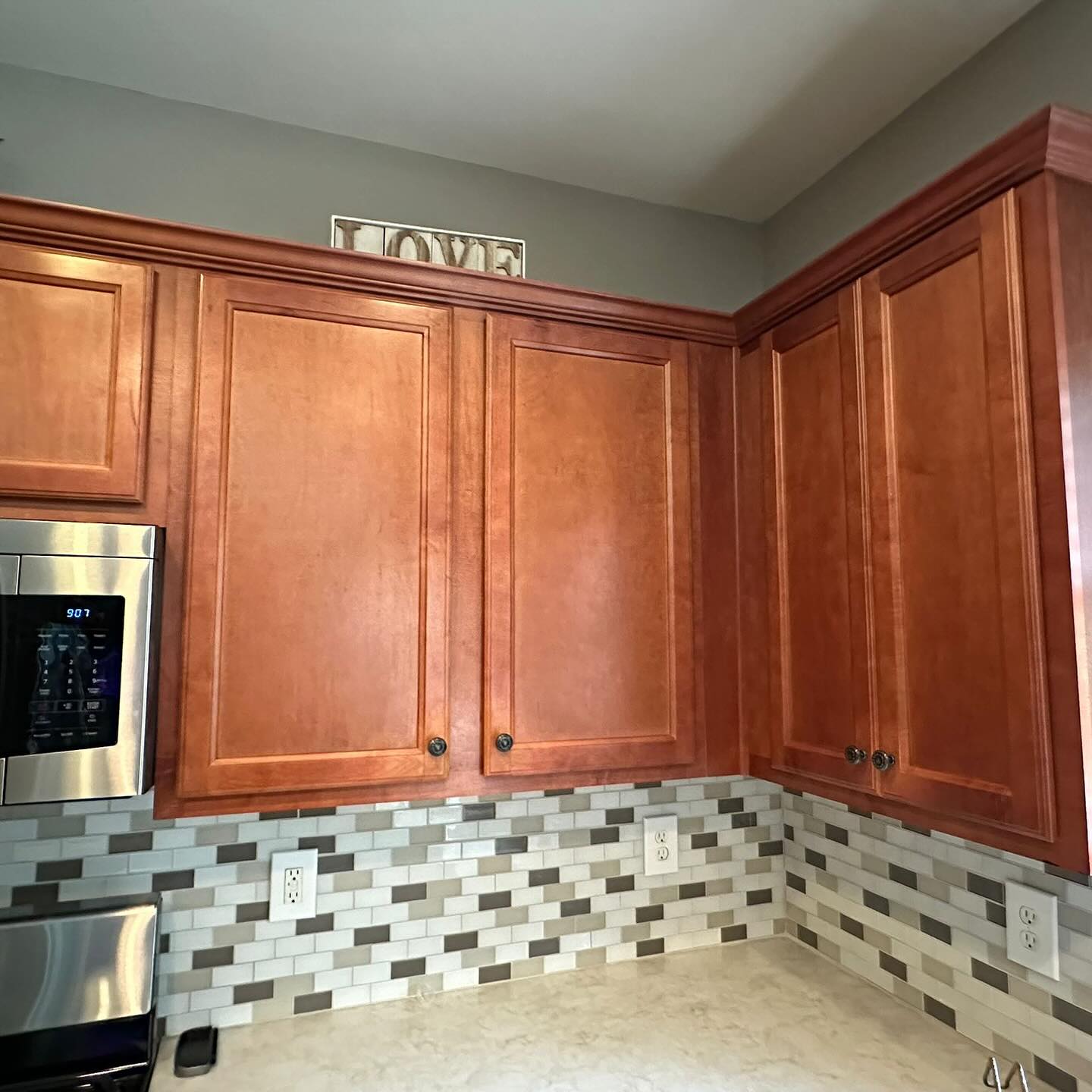
Look at the mosaic in both halves. Same grout, same tile, same wall. On the left it looks random, almost chaotic. On the right it looks picked on purpose. That isn’t the tile changing. That’s your eye finally finding somewhere calm to rest.
The counter that used to look cheap
She was quietly saving up to replace the island counter. On top of orange cherry, the white marble-look surface read as flat and chalky. It looked like laminate even though it isn’t. Guests never commented on it. She assumed that was because it looked like nothing.
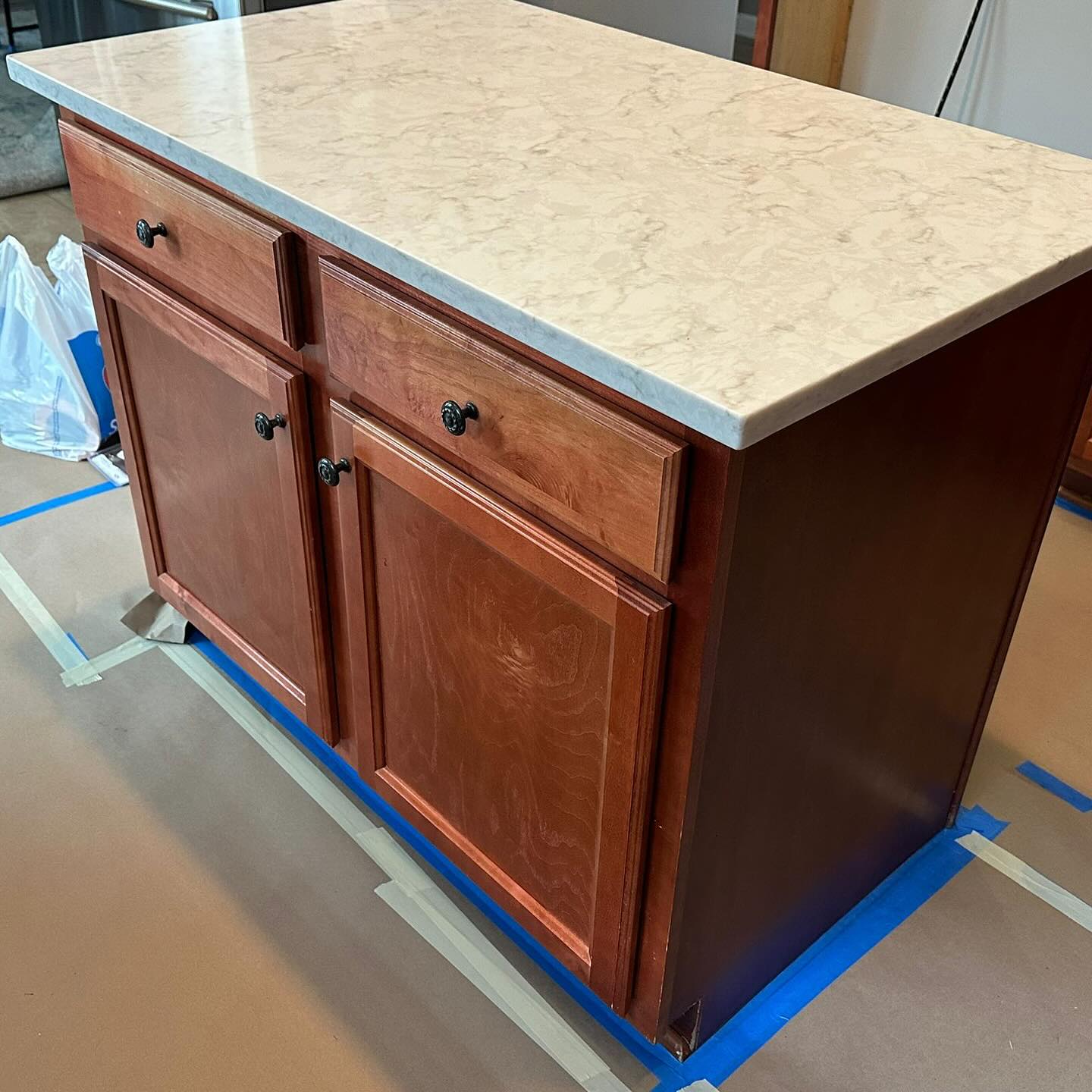
Against the dark base, the veining has real contrast now. The white is crisper. People lean over the island and ask what the stone is. It’s the exact same counter she had last Tuesday.
The hardest-working shot in the project
This before-and-after pair is where the project earns its money. The LOVE sign is still up top. The mosaic hasn’t moved. Nothing in the room was replaced. The temperature of the whole kitchen just flipped.
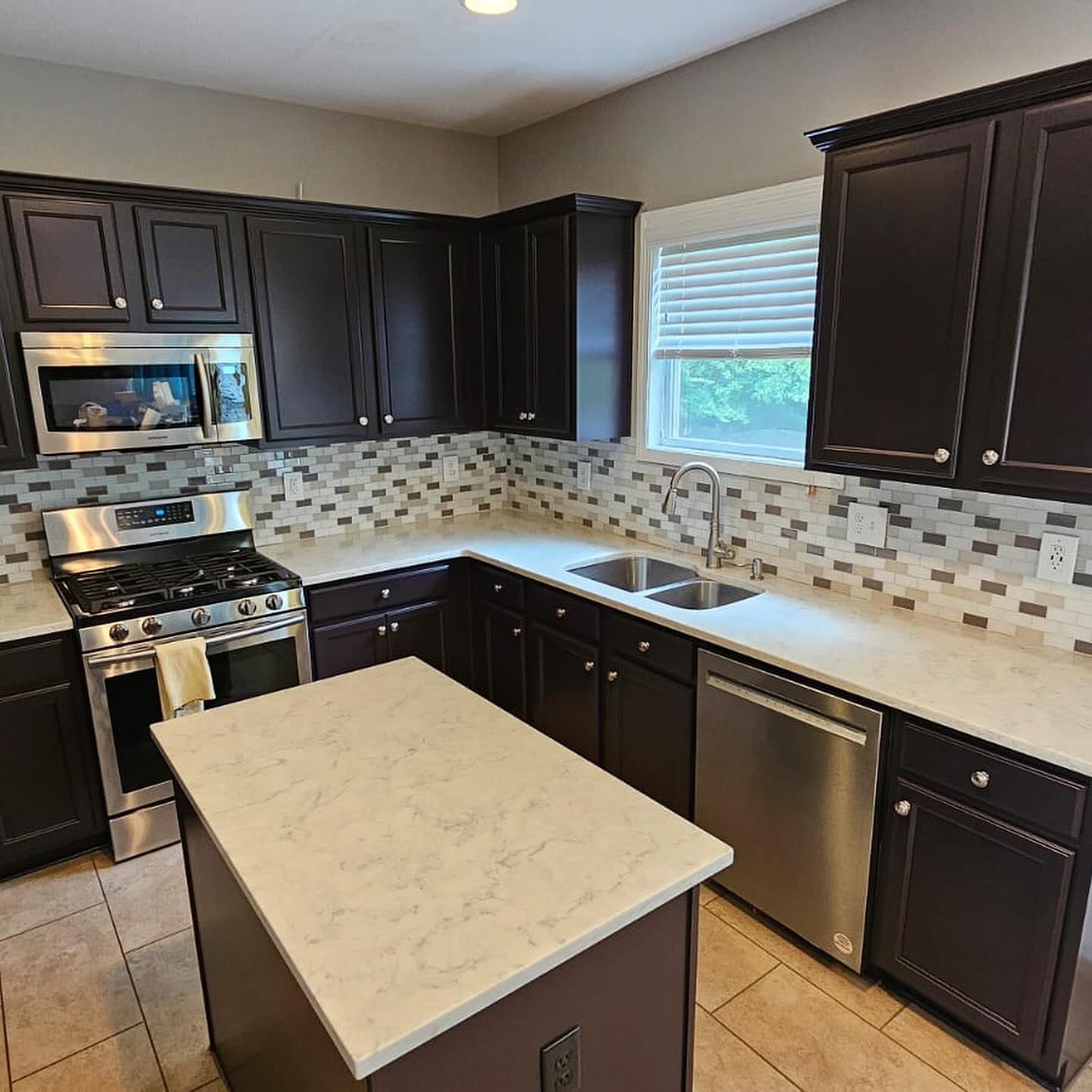
The stainless stove and sink used to look like they wandered in from a different kitchen. Dark cabinets frame stainless the way a mat frames a photo. The appliances stopped shouting for attention and started feeling built in.
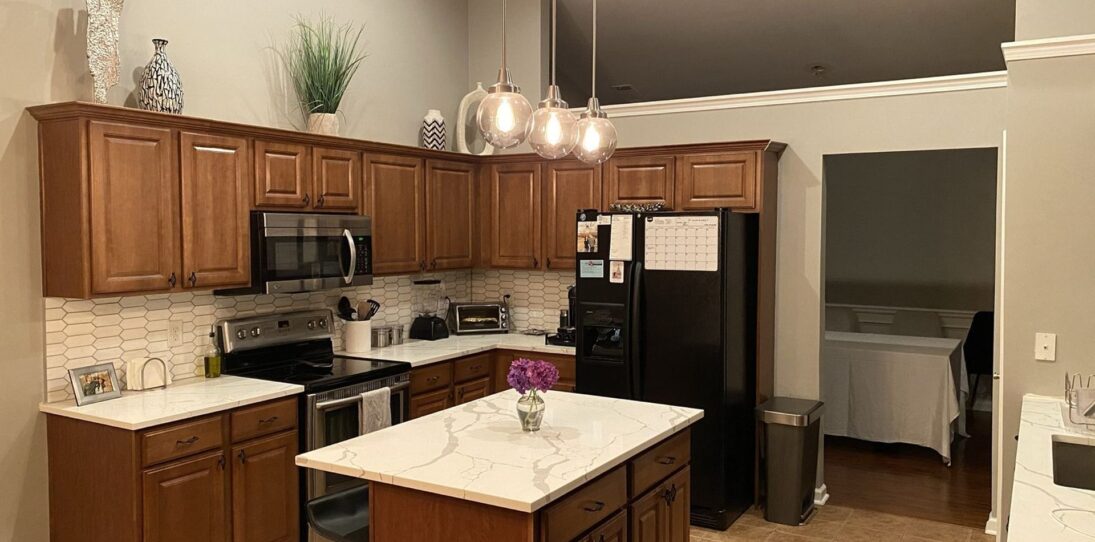

What dark paint does to fussy trim
Her cabinets are not simple. Raised panels on every door, decorative knobs, heavy crown molding on top. In cherry, every one of those details screamed “builder traditional, circa 2008.” The crown molding especially read as top-heavy, like it was pressing the ceiling down an inch.
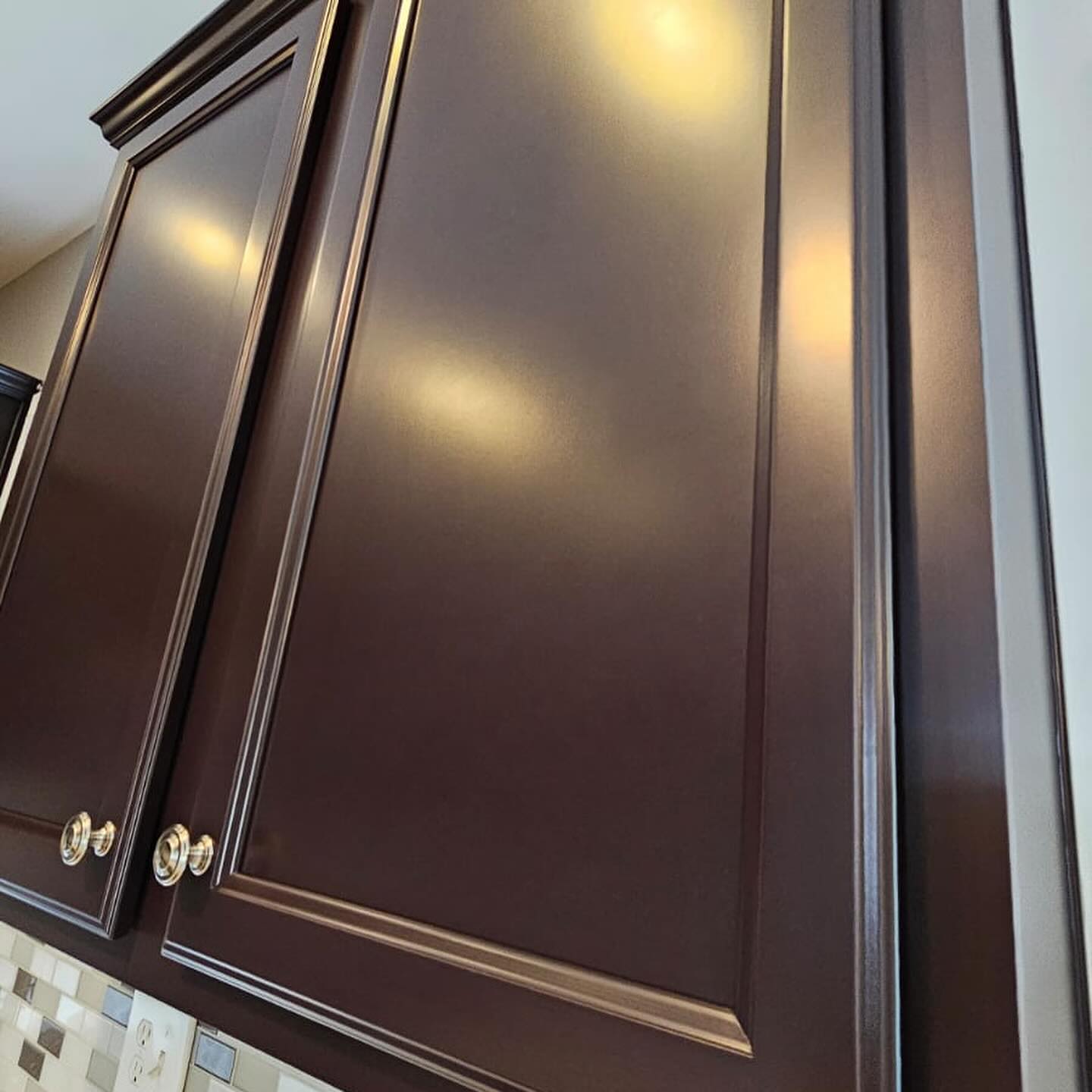
In espresso, the same details read as classic. Dark paint has a way of calming ornate profiles. You see the shape of the molding. You don’t notice the fuss. The crown goes from pressing down to quietly finishing the top.
The corner that sold the color
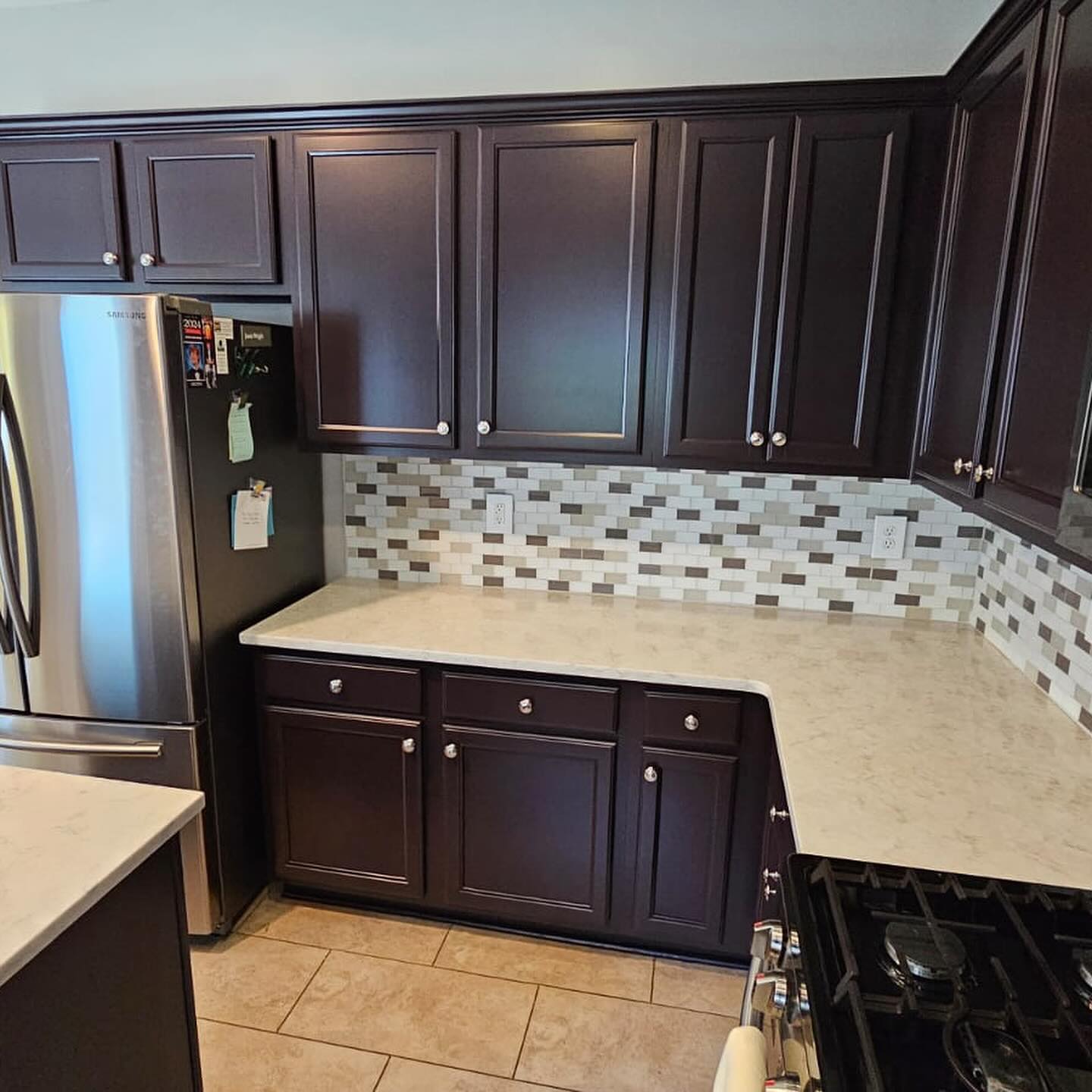
If you want to see the whole argument for the color in a single frame, this is it. The espresso is clearly brown under warm bulbs, not black. The wood grain is gone, which makes the surface look modern and solid. And the mosaic sitting behind it, same tile that was there two weeks earlier, now looks like it was picked by somebody with a point of view.
The full room, done

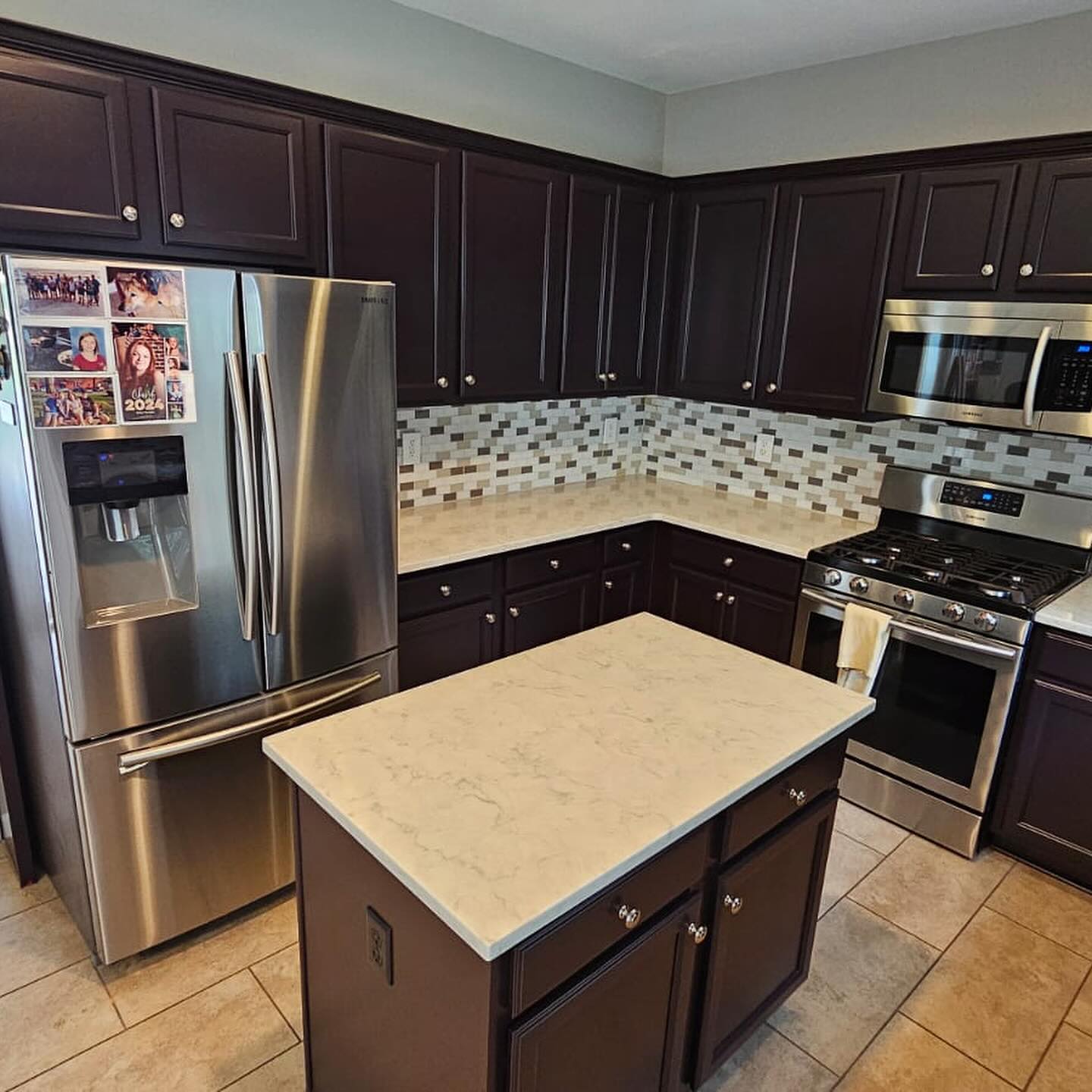
She never called the tile guy.
She paid for paint, three days of a painter’s time, and the sanding and prep that went with it. The tile is still on the wall. The counters are still the counters. The appliances are still the appliances. The floor still looks a little dated, honestly, but it reads warm instead of random now, which is enough.
If something in your kitchen feels off, resist the urge to blame the loudest piece first. The cheap fix is usually not ripping something out. It’s giving the rest of the room a quieter anchor to lean on, and seeing what settles down on its own.