

When night falls in northern Wisconsin, Robin Greenfield can feel the cold settle into the wooden room where he sleeps. There’s no thermostat, no running tap and no insulation in the walls. His answer to winter doesn’t start with the building but with the bed.
A summer room facing winter
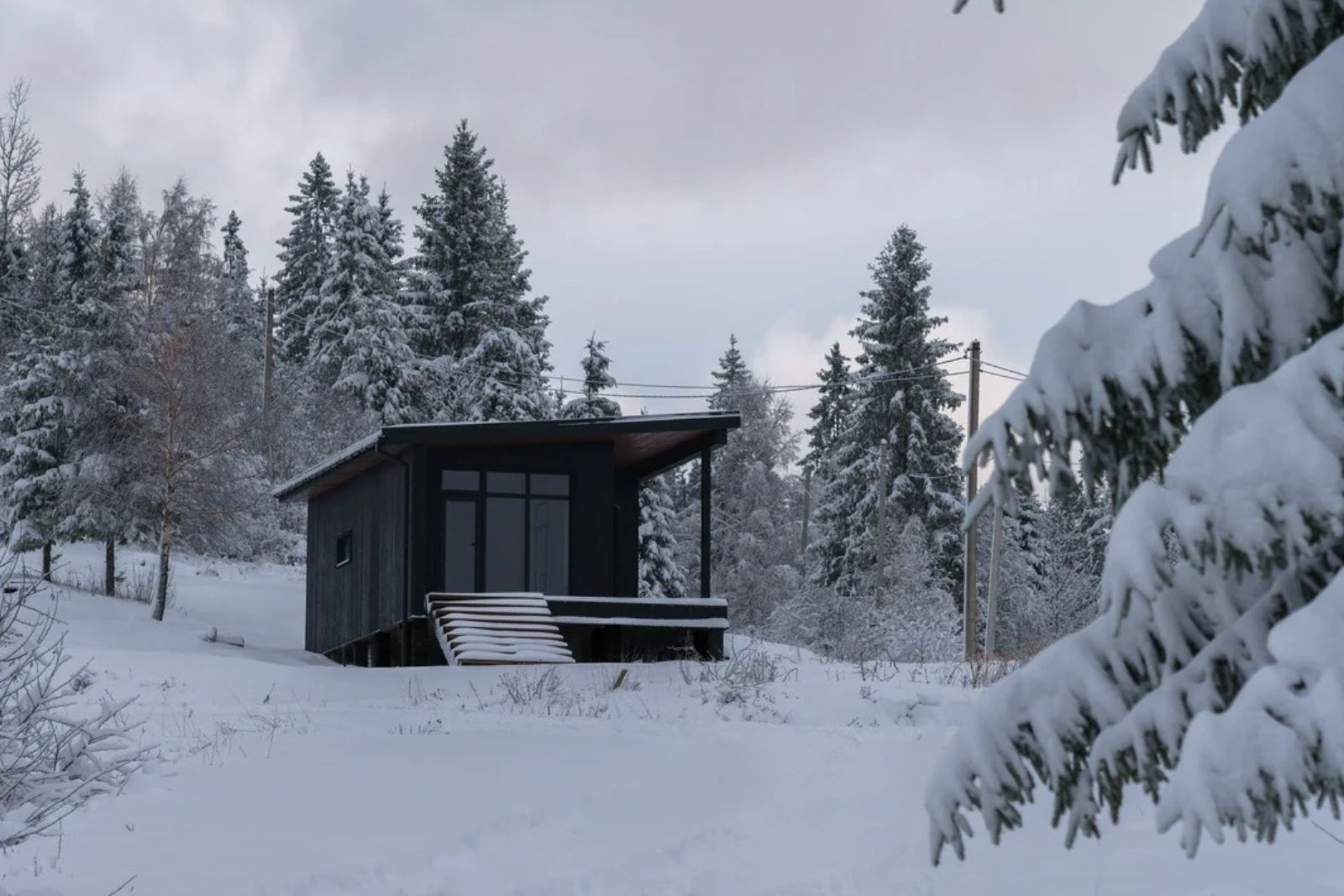
Calling it a tiny home makes it sound more ordinary than it is. The Hermitage is really a sauna and an adjoining hangout room, built by a friend who lets Greenfield use the space.
When he moved in during summer 2025, the living area had screened openings, no heat and no electricity. Greenfield called it a three-season room, with solid window panels to put up before winter. A wood stove sits on the sauna side.
For the 2025-26 winter, he planned to make this rough room his bedroom. Light would come from a rechargeable solar lamp and a headlamp. His devices would be charged in another house on the property. After dark, his whole world would shrink to the size of his bed.
Warming the bed, not the room
His evening starts by lighting firewood in the stove. With the fire going, the stones heat on the stove while he arranges the bed from bottom to top: the foam mattress, cotton sheets, a feather pillow at the head and wool blankets on top.
Before he gets in, he tucks the hot stones between the wool blankets, never against his skin or the cotton sheets. The stones are removed before sleeping rather than left in the bedding overnight.
He doesn’t try to keep the whole room at the temperature most of us expect at home. The trick is simple. Forget heating the room and heat the few feet around you instead.
Dense stone takes its time to cool down. Wool traps lots of tiny pockets of air, which slows the loss of heat. Between them, the warmth stays where he needs it, but mornings are another matter.
Mornings without a faucet
There’s no tap to turn. The property has a well, and Greenfield collects what he needs.
Dishes and clothes get washed in a trough. Laundry dries on the roof. A five-gallon bucket composting toilet he built by hand stands in for a bathroom.
Every chore takes more effort: collecting water, washing dishes by hand, preparing wood for heat. The upside? No pipes to freeze. The downside, however, is that there’s no hot shower on a January morning..
For Greenfield, that’s the point. Comfort is something he earns each day, one bucket and one log at a time.
Where the hot stones stop
Hot stones in bedding can burn you or start a fire. Remove them before sleeping. If you use a wood stove, it needs professional installation, a chimney inspection, space from bedding and a working carbon-monoxide alarm.
AA warm bed isn’t a winterized home. Most houses still need proper insulation, safe heating and a bit of fresh air, even in winter.