The storm warning comes in, and you do what everyone does: drive to the hardware store, haul home a pile of sandbags, and stack them against the front door until your back aches. Then the water arrives, and it finds its way in anyway, seeping between the bags and under the door frame. The carpet in the hall is soaked by morning, and you can’t figure out what you did wrong.
This is not your fault. Sandbags are the image everyone has of flood protection, but they were never a seal. And a recent set of laboratory tests found that a far cheaper item, already in most kitchen drawers, did a much better job at the door.
What The Tests Actually Showed
Researchers at the University of Hull ran the laboratory tests on modern wooden, vinyl and composite front doors, each installed by trade professionals. They raised the water in 2-inch steps up to 24 inches and measured every drop that leaked through. With no protection, the doors often let in thousands of liters an hour at full depth, which means hundreds of gallons.
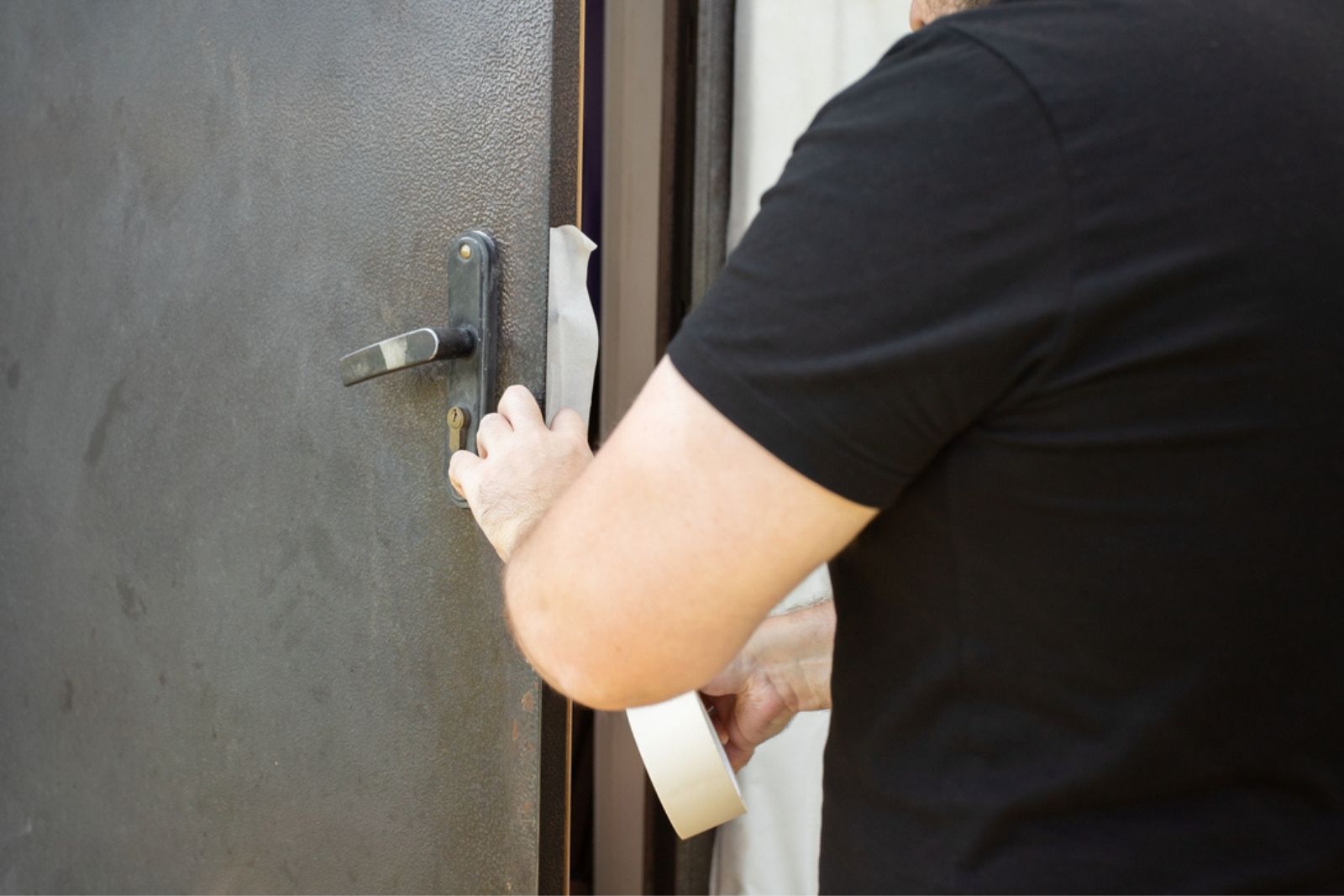
A wall of 54 sandbags, with plastic sheeting between the door and the bags, cut that leakage by about 70 percent at best. Plain duct tape applied to the outside of the door cut it by 97 to 98 percent. A flexible synthetic rubber tape did slightly better still, at about 99 percent.
The difference comes down to where the water gets in. A door leaks through its gaps, around the frame and at the threshold. Sandbags hold back some of the water without sealing anything. Tape closes the gaps themselves.
How To Tape A Door Before A Flood
- Buy the right roll now. Keep a roll of wide, strong duct tape, or a butyl-style flood putty tape, in the house before storm season. A roll costs about $10 or less.
- Work from the outside. In the tests, tape on the outside of the door comfortably beat tape on the inside, so don’t do it from the hallway.
- Cover every gap. Seal the joints between the door and the frame, and along the bottom where the door meets the threshold.
- Give it 10 to 20 minutes per door. That’s how long one careful person needed in the lab. Do it before the water reaches the step, not as it arrives.
One more detail from the results: doors that open outward performed better than doors that open inward.
The Limits, Stated Honestly
These results describe one doorway in controlled conditions, up to 24 inches of water. They are not a promise that your home stays dry. Water can still enter through walls, floors, drains, vents and other openings that no tape can reach, and results depend on the condition of the door and frame and on how well the tape is applied. The lead researcher, Professor Stuart McLelland, is explicit: “Tape is not a substitute for permanent, professionally installed property flood resilience measures.”
So treat the roll as a cheap first line, not a plan. If officials call for evacuation, leave: no door seal is worth staying for rising water. And the same logic that makes a closed, sealed door so protective applies inside too, which is why fire experts say a closed bedroom door can buy precious time.
Skip the sandbag pile, tape the outside of the door, and know when to go. That’s the trick.