
You pull the dresser away from the wall and there it is: a gray bloom of specks on the paint. The white vinegar in the kitchen suddenly looks like the easy answer. Before that spray touches the wall, though, it’s worth asking where the damp came from.
Where that gray bloom comes from
Those spots tend to show up where warm, damp room air meets a cold surface. Behind furniture is a classic place. So are the wall beside a window and the area high up in a steamy bathroom. When moisture lingers, mold spores already sitting in household dust can start to grow.
So before you reach for the spray, deal with the damp Just like with moldy bathroom caulk, an exhaust fan, a repaired leak and a little breathing room behind the dresser do more than spraying again and again.
It also helps to know what you’re looking at. Vinegar is meant for a small patch of surface mildew on sound, fully cured, washable paint. Fingerprints, cooking grease and everyday grime just need a soft sponge, mild soap and warm water.
What the vinegar can and can’t reach
White vinegar contains acetic acid. Mold doesn’t like acidic conditions, so a coat of vinegar can slow some types down. Letting it soak in also makes the growth easier to wipe away.
In a lab test, vinegar’s effect varied between fungi but a real wall is not the same as simulated lab conditions. There is no one-stop solution that works on ever mold.
The wall itself plays a part, too. Paint forms a skin you can clean, but the paper-faced drywall underneath is porous, and threadlike growth can travel through it, out of reach of any spray. This means drying the wall properly matters as much as the vinegar does.
One hour on the wall
Start by opening a window or turning on the exhaust fan. Put on gloves and goggles. An N95 respirator helps limit what you breathe in while you disturb visible mold.
Then test the paint. Dab a little vinegar on a hidden spot and let it dry. If color comes off on the cloth or the sheen changes, stop there. Fresh paint may still be curing, so follow the can label or the manufacturer’s instructions rather than cleaning too early.
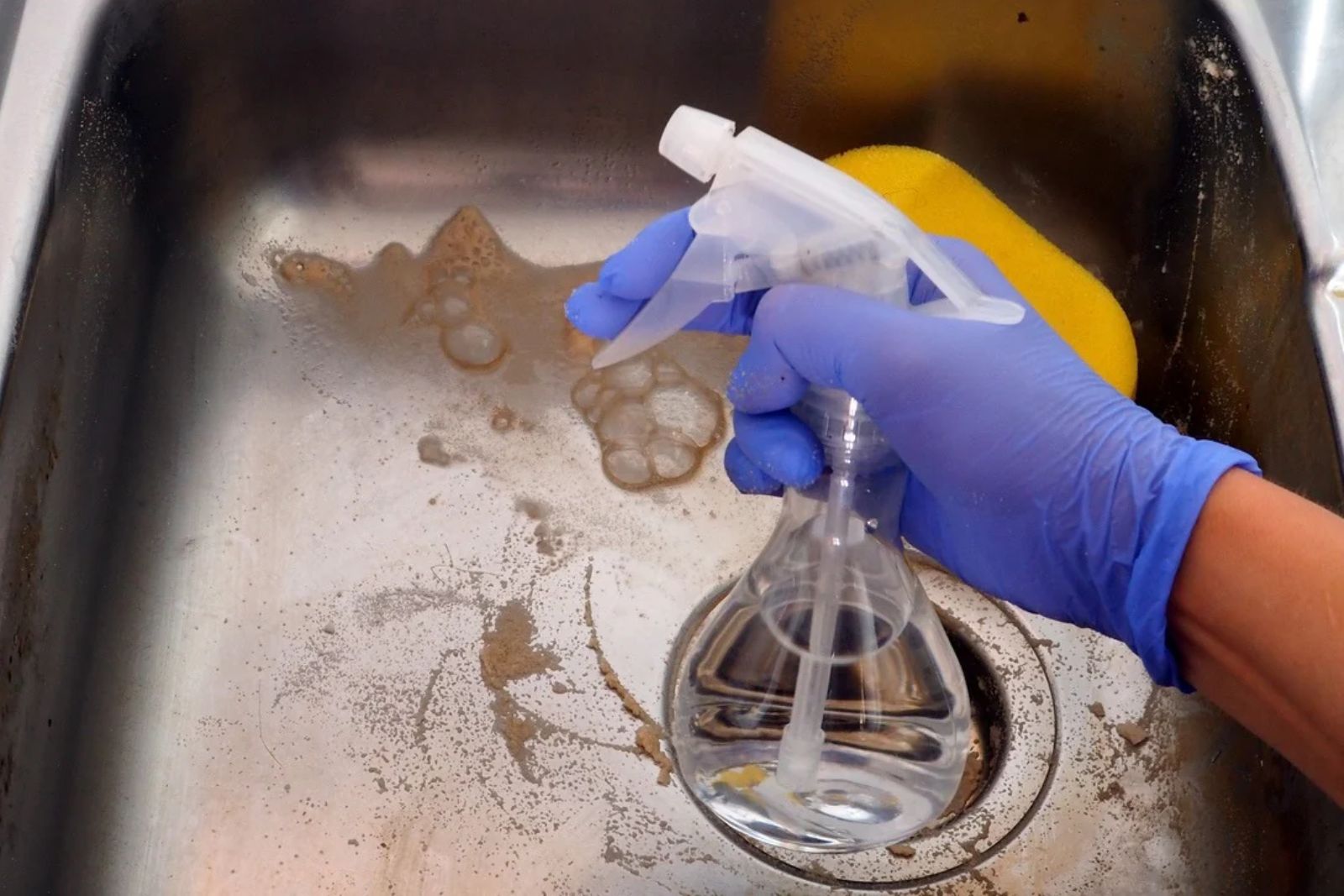
If the paint passes the spot test, pour 1 cup of plain, undiluted household vinegar into a clean, labeled spray bottle. Hold the nozzle close and dampen the specks without soaking the wall. Then leave it alone for one hour.
When the hour is up, gently loosen the growth with a soft sponge or brush. Wipe with a clean cloth dampened with water, rinsing it often. Blot the wall dry and keep the air moving until no moisture is left. Then, when it’s time to put the dresser back, make sure to leave a few inches between it and the wall.
Where the vinegar bottle stops
Never mix vinegar with bleach or other cleaners: acid and bleach can release chlorine gas. Skip wallpaper, bare drywall, heavy pressure and too much water on flat or matte paint.
A clean surface doesn’t prove hidden mold is gone. Beyond about 10 square feet, or with sewage, HVAC contamination, soft drywall or mold that returns after fixing leaks and ventilation, call a professional. If mold affects your health, ask a clinician.