

That brown ring around the burner has already survived dish soap, vinegar and a few determined passes with the sponge. Pressing harder feels like the obvious next move. It’s also the moment a simple cleanup can start to get rough on your stovetop.
Why that ring shrugs off vinegar
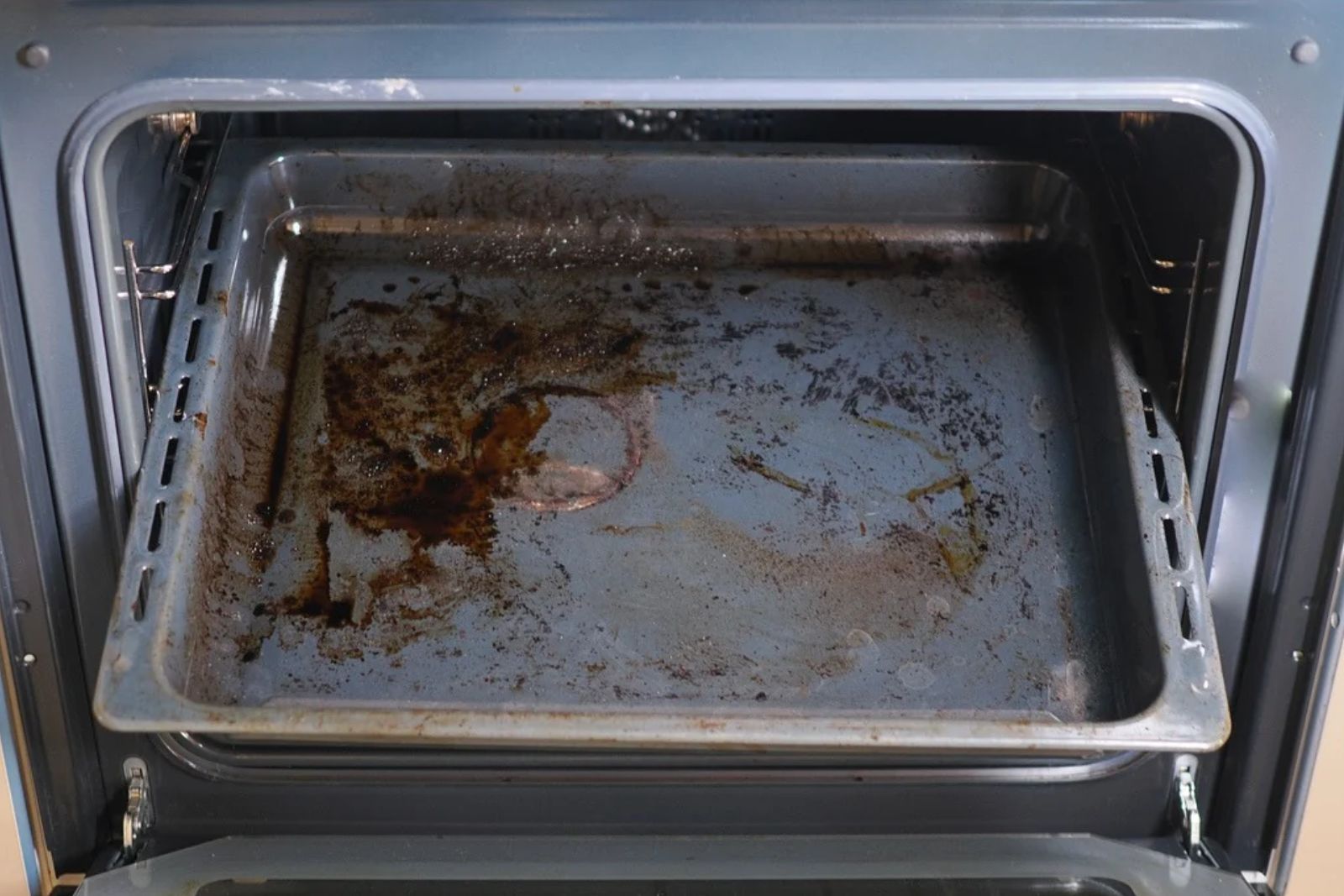
Grease that has been cooked on isn’t the same as the oil that splattered from the pan. Heat turns fresh oil into a tougher film that clings to the surface. That’s why soap and a sponge seem to slide right over it.
The powder that handles it is washing soda, also called sodium carbonate. It’s a stronger alkaline cleaner, traditionally sold in the laundry aisle. Don’t confuse it with the baking soda sitting next to the flour. That one is sodium bicarbonate, a mild alkali that often cleans through gentle abrasion.
The primary difference is that warm alkaline water starts turning fatty grime slightly soapy, so it breaks up and rinses away instead of smearing. Vinegar is great against mineral deposits, but baked grease responds better to an alkaline cleaner. And mixing vinegar into washing soda only weakens it.
The trick is not to overdo it. A measured solution and a cloth that’s wet, not dripping, will do most of the work.
Half a cup in a gallon of warm water
Before anything else, turn every control off and let the stovetop cool completely. Brush away the crumbs. Take off the grates, caps or drip pans only if your appliance manual says they’re removable.
Then put on rubber gloves and mix the solution. For range tops, the ratio is ½ cup of washing soda in 1 gallon of warm water. Make sure the powder has fully dissolved before you start. If you sprinkle them straight onto the stove, the grains just act as a scouring powder you don’t need.
Dip a soft cloth or a non-scratch sponge into the solution and wring it until it’s wet but not dripping. Wipe the greasy ring, and rinse the cloth often so the loosened grime doesn’t end up back on the finish.
Removable burner pieces that aren’t aluminum can soak in the solution for at least 30 minutes, if the manual allows it. Afterward, rinse every cleaned surface well with fresh water and dry it. Don’t put anything back on until it’s completely dry.
What comes off tells you what’s next
That first pass tells you what kind of mess you’re dealing with. If brown, tacky residue comes off on the cloth, the solution is loosening the grease. Keep rinsing and wiping until fresh water no longer leaves a slippery or chalky film behind.
A hard, glassy black patch is another story. It may be heavily carbonized oil or burned food, and one more round with the solution is reasonable. If that burned layer is on a pan rather than on the stove, a hot burnt-pan soak keeps the stronger treatment away from controls, seals and fixed heating parts.
One word of caution before you go further. Washing soda isn’t safe everywhere on your stove.
What the soda shouldn’t touch
Keep your gloves on, avoid the dust, and keep the solution away from igniters, burner ports and electrical parts. If any gets in your eyes, rinse with water for at least 15 minutes.
Keep it off aluminium and any painted or lacquered trim. On a ceramic glass hob, don’t use abrasive powders unless your manual says they’re fine. If a blackened spot still won’t budge, stop scrubbing because pressure can scratch enamel and stainless steel. Try a cleaner or scraper your manual approves, and if the mark is still there, it’s worth calling in a repair technician.