For years, she stared at the same wall and couldn’t put her finger on what was wrong with it.
Everything looked fine on paper. The TV was centered. The white mantel was freshly painted. The beige behind it was the same safe shade her builder had rolled across the whole first floor. But every evening when she walked into that room, something felt off. The wall was doing its job the way a rental does its job: it was there, and that was about it.
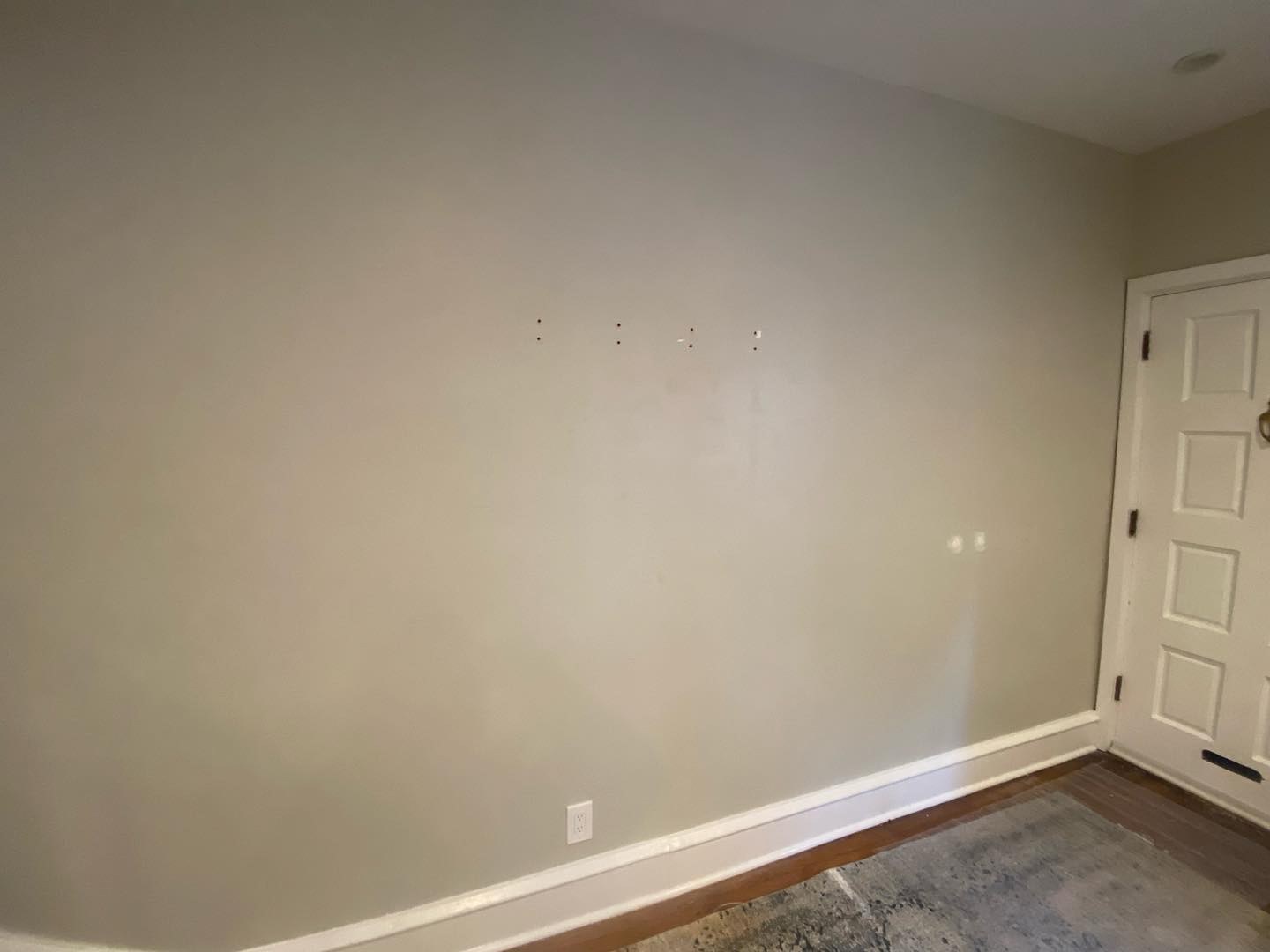
She repainted it once. Tried a second color a few months later. Eventually, she gave up and just lived with it. A black TV floating on a flat wall, with a lonely white mantel sitting underneath it like a prop nobody picked up.
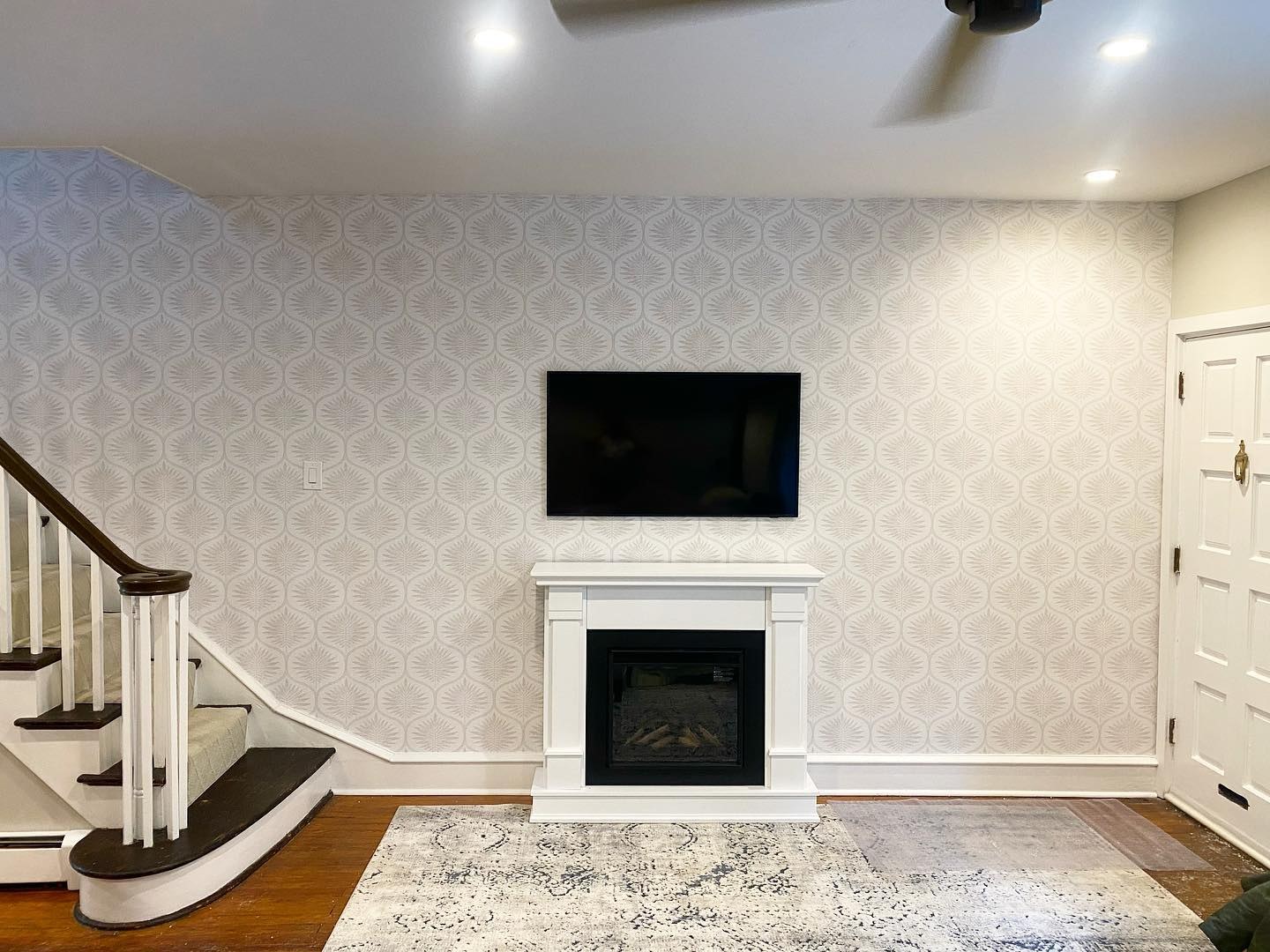
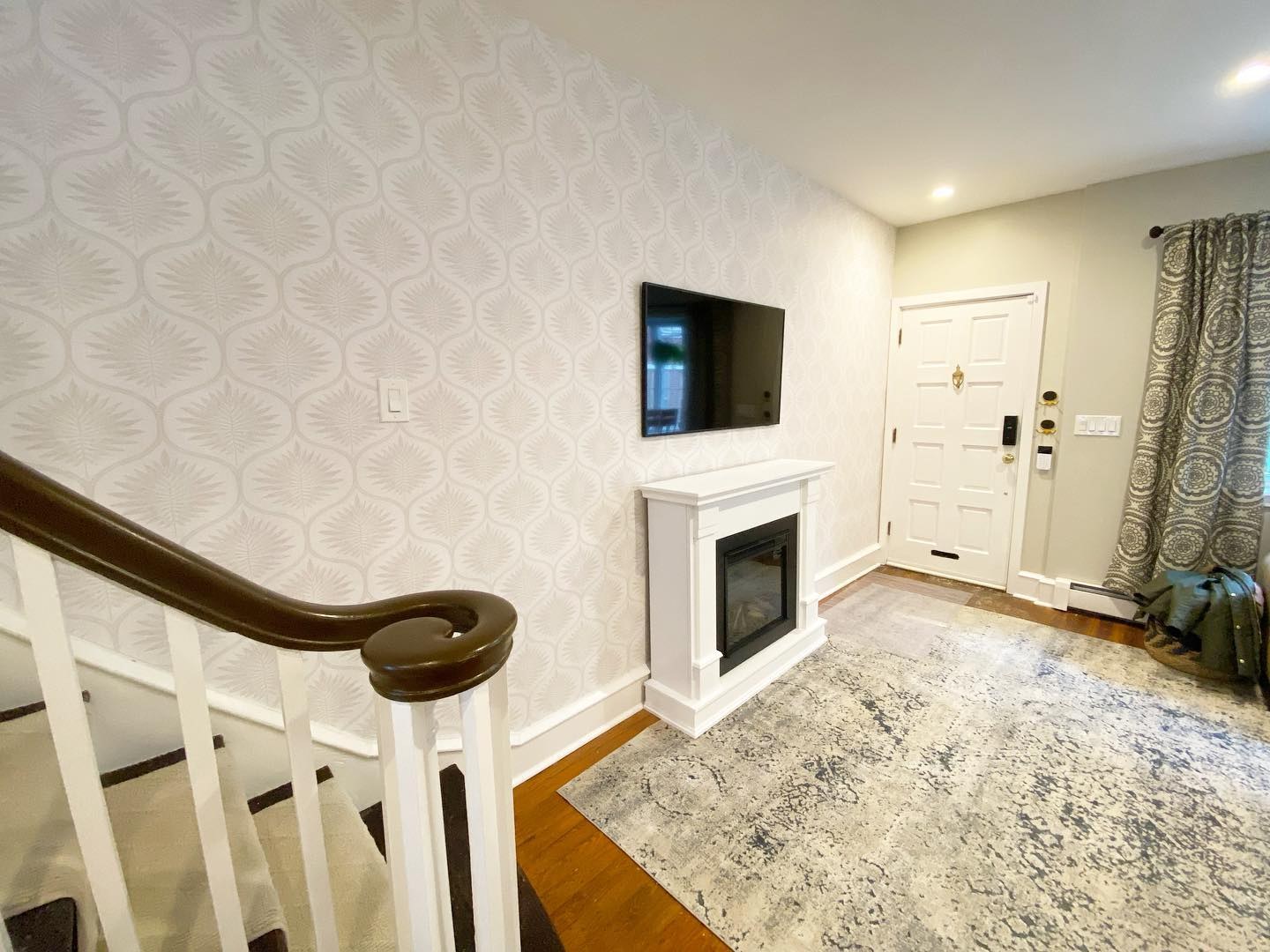
Last month, she did something that hadn’t crossed her mind before. She skipped paint entirely, picked a soft cream palm-leaf wallpaper on an off-white ground, and had it installed across the full TV wall and all the way up the staircase. When she walked back into the room afterward, it didn’t just look better. It looked like a different house.
Why paint kept losing this fight
Here’s the part nobody warns you about when you mount a TV over a fireplace. That screen, when it’s off, is a hard black rectangle sitting dead center on the most-looked-at wall in your house. Any solid paint color behind it just becomes background to the box. Your eye lands on the TV and finds nowhere else to go. The mantel underneath starts looking like it wandered into the shot.
Paint can’t rescue a wall like this because paint is still one flat surface, no matter the shade. You can go cooler, warmer, moodier, brighter, or try a dramatic black feature wall, and the room will still feel like something is missing. The fix isn’t more color. It’s actual texture to look at.
A gentle, repeating pattern gives the wall somewhere to send your eye. It moves across the leaves and the soft ogee curves instead of locking onto the screen. Suddenly the mantel feels tucked into a designed surface, not stuck on top of a blank one.
The same dead wall from every angle
Coming down the stairs, the problem didn’t change. It just showed up from a different angle.
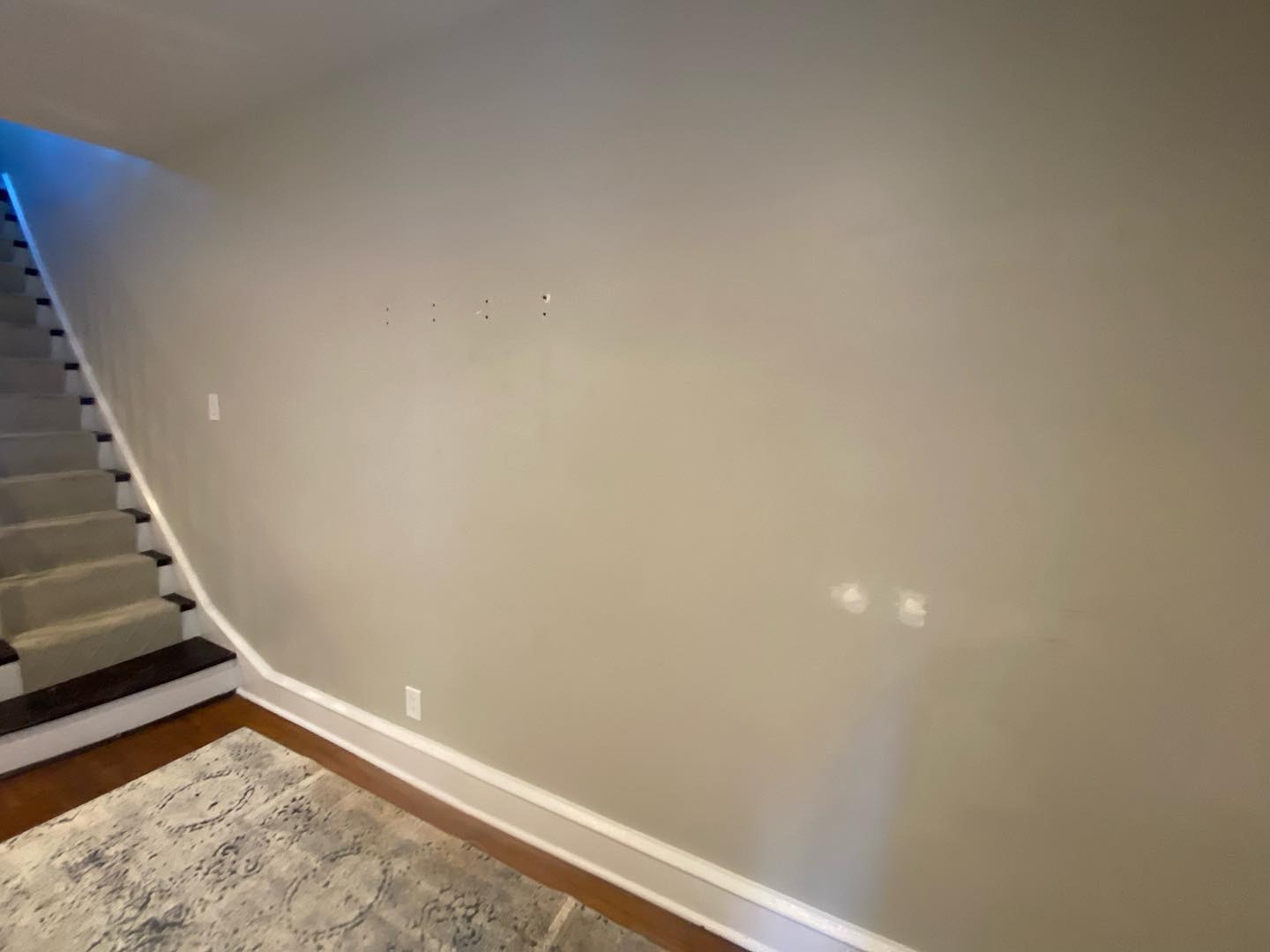
The paint ran uninterrupted from ceiling to baseboard. No break, no rhythm, nothing to catch on. The handrail, the stair runner, the rug, everything in the room pulled your eye toward a wall that had nothing to say back.
How this install actually went
This isn’t a Saturday craft project, but it’s a long way from a renovation either.
The installer started with a laser line snapped down the wall as his vertical guide. On old row home walls, which are almost never truly plumb, that beam is the whole game. One strip off by a quarter inch (about 6 mm) and the leaves start leaning by the time they hit the ceiling.
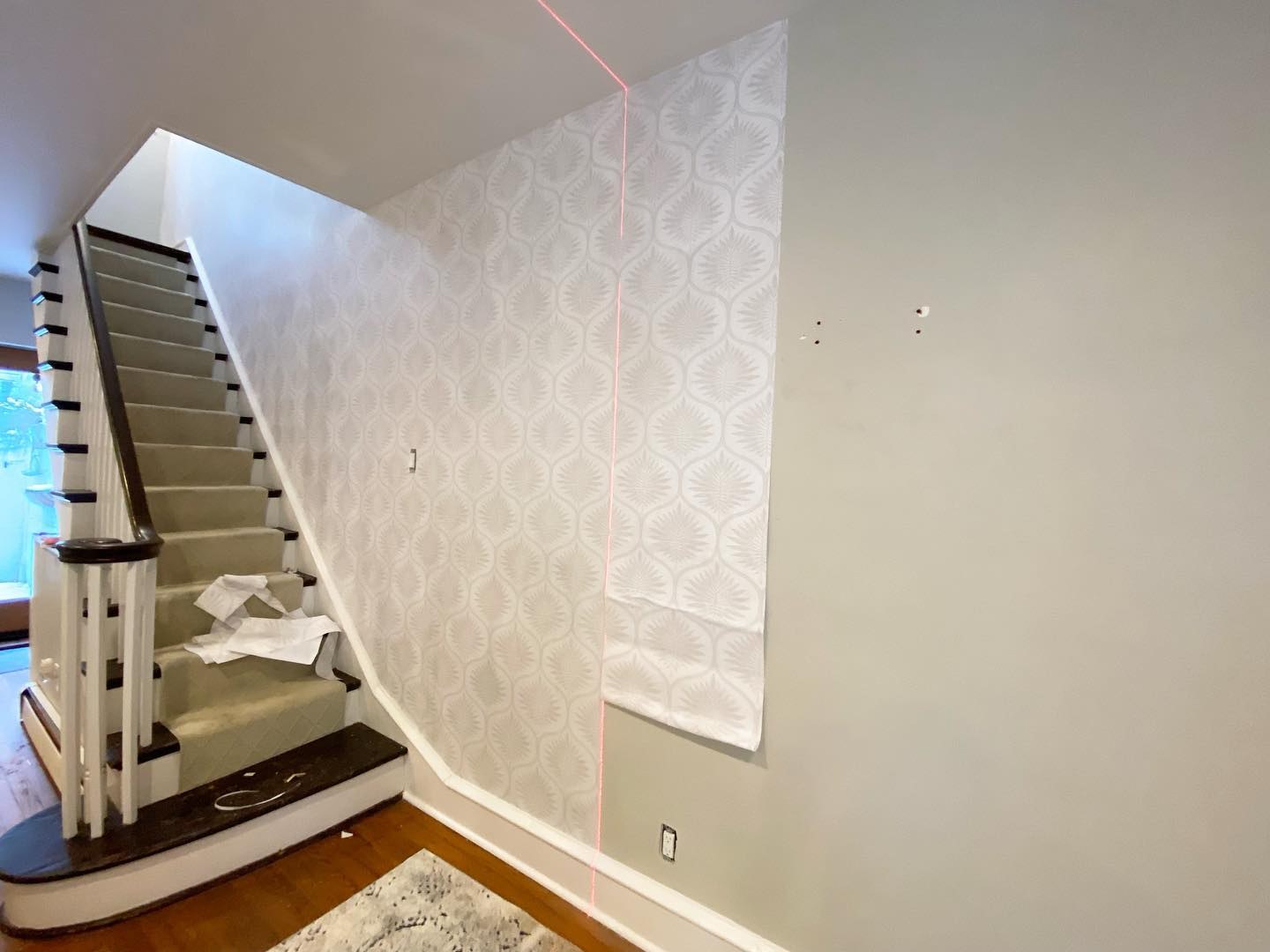
From there, he worked panel by panel, up the stairwell and across the full TV wall. Each strip got pressed flat, smoothed from the center outward with a sponge to chase out air bubbles, and trimmed clean against the baseboard. No special crew, no fancy kit. Just a ladder, a sponge, a sharp blade, and a laser.
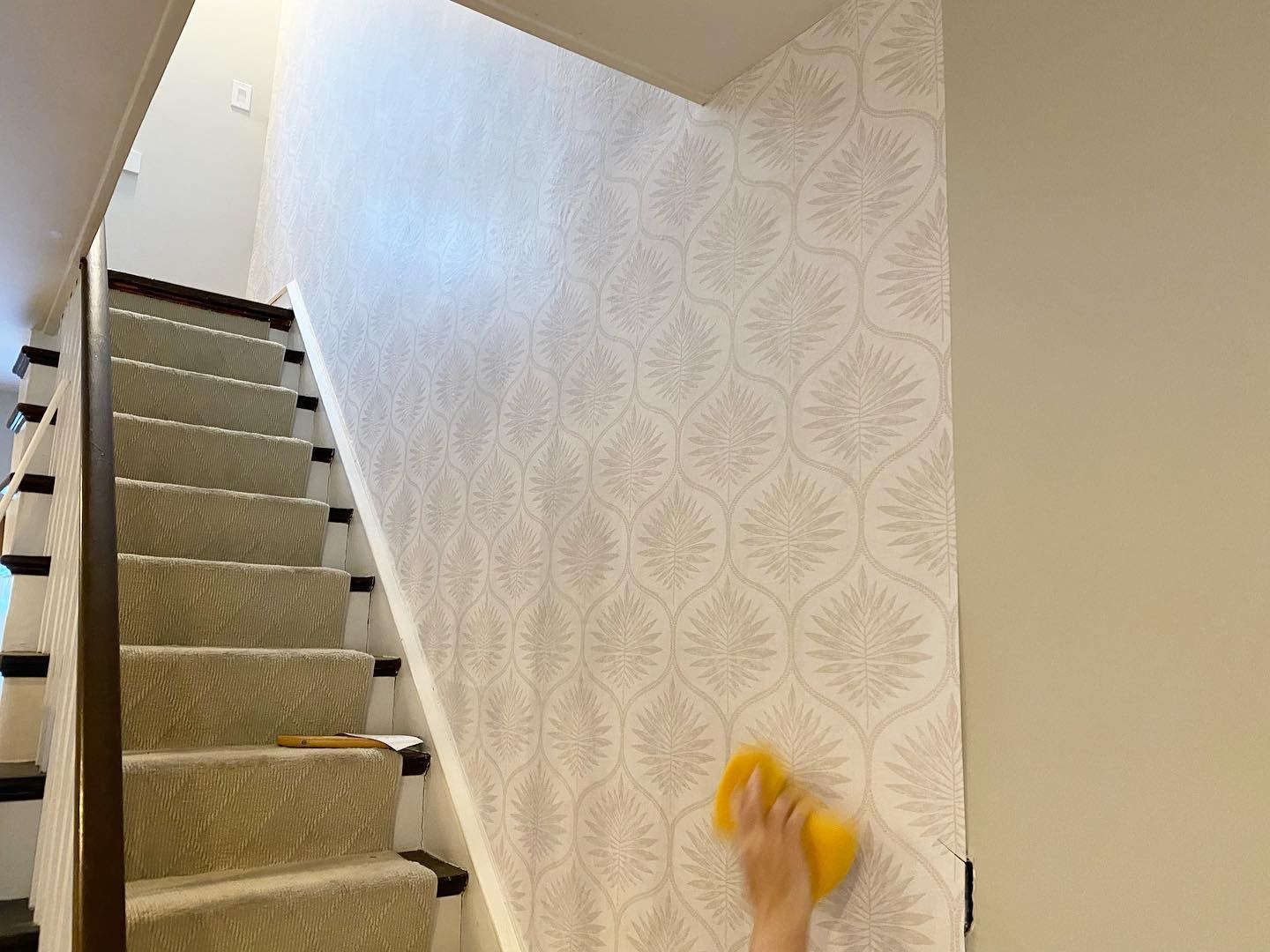
Total time for a wall this size, including the stairwell: one long afternoon.
Why this finished wall reads custom
Walk back in from the staircase now and everything clicks into place.
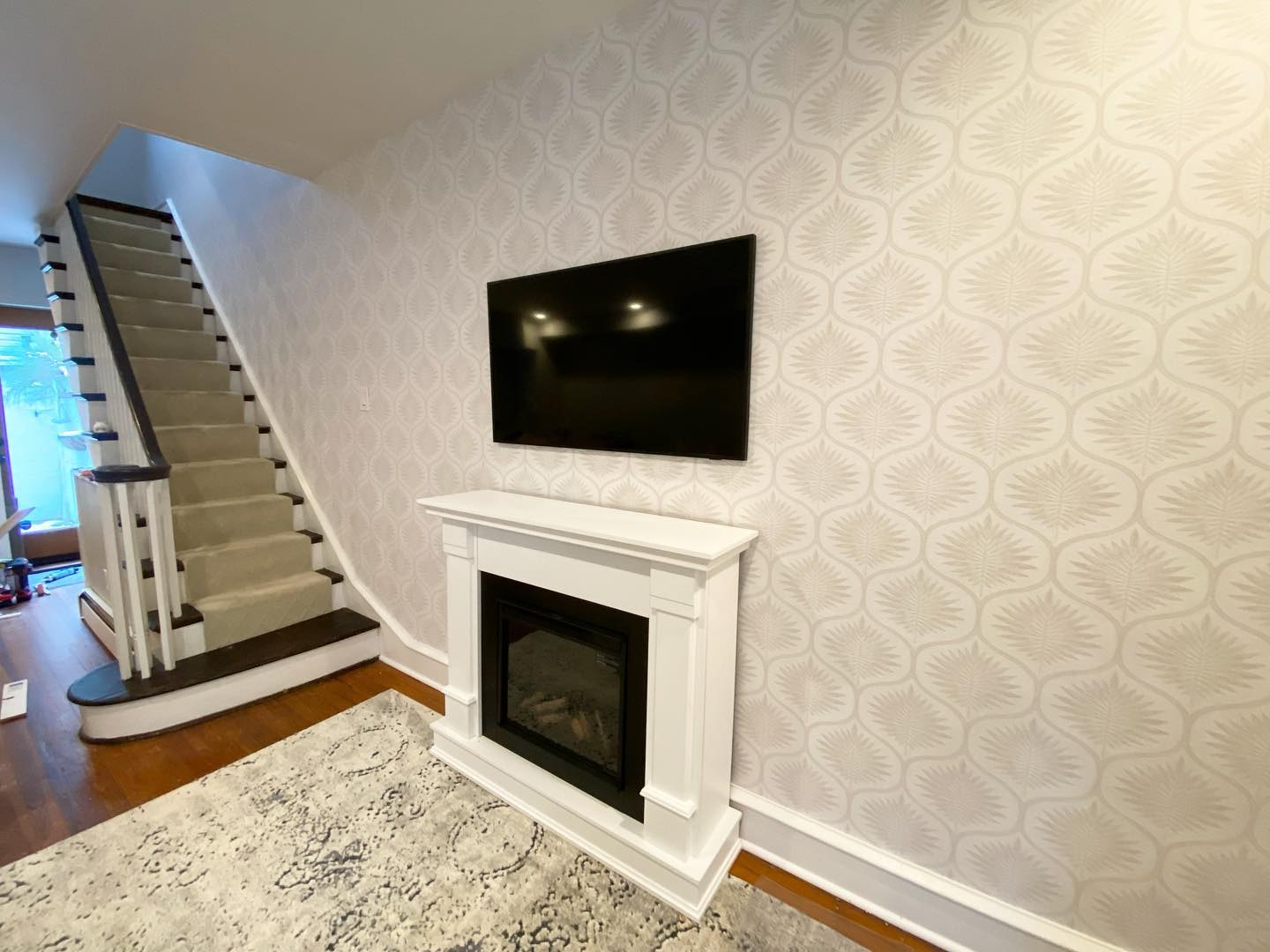
The white fireplace reads like real millwork now, because the repeating leaves behind it give it something to push against. The TV still has to be a black rectangle, but it isn’t floating anymore. It sits inside a pattern. The stairs stopped feeling like a separate little hallway, because the paper carries right up the stairwell without a break.
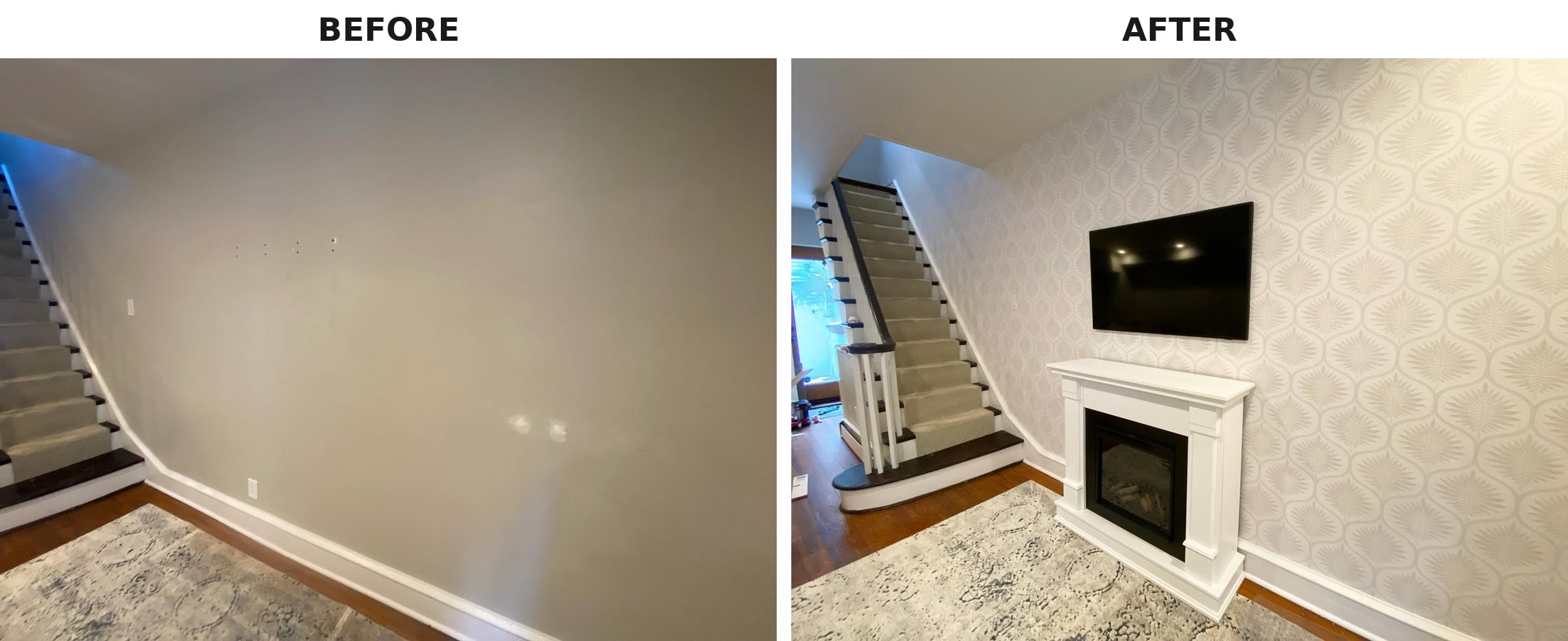
That’s the real trick here. It stopped being one wall. It became the whole downstairs.
What to borrow for your own wall
Pick texture over statement. A tone-on-tone pattern in cream, off-white, warm gray, or soft sage will live quietly behind a TV for years, loud enough to fix the flat-wall problem, calm enough that you won’t be sick of it by month three.
Run the paper past the obvious wall. Here, carrying it up the stairwell is the single move that makes the downstairs feel designed instead of just decorated. If your TV wall connects to anything, bring the pattern with it.
Pay for the laser. On old row home walls, an installer with a proper vertical beam saves you from staring at a lopsided pattern every night for the next decade.
And keep the furniture dead simple. A plain white mantel, a muted vintage rug, dark wood floors. The wallpaper does the heavy lifting. Everything else just gets out of its way.