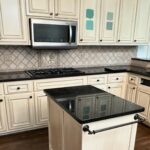
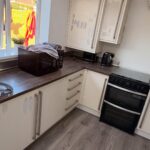
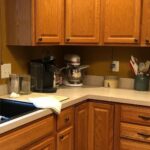
The kitchen in these photos sits in a suburban home outside Crewe, England. Oak shaker doors. Black speckled granite. A chrome extractor over a gas hob. A double oven, a sink under a garden window, two skylights in a vaulted ceiling. Nothing broken. Nothing even really tired. Just one of those kitchens that could have come out of any mid-2000s builder brochure.
Her options, on paper, were the usual two: live with it, or spend £15,000 to £20,000 (about $19,000 to $25,000 / €17,500 to €23,000) on a new one.
She found a third option. Two tins of Farrow & Ball paint. A spray crew for a few days. Zero demolition.
The “before” that honestly wasn’t that bad
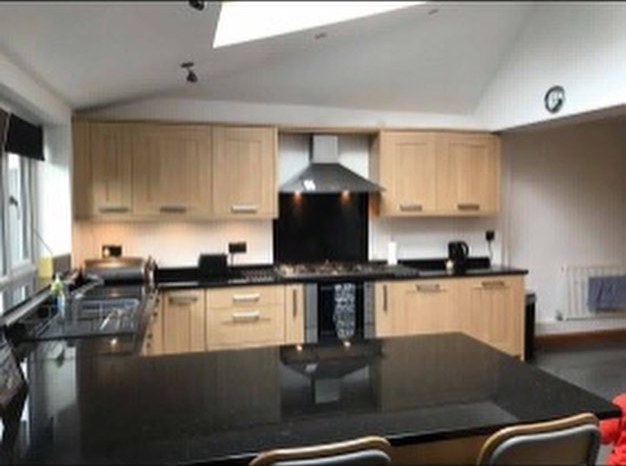
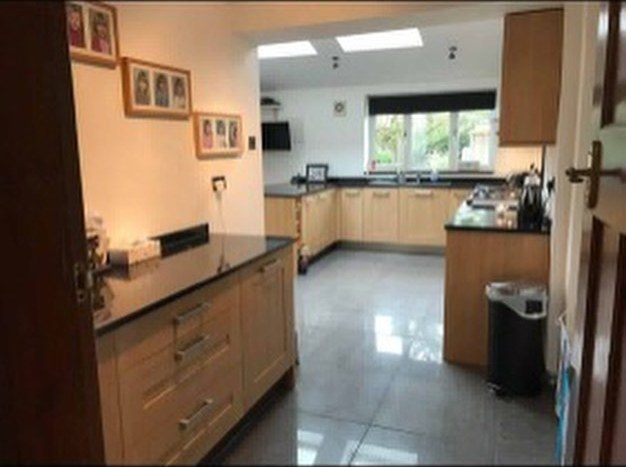
Here’s what makes this kind of kitchen so hard to refresh. Nothing’s actually wrong with it. The doors aren’t warped. The hinges still work. The granite is in good shape, the appliances still do their job, the layout is fine. You can’t point at any one thing and justify a rip-out.
But every time she walked in, it felt like she was living inside a decision someone else had made back in 2008.
Why she said no to a brand-new kitchen
Those replacement quotes kept landing in that same five-figure range. A used family car. A couple of real holidays with everyone’s flights paid for.
And the part that stung most: the new kitchen would have looked almost identical to the old one. Showrooms keep selling the same shaker shapes in the same safe neutral finishes, year after year. She would have paid five figures to end up with a slightly fresher version of the exact kitchen she was trying to escape.
The move most homeowners never consider
Keep everything. Paint the doors. That’s the whole plan.
Cabinet boxes stay. Doors stay. Drawer fronts stay. Granite, floor, splashback, extractor, oven, hob, sink, taps, windows, lights, every bit of it stays exactly where it is. The only thing that changes is color.
It costs a fraction of a replacement. It takes a fraction of the time. And when it’s done well, nobody who walks in afterwards guesses what you kept.
Two Farrow & Ball colors that stop a scroll
On the wall cabinets: Down Pipe. A deep charcoal grey that reads almost black in evening light. British interior designers have quietly loved it for years. Most homeowners buy it for a front door and then lose their nerve on anything bigger.
On the base cabinets: Babouche. A bright, saturated mustard yellow named after a Moroccan slipper. This is the color most people talk themselves out of in the aisle. Too loud. Too risky. Too easy to tire of. Every kitchen showroom in the country would have steered her toward white, cream, or navy.
She skipped the steering.
What the mid-job chaos actually looked like
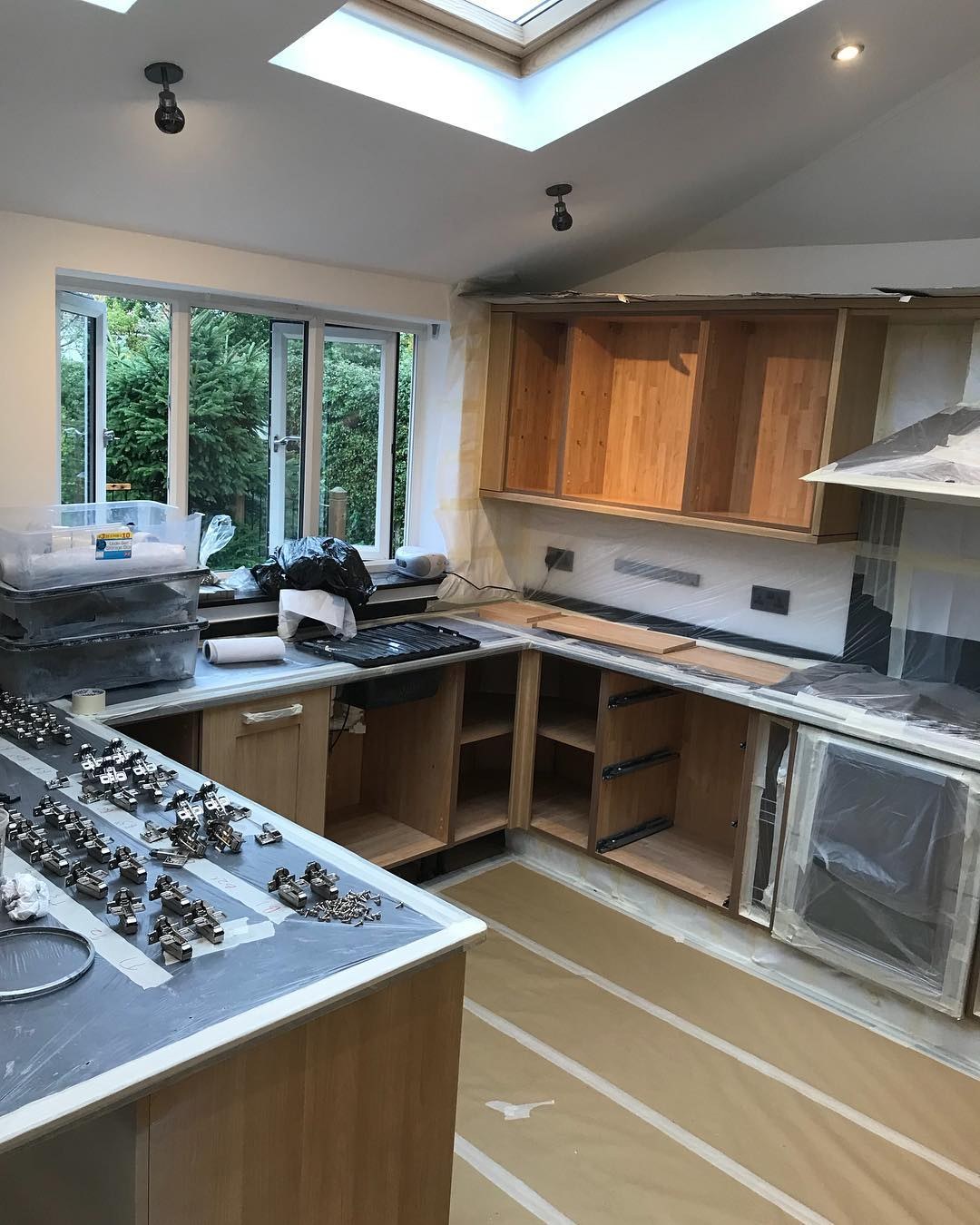
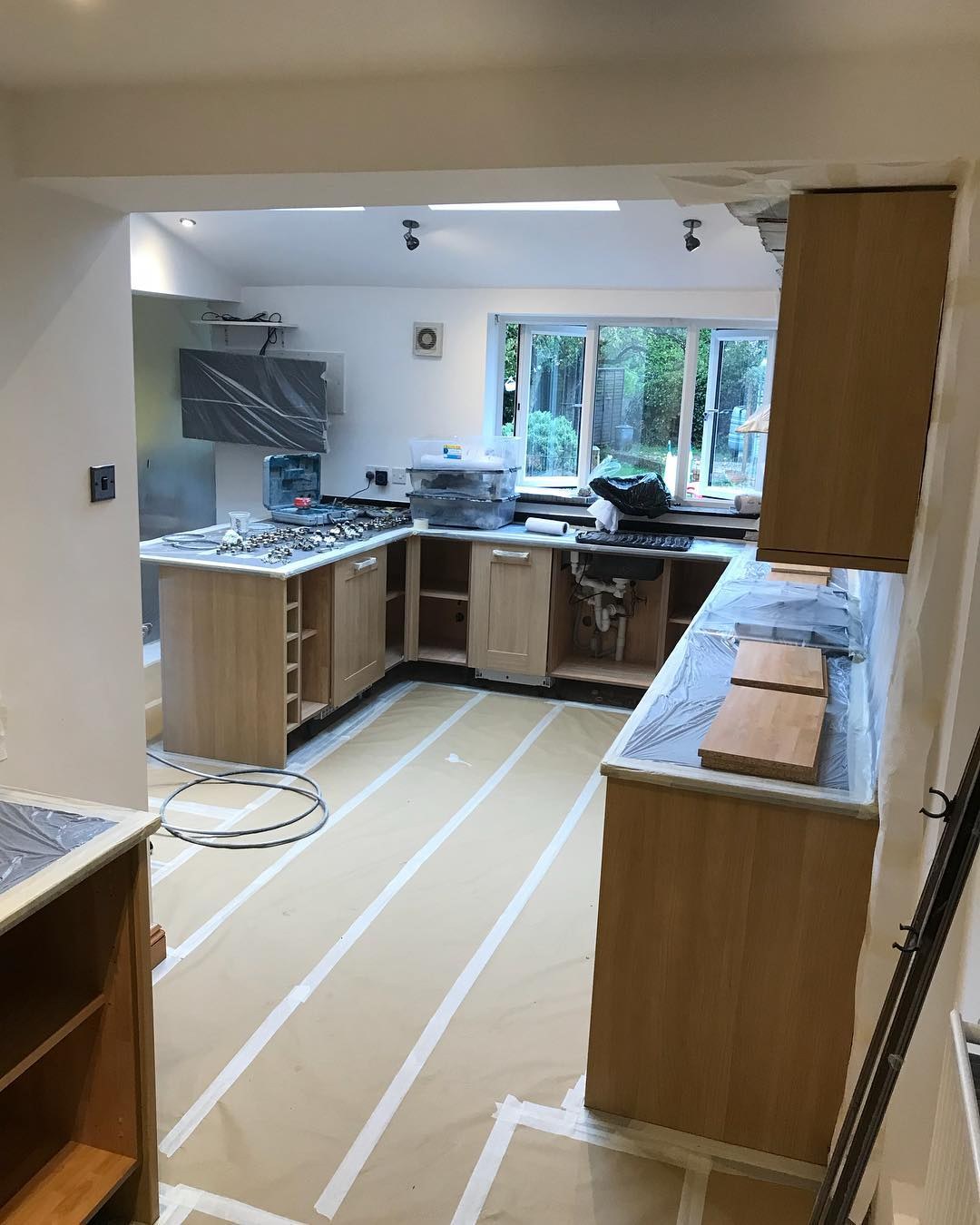
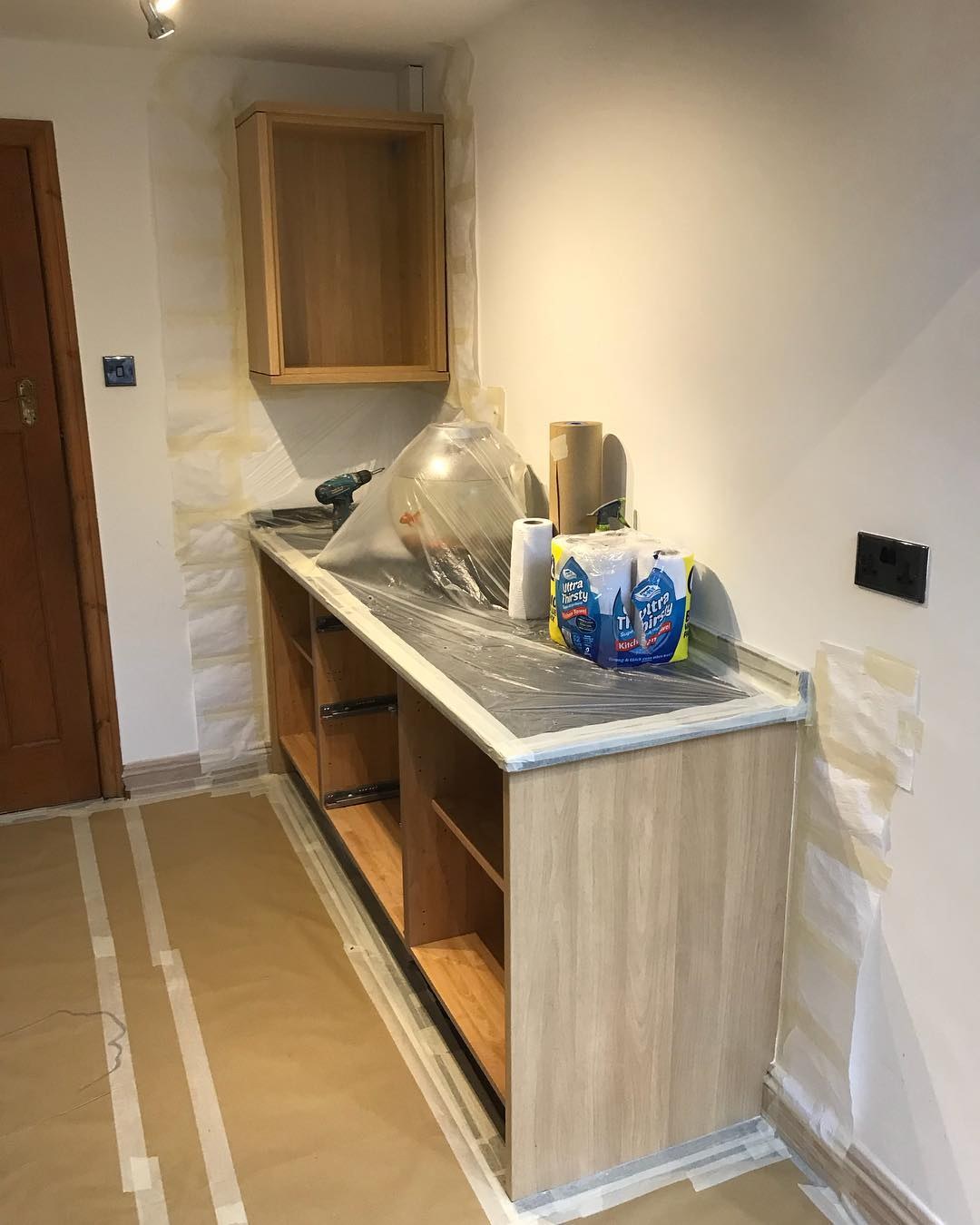
This part never makes it into the “I painted my own kitchen” posts online. Every door and drawer front comes off. Every hinge and screw gets bagged and labeled. Every square inch of the room gets wrapped in brown paper and plastic so a single speck of overspray never lands on the granite, the floor, or the appliances.
The reason that matters: the sprayed finish is the whole point. Brush strokes on cabinet doors age badly and look homemade from day one. Spray gives you the smooth, factory-looking surface that fools people into thinking you bought new cabinets.

The reveal
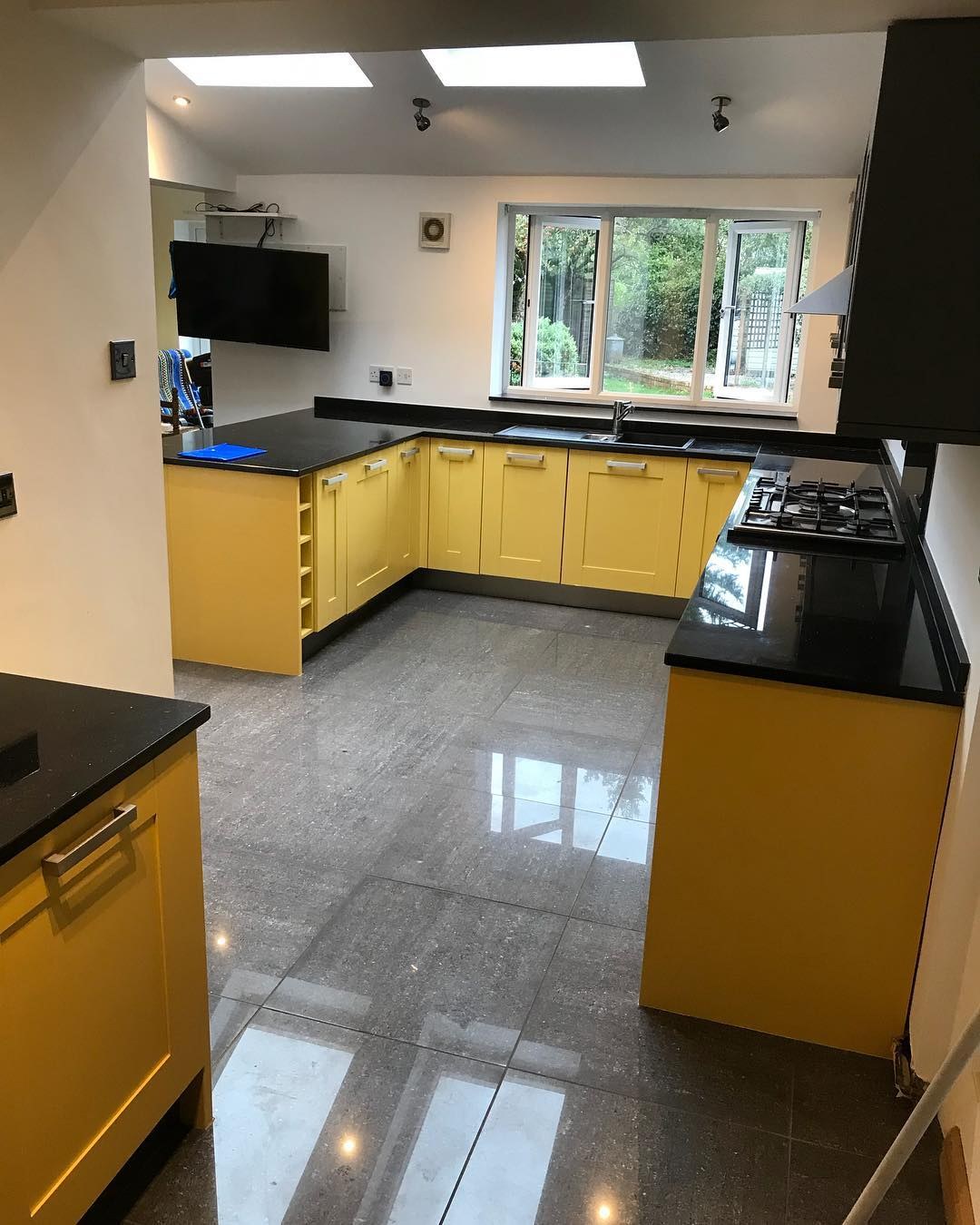
Same room. Same granite. Same tiled floor. Same vaulted ceiling. Just paint.
Down Pipe on the uppers pulls the eye up and anchors the top of the room. It keeps the yellow from running the whole show. Babouche on the bottom does the opposite job. It catches every scrap of light coming through the skylights and the garden window, so the kitchen feels warm and lit up instead of flat.
The surprise winner: that old black granite
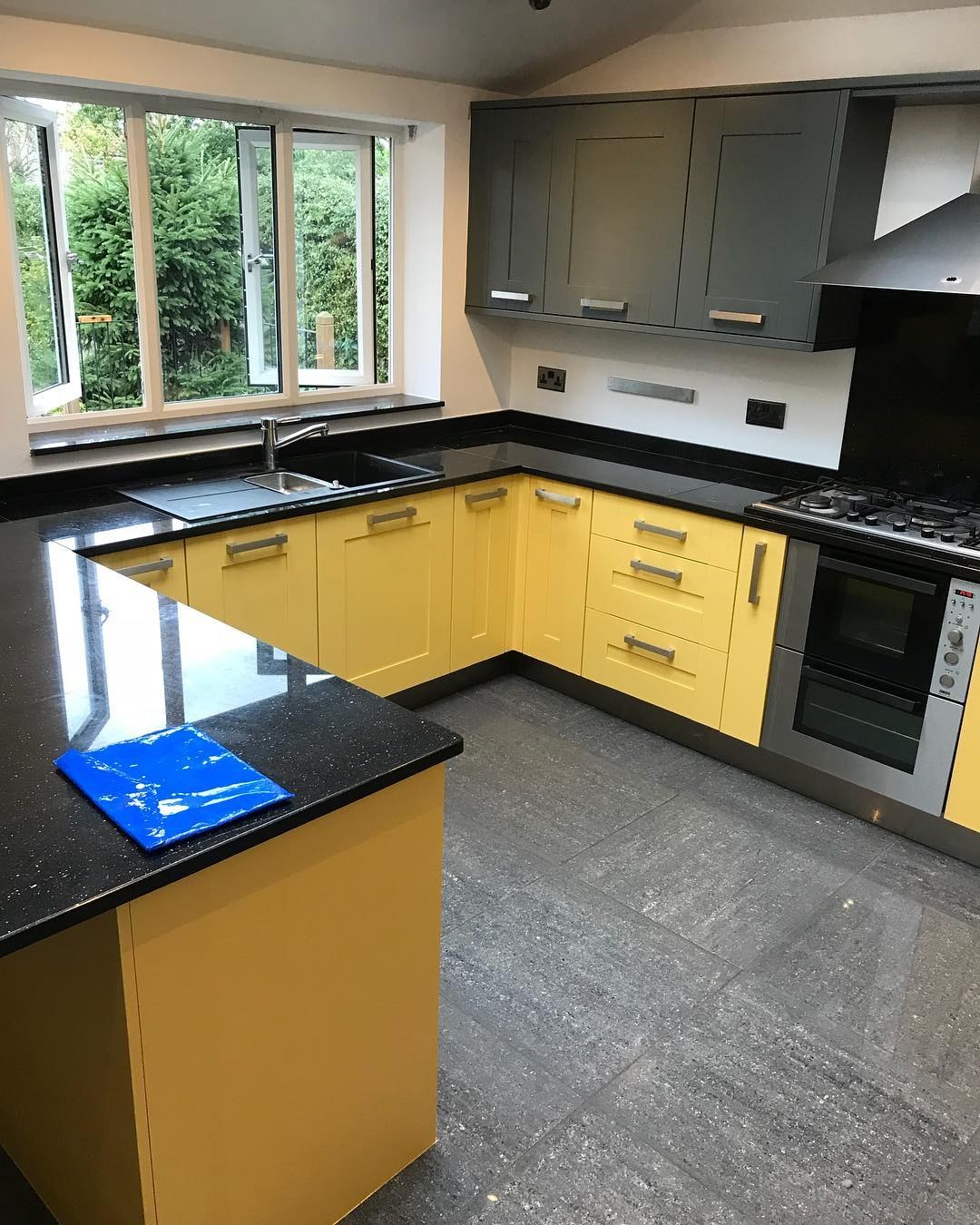
Against the oak, that speckled black granite looked heavy and dated. One of the first things most people would have ripped out.
Against Babouche and Down Pipe, the same stone suddenly reads as expensive. You see this exact pairing in high-end kitchen magazines all the time: a deeply saturated color sitting under a glossy dark stone top. The granite didn’t need replacing. It needed better cabinets to live next to.
The stainless plinths that quietly tie it all together
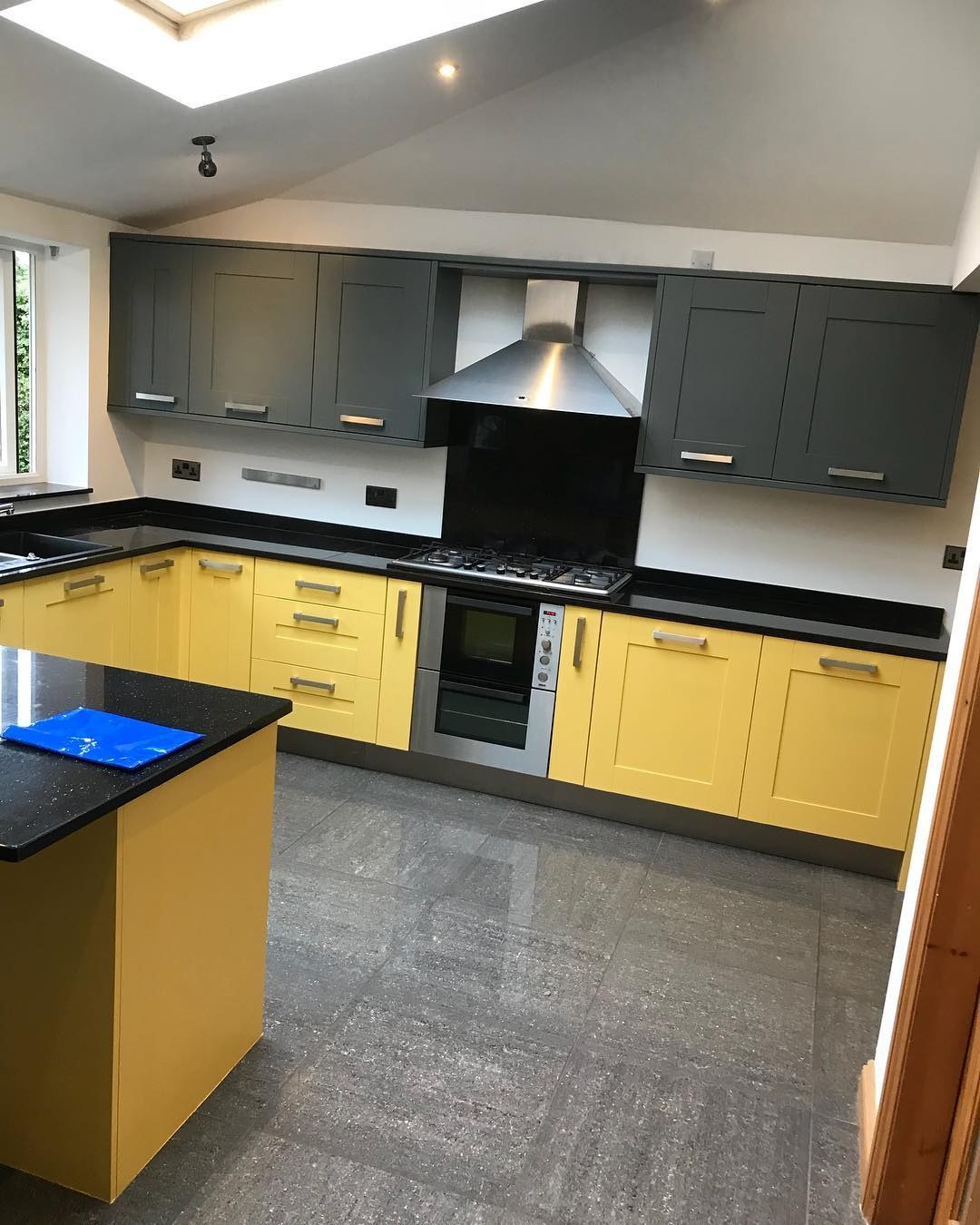
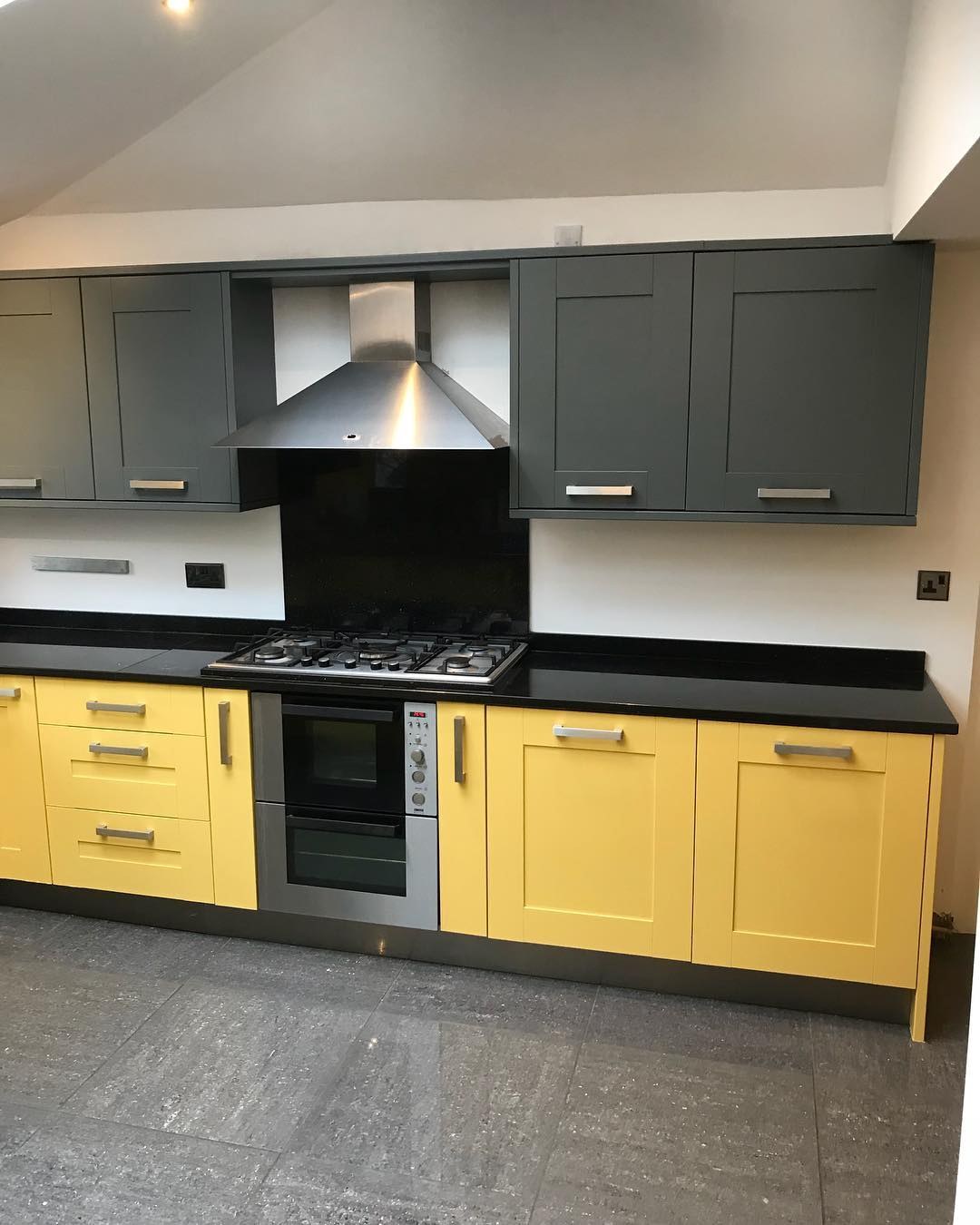
The thin stainless steel strip running along the floor under the base cabinets is doing more work than it looks. It picks up the finish on the extractor, the oven, the hob, and the handles, which gives the room one clean metallic thread from top to bottom. Without it, the yellow would float off the floor and read a little cartoony. With it, the whole room holds together.
Small detail. Big difference.
The two-tone trick high-end designers use on purpose
A single color on all the cabinets reads like a paint job. Two colors, one on top and one on the bottom, reads like a design decision. It’s the same move you see in bespoke kitchen showrooms that charge £40,000 and up (about $50,000 and up / €46,000 and up). You can borrow it with two tins of paint and a confident hand.
The uppers want the darker, moodier color so the top of the room has weight. The lowers want either the brighter or the more grounding color, depending on how much light the room already gets. She had skylights pouring light in, so she went bright on the bottom and let Down Pipe handle the shadows above.
What she kept, what she spent, and what she saved
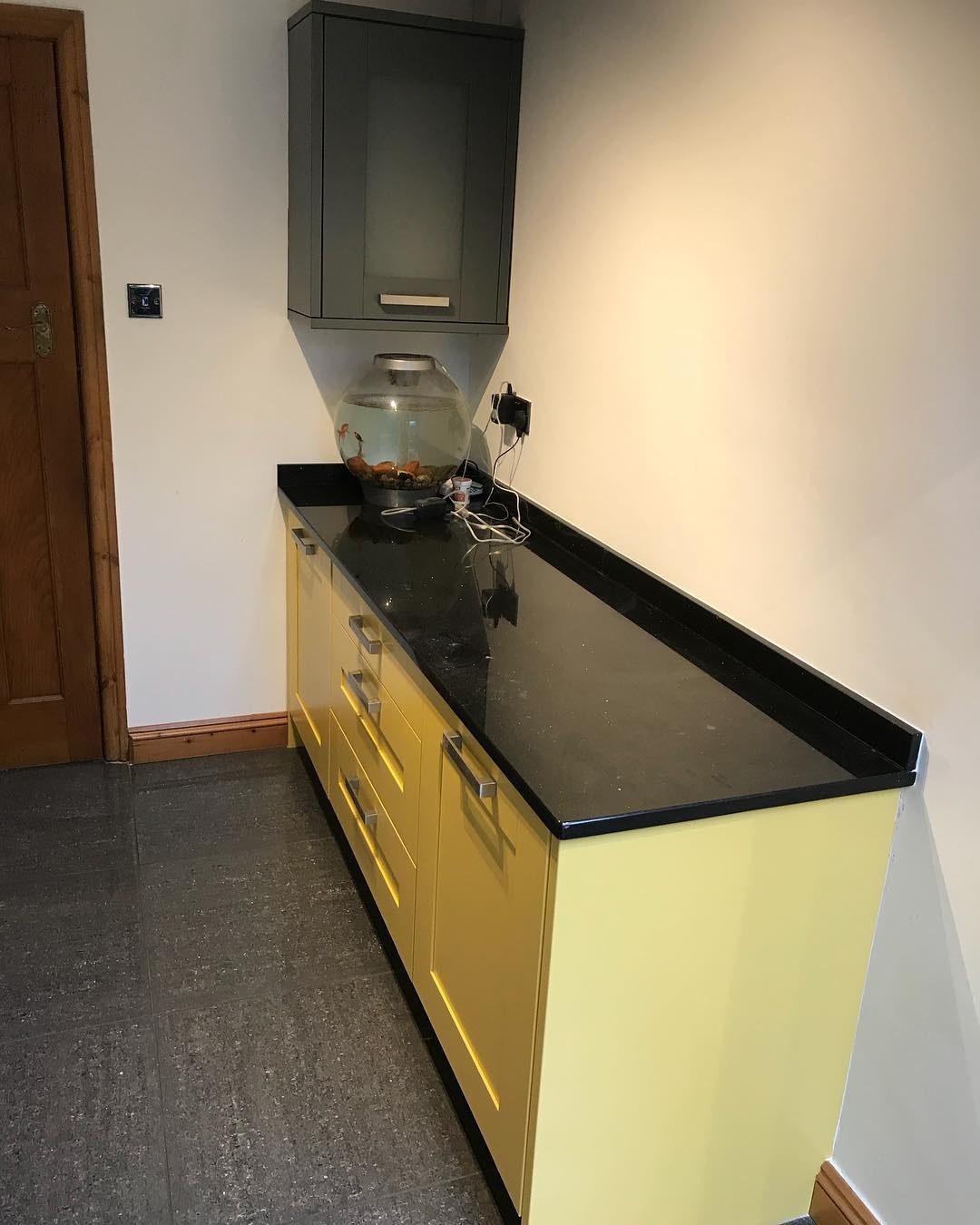
Kept: every cabinet box, every door, every drawer front, every hinge, the granite counters, the tile floor, the black glass splashback, the extractor hood, the double oven, the gas hob, the sink, the taps, the whole layout, the skylights, the windows.
Spent: two tins of Farrow & Ball paint, primer and masking materials, a few days of professional spray labor, a run of new stainless steel plinths.
Saved: roughly £15,000 (about $19,000 / €17,500) compared to a full kitchen replacement at the same spec.
The lesson most homeowners never get told
A dated kitchen isn’t always a bad kitchen. Sometimes the bones are fine and the finish is the whole problem. Two colors most people are too nervous to pick, one properly masked spray job, and a willingness to leave everything else alone. That’s the whole move.
Her black granite is the same stone it was on day one. Her oak cabinet boxes are still in there, right under the paint. The kitchen just stopped looking like 2008 and started looking like the cover of a magazine.