
A primary bedroom walked in beige and walked out moody blue. What changed isn’t the wallpaper. It’s where the wallpaper ended up.
Beige walls, dark baseboard, three skinny white picture-frame moldings waiting for a purpose. Black ceiling fan. Sliding door throwing good light across the carpet.
Nothing wrong with it, nothing right either. The kind of room you walk through on the way somewhere else.
Why it all started on paper
The plan got worked out before a brush touched the wall. An elevation sketch locked in how wide each frame should be, how tall, how far apart, and how much breathing room to leave on the outside edges.
The mockup that drove every decision
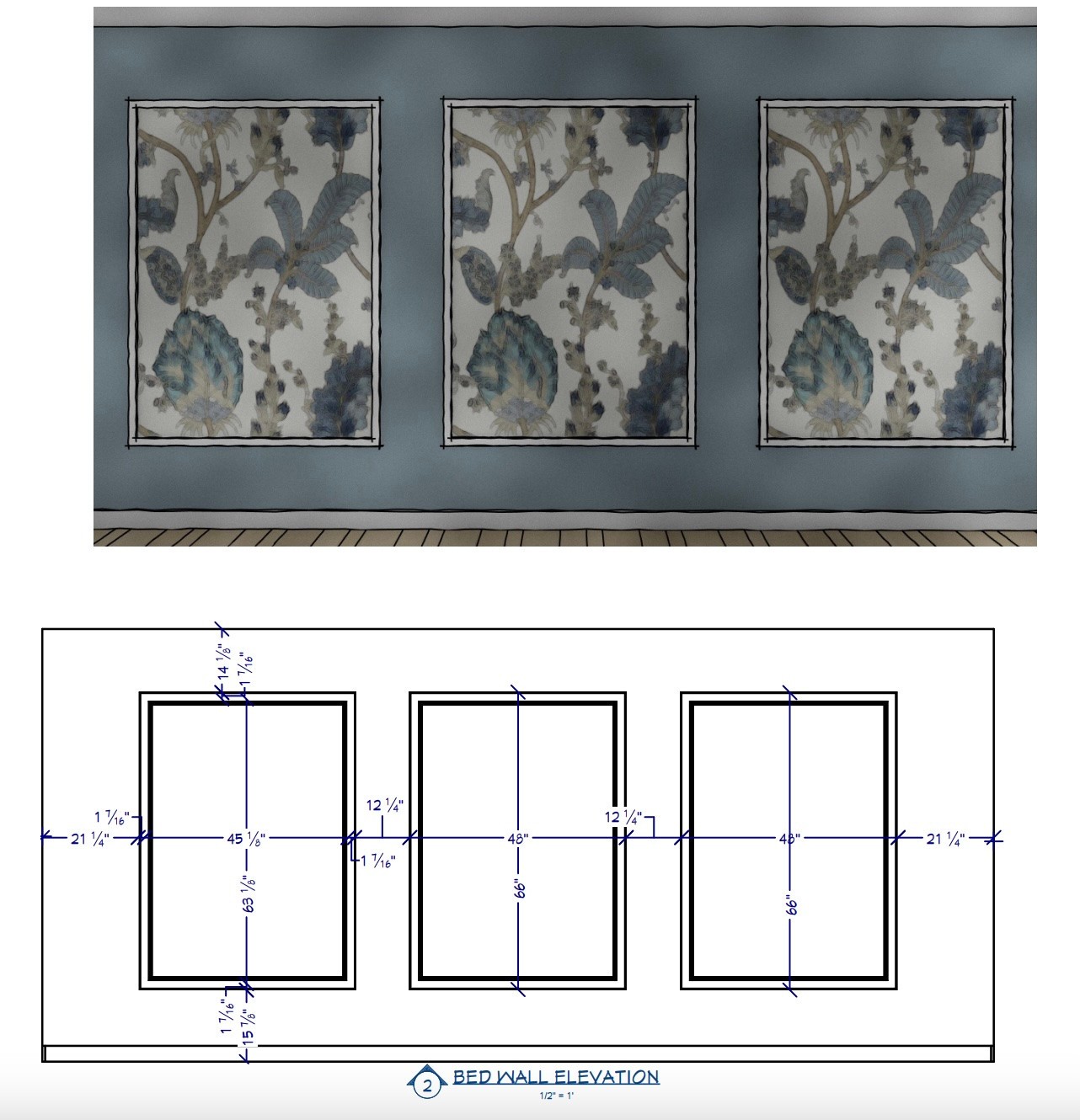
The numbers across the bottom are the whole trick. Twenty-one inches of blue breathing room on each outside wall. Twelve inches between frames. Each opening forty-five wide and sixty-six tall. Those aren’t lucky guesses. They’re what makes the wall feel built, not pasted on.
Half an hour on graph paper saves a weekend of patching holes.
What the room looked like on day one
Warm beige everywhere. Three empty white moldings running across the main wall. A dusty blue paint test splashed into the middle frame, with a little color card pinned next to it. Drop cloths bunched on the carpet. A paint can open on the floor.
The before shot that explains it
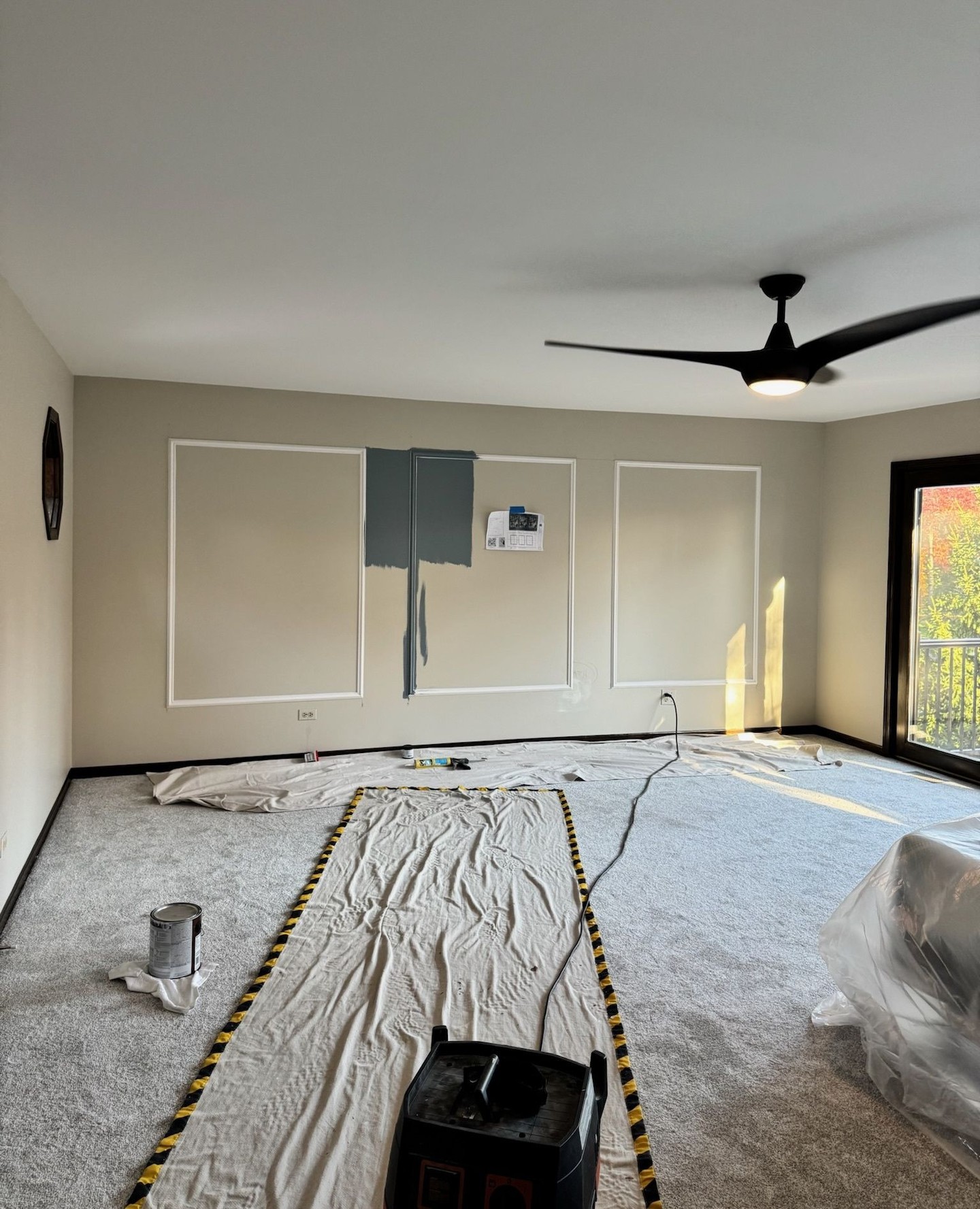
Two things stand out. The bones were already in place. Those white moldings are the same frames that end up holding the wallpaper later. All that changed is the color they got painted and what went inside.
And that little blue test patch? That’s the whole mood of the finished room, sitting on day one next to a color card. One brushstroke, and you can feel where the room is headed.
The before and the after on the same wall
Same wall, same three picture-frame moldings, same ceiling fan. Only the paint and what sits inside the frames changed.
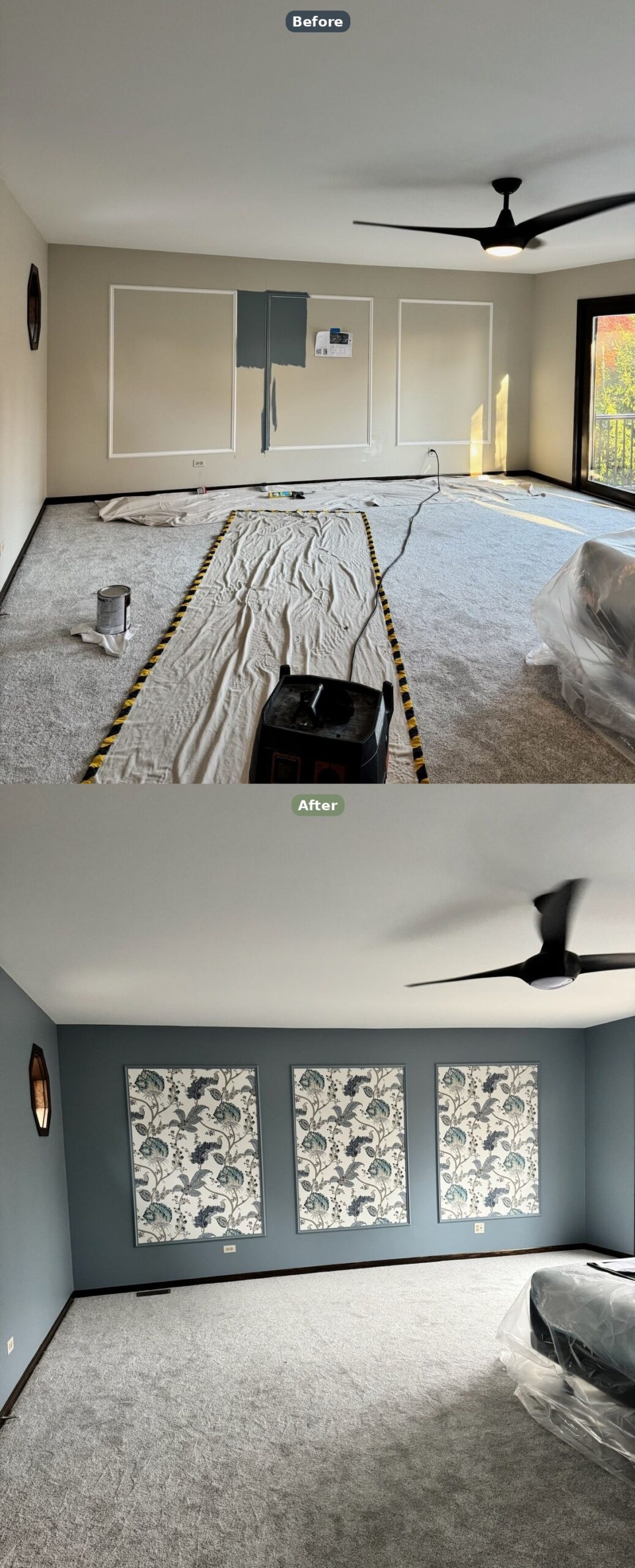
Line them up and the trick becomes obvious. Beige reads as half-finished. Blue reads as a hotel room. Paint and three panels of wallpaper, that’s it.
The paint that carries everything
The color is Benjamin Moore Chiswell Blue. Dusty, a little gray, a little moody. It reads quiet in morning light and deep at night, which is exactly what you want in a bedroom. Not so dark it turns into a cave. Not so light it goes beachy.
The move most people get wrong
The picture-frame moldings got painted the exact same Chiswell Blue as the wall. Not white. Not a trim color. The same blue.
That one switch is the reason this looks like a hotel suite instead of a Pinterest project. White frames would have fought the wallpaper. Blue frames disappear, which lets the wallpaper float inside the opening like a hung canvas.
Where the Thibaut wallpaper ended up
Instead of covering the whole wall, the Thibaut botanical pattern was cut to fit only inside the three frames. Cream background. Inky indigo leaves. A few teal statement blooms. Tan vines connecting the whole thing.
The finished wall, pulled back
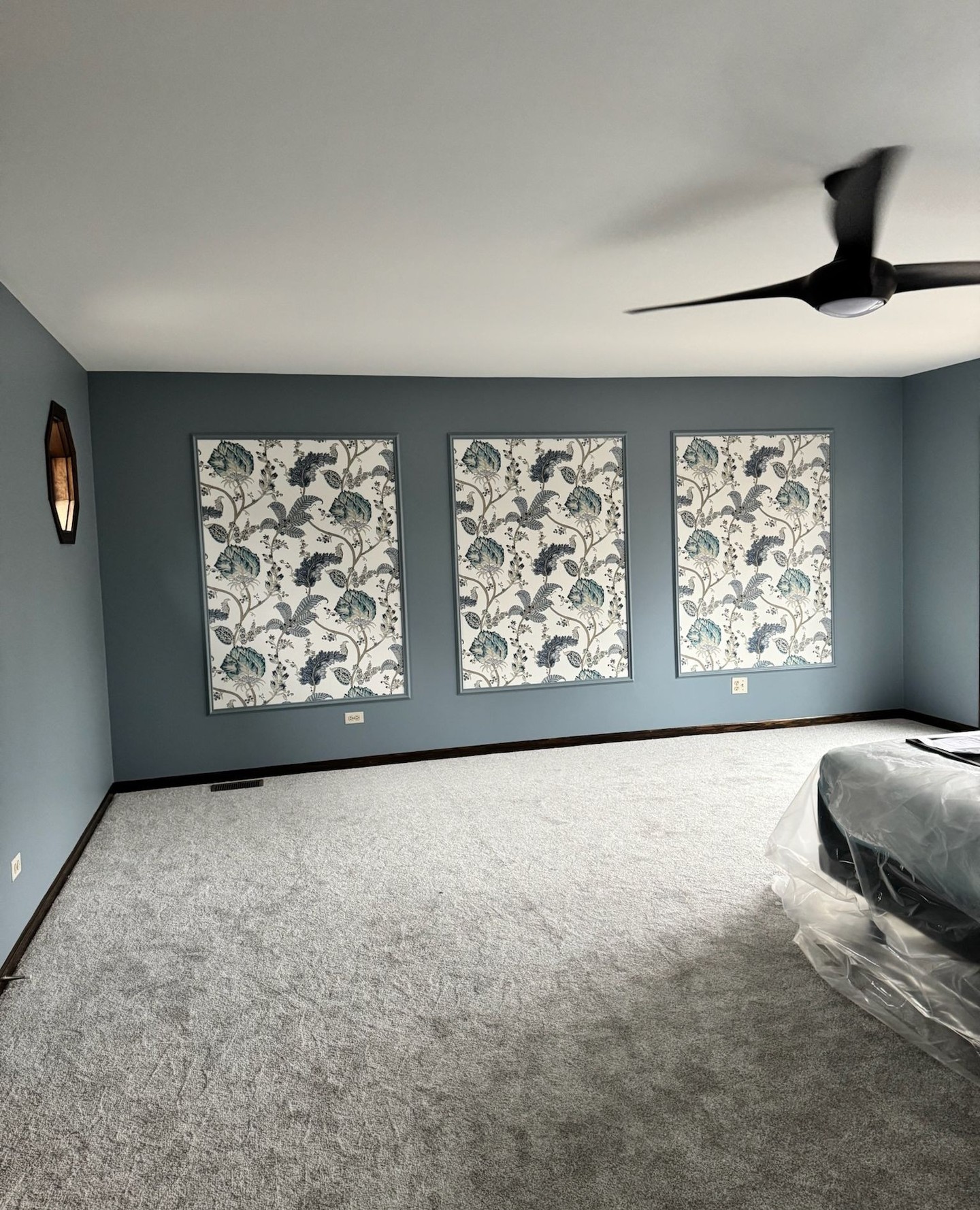
Three tall botanical panels on a field of dusty blue. No awkward wallpaper seam at the ceiling. No pattern fighting an outlet. Every edge sits inside a clean blue border.
The bed isn’t even in yet and the wall already has a headboard moment built in.
Why framed wallpaper beats a full accent wall
An accent wall is a surface. A framed panel is an object. Your eye treats them completely differently.
A surface fades into the room after thirty seconds. Your brain logs it as background and moves on. An object pulls you back every time you walk in. Give wallpaper a border of paint around it and it stops being wall covering. It becomes something to look at.
The symmetry does the rest. Three identical frames read as architectural. One wallpapered wall reads as a decision the previous owner made.
The close-up that gives the game away
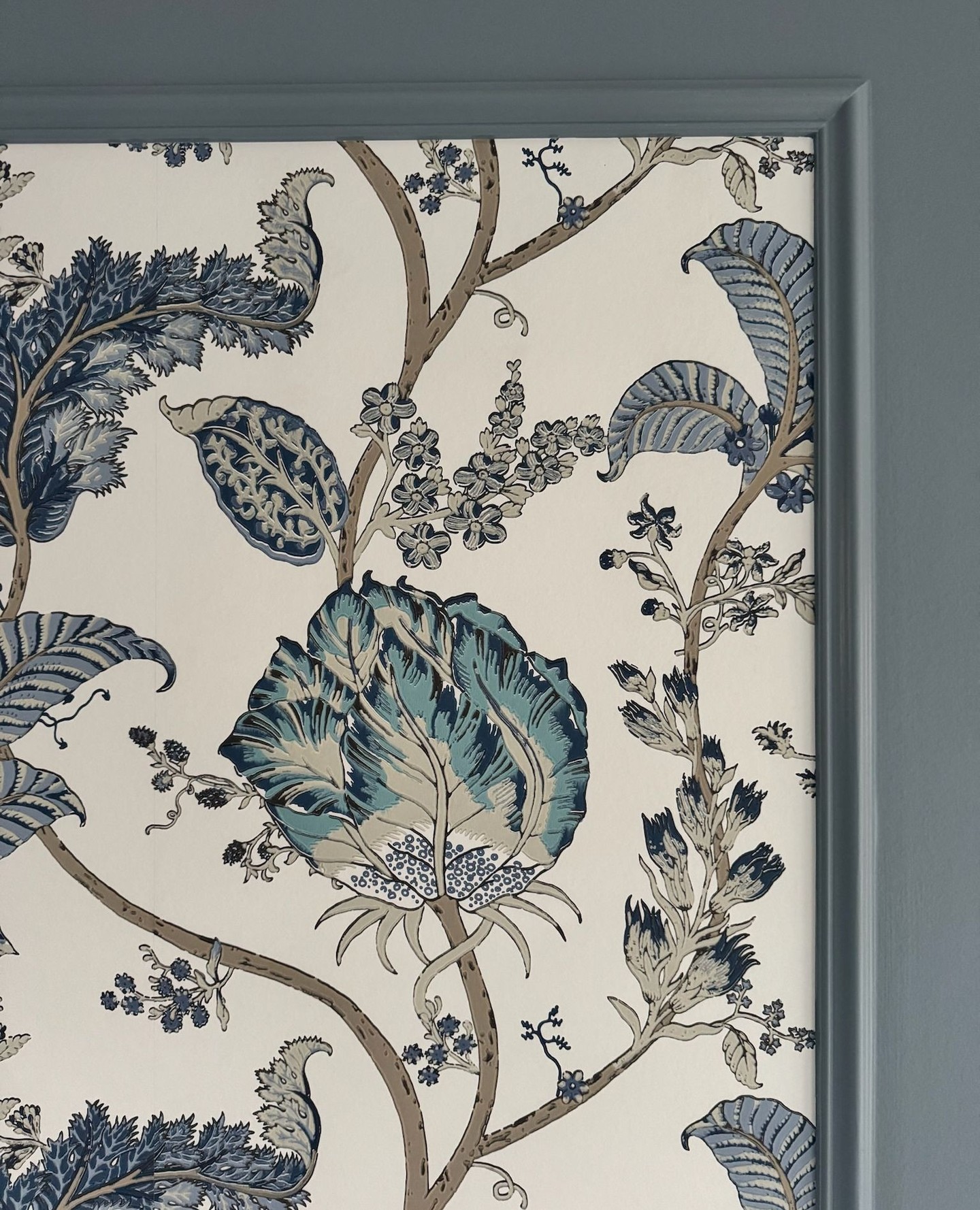
Look how simple the trim is. Pine picture-frame molding from the hardware store, nothing fancy. The reason it reads expensive is the paint color on it, not the shape of it.
Also look where the blue trim meets the wall. No caulk line screaming for attention. Just one continuous blue surface, broken only by the wallpaper opening.
What it took to pull off
A gallon of Chiswell Blue, with leftover for the trim. One run of picture-frame molding. A few rolls of Thibaut. A measuring tape and a level.
Skills that matter: cutting trim at a clean miter, hanging wallpaper inside a straight rectangle, keeping frames level. Papering inside a rectangle is the easy part of wallpapering. No outlets. No ceiling angles. Four straight edges.
A weekend if the walls are smooth, two if you need to prime first.
The lesson worth stealing
The real win isn’t the wallpaper or the blue. It’s the third option.
Most people stare at a blank bedroom wall and pick between two things. Wallpaper the whole thing, or paint it and move on. This room invented a third way. Treat the wallpaper like art, frame it, let the paint hold the room together around it.
Works with any wallpaper you love and any paint color that flatters it.