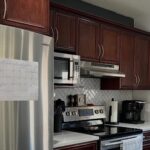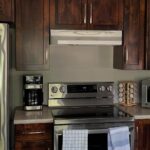

Most people stare at a kitchen like this one and start saving for new cabinets. It feels like the only honest way out. The arches look dated. The finish looks peachy. The whole thing reads like a house that hasn’t been touched since the Bush administration, and every renovation show on cable has trained us to believe the fix is a dumpster and a check with a lot of zeros on it.
Then somebody with a paintbrush and a free weekend proves everyone wrong.
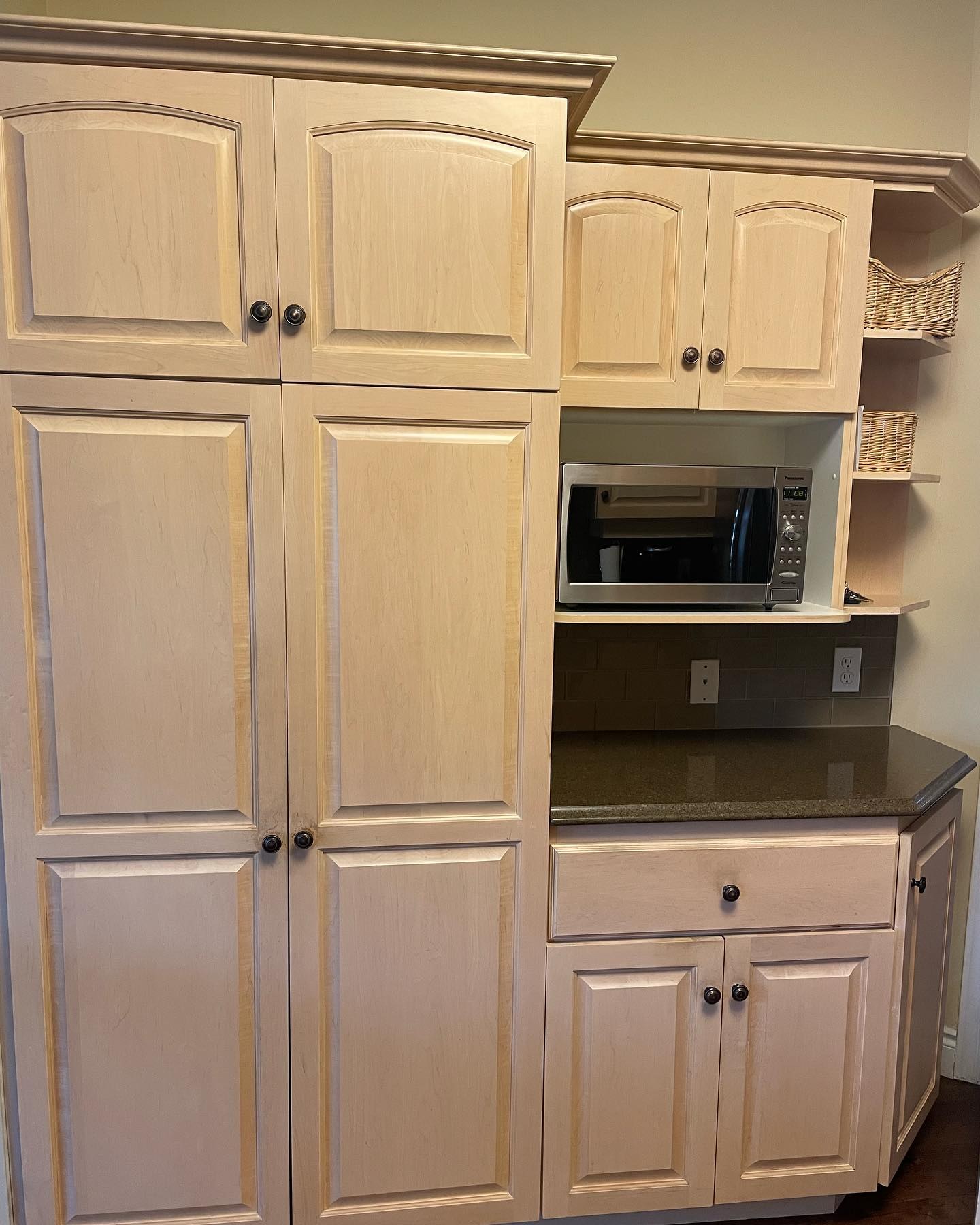
This is a pretty standard mid-2000s builder kitchen. Cathedral arched doors. Raised panels. That bleached-peach maple that was in every spec home from Ohio to Oregon between about 2005 and 2012. The hardware is small oil-rubbed bronze knobs that disappear into the wood. The backsplash is a muddy olive glass subway that nobody can quite figure out, and the open side shelves are holding wicker baskets because that’s what you did with open shelves fifteen years ago.
Nothing here is broken. Everything here is just whispering 2008.
The one thing that’s actually aging this kitchen
The arches aren’t the problem. I know that sounds backwards, because the internet has spent a decade telling you otherwise. But look at any English cottage kitchen in a glossy magazine right now. Cathedral arches. Plenty of them. The arch is a shape. It’s neutral. It takes on whatever story you paint onto it.
The problem is the finish. That pinkish-peach maple wash doesn’t play well with any color made after 2015. It fights warm whites. It makes true cream look yellow. It makes the olive backsplash look like a regret. It’s the kitchen equivalent of a palette that stopped working.
Same corner, different century
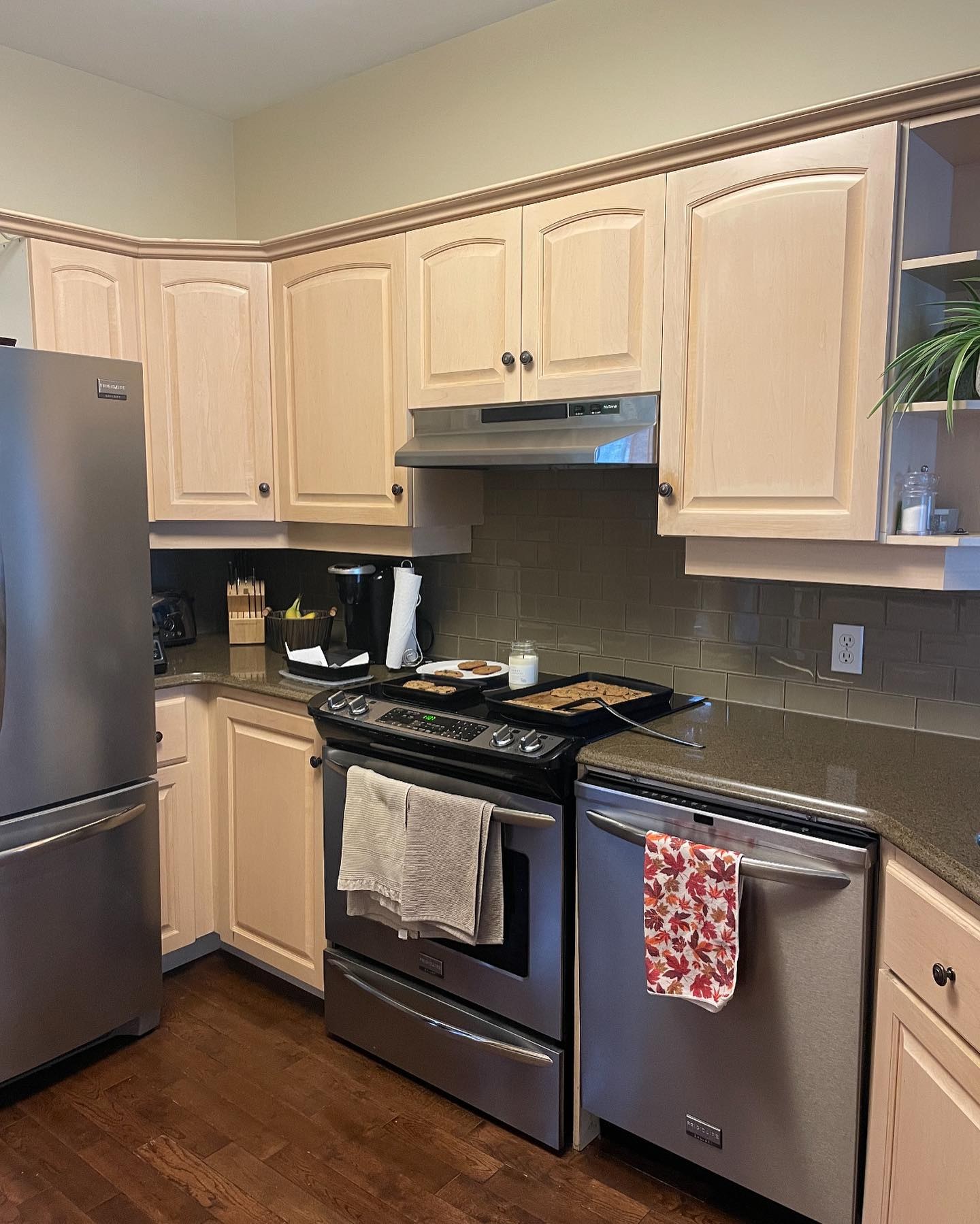
Look at this corner. Fresh cookies on the stove, which is honestly the most charming thing in the shot, because everything else is doing the kitchen no favors. The uppers feel short. The hardware is invisible. Nothing has a job. The fridge, the range, and the backsplash are all pulling in different directions, and the cabinets are just sort of there, trying not to make eye contact.
Now watch what happens when the color changes.
What a weekend of sanding actually did
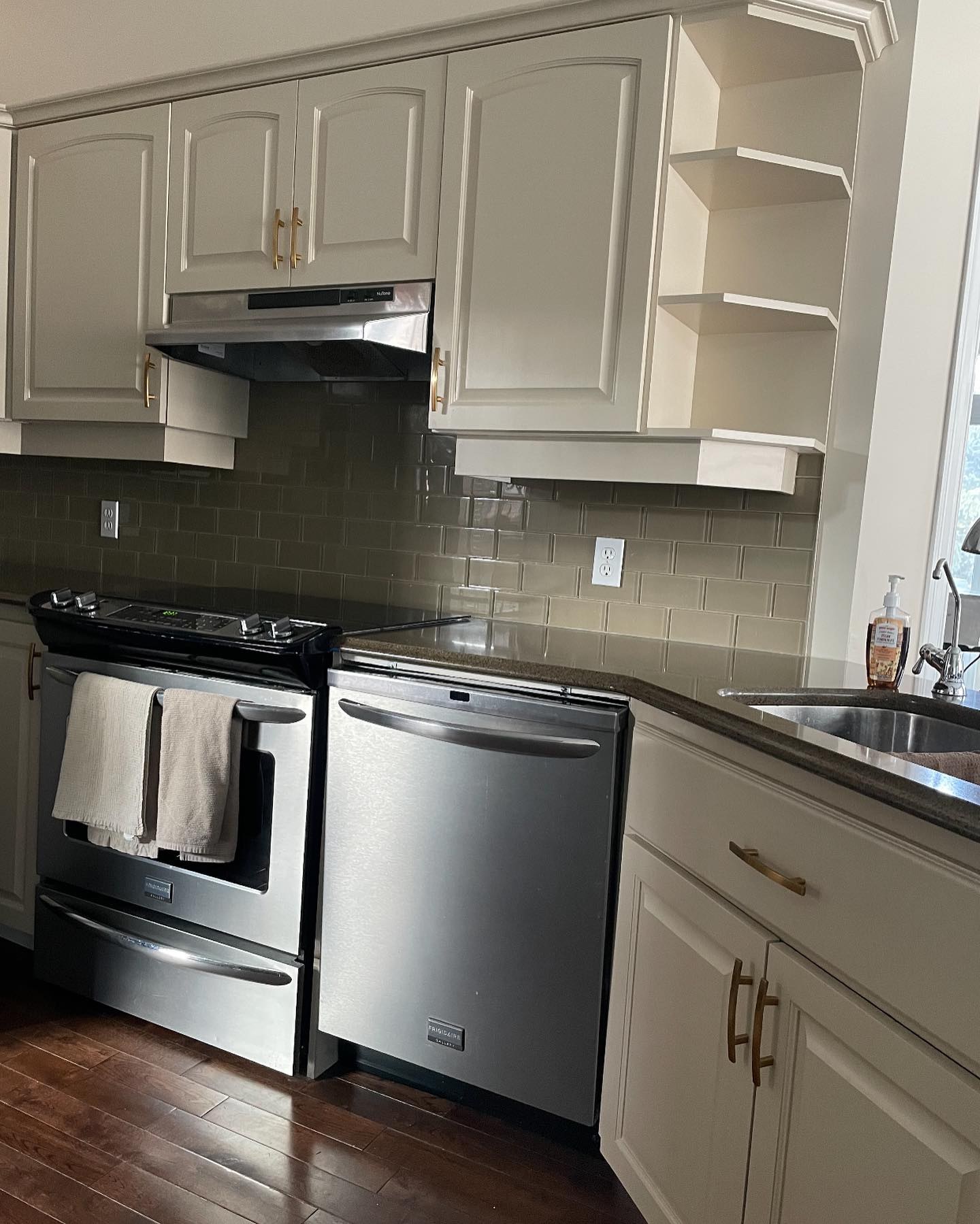
Same hood. Same backsplash. Same granite. Same floor. The paint color is Sherwin Williams Malabar, a grounded sage with just enough gray in it to stay quiet next to that dark granite. The trim and ceiling molding went to Creamy, a warm off-white that lets the sage breathe without fighting it. The walls behind everything went to Natural Linen, a soft greige that finally stops competing with the backsplash.
And the small dark knobs came off. Long brushed brass bar pulls went on in their place. That one swap does more structural work than you’d think, because it gives the uppers a vertical line to follow. The cabinets suddenly look tall. The hood looks framed instead of marooned. That olive backsplash that nobody could figure out? Now it looks like somebody chose it on purpose.
The pantry wall was the harder test
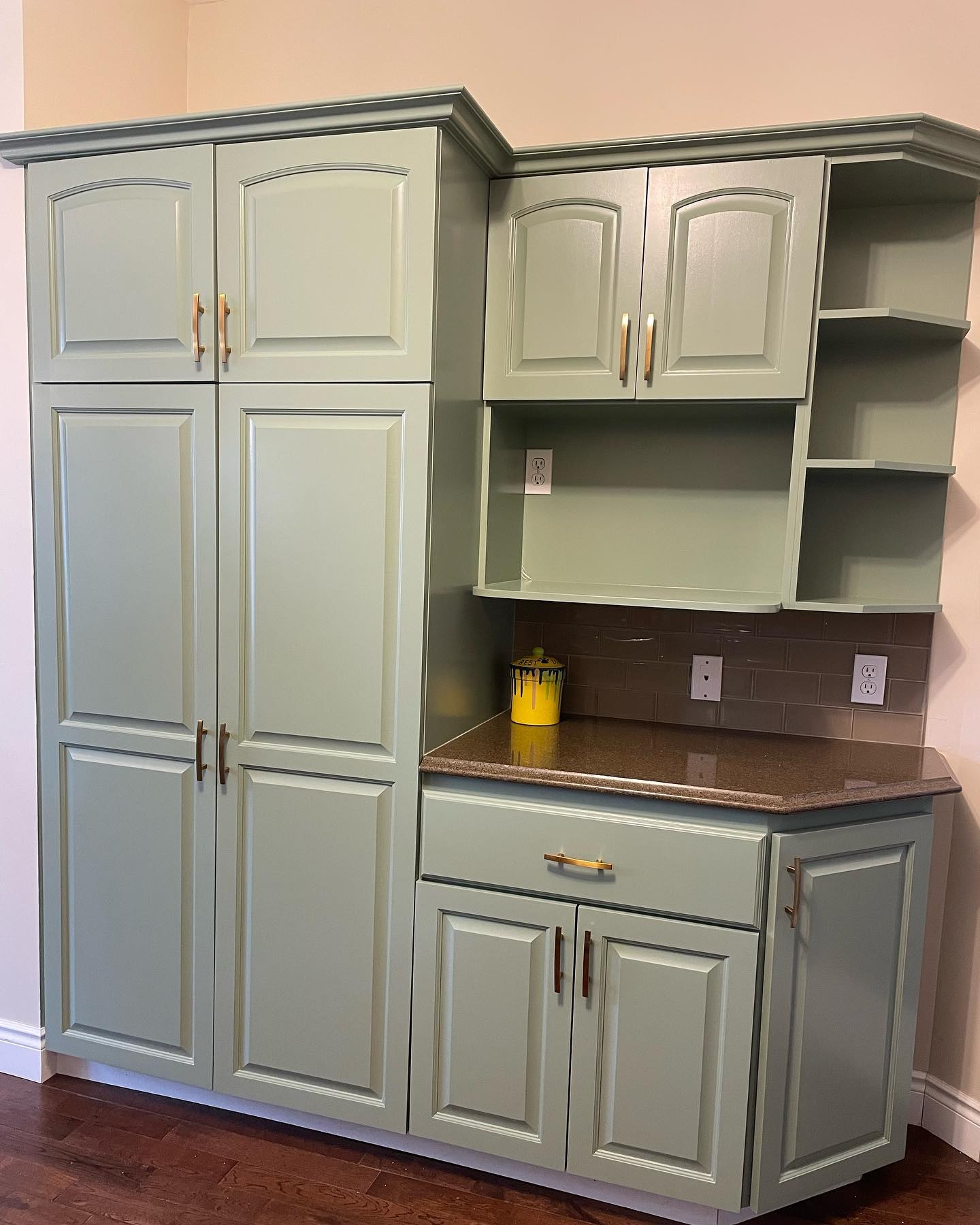
Nine feet of cathedral-door pantry is where paint jobs usually fall apart. It’s the biggest single block of color in the room. If the shade is even slightly off, you feel it the second you walk in.
Malabar holds. The arches, which the internet told everyone to hate, are suddenly doing the work. In sage, a cathedral arch reads as English cottage. In warm white it would read as modern farmhouse. In a deep forest green, moody traditional. The shape is a vessel. The color decides the story.
The honest side by side
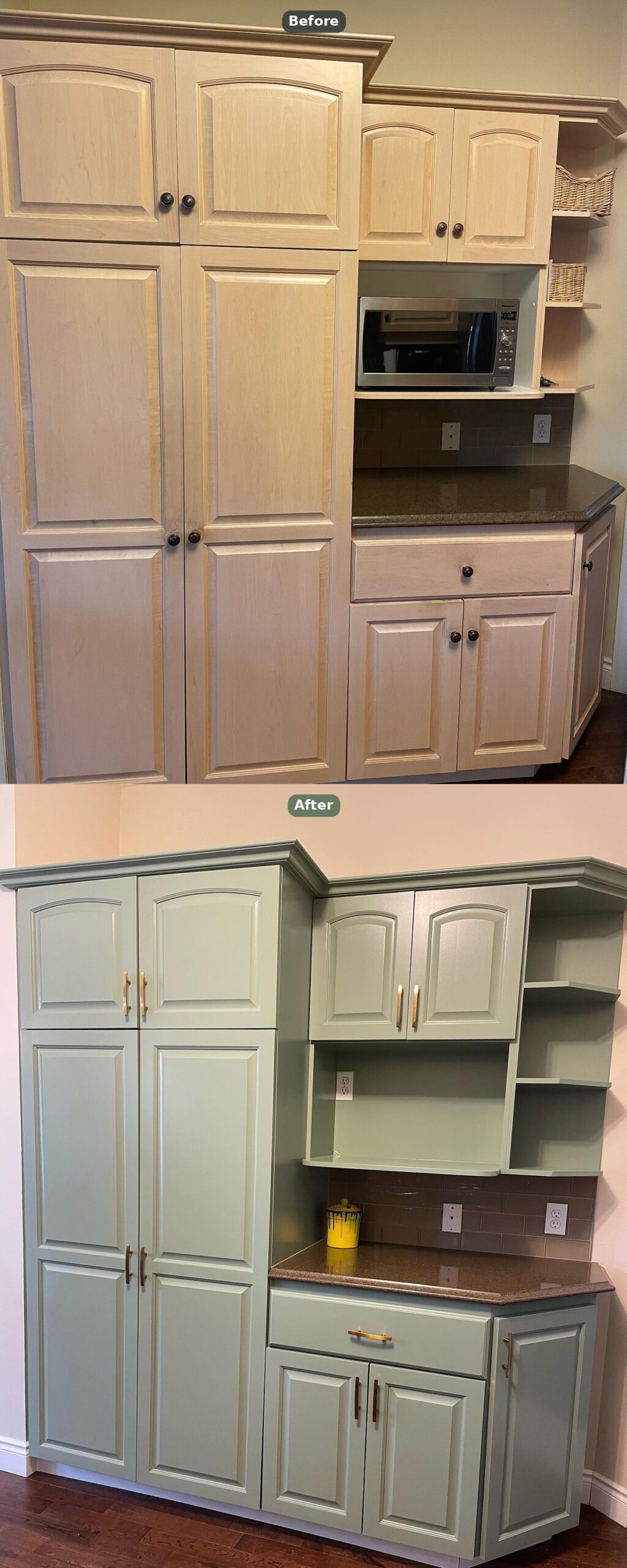
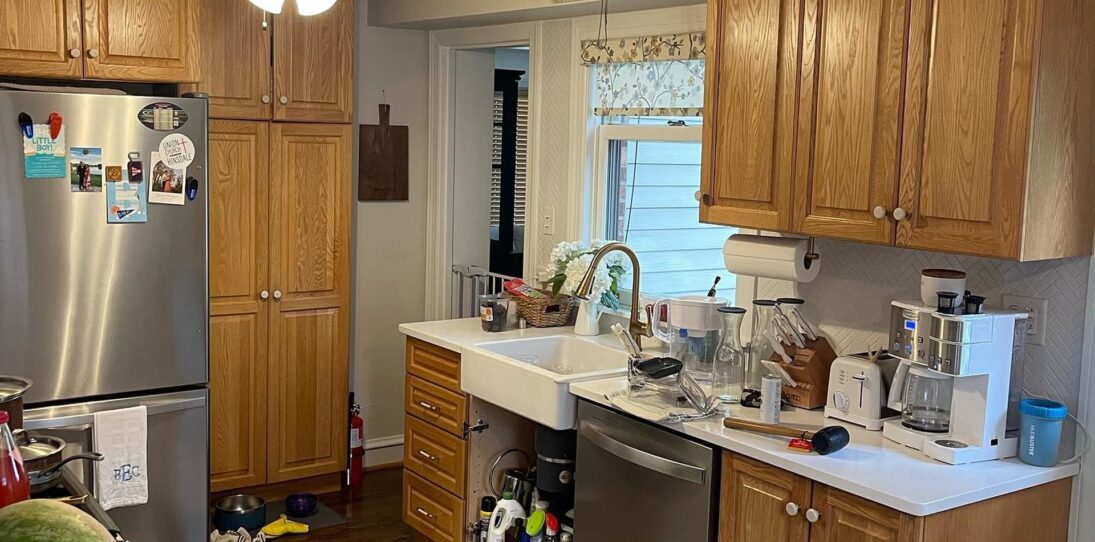
Same cabinet boxes. Same arches. Same microwave nook. Same little open shelf unit on the right. The only edits are paint color, trim color, wall color, and hardware. Everything that looked tired on top looks intentional on bottom, and nothing got demolished to get there.
Why this one hits in 2026
There’s a quiet grief under a lot of kitchen searching right now. People feel stuck with cabinets they didn’t pick, in houses they can’t afford to gut, in a year when thirty-thousand-dollar renovations feel reckless. This transformation isn’t selling a trick. It’s handing out permission.
Permission to stop waiting for the money. Permission to stop believing the arches are the enemy. Permission to make the house you live in feel like the one you chose.
Look back at the stove wall before photo one more time. There’s a spider plant already sitting on that open shelf. Green, trailing, thriving. The room was asking for this color the whole time. The owner just finally heard it.
The exact recipe, if you want to copy it
- Cabinets: Sherwin Williams Malabar
- Trim and ceiling molding: Sherwin Williams Creamy
- Walls: Sherwin Williams Natural Linen
- Pantry accent in the original: Sherwin Williams Jade Dragon
- Hardware: long brushed brass bar pulls, dark knobs removed
- Everything else kept: boxes, cathedral doors, olive glass subway backsplash, dark granite, appliances, hardwood floor