
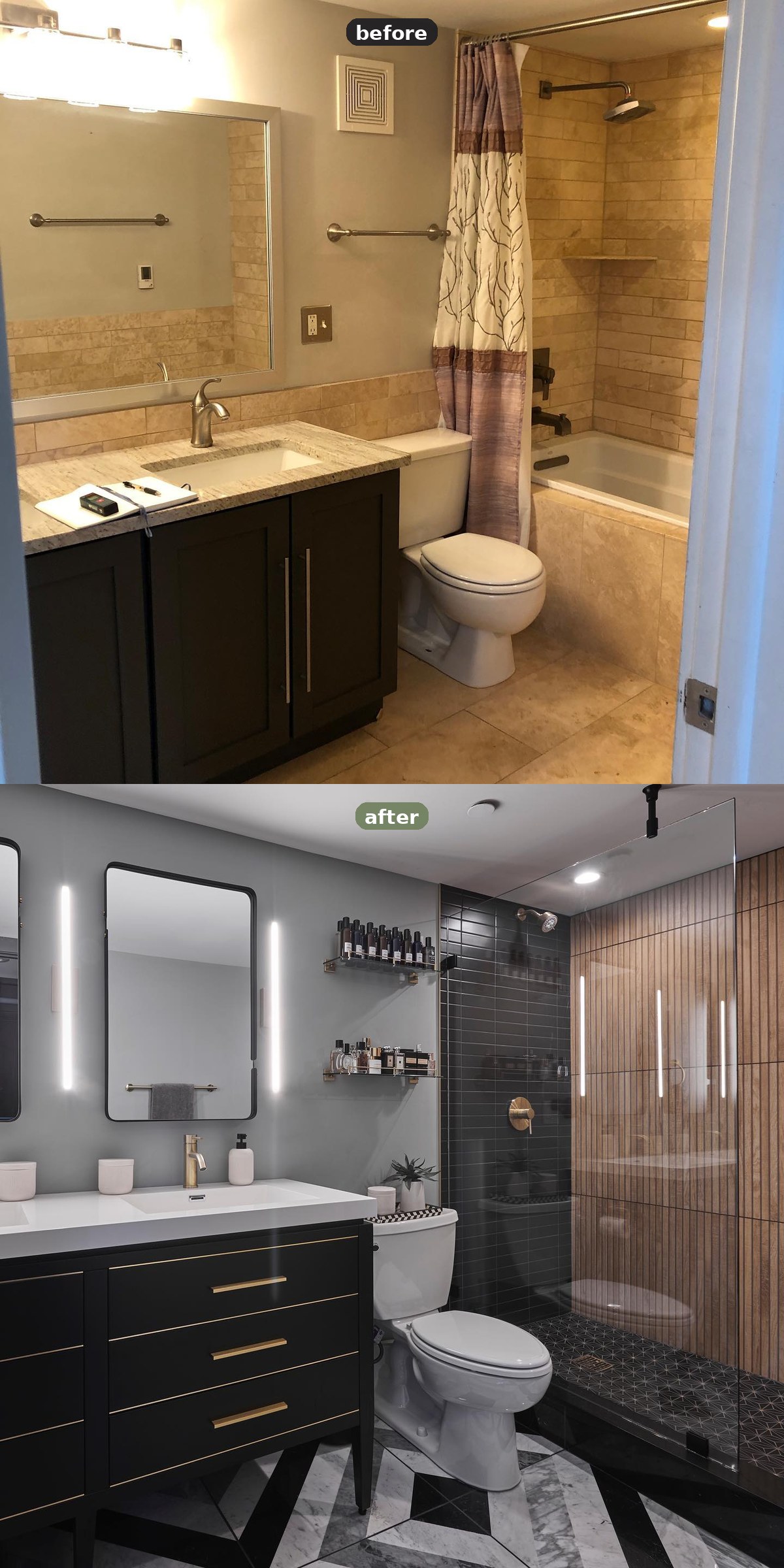
This story is not about a broken bathroom getting fixed. It is about a perfectly fine bathroom getting called out for being boring. Travertine, granite, dark shaker vanity, big silver mirror: the kind of room every realtor calls “beautifully updated.” The homeowner looked at it and decided nice was the problem.
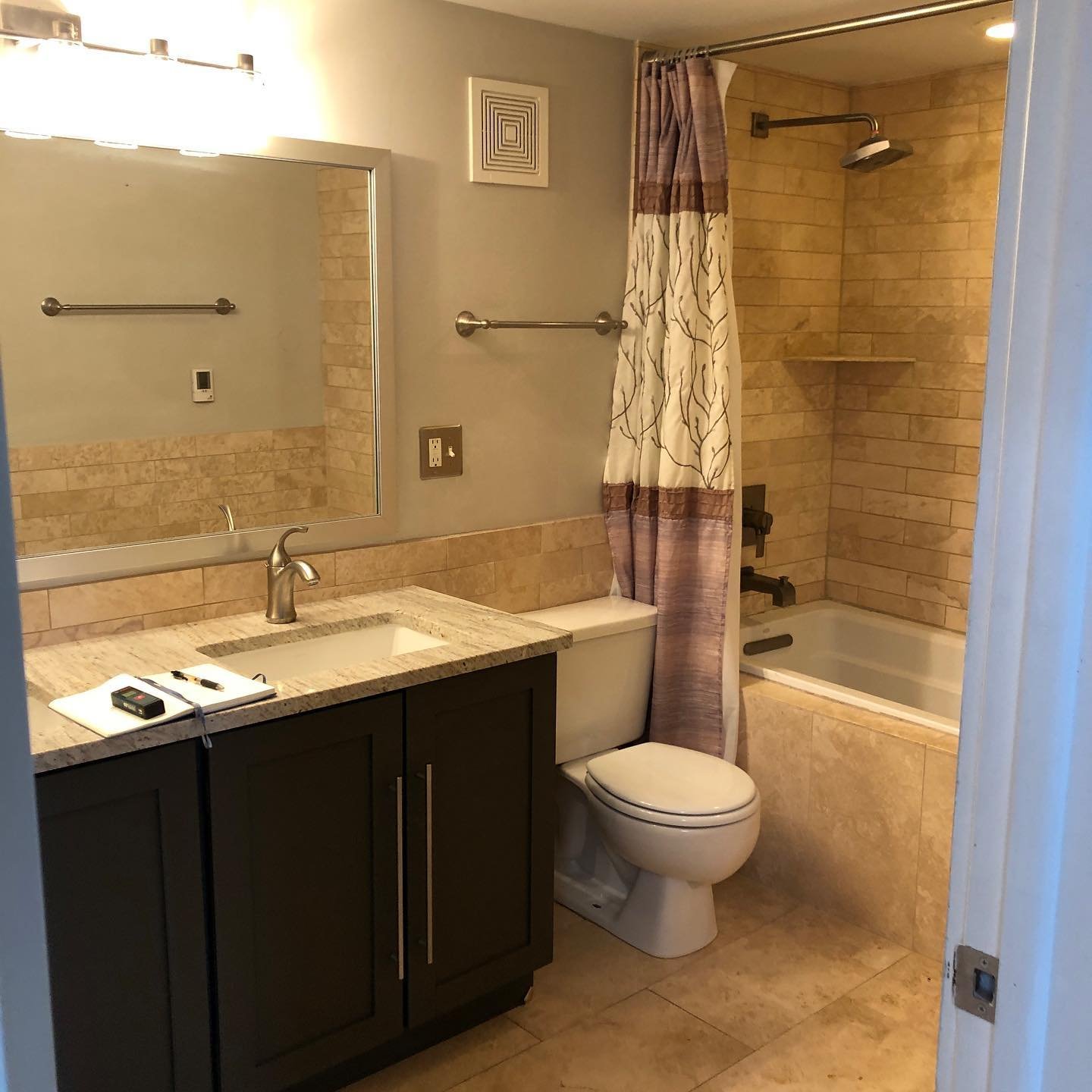
Nothing in here is broken. The granite is real, the vanity is real wood, the tile is real stone, the whole room is maybe eight years old. Almost every reader is sitting in some version of this bathroom right now, telling themselves it is fine.
Then she did the one thing every design blog warns you against
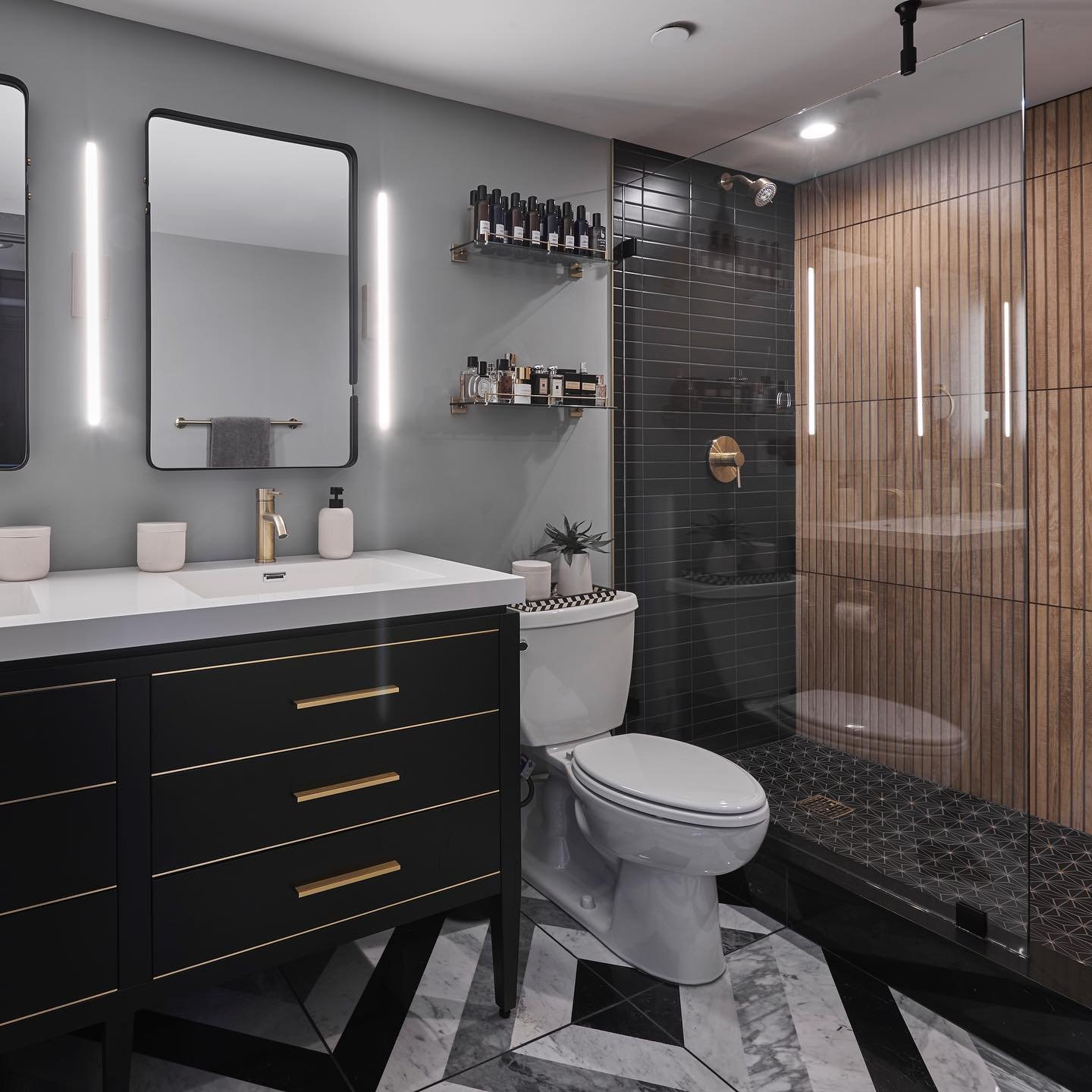
Every rule about small bathrooms says the same thing: keep it light, especially with no window. She went the opposite direction on all of it. Black shower tile, black vanity, black-framed mirrors, black shower pan, plus a geometric marble floor that would scare most designers off a bigger room. On paper, disaster. In the room, it works.
Here is why dark walls actually make a small bathroom feel bigger
Pale walls announce themselves. Your eye lands on every corner and edge where the room stops. Go dark and those edges melt. What is left is the stuff she put there on purpose: the warm wood panel, the brass, the pattern under your feet. A calmer room almost always feels like a bigger one too.
The wood on the shower wall is not actually wood
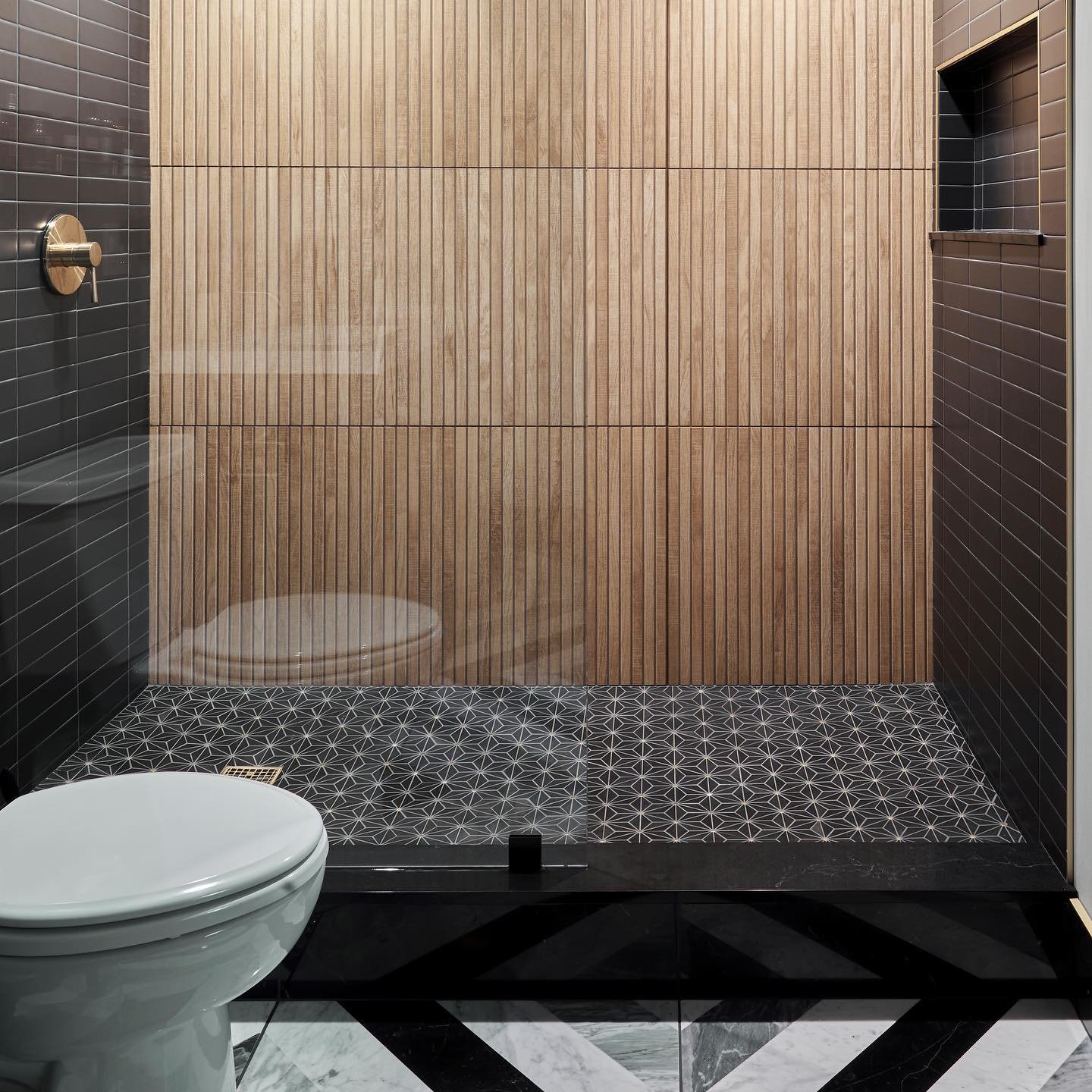
This is the detail every guest will ask about. Mirrella Natural, $1,450 for the run. It is porcelain tile printed and textured to look like fluted teak. Real wood in a wet zone would warp in a season. As tile, you hose it down.
The side tile is a trick most people would never guess
The side walls are American Olean Color Story in Black, $700 for the whole wall, a tile you can buy at any big box shop. The install is what sells it. She laid the tile horizontally and stacked the grout lines in a strict grid instead of offsetting them. Offset the usual way and you are back in 2010. Lined up this way, it reads European.
The floor is where the real craftsmanship money went
The floor tile itself is almost offensively cheap: Floor and Decor Cavalier Polished Marble, $1,000 for real Carrara. The real money, the part no one lists on a receipt, is the labor of cutting that marble into strips and laying it in that geometric ribbon. That is not a tile you buy. That is a pattern someone drew and a stone mason built piece by piece. It gives the room Art Deco hotel energy no shortcut can fake.
The vanity looks custom but anyone can order it
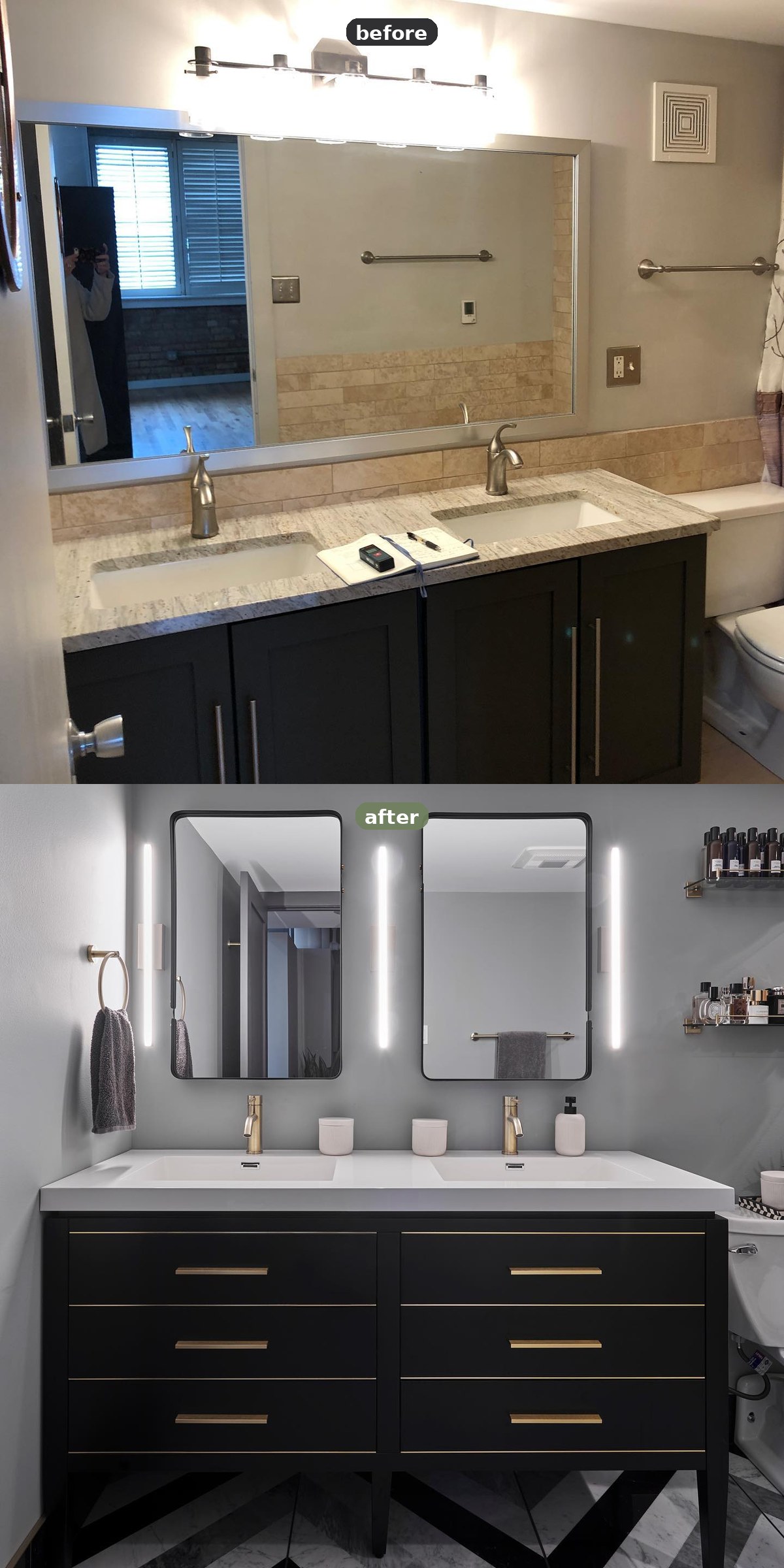
Houzz “Grace”, $2,000. You add it to cart and it ships. The reason nobody guesses that is the stuff around it. Two mirrors instead of one giant frameless, vertical LED sconces instead of a chrome Hollywood bar, brass faucets instead of brushed nickel. Each is a retail shelf swap. Together, inside a tight black-brass-white story, the wall reads like a hotel.
The small stuff holds everything together
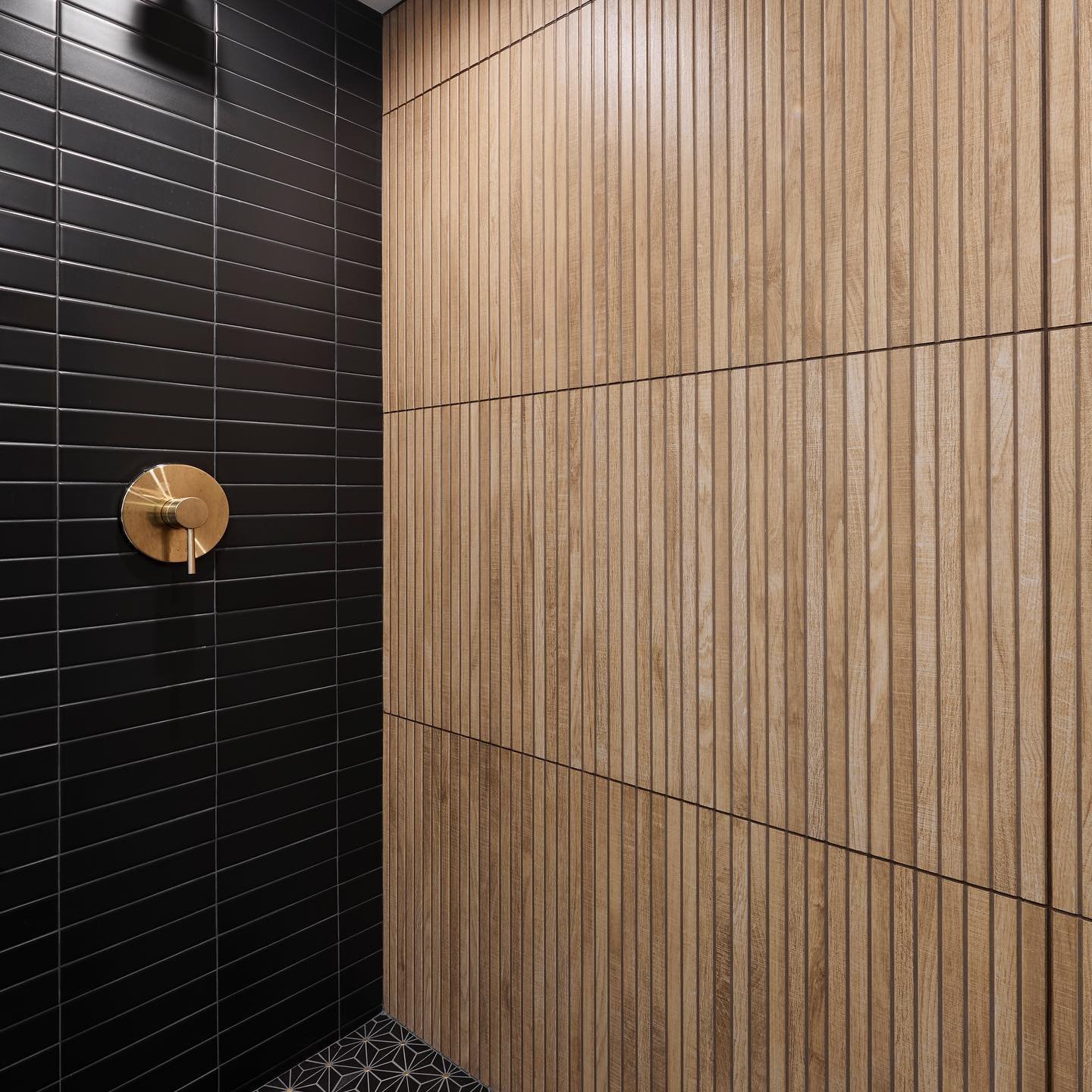
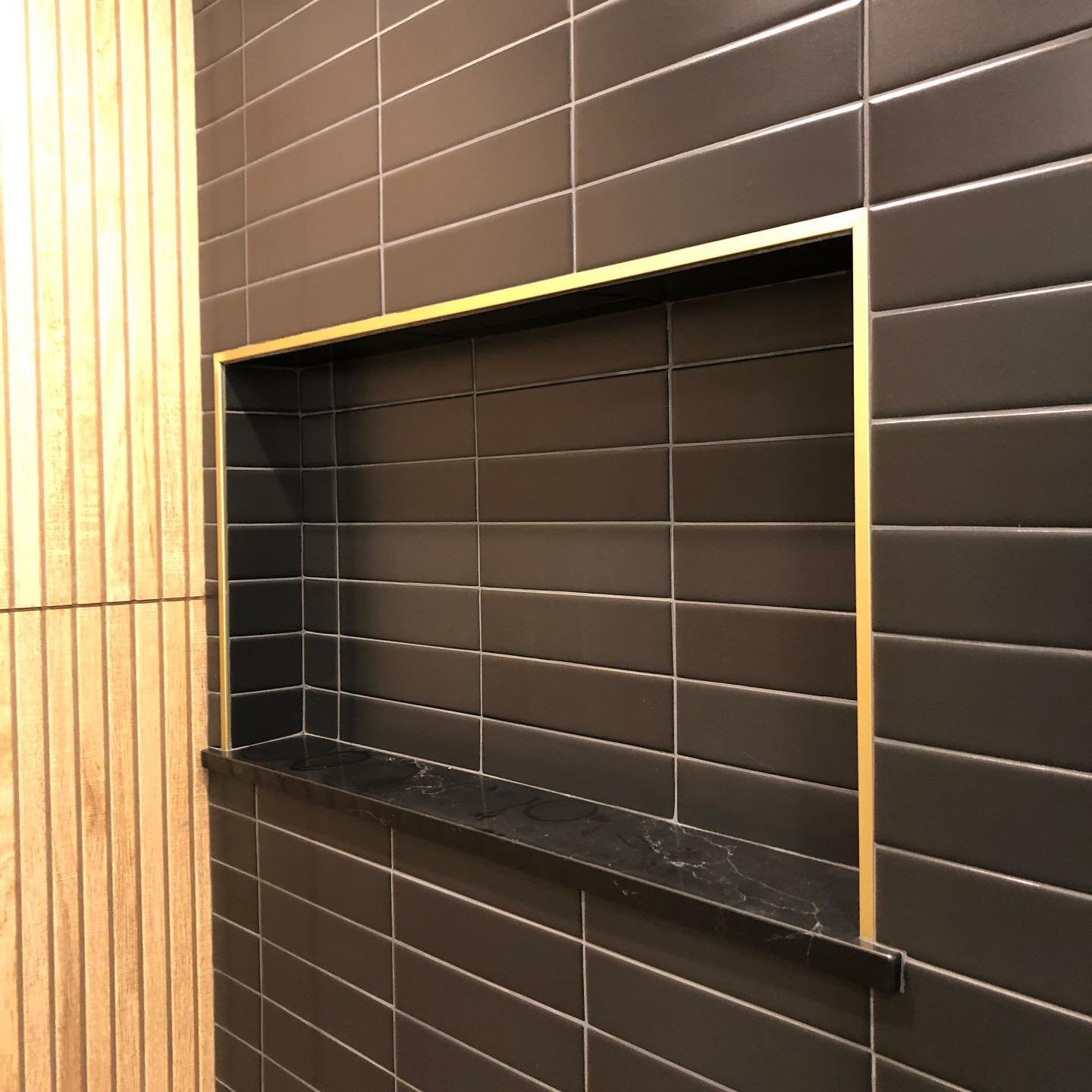
Two small moves do a lot of quiet work here. The shower control is a single round brass dial, not the usual three-piece set of knobs and diverters. One clean circle on a wall of tile. And the niche is wrapped in a razor-thin brass trim, the kind of detail that costs almost nothing and changes everything. Without it, shampoo cutout. With it, picture frame.
The one real sacrifice she made
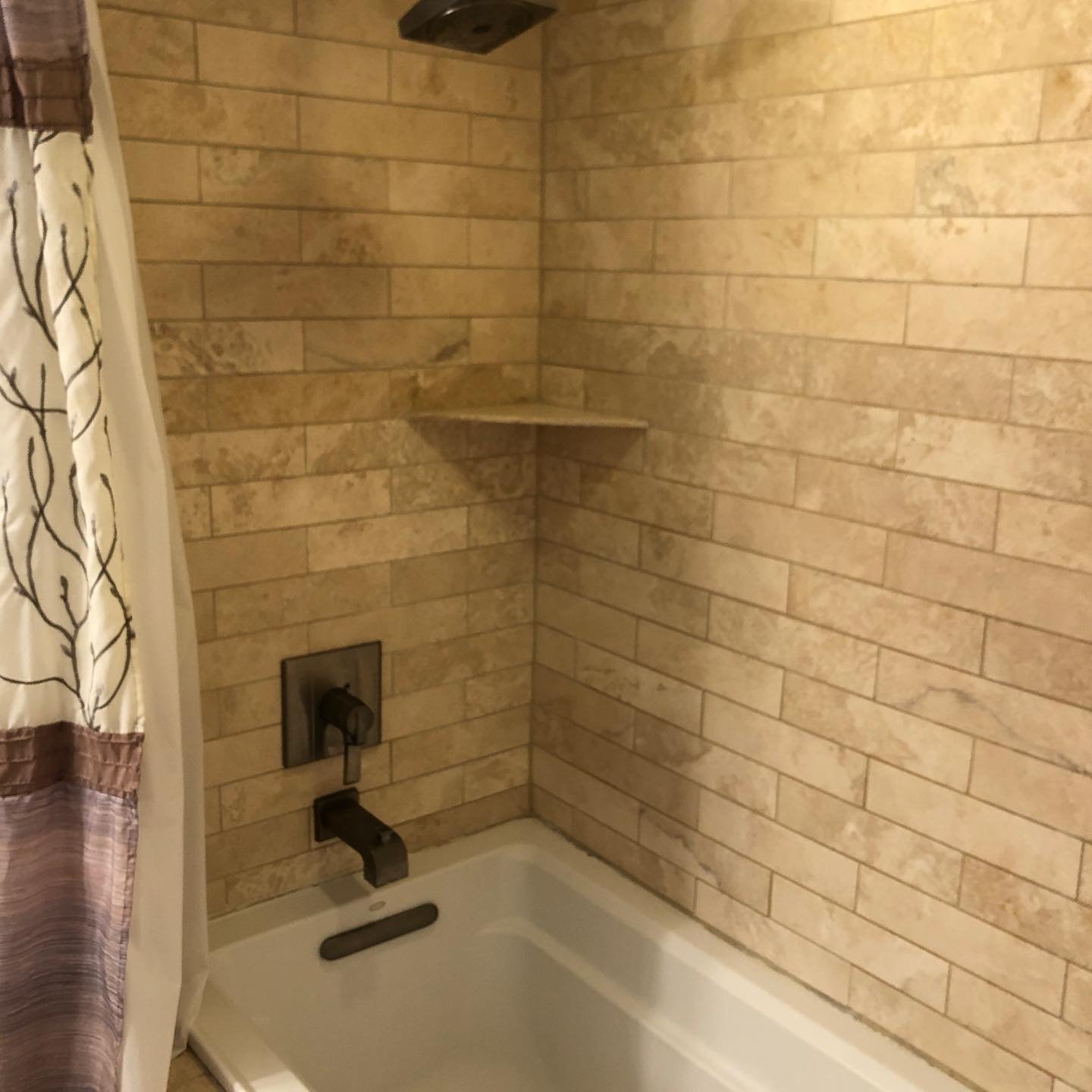
The tub is gone. She traded the alcove tub for a true walk-in shower. If you have small kids who need a nightly bath, this plan is not for you. For a couple that only showers, or a guest or primary bath, trading an unused tub for a real walk-in is almost always the better move. Think about your house before you copy hers.
What the whole room actually cost
The itemized list the designer shared on Instagram:
- Vanity, Houzz Grace: $2,000
- Faucets, Artos Trova Lav: $275 each
- Shower back wall, Mirrella Natural: $1,450
- Shower side tile, American Olean Color Story Black: $700
- Shower floor, Floor and Decor Basalt Nova Noir: $500
- Bathroom floor, Floor and Decor Cavalier Polished Marble: $1,000
- Shower plumbing, Artos Trova: $400
- Mirrors, Home Depot: $250
- Lights, Lightology Barlow: $350 each
Visible material spend lands around $7,000 to $8,000, with marble floor labor on top. The sources: Floor and Decor, Home Depot, Houzz. No luxury brands anywhere. That is the part that should make you stop scrolling.
The lesson worth taking home
A small windowless bathroom does not have to stay light to feel open. Give the eye something warm to land on and the dark walls stop closing in. Big box tile can look designer in the right install pattern. An off-the-shelf vanity can look custom inside a tight color story. The bathroom you were going to leave alone because it was fine is probably the one with the most room to grow. She proved it for about $7,000. Your beige bathroom is waiting for you to stop defending it.