
A good solid oak kitchen isn’t cheap, and this one clearly wasn’t. Curved end cabinets, soft-close drawers, a belfast sink, a black range tucked into a stone alcove, and a granite island big enough to seat the family. Built to last forever. And it had. Everything still worked, everything still closed softly. There was nothing wrong with it except one expensive thing: the color.
Honey-toned oak was the kitchen of choice through the 2000s. By the late 2010s, warm orange wood had become the fastest way to make a room look twenty years old. Agents started quietly knocking money off homes that had one. The owners of this cottage kitchen knew it. They also knew that ripping out perfectly good solid oak to chase a color trend felt insane.
So they did something most people never consider. They kept the kitchen and changed only the thing that was broken. Two days. One spray gun. One satin coat of RAL 7037 dusty grey. No skip on the drive, no builder’s quote, no new mortgage. The result is sitting below.
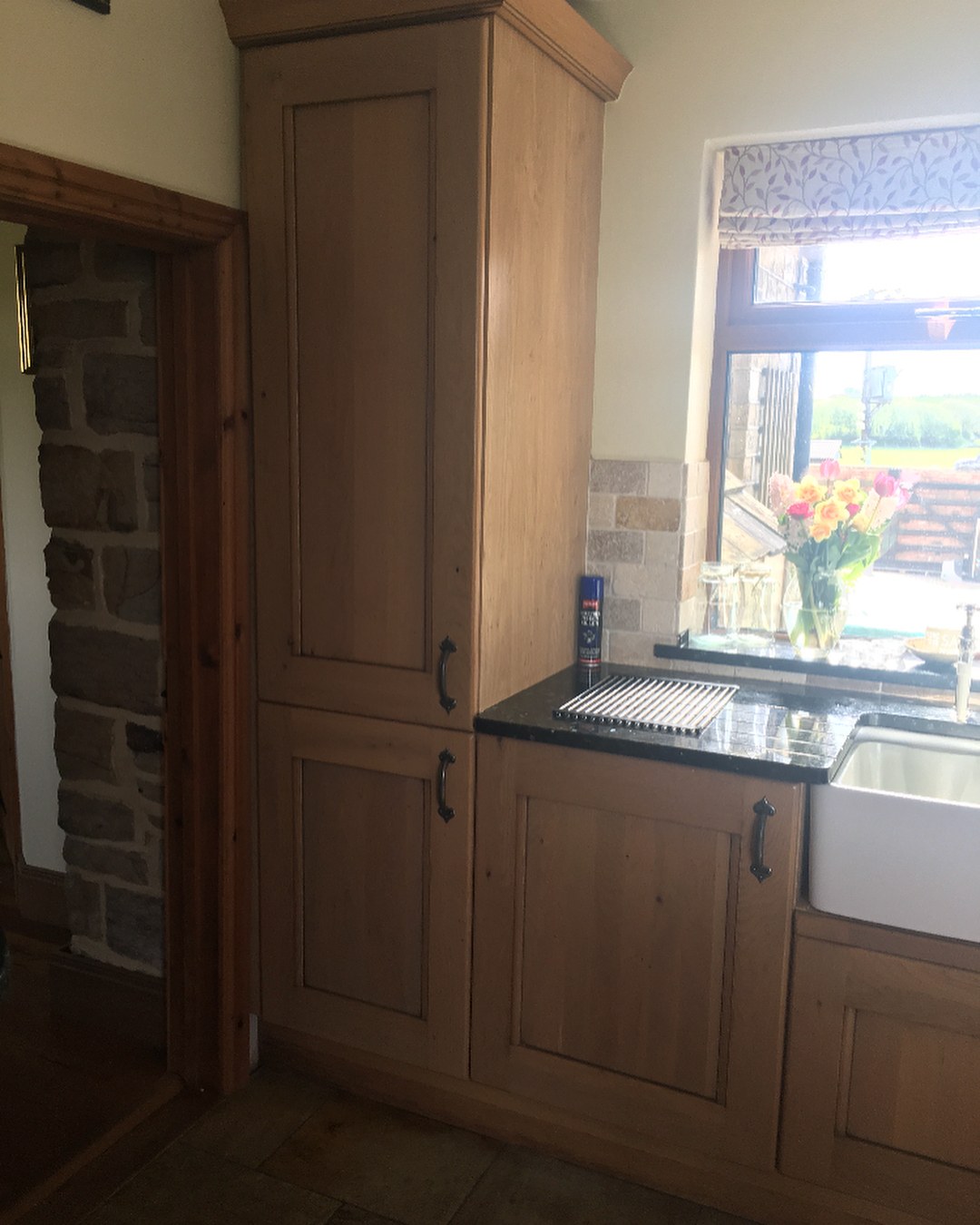
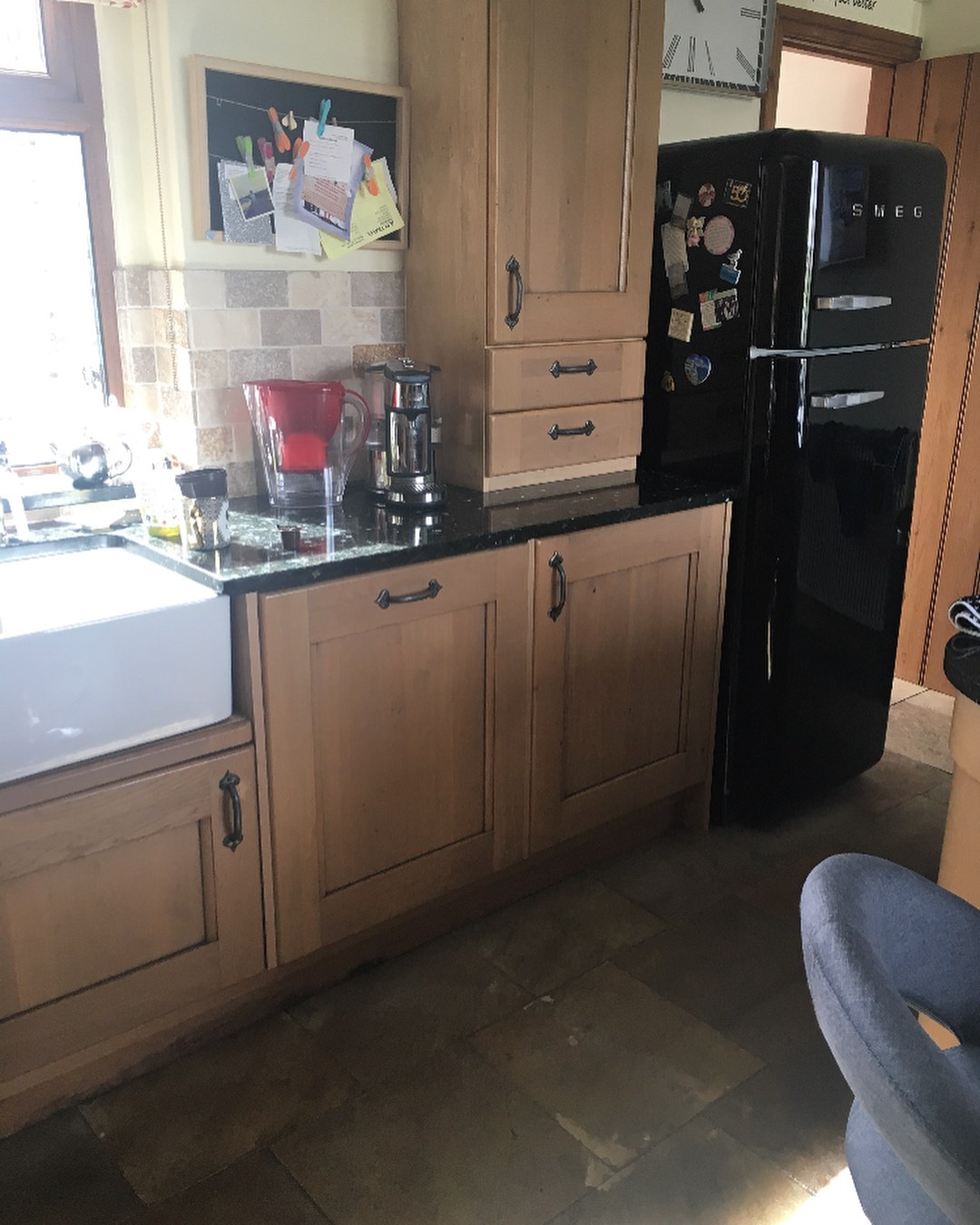
The before, at the wall most guests saw first
This is the sink wall by the window, the one you walked toward coming in through the stone arch. Belfast sink, stone floor, countryside view. But that oak larder runs floor to ceiling and dominates everything. The tiles disappear. The whole corner reads as one big orange block.
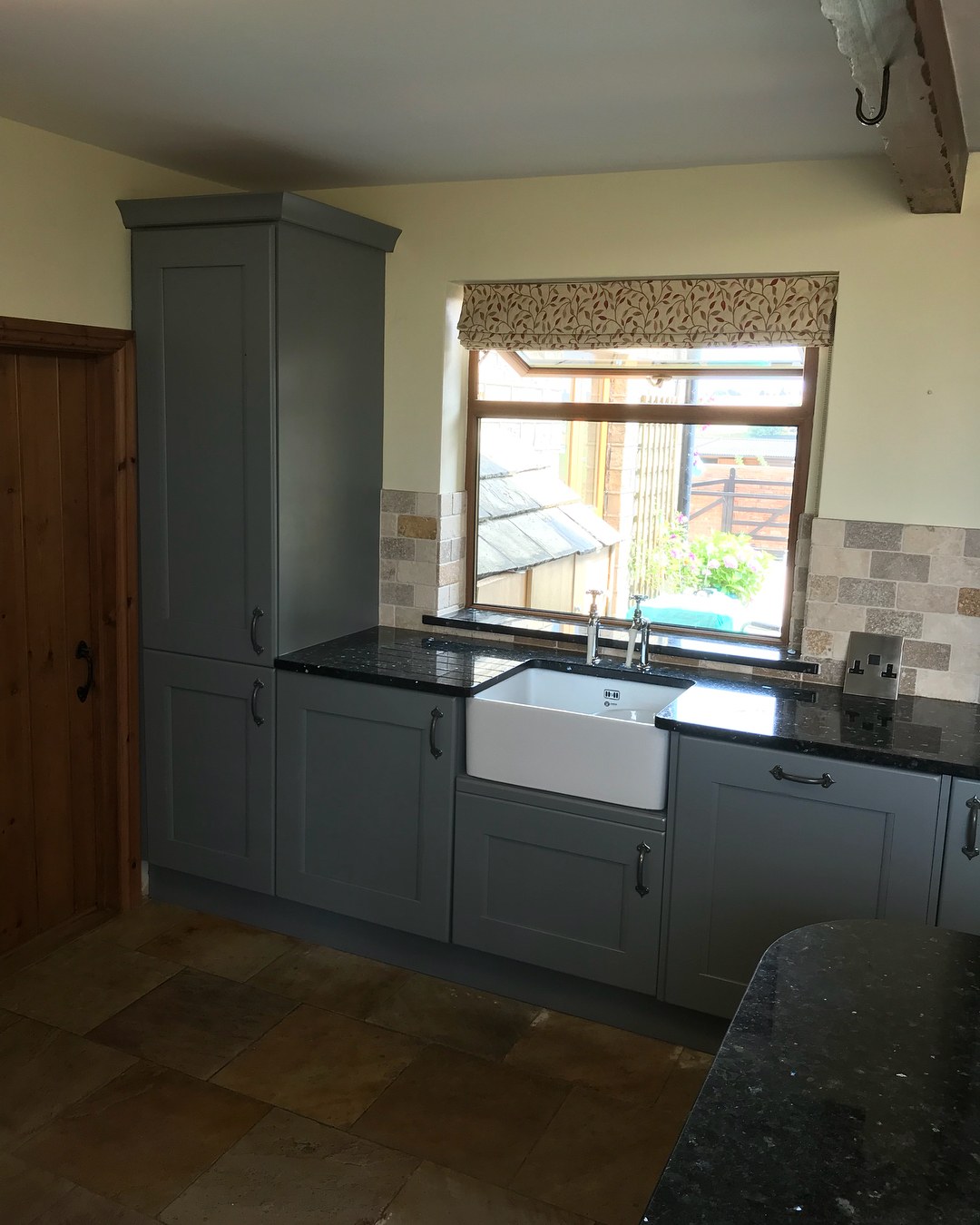
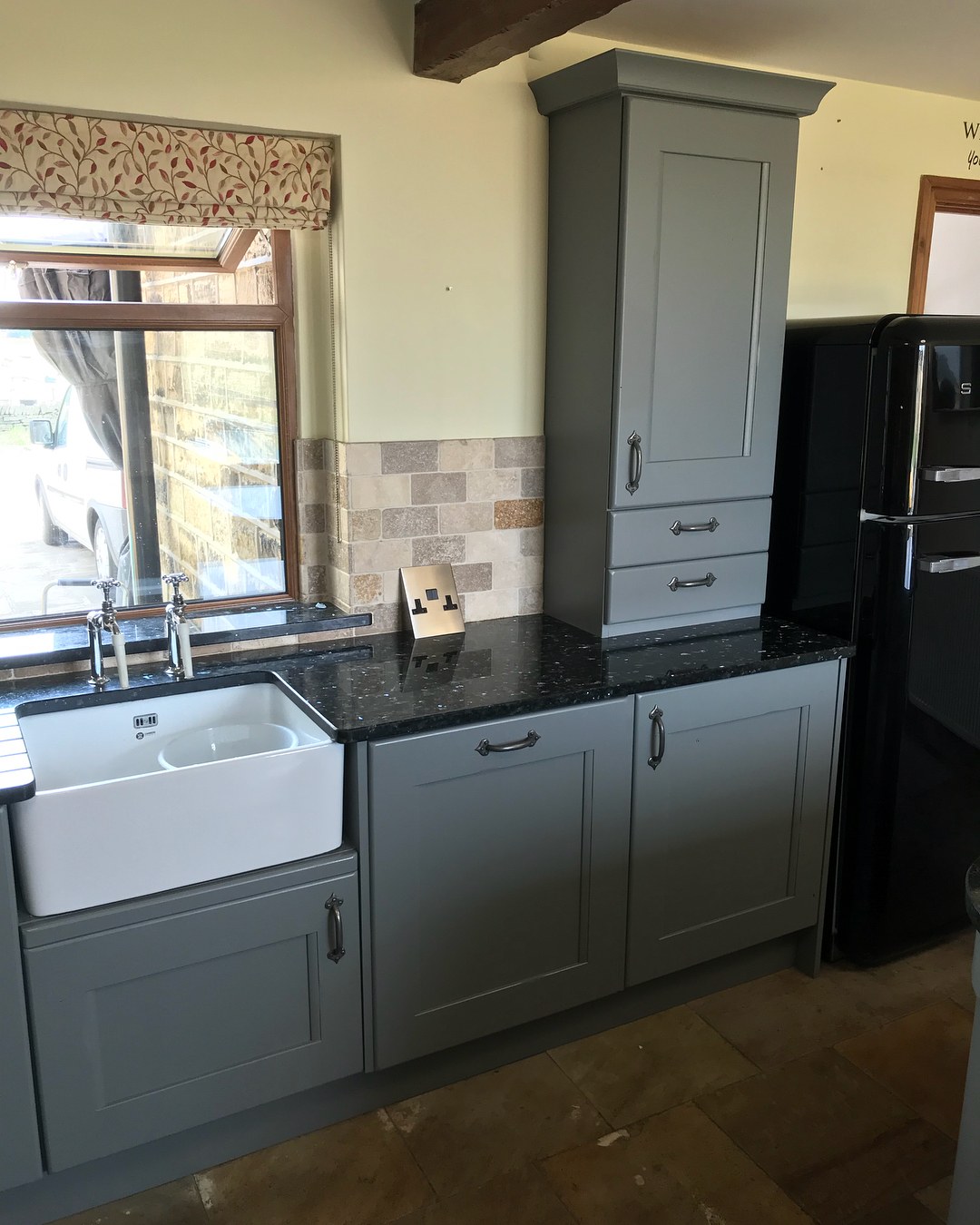
The after, same angle, same light
Now look at the exact same corner once the spray gun has done its work. The larder is still the larder. The window is still the window. The sink hasn’t moved. Only the color has changed, and suddenly the stone backsplash has something to say for itself and the daylight actually reaches the counters.
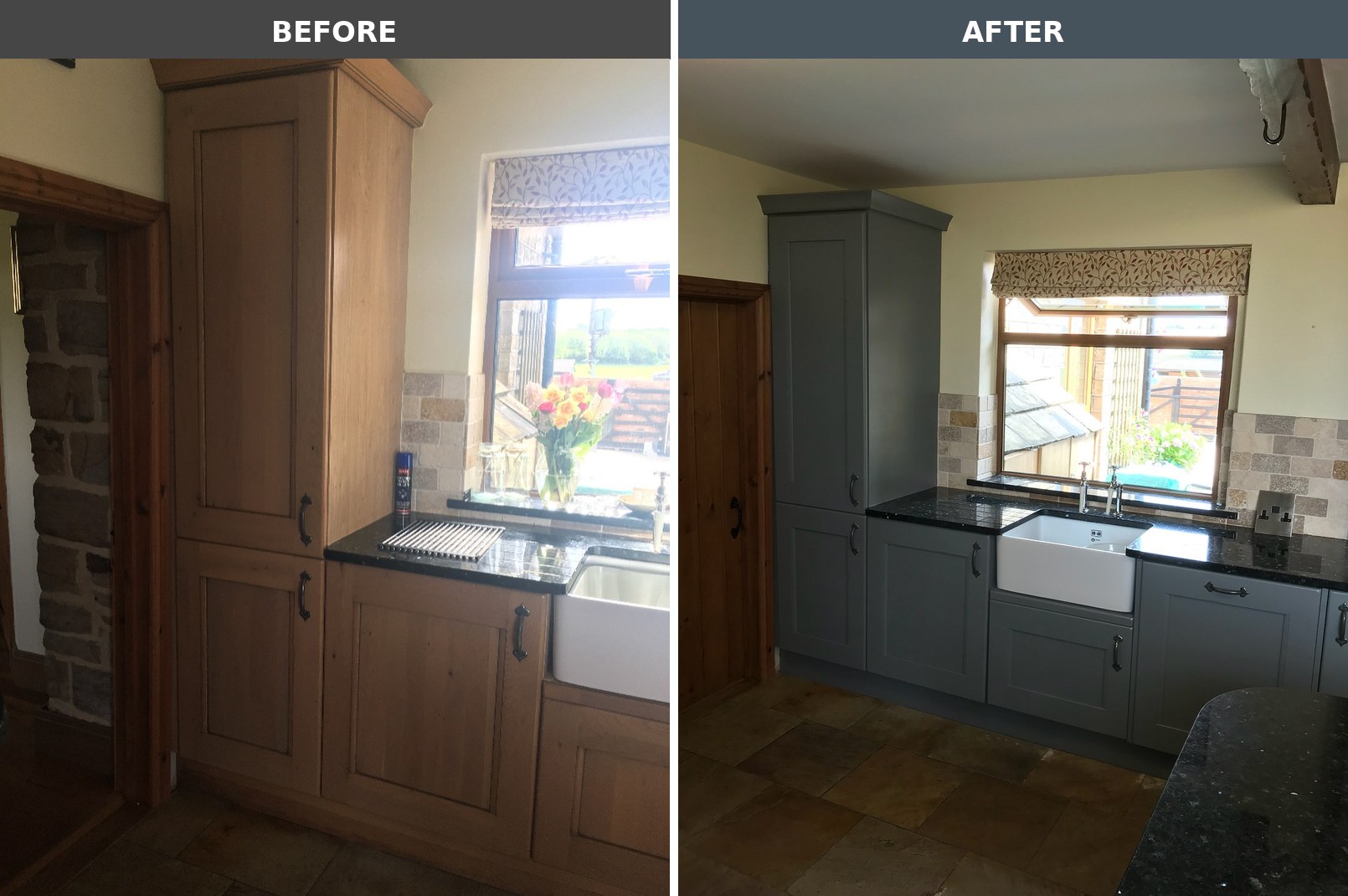
Side by side, so you don’t have to imagine it
Put the two frames next to each other and the honest math shows up. Same tiles, same counter, same window dressing, same iron drop handles. The grey version looks like a bespoke English country kitchen out of a magazine. The orange version looks like a time capsule.
The SMEG fridge was never the problem
If you’ve ever tried to drop a black retro SMEG fridge into a warm oak kitchen, you know how awkward it looks. It sits there like a visitor. Here’s what it looked like before the spray.
Afterwards, you barely notice the fridge. The grey cabinets, the black appliance, the chrome taps all read as one considered palette instead of three decades fighting for space. The lesson: it was never the SMEG that looked out of place.
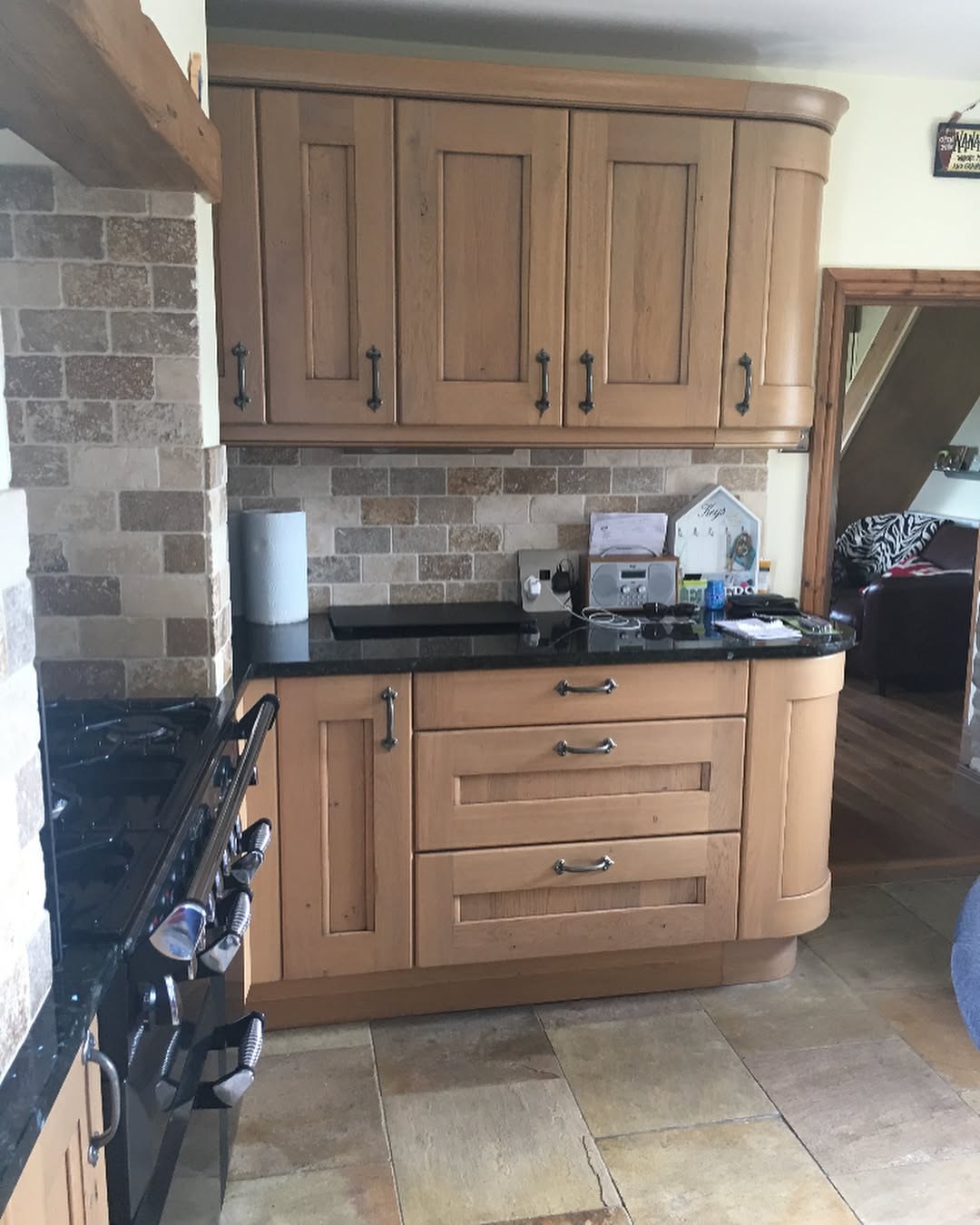
The curved corner that cost a fortune and nobody noticed
See those curved end cabinets wrapping the corner by the range? That’s expensive joinery. Bullnose returns, custom scribed cornice, the kind of detail you pay for and then can’t see because the eye is too busy trying to process all the orange.
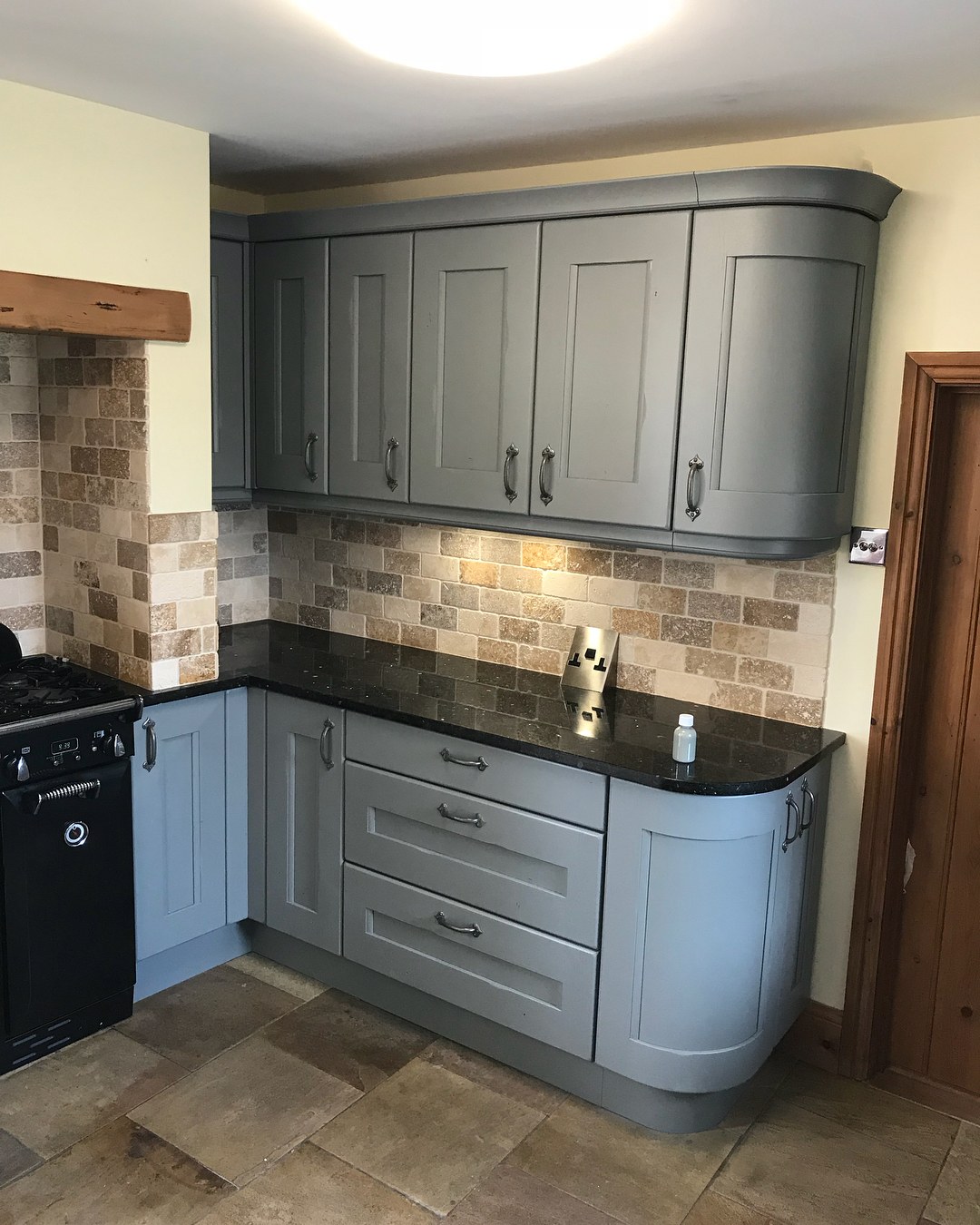
Once the paint goes on, the shape of the cabinetry finally gets to lead. Curves, cornice, drawer stack, the little pewter cup handles, all of it reads properly. This is the picture that made people stop scrolling.
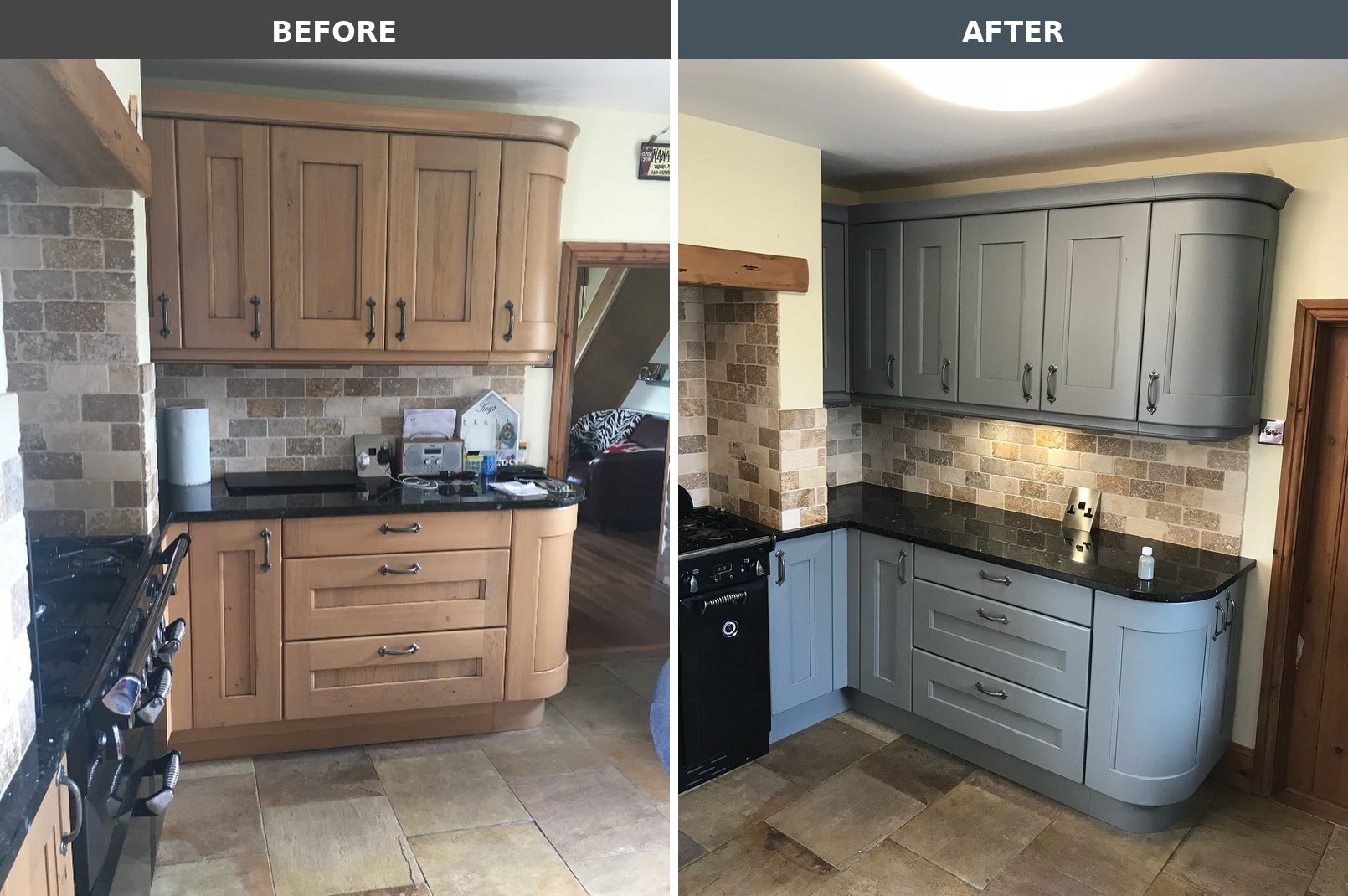
The island that stopped looking like a pub counter
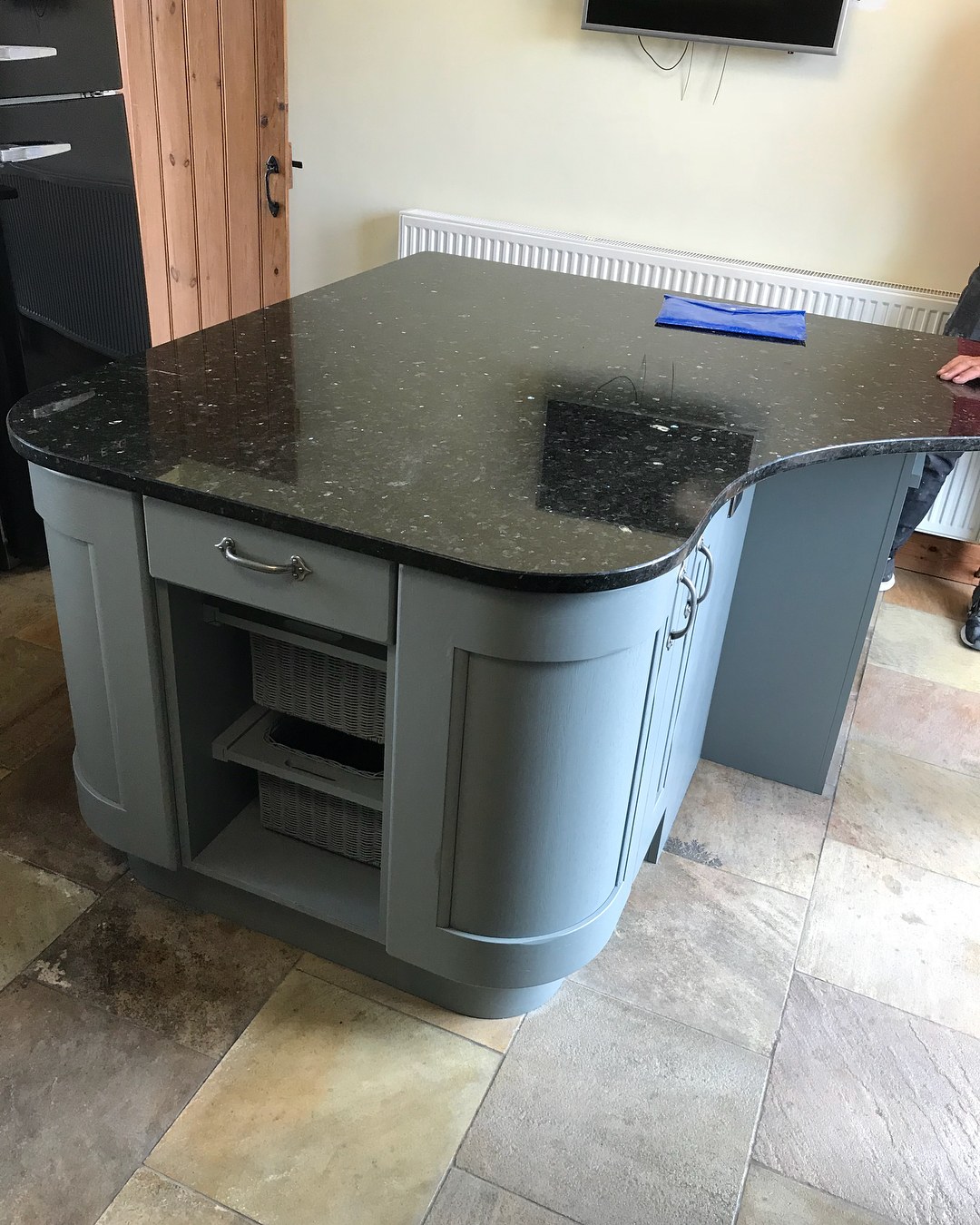
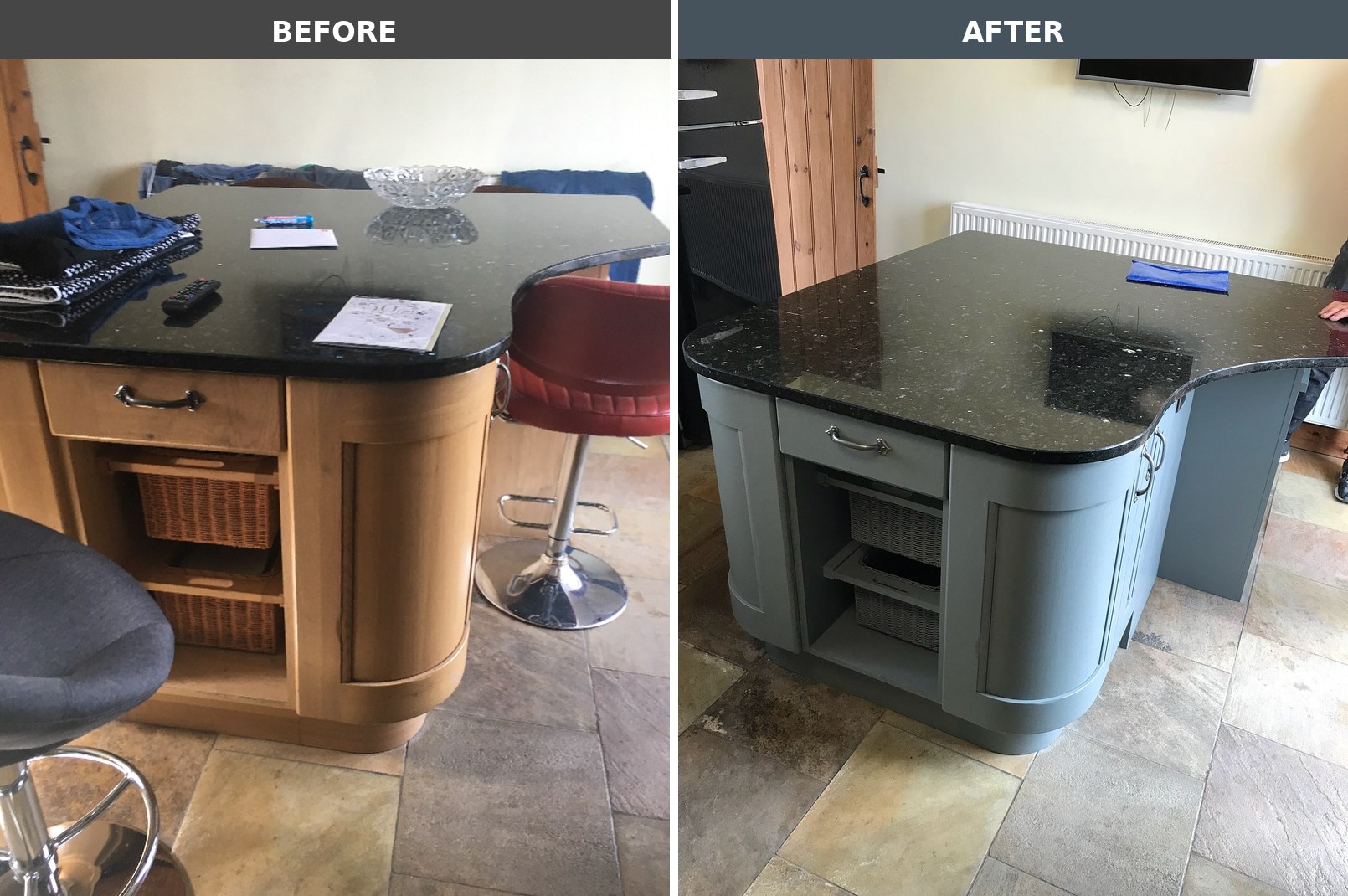
The old oak island was fine. Wicker baskets, a bar stool at the end, the casual breakfast perch that was everywhere in 2008. But “fine” isn’t what you want anchoring the middle of a kitchen.
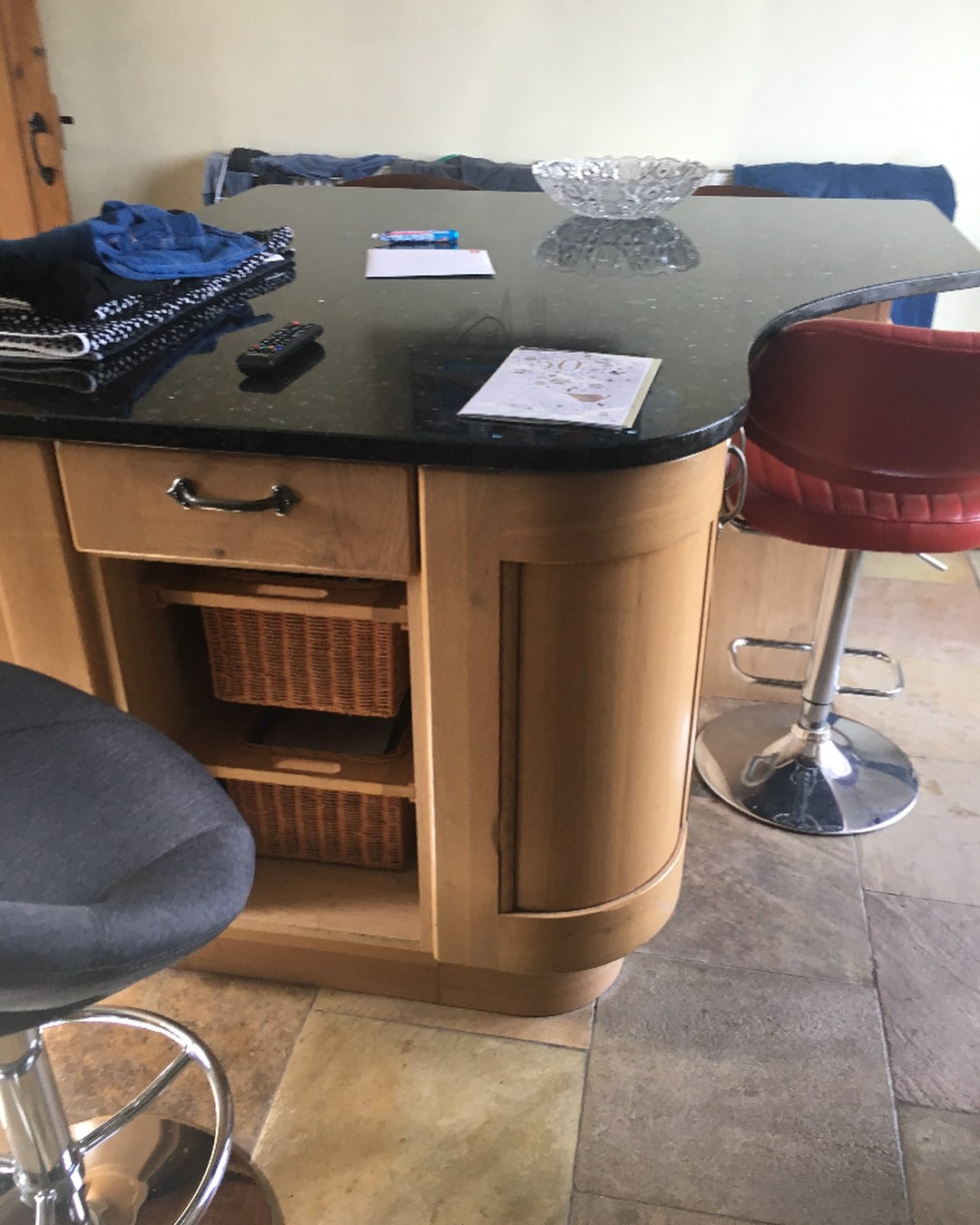
Grey cabinets, whitewashed baskets, the same black granite catching the light differently now. It stopped being a casual breakfast counter and started looking like a proper center-of-the-room piece. A buyer walking in today would price it as part of a renovated kitchen, not a pre-2010 one.
Why this works and roller jobs don’t
A lot of people try this with a brush and a tin of chalk paint. Most regret it inside a year. Here’s what a proper spray job looks like mid-way.
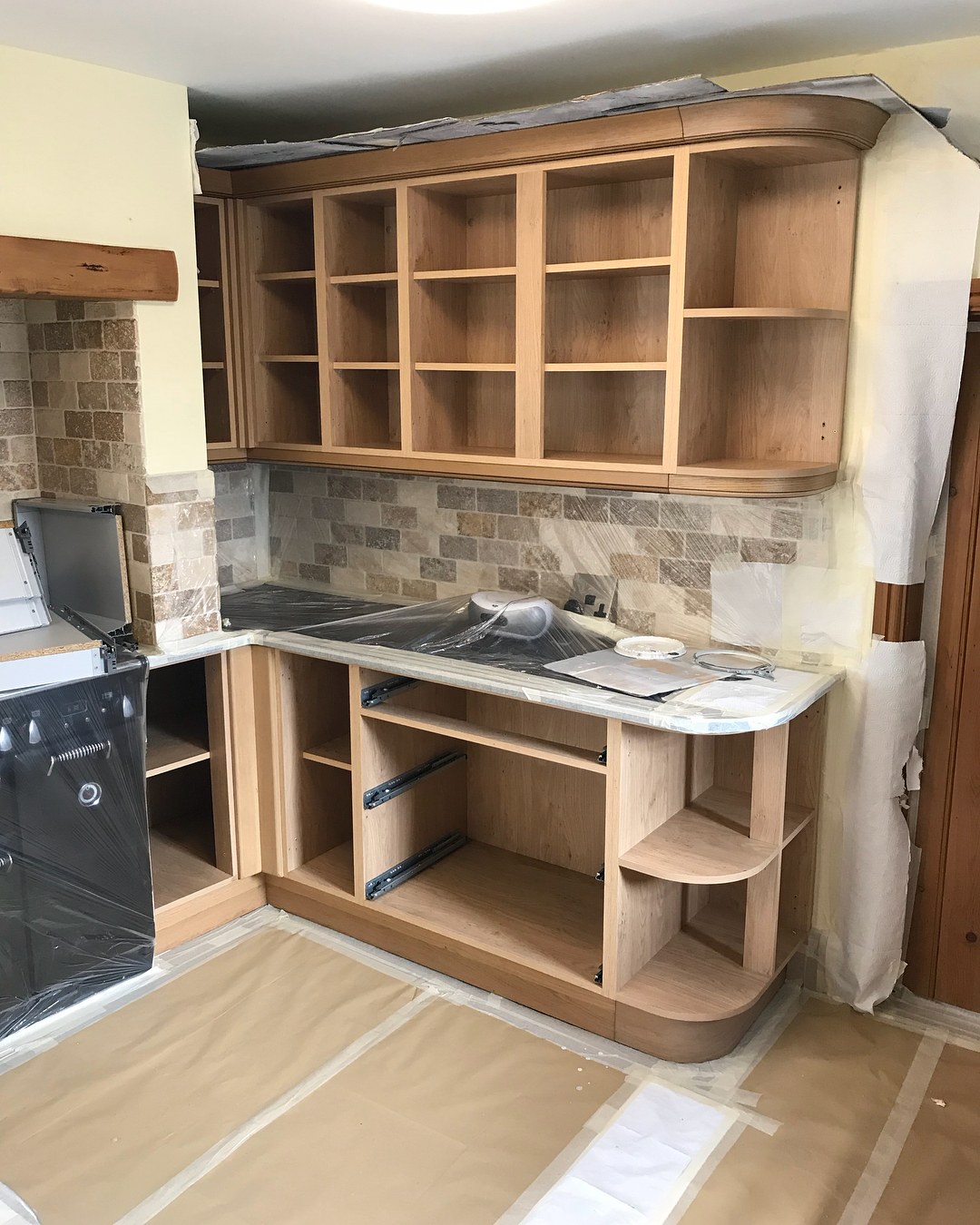
Every door and drawer front comes off the hinges, gets keyed, filled, primed, and sprayed with a two-pack lacquer that cures into a finish you can wipe down like a car panel. The carcasses stay in place and get masked up like you see above. That’s why the result reads as “re-manufactured” instead of “painted over.”
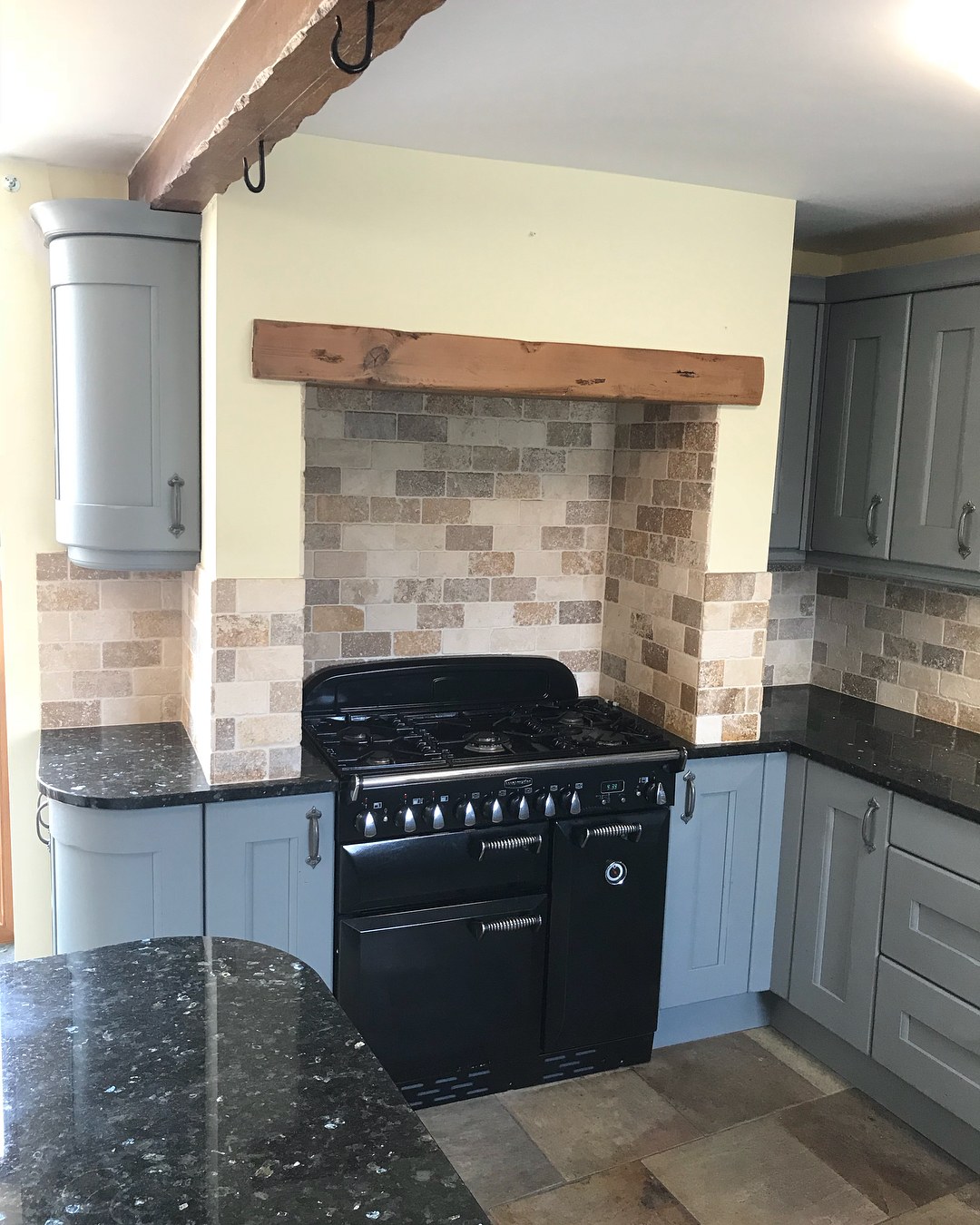
The shot that sold the whole project online
The alcove around the range cooker. Reclaimed oak mantle beam, warm stone splash tiles, cast-iron range, and grey shaker cabinets closing it all in. Country heart, modern skin.
The point this kitchen quietly makes
The people spending the most on brand new kitchens right now often already own the best-built kitchen they’ll ever have. They just can’t see past the color.
A respray costs a fraction of a rip-out and takes a weekend instead of a month. In a house like this one, it quietly puts thousands back on the value by erasing the biggest date-stamp in the building. The oak is still there. So is the craftsmanship. The sprayer just gave the owners a way to live with it again.
If your kitchen is sound and the only thing you hate is the color, the answer isn’t a new kitchen. It’s a spray gun, a satin finish, and a shade like RAL 7037 dusty grey.