Ask the internet how to update a dated kitchen, and the first answer is almost always the same: start by pulling that busy backsplash. The couple at this Roblin, Manitoba refacing job ignored every bit of that advice. They kept the loud multi-tone tile, left the walls alone, and still ended up with something that looks like a fresh custom build.
Here is where the project began.
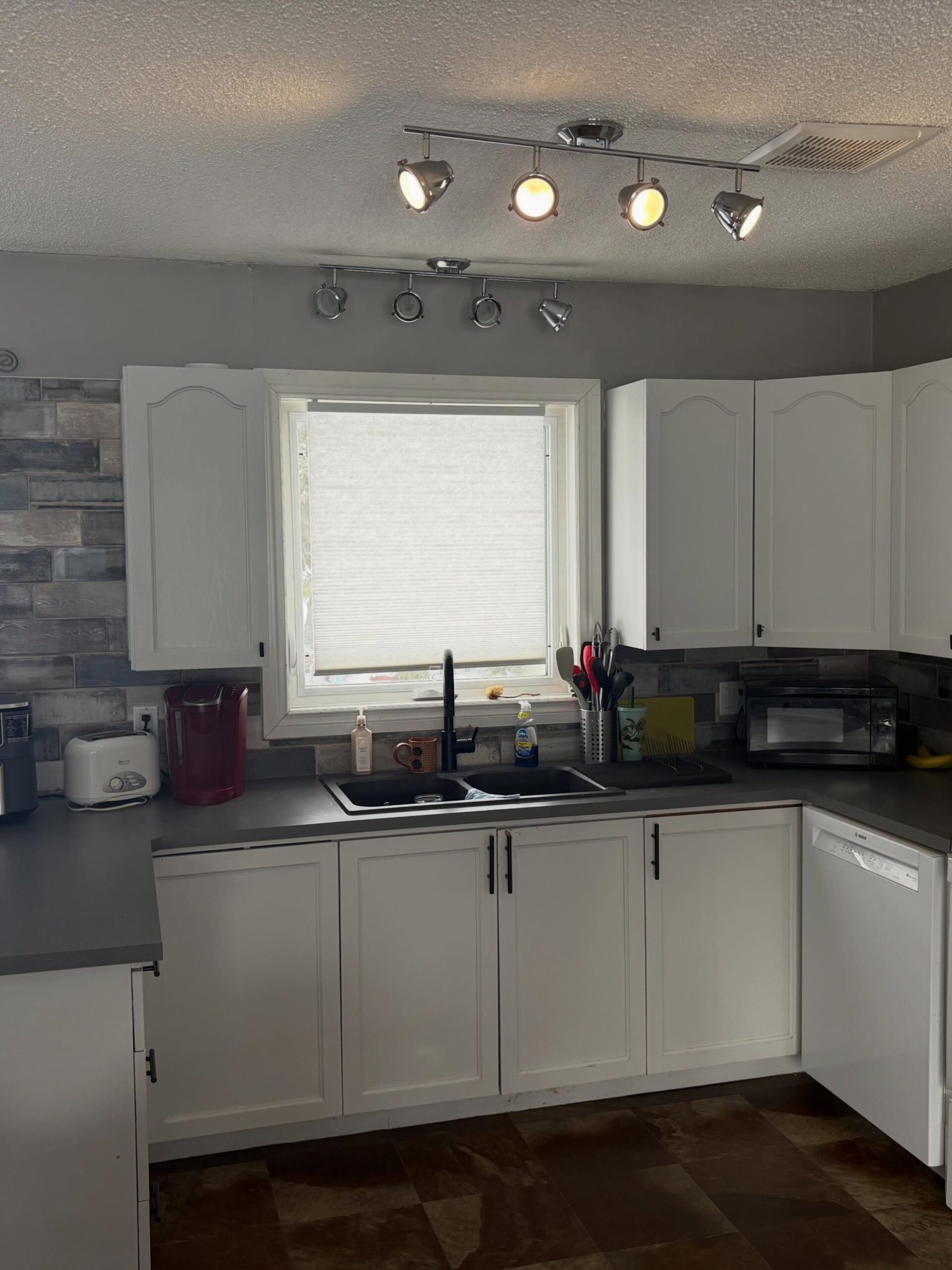
Everything you’d expect from a late-’90s build is sitting right there. Cream arched cathedral doors, chrome track lights with those little round heads, dark counters, and a backsplash in moody blues and warm browns that every renovation Reel this year would tell you to rip out before you spend a dollar on anything else.
Why pulling the backsplash was never on the table
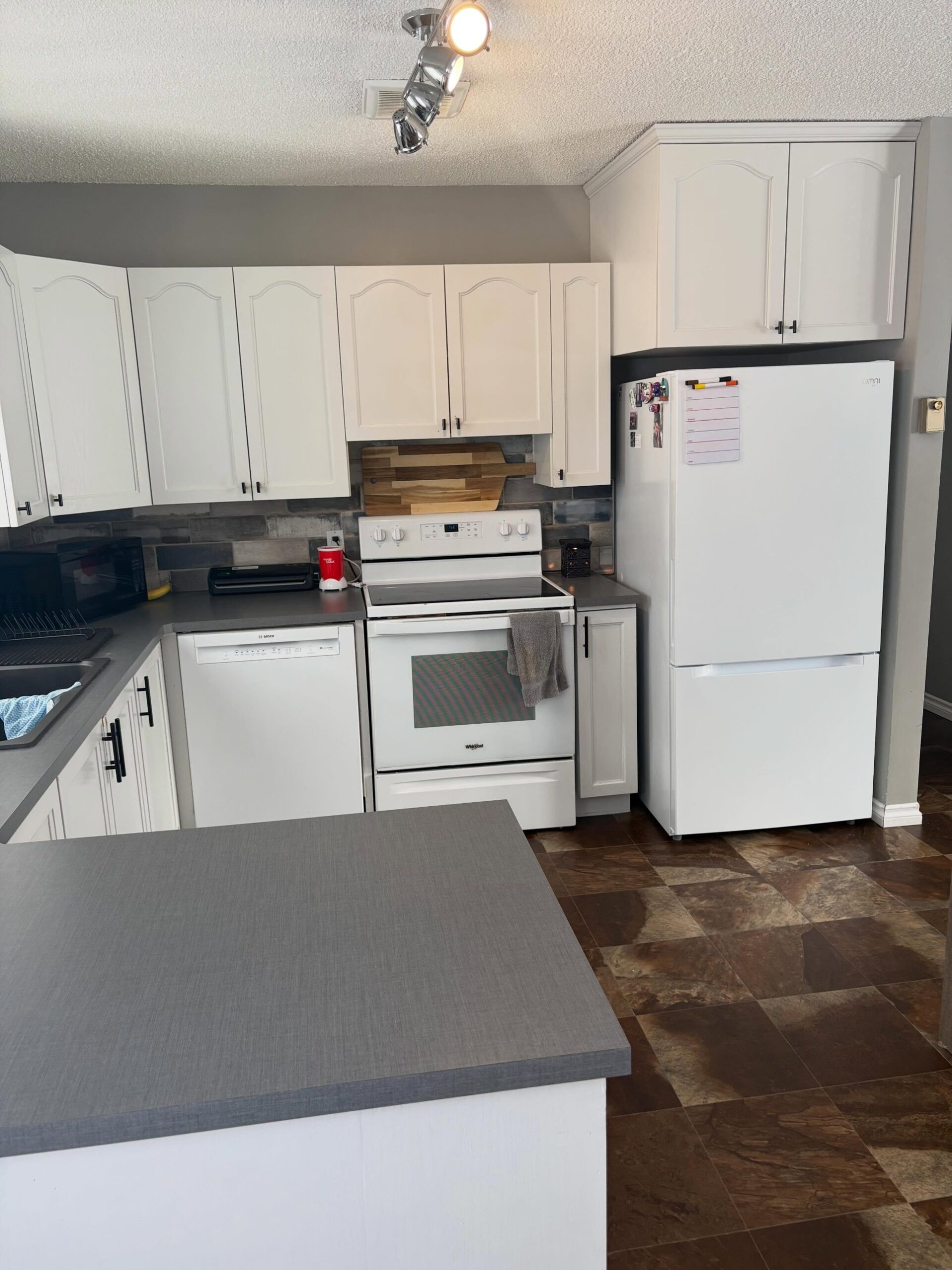
That tile runs all the way around the kitchen. It wraps behind the range, behind the fridge, and up the sink wall. Pulling it would have meant tearing into every wall in the room, trashing the budget, and living in dust for weeks. So the clients made the call most homeowners talk themselves out of. The tile stays. Everything else moves.
The payoff after the reface
And this is what that choice got them.
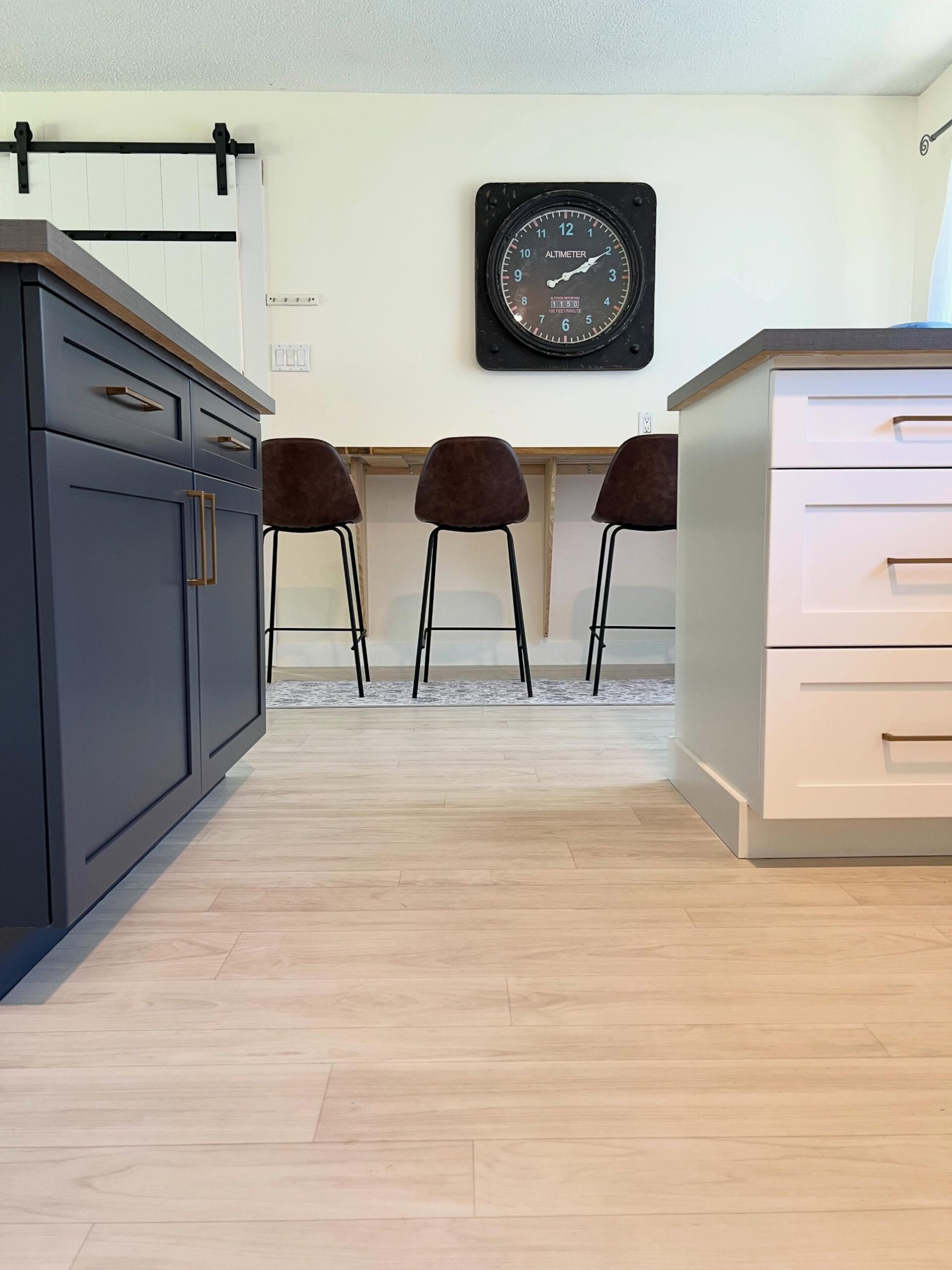
Same kitchen. Same backsplash hiding just out of frame. What changed is a navy island in Benjamin Moore Hale Navy, perimeter cabinets in Chantilly Lace, a blonde LVP floor, gold hardware, and leather stools pulled up to a new counter run. No walls came down.
Why the loud tile actually works now
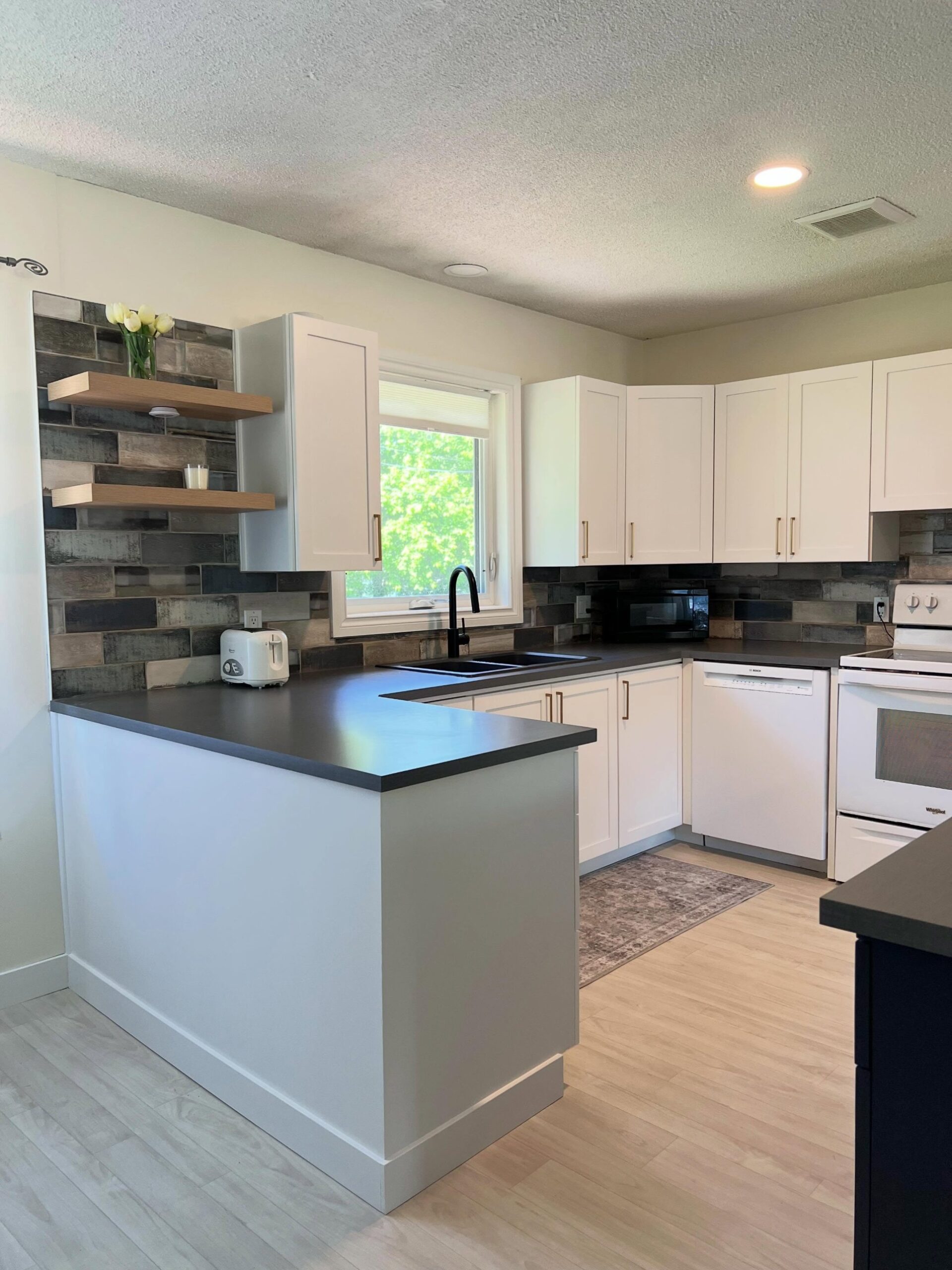
Why does this work when it sounds like it shouldn’t? Busy tile is not really a pattern. It is a palette. Those planks already carry navy, warm white, charcoal, and amber in them. The designers at Refreshed and Refurbished MB didn’t try to tame the tile. They quietly matched everything else to it and let the tile do the heavy lifting.
The sink wall is the clearest story
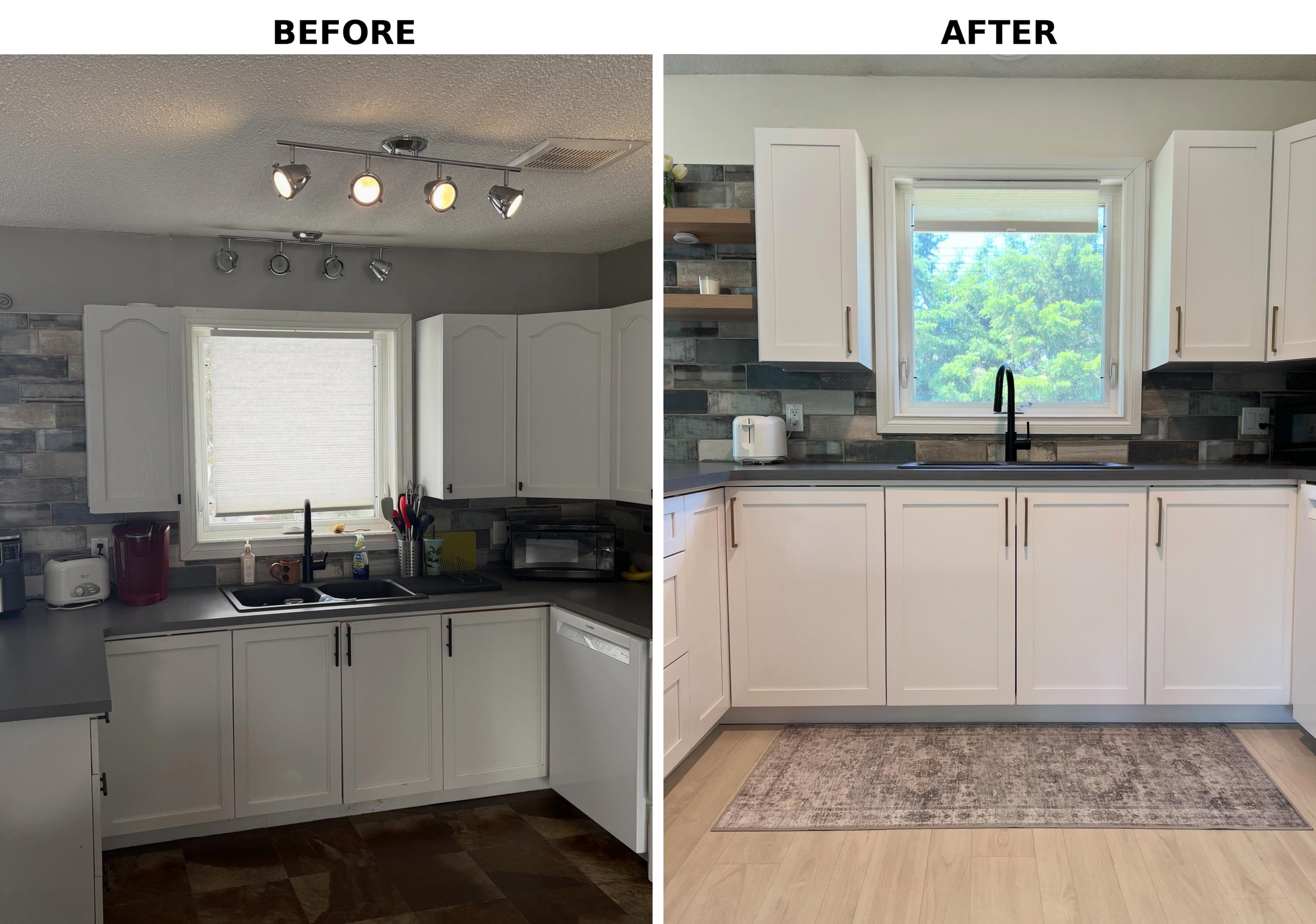
Window, tile, counter run, cabinet boxes: all exactly the same. The whole shift came from new door fronts, a lighter floor, and a swap from chrome fixtures to black and gold. Two of those three are a weekend project.

Finishes that were already waiting in the tile
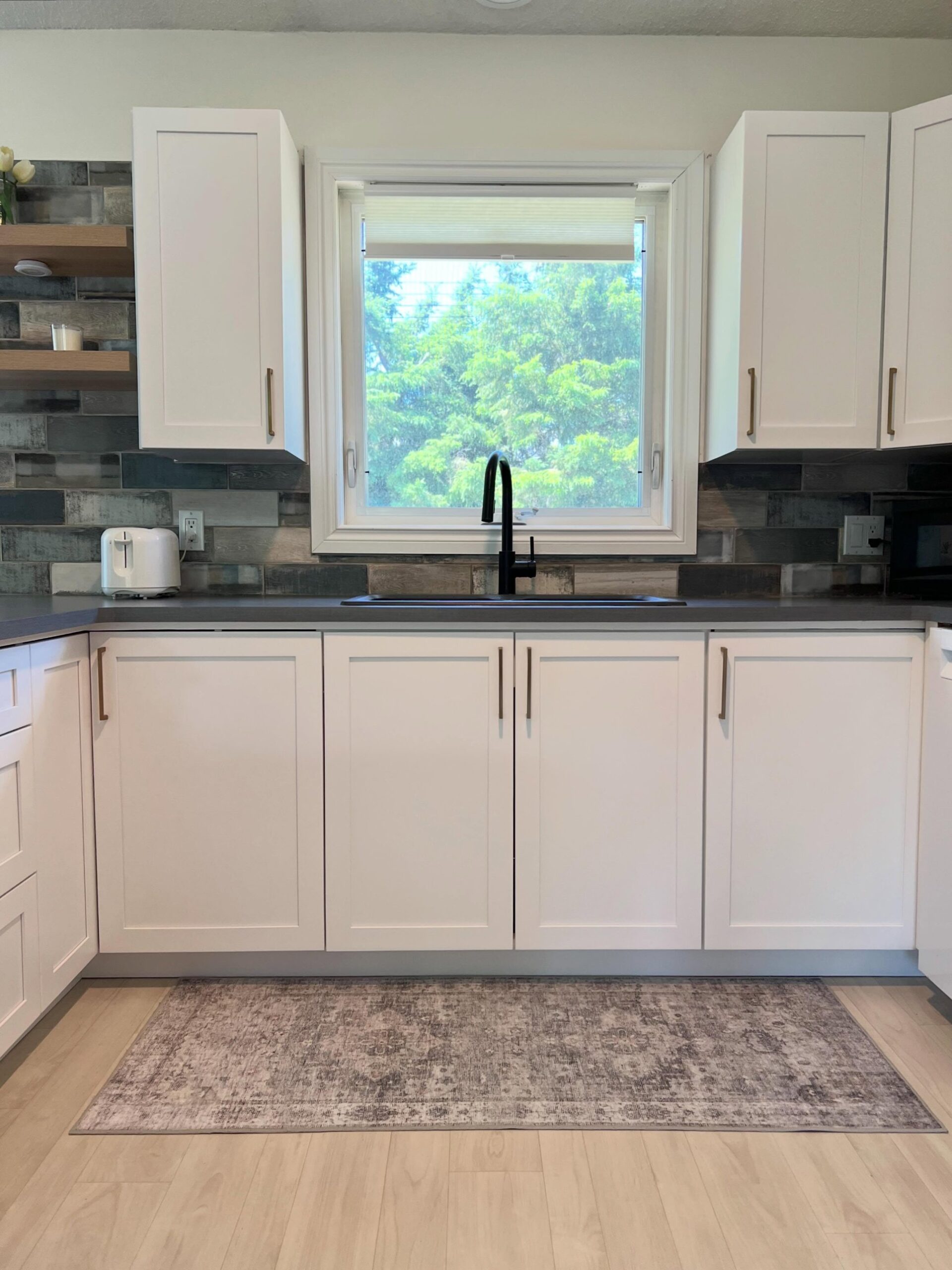
Now look at the finishes together. Gold pulls repeat the amber in the tile. A matte black faucet picks up the darkest planks. Even the faded rug ties into the brown and gray wash of the backsplash. Nothing in this room is a brand new color. Every finish was already waiting inside that tile.
The only thing they added to a wall
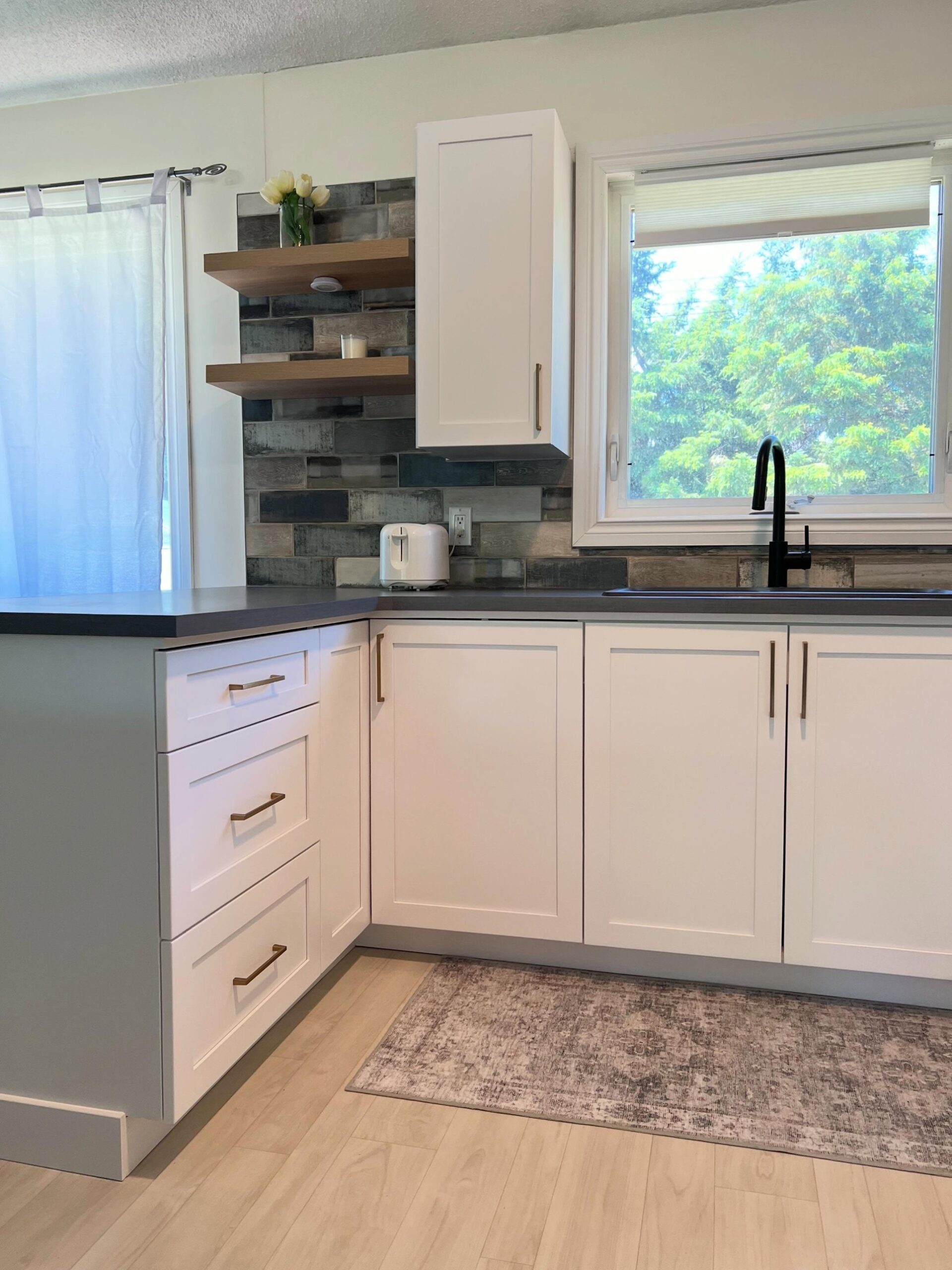
The only brand new wall feature is a pair of floating oak shelves. They sit right where your eye lands first, and they bridge the warm blonde floor and the warm notes in the tile. Three materials, one quiet handshake.
The range wall is where the floor earns its keep
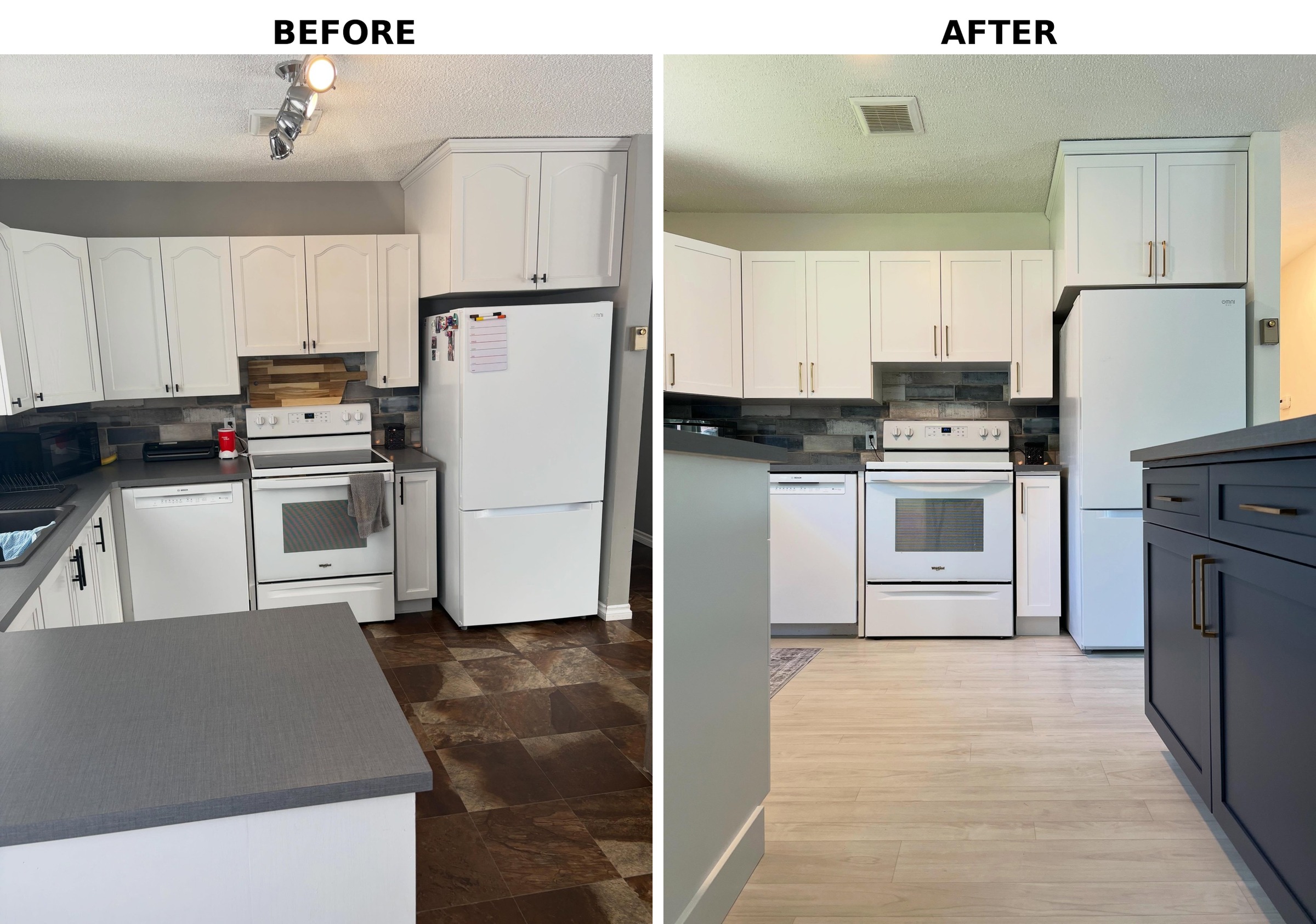
Range stayed. Fridge stayed. Tile stayed. All the drama is coming from two swaps: cathedral doors became flat Shaker fronts in Chantilly Lace, and the dark brown floor tile became blonde LVP. That new floor is doing more than it gets credit for. It bounces light straight up into the backsplash and pulls the warm tones forward, where the dark floor used to drag everything down.
The navy base cabinet is the quiet workhorse
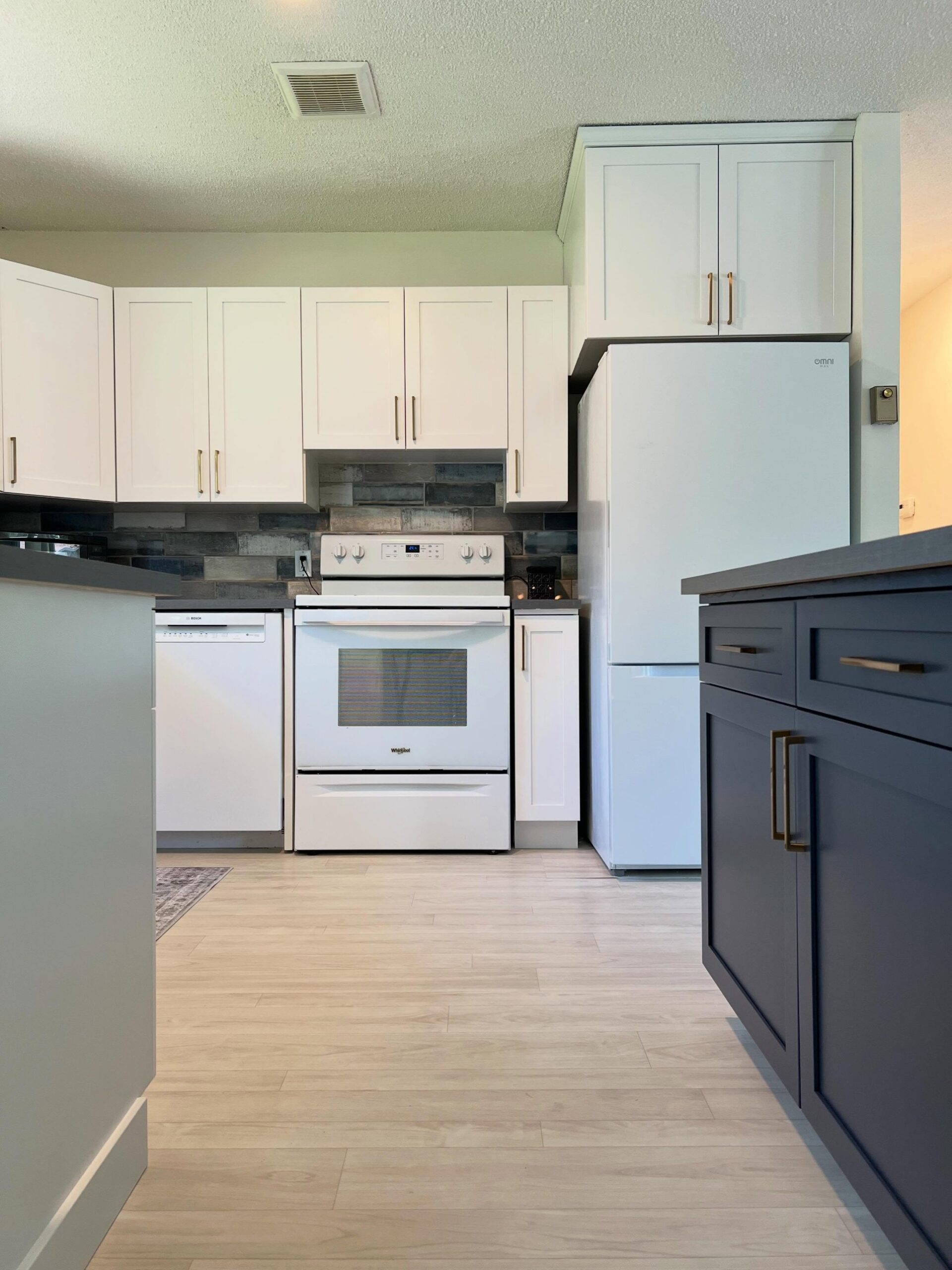
That navy base on the right is doing a lot more than it looks. It picks up the deepest tiles in the backsplash and gives your eye one solid dark place to rest. Without it, the busy tile would still feel busy. With it, the tile reads as the feature wall of a kitchen that costs twice what this one did.
What you can borrow from this reface
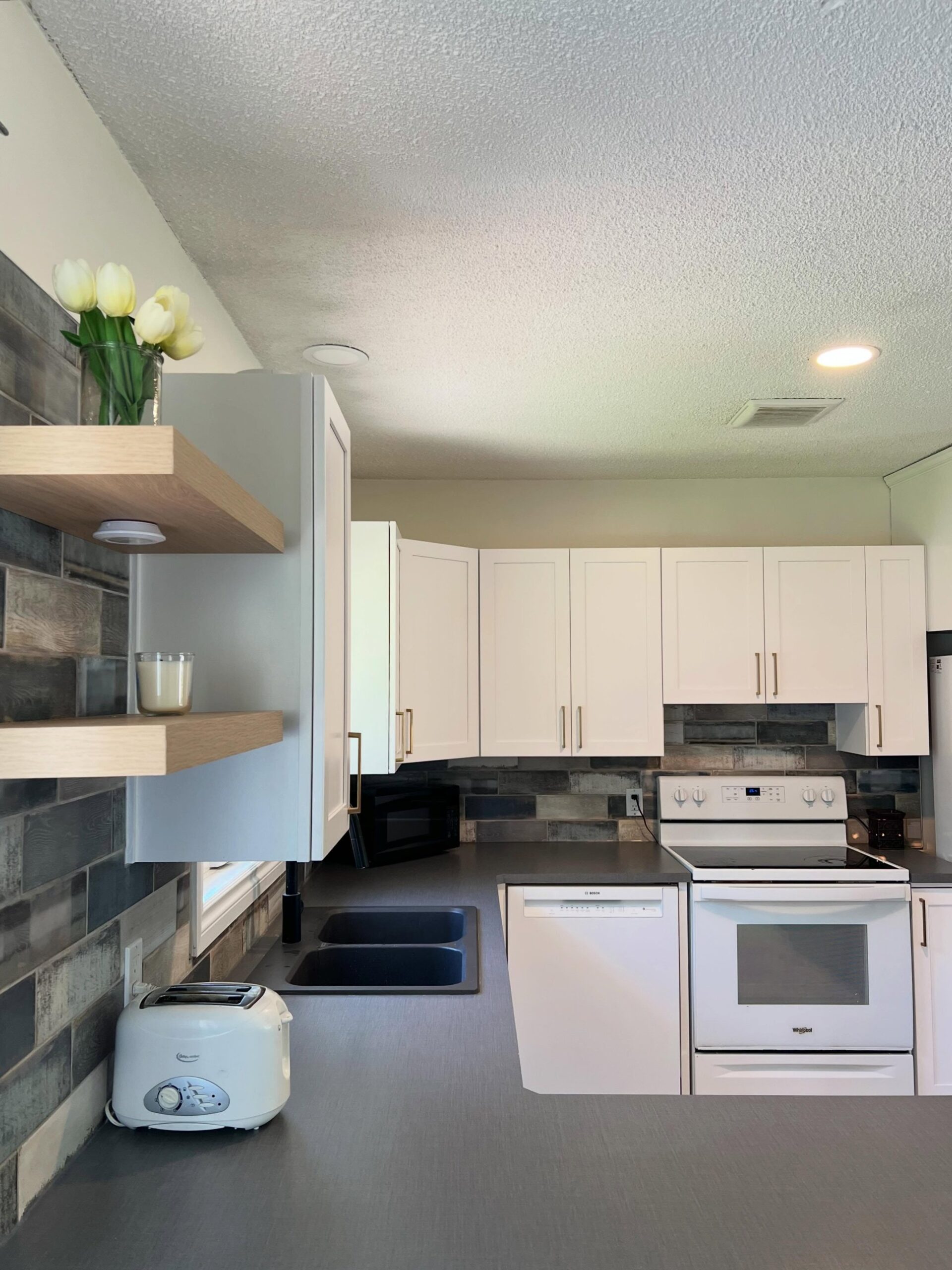
The useful takeaway here costs very little to try at home. Before you swing a hammer at the loudest thing in your kitchen, change the quiet things first. Cabinet fronts. Floor color. Hardware. One dark anchor piece. The loud thing you were ready to tear out might turn out to be the best feature you already own.
So, would you have kept this backsplash, or would it have been the first thing in the dumpster?
Cabinet colors (both Benjamin Moore): Chantilly Lace on the perimeter, Hale Navy on the island Refacing company: @refreshedandrefurbishedmb Location: Roblin, Manitoba