
Drive through South Philly for ten minutes and you start seeing it everywhere. Whole blocks of row homes wearing the same butter-yellow vinyl, siding that got nailed up in the late 90s and has been quietly aging the neighborhood ever since. Most owners assume the only way out is ripping it all off and starting fresh, which runs into five figures the second the first contractor shows up.
Then you spot a house that looks like it just came off the truck. Crisp white body, sharp black shutters, like a brand-new build dropped between two older neighbors. You walk closer and realize nothing structural actually changed. Just paint and shutters. That is the whole move.
The crew at pezzottipainting pulled this one off on a row home in South Philly. The before and after are the kind that stop you mid-stride, so let’s walk through it.
The prep day most homeowners never see
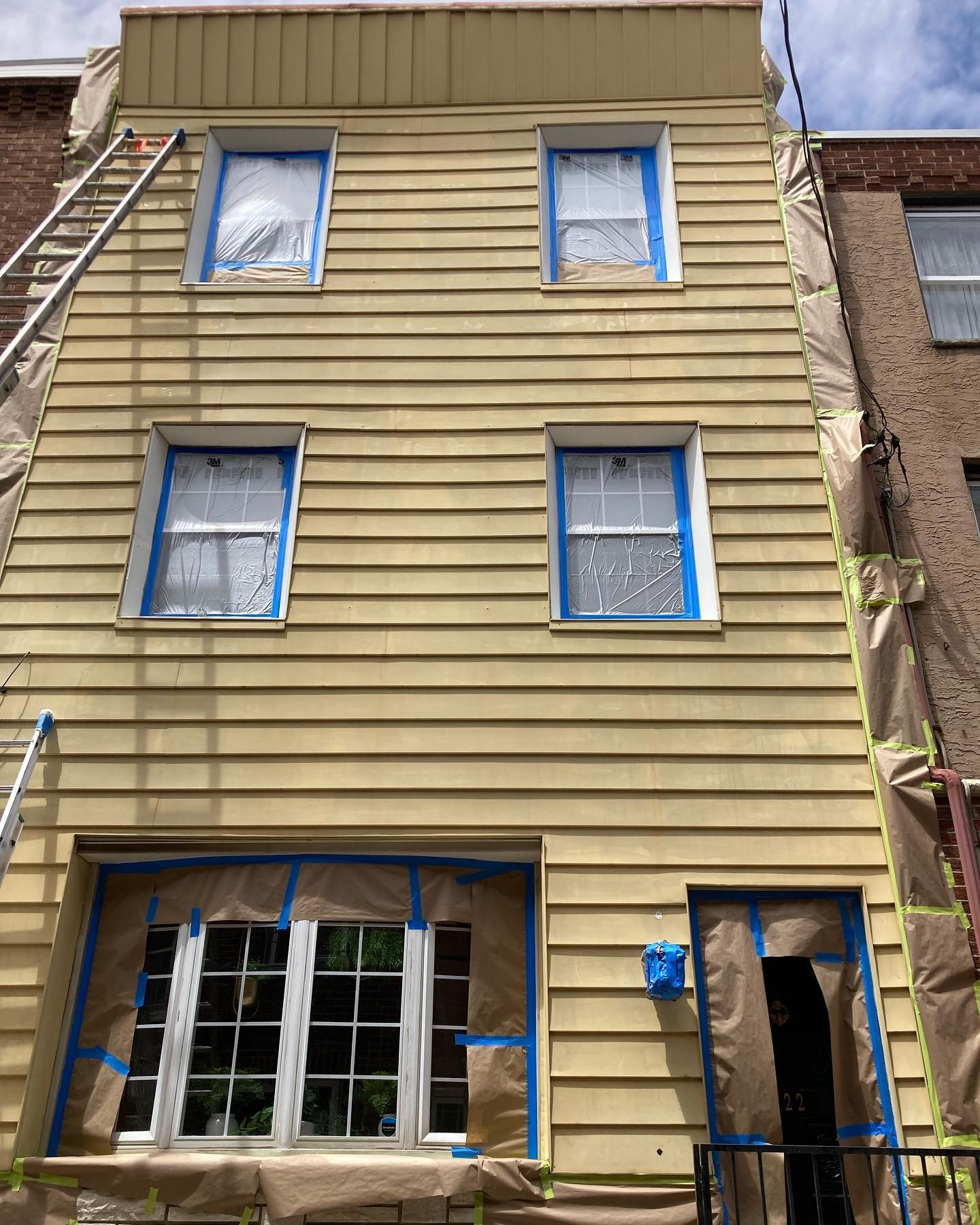
No color has gone up yet. What you are looking at is the part nobody posts about: the mask-out. Every window sealed with 3M film, every edge taped off with care, and the neighbor’s brick wall covered top to bottom with kraft paper so a little sprayer drift does not become a Monday morning apology. The front bay is wrapped tighter than a holiday gift.
Prep is where a professional job separates from a DIY weekend. One roller pass against raw brick is an hour of scrubbing someone else’s wall. One missed tape line is a $600 glass clean. The quote for a job like this covers a whole day of taping before any color opens up, and this image is the reason.
While the crew is masking, they are also eyeballing the siding itself. Here’s the part most homeowners get wrong: vinyl siding in solid shape (no cracks, no warping, no chalk coming off on your thumb) does not need to be replaced. The right exterior acrylic bonds to it, flexes with it in the summer heat, and holds color for years. That one call is the difference between a $3,000 to $5,000 (about €2,800 to €4,700) repaint and a $12,000 to $20,000 (about €11,200 to €18,700) tear-off.
The reveal, up close
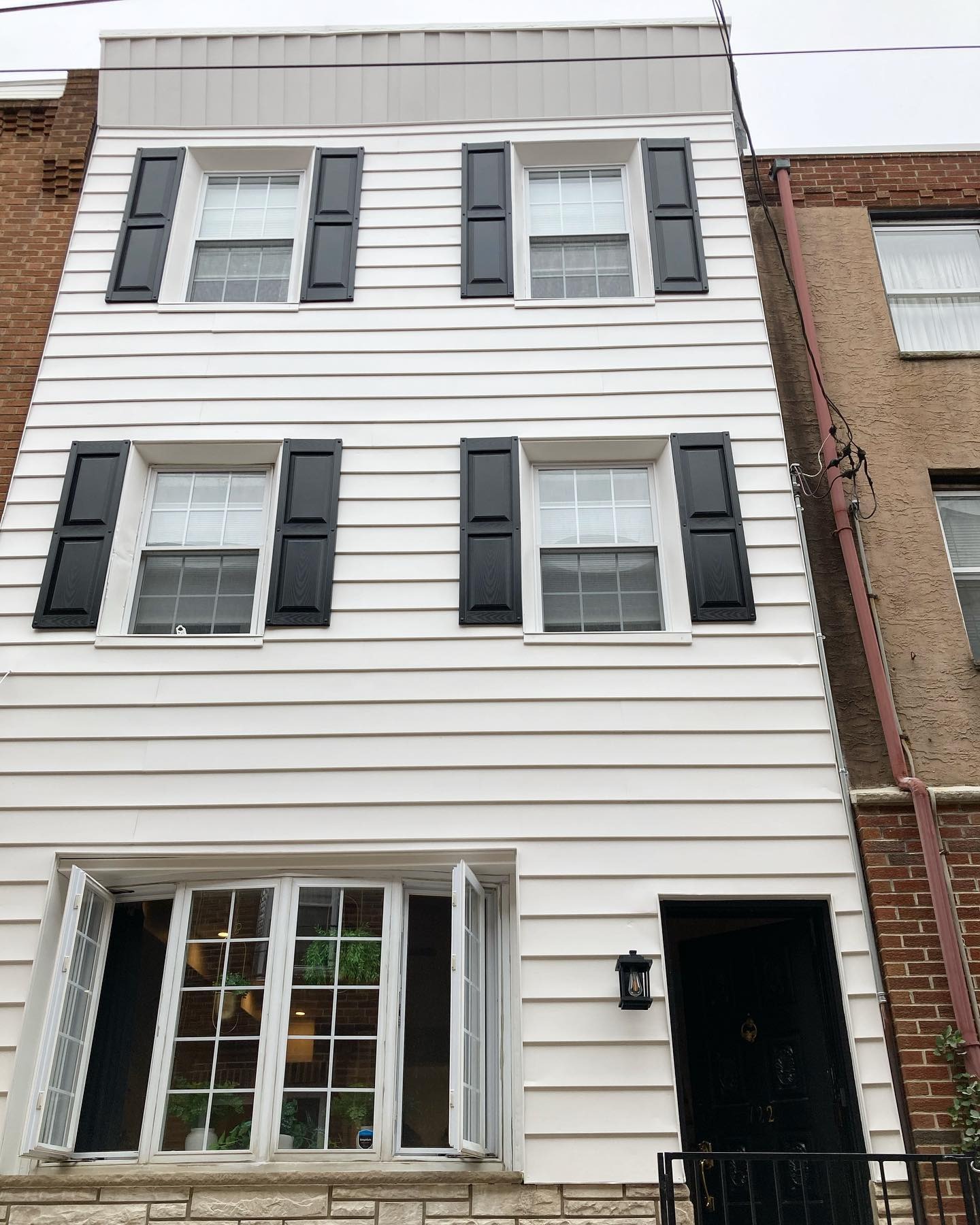
And now the finished thing. The body is Sherwin-Williams Snowbound, with Sherwin-Williams Tricorn Black on all the shutters and the door accents. Snowbound is a soft, warm white that reads clean without going icy. Tricorn Black is a true neutral, no blue or brown bleeding through. The two sit next to each other with zero tonal fight, which is the quiet reason this facade looks sharp in every kind of Philly light, cloudy or bright.
Notice what else moved. Four new flat-black shutters on the upper windows, a new matte-black wall sconce next to the front door, and a fresh white trim collar wrapped around the door frame itself. Each of those moves is small on its own. Stacked together, they give a flat row-home facade some vertical rhythm, which is what makes a plain box with windows suddenly read like a house with architecture.
What the house looked like when the crew showed up
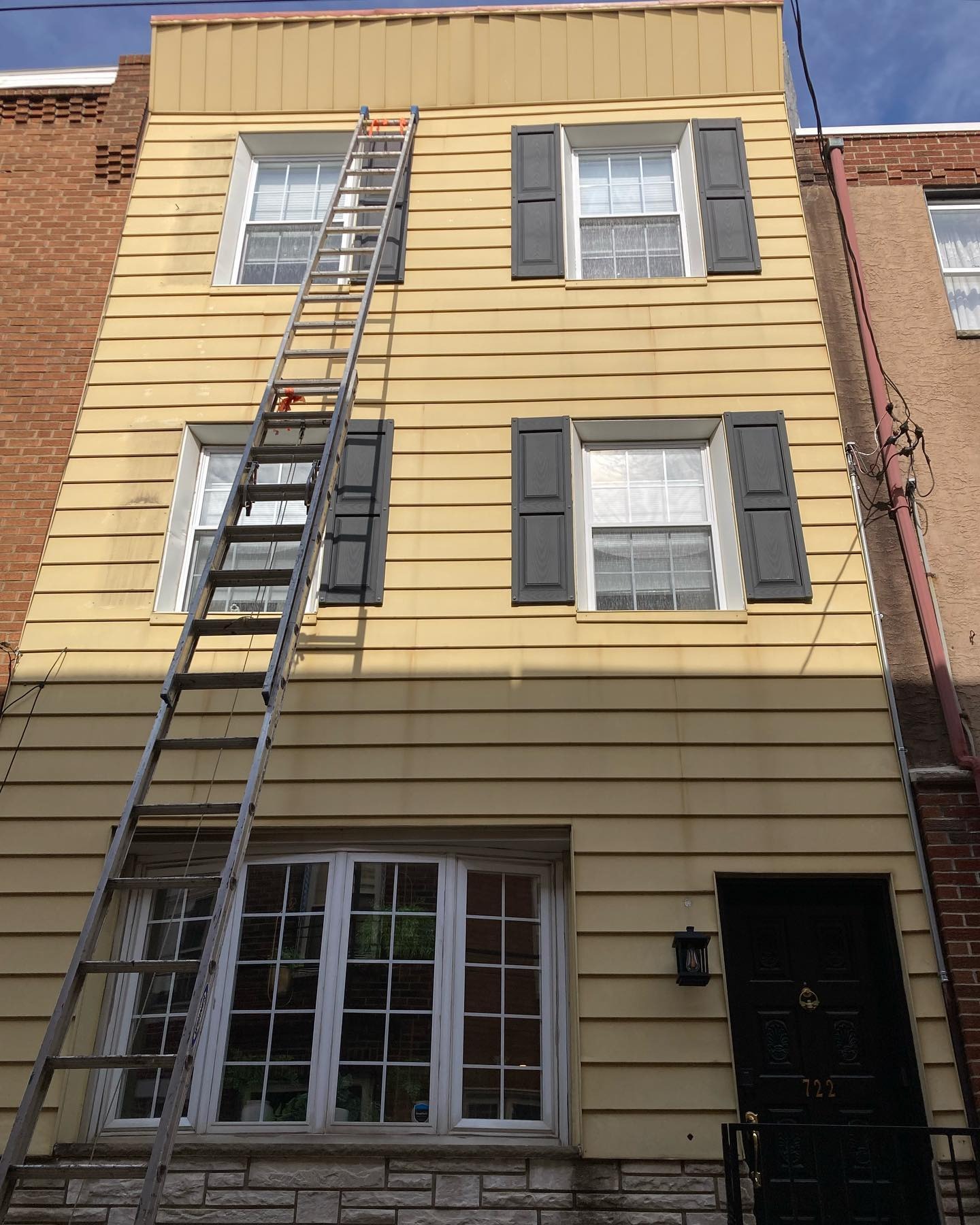
Butter-yellow body, dull gray shutters, cream cornice up top, black door at the bottom. Nothing was broken. The windows looked clean. The stoop was in good shape. What the house had was a tonal problem, and it was the kind of thing you cannot quite name from the sidewalk.
Yellow siding and gray shutters are a famously ugly couple. Warm body, cool trim, your eye never finds a place to land. The shutters wash into the facade instead of framing the windows, so the whole front reads as one soft blur of color with a door stuck on. Fix the tones and the facade snaps into focus. Which is exactly what happened next.
Inside the actual paint days
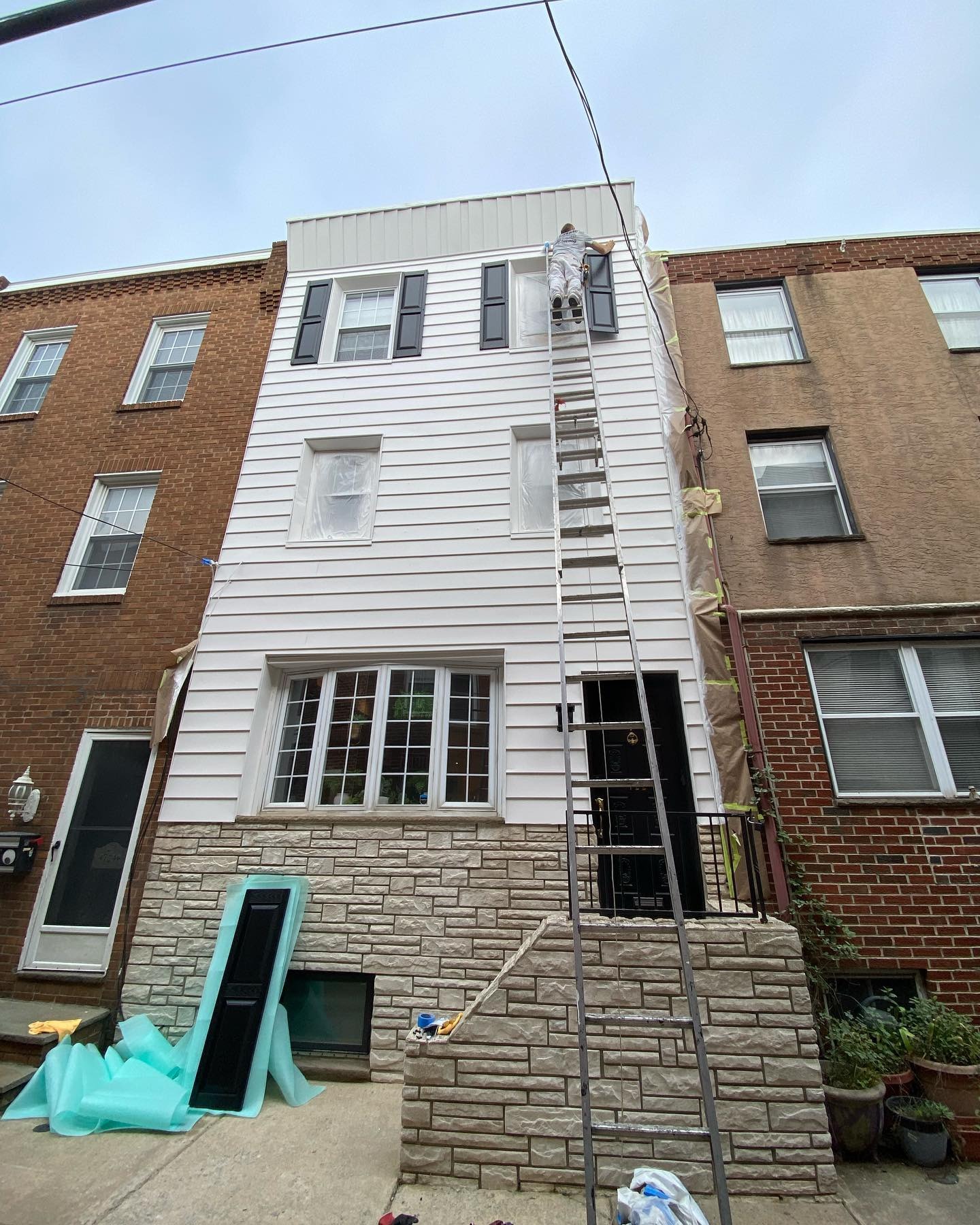
This is day three or four. The body is in Snowbound already, two of the top-floor shutters are mounted, and the middle-floor windows are still sealed because you always work top to bottom. Gravity wins every paint argument. That is a painter in white coveralls up on the aluminum, cutting a clean line against the roof trim.
Rough schedule for a row home this size, small crew: day one is a pressure wash and a dry. Day two is the full tape, paper, and mask. Days three and four are two coats on the body and the shutter swap. Old shutters come off, the new ones go up on fresh screws, and the ladders come down. Four days, no permit headaches, no structural work.
Same corner, side by side
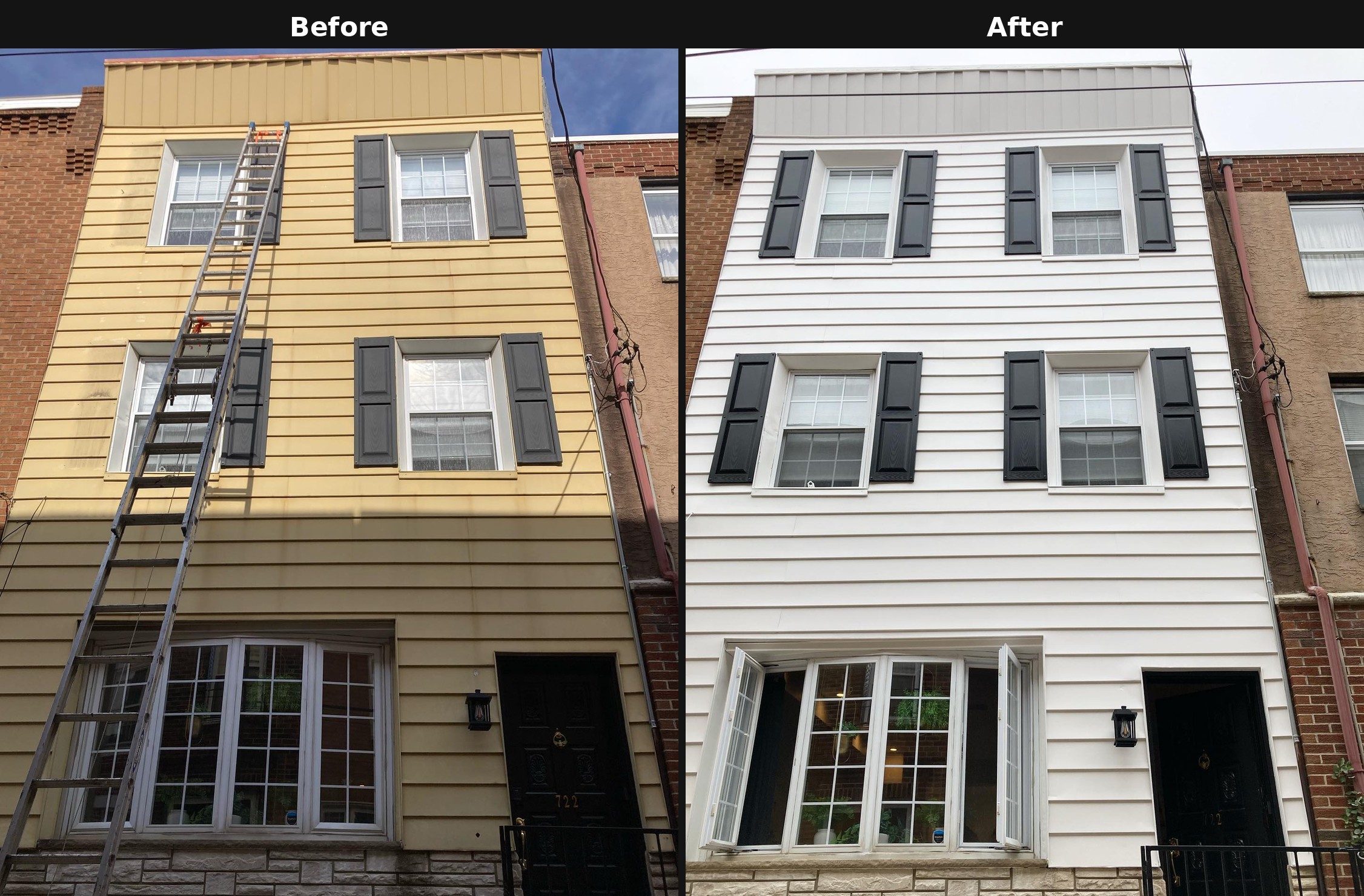
Same bay window. Same stoop. Same door in the same spot. Same neighbors on either side. The only real changes between the two frames are paint, shutters, a new door trim collar, and a swapped wall sconce. No new vinyl, no new windows, no new door, no re-siding.
If your own block has a yellow or cream row home that is looking tired, the fix is almost never a tear-off. Walk up close and give the siding a once-over for cracks or chalk. If it is in decent shape, a good two-color repaint plus better shutters will get you most of the way to a brand-new look for a fraction of the cost. The rest of the decision is just picking your white.
Sources: @pezzottipainting on Instagram