

You come through the front door, set down your keys, and your dog lowers its front legs into a long stretch while looking right at you. It looks much like the stretch you see after a nap, except this one starts the moment you step through the door.
In short
- A stretch when you come home is your dog’s quiet way of saying hello.
- It shows your dog feels happy, comfortable, and relaxed with you.
- The movement can carry affection and anticipation of time together.
- A greeting stretch is calm; a play bow is an invitation to play.
A greeting stretch says you are welcome
View in gallery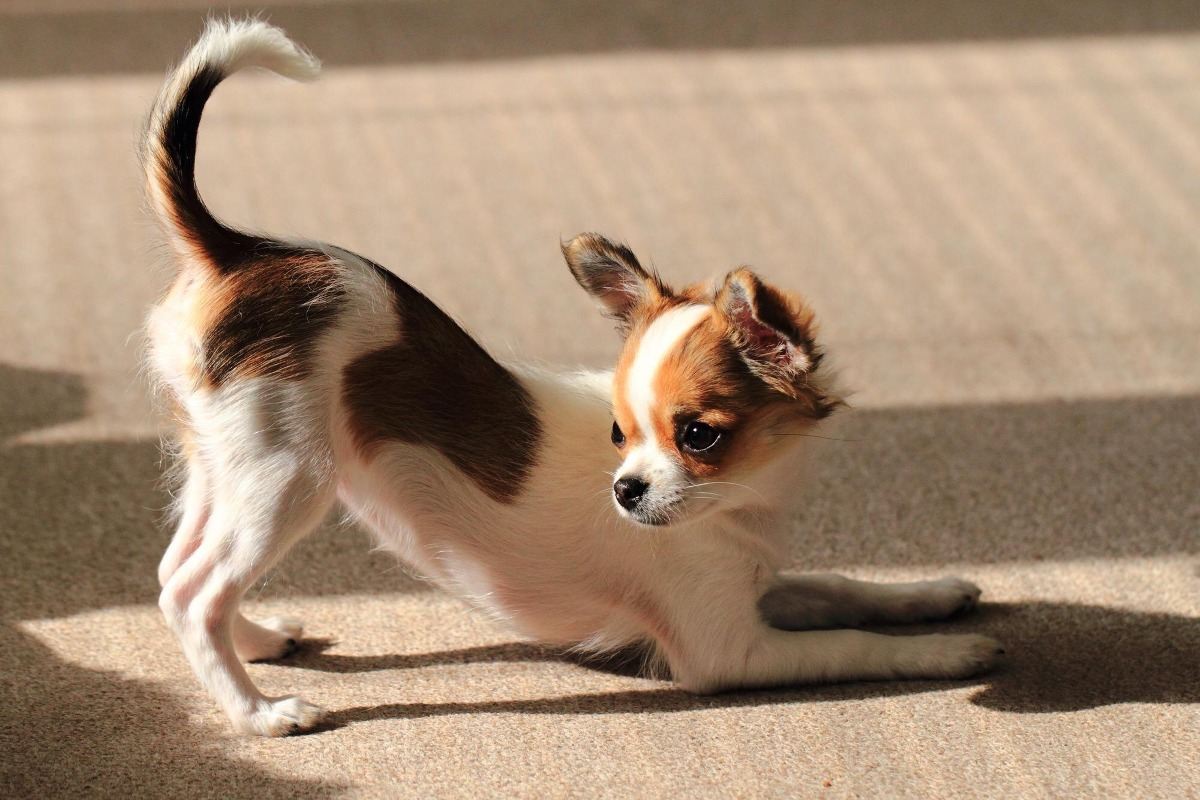
You walk into the kitchen, and your dog comes over with its front legs stretched out and its body lowered. There’s no excited leap or welcoming bark. Just a stretch and a gentle movement that welcomes you home.
Certified animal trainer Nicole Ellis describes it as an affectionate gesture from a dog that is happy you are back. Your dog feels comfortable and relaxed with you, and it wants to connect. There is no need for it to pester you for attention right off the bat, because it knows you and is just happy for you to be there.
That’s what makes the pose so sweet to notice. You might see it when you arrive home or when you first greet your dog in the morning. Either way, the stretch can be part of the hello you share, even before you reach down to greet your pet.
The stretch connects rest with company
Your dog may have been resting just before you appeared. Getting up brings a natural urge to stretch, and your arrival gives that movement a social meaning. The body is preparing to move while your dog is looking ahead to being with you.
Dr. Wailani Sung, a board-certified veterinary behaviorist, explains that greeting stretches can happen as dogs shift from rest to activity, relax, and anticipate interaction. Those pieces fit together in a familiar household moment: you come through the door, your dog rises, and a stretch becomes part of its welcome.
There’s a physical side to that movement, too. A natural stretch helps prepare a dog’s body for activity. In all honesty, the stretch is probably a little bit of both. A stretch after a good snooze and a way of saying hello. In a greeting, the same movement can help your dog get going and show how comfortable it feels around you.
A play bow has a different energy
Picture your dog lowering its front end, then springing up, wagging hard and darting away. A play bow is lively interaction, a clear invitation to come on in and join the fun. A greeting stretch has a quieter pace. Your dog extends its front legs and takes a moment to stretch rather than bouncing into action.
The difference is easier to see when you watch what happens next. A play bow often comes with an enthusiastic tail wag, a short bark, an open mouth, or a run back and forth. The greeting stretch belongs to a calmer arrival, when your dog seems at ease and ready for your company.
So that little pause by your feet carries its own message. Your dog is welcoming you in a way that suits the moment, with a movement that feels relaxed rather than ready to race across the room.
The limit
You shouldn’t look to read too much into a stretch, though. Sometimes it might be a natural post-nap movement or an invitation for some energetic play time. But that relaxed stretch that you see when you walk through the door is the sign of a dog that’s happy to see you. What’s more important, however, are the interactions and movements that come next.