
You open the front door, and before the rest of the home begins, there’s that cold square of tile. Grout lines and a transition strip mark exactly where the entrance stops. In a small hallway, that little break can feel much bigger than it is.
The square that stops your eye
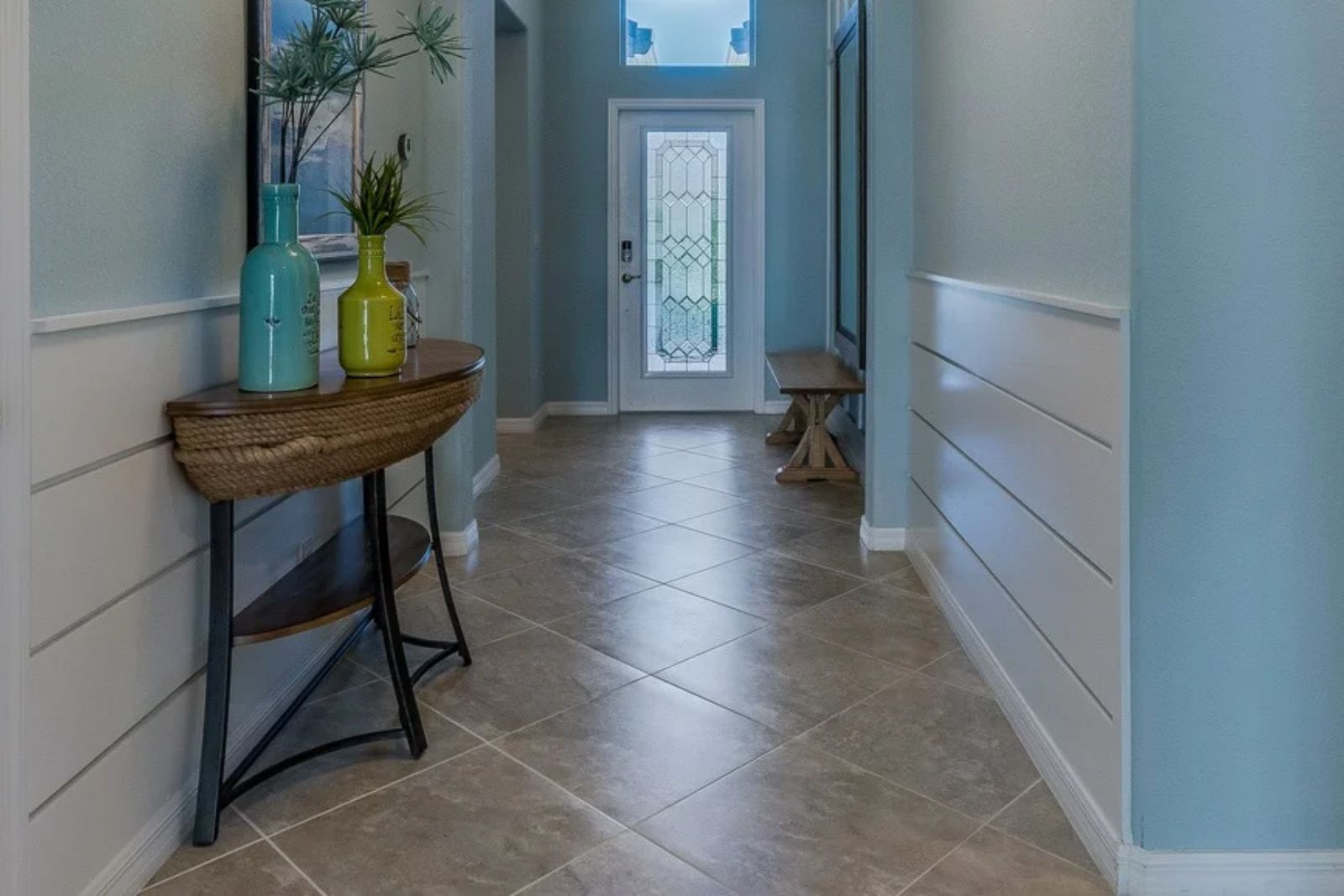
That tile gives you somewhere obvious to land when you walk in, but the problems start when it sits right next to a different flooring. Jarring color or texture shifts, and grout lines draw a stark line across the room. Your eye reaches it and stops.
At the front door, that shift matters more than anywhere else. Wood can make a house feel warmer before anyone has taken off a coat, especially when the hallway opens straight onto the living room, the staircase or the kitchen. When it’s done right, the entrance stops feeling like a utility patch and starts feeling like part of the living space.
Why one floor changes everything
Board width makes a difference as well. Wider boards not only mean fewer joints but also create a calmer look than a grid of small shapes. Natural oak and light, warm tones, including honey, caramel and chestnut, carry that softer feeling along instead of boxing the entrance off into its own block.
The main thing is getting the match right. If the hallway meets a wood floor you already have, an exact continuation looks far more convincing than a near-match. If the original boards can’t be matched, go for a contrast that looks intentional, in color or in laying pattern. Two almost-identical woods side by side is the look to avoid.
Choosing from your own doorway
This isn’t the sort of decision you make in a showroom. It can only be made when standing in your own doorway, because that’s what you’ll be looking at every day. Before the old tile comes up, have an installer check the subfloor, measure the moisture and work out the finished height. That way, you won’t end up with a raised edge where the new boards meet the next room.
Then lay full-size samples right beside the floor they’ll join. Look at them in daylight, then again after dark. For the most seamless look, use the same board and finish as the nearest room, and run the planks along the hallway’s longest view. Around walls and door frames, leave the expansion space the manufacturer calls for.
When puddles tip it back to tile
Wood isn’t waterproof, tough, so if rain, snow or muddy paws regularly leave puddles by the door, tile, stone or a good vinyl may still be the better choice.
A breathable walk-off mat just inside, frequent dry sweeping and wiping up tracked-in water right away will do most of the work. Wood swells and shrinks as indoor air gets damper or drier, so keep conditions as steady as you can. For the weekly clean, a well-wrung damp mop and a cleaner approved for your floor’s finish are all it needs.
It’s important to never wet mop or steam clean a wood floor. If persistent cupping, swelling, dark stains or a damp subfloor are a problem, it might be time to have a flooring professional come and find the moisture source before replacing anything.