
If you own a honey oak kitchen, you already know the speech. The realtor gives it, the flipping shows give it, every Reddit thread gives it. Rip it out. The cheapest version of that advice still starts around twenty grand.
This homeowner refused the whole script. She kept the cabinet boxes, kept the raised panel doors, kept the arched window over the sink that every renovation blog tells you to box in. She even left the oak grain showing through the fresh paint, the step painters charge you extra to hide. Two colors and a weekend of island counter swap, and the kitchen now reads like something out of a quiet luxury catalog.
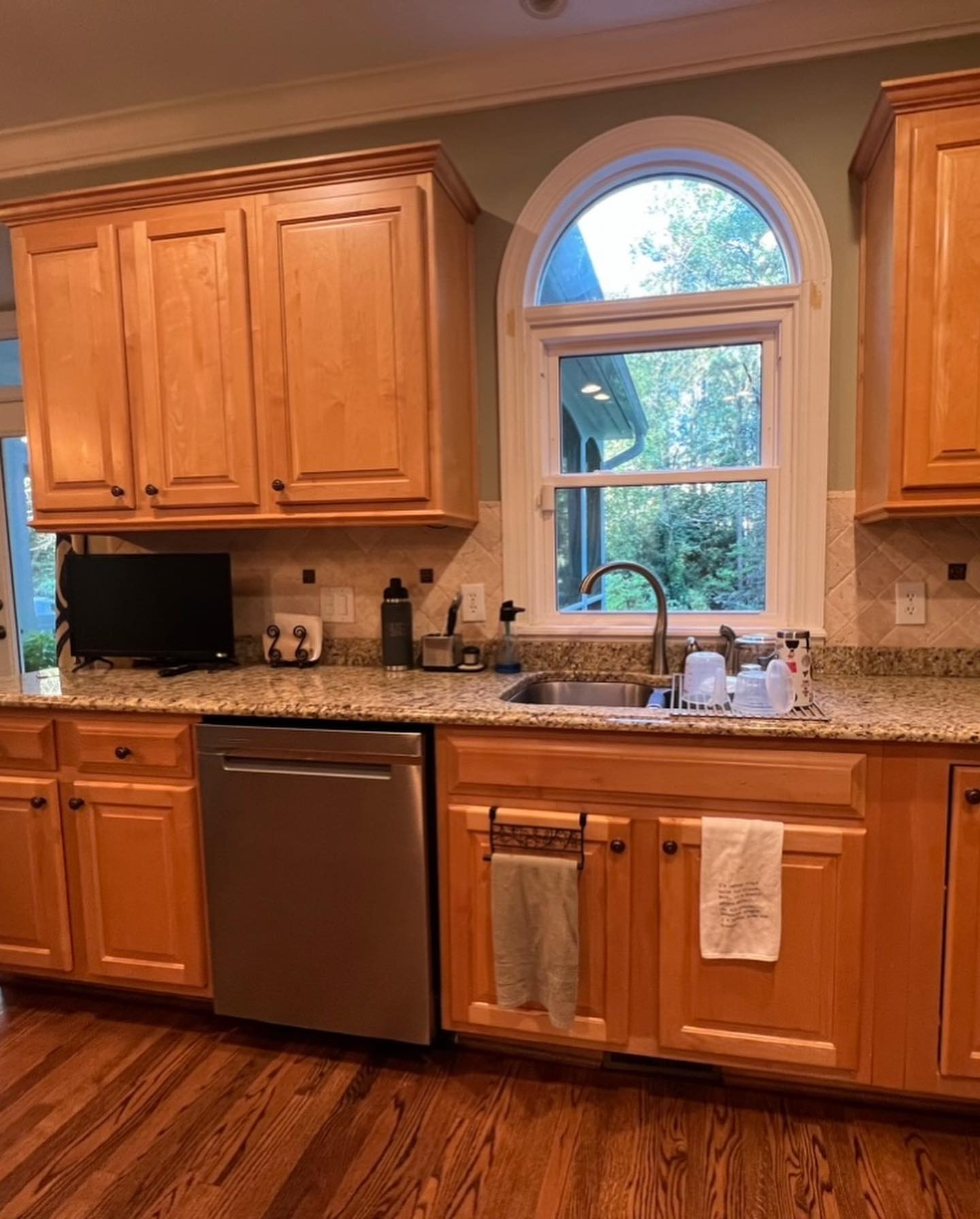
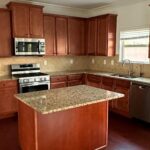
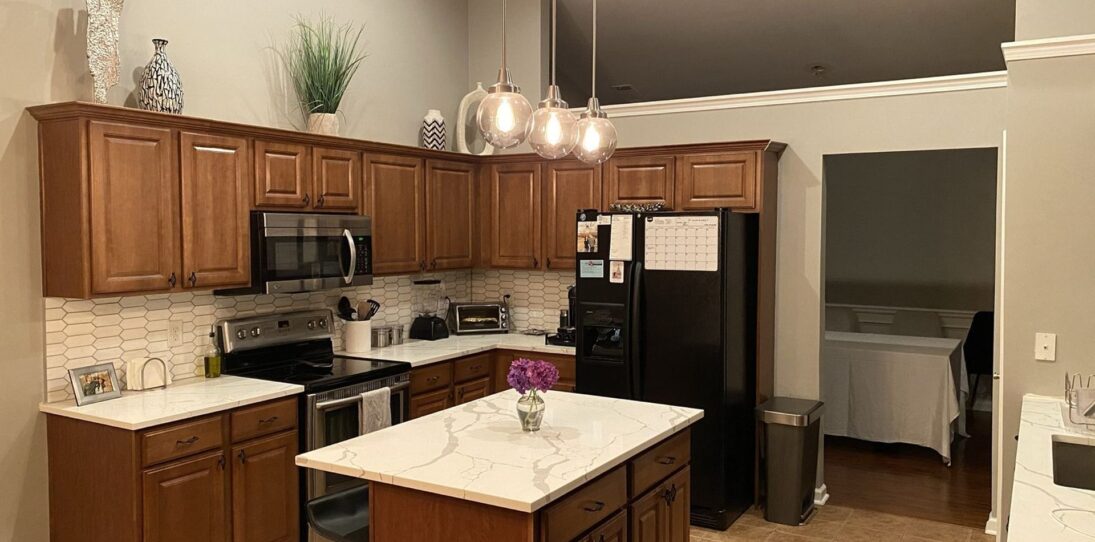
A builder-grade early 2000s layout. The oak is that specific warm orange you only find in houses built between 1998 and 2008. The granite is speckled beige with brown and black flecks. Nothing is broken. The appliances work. The floor is beautiful. The problem is the color story. Every surface is warm, every surface competes, and your eye never gets a place to land.
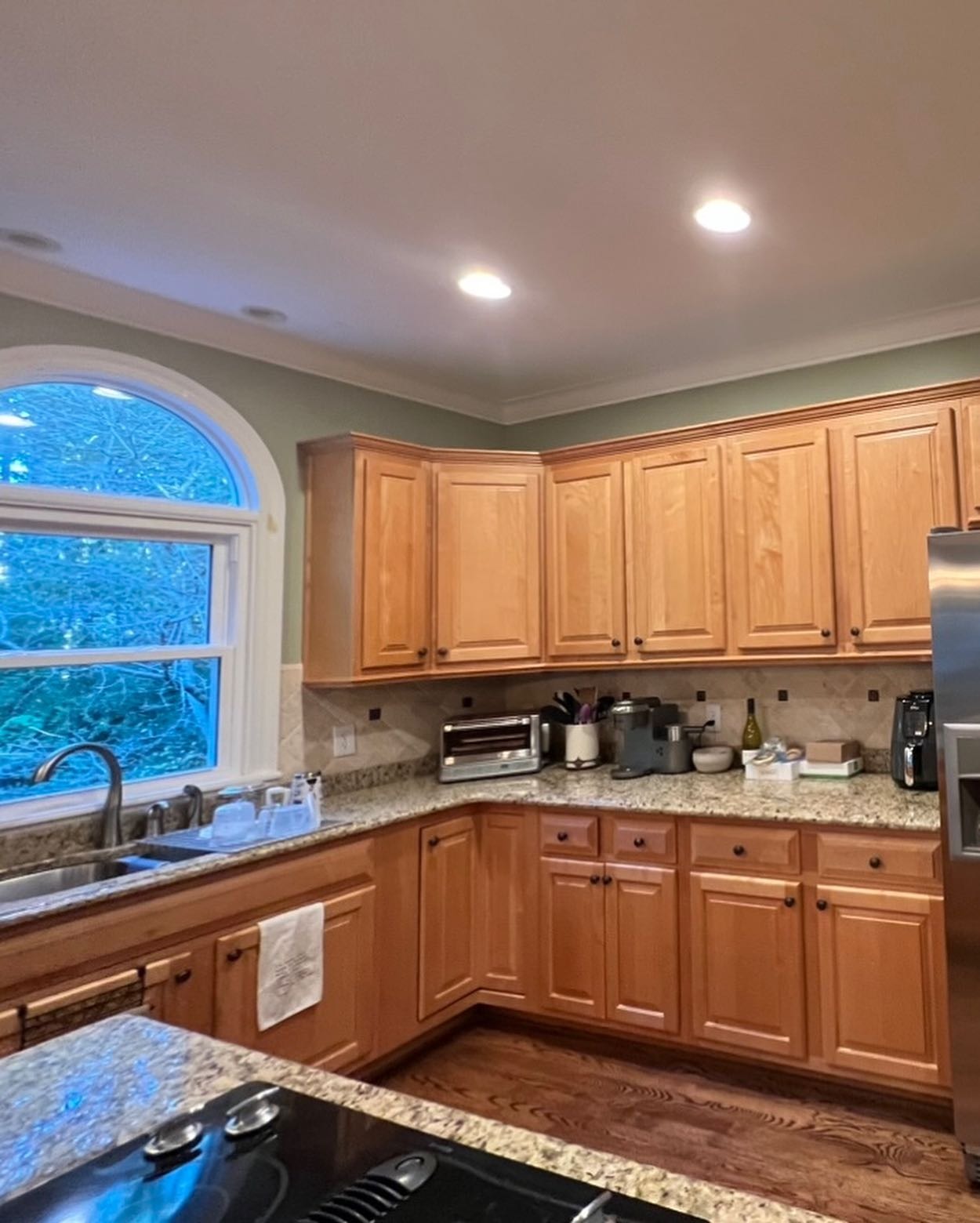
A second angle makes it worse. The sage walls are a nice color on their own, but they sink under the oak. The bronze knobs disappear. The crown molding gets swallowed because wood and trim both read as yellow.
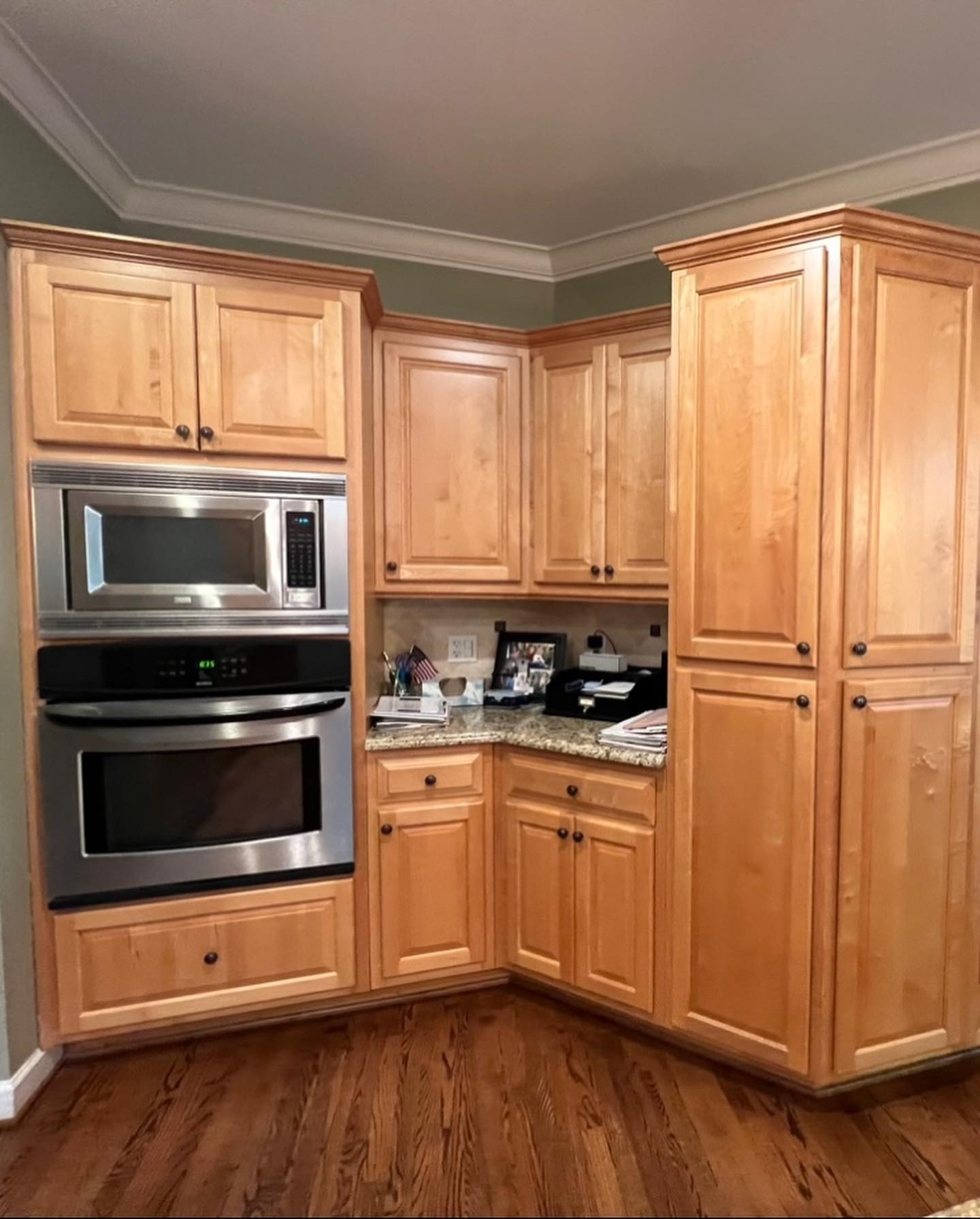
This is the corner every oak-kitchen owner recognizes. In oak, it reads as a solid wall of brown. You can barely tell where one door ends and the next begins.
Rule one she broke: she never stripped the grain
The grain-fill step is where most cabinet paint jobs die on the quote sheet. Oak has a deep, open texture, and the standard advice says flatten it before you paint. Sand the doors, trowel on filler, sand again, prime, sand, spray. The labor triples. The price tag follows.
She skipped the whole thing. The grain is still visible under the off-white if you lean in close. From where you actually stand in a kitchen, you do not notice. That leftover texture is the detail that saves the whole job. Painted cabinets with no grain underneath have a flat, plastic quality, the same look you get from cheap vinyl-wrap doors. The soft oak grain pushing through the paint gives these cabinets a hand-finished warmth that custom shops charge thousands to fake.
Rule two she broke: she did not match the island to the perimeter
Every small-kitchen article you have ever read says pick one color. Match everything. A single color will make the room feel bigger. She went the other direction and painted the perimeter a warm off-white and the island a deep navy that almost reads black at night.
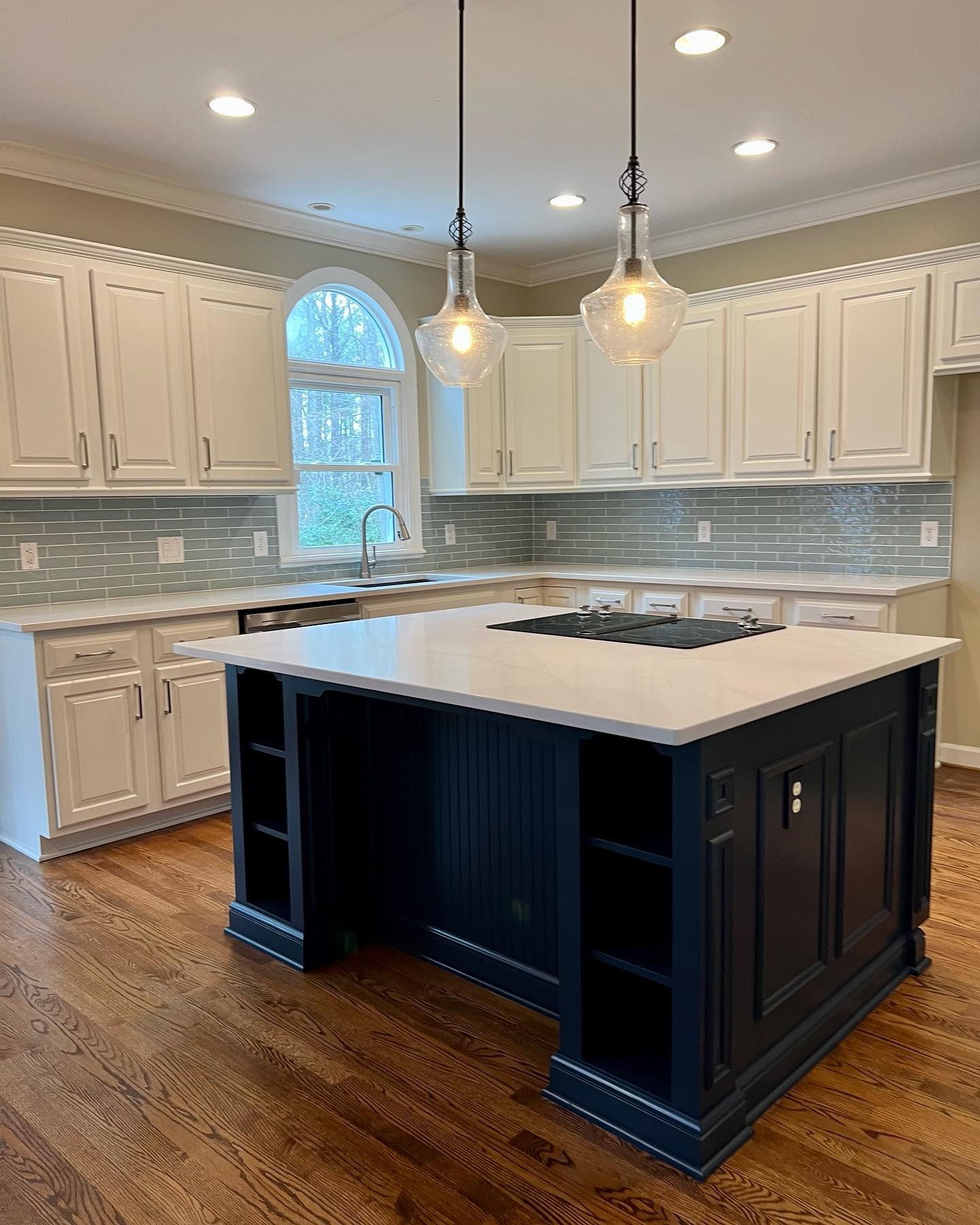
The room looks bigger, not smaller. The reason is simple. When every surface shares one wood tone, your eye reads the whole kitchen as one blurry zone. There is no center. The navy island gives your eye a place to stop and rest. Once your eye has that center, the white perimeter stops looking like a wall of doors and starts reading like a frame.
Rule three she broke: she kept the arched window instead of boxing it in
Ask any renovation forum about an arched window over a sink. The answers come back fast. Box it in. Cut it down to a rectangle. Rip it out. The arch, they will tell you, dates the house harder than the oak does.
She did nothing to the window. She painted the trim around it bright white and left it alone. In the oak version, the window and the cabinets pulled the eye in opposite directions. Now that the cabinets are white and the trim is white, the arched shape finally gets to breathe. The two seeded glass pendants over the island echo the curve from below. One curve answers the other. Nothing had to come out, and the room gained a feature that used to feel like a flaw.
Rule four she broke: she stopped before gutting
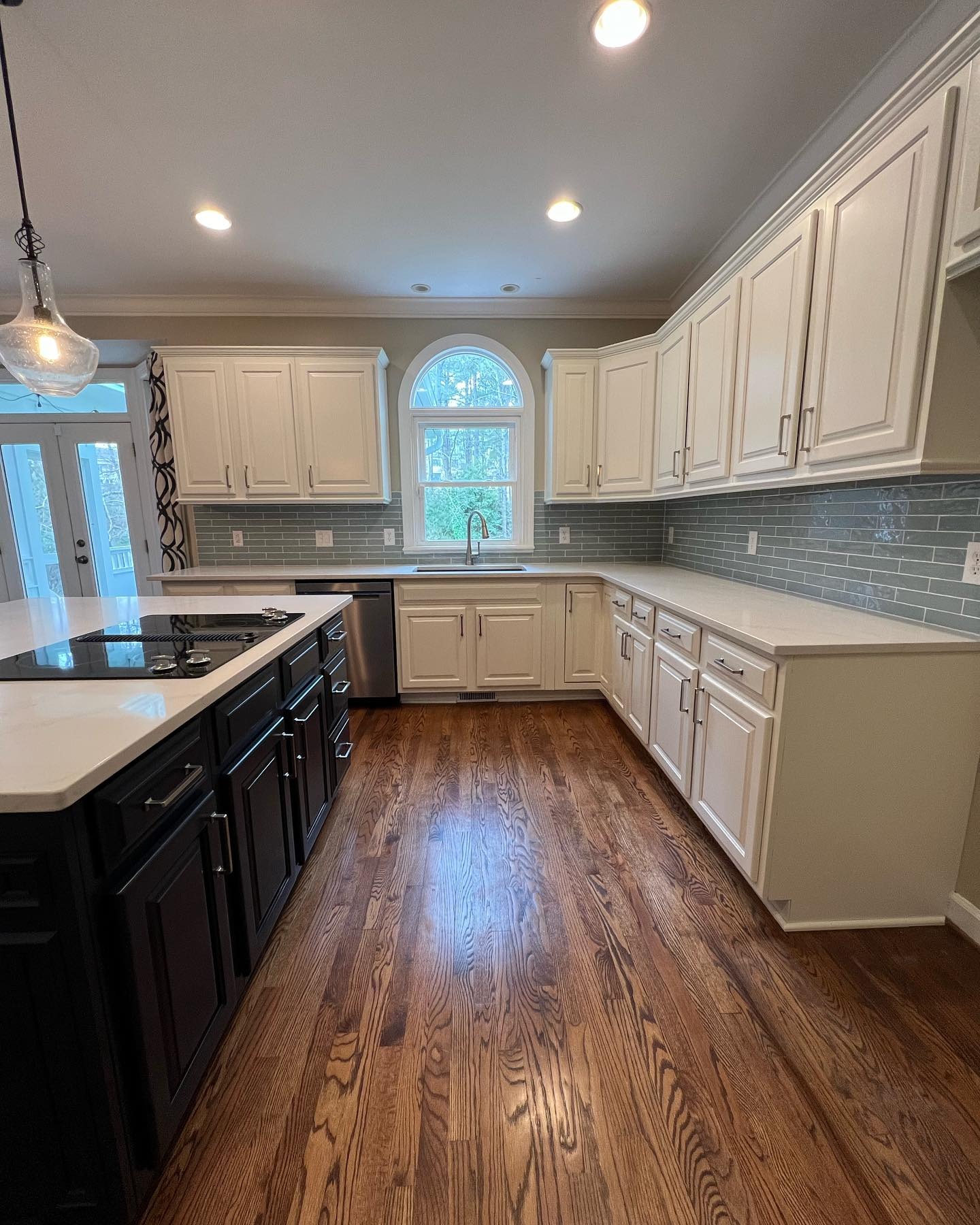
The full length shot is where the restraint pays off. Same uppers. Same lowers. Same crown. Same floor. She did not move a single box. She swapped the busy diamond tile for a soft green glass subway that pulls from the island, and let quartz take over from the speckled granite. Two changes plus paint, and that is the entire project.

The wall oven corner proves paint did all the work
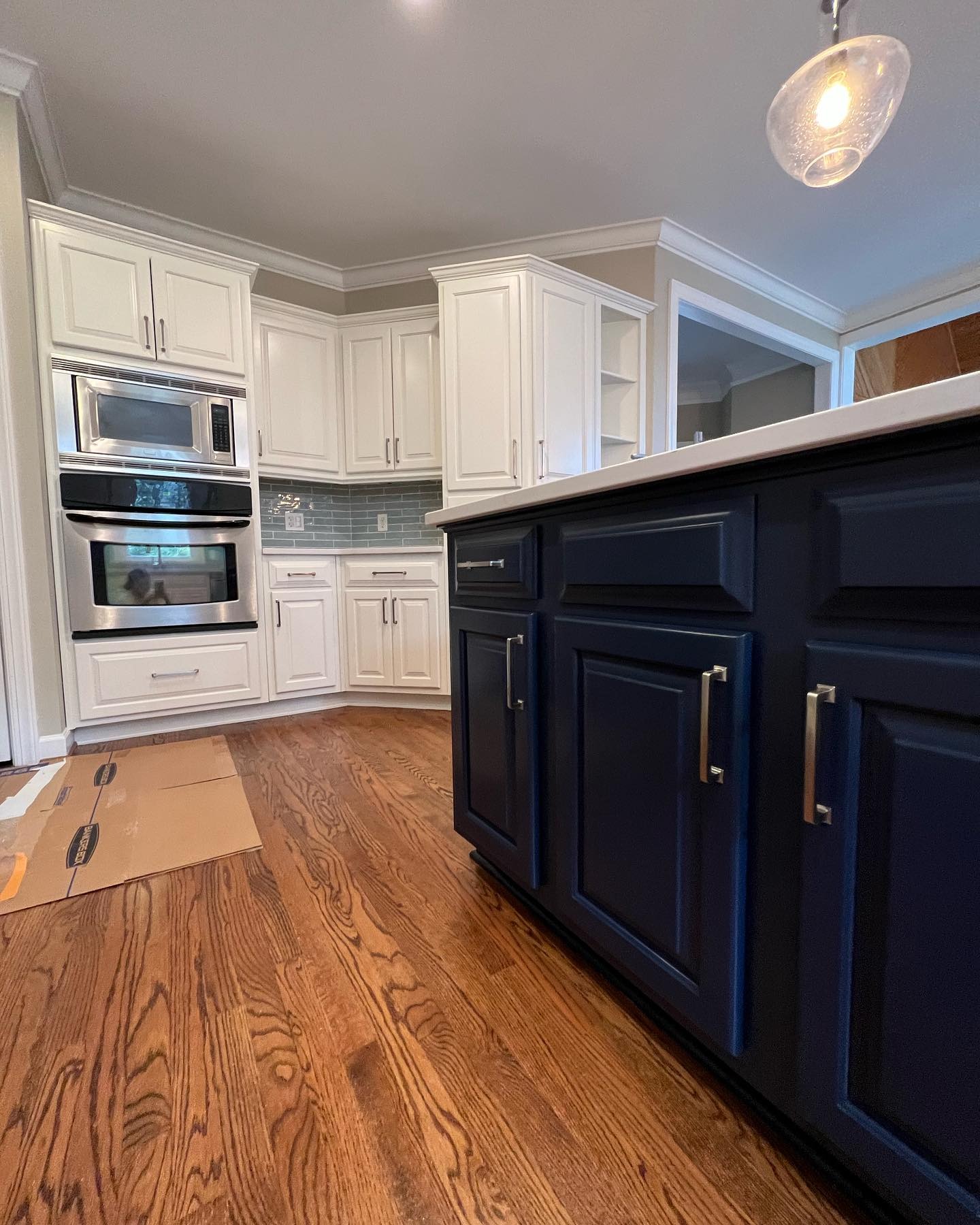
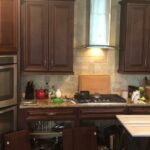
Same wall oven. Same microwave. Same pantry layout. The appliances suddenly look like they belong, because the off-white around them finally lets them sit back instead of competing. Two paint colors on the same cabinets, and the corner that used to disappear is now a quiet backdrop.
The navy island earns its color
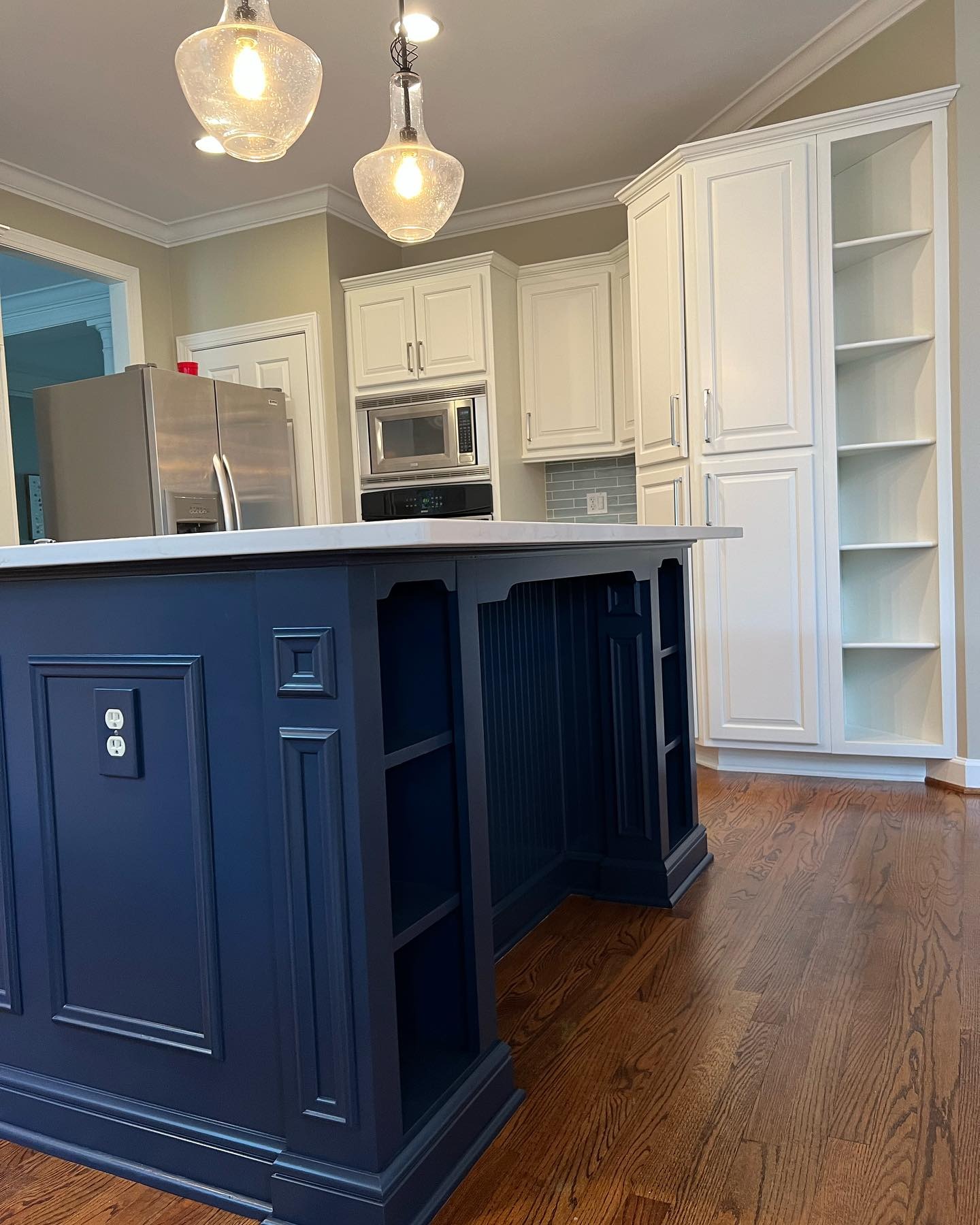
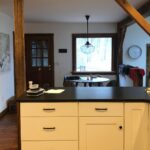
Look at the island from the back and the detail work finally comes forward. The raised center panel, the small square trim accent, the beadboard sides, the stepped baseboard. In the oak version all of that disappeared because the warm wood blurred the shadow lines. In the navy, every edge throws a tiny shadow and the island reads like custom millwork. The open cubby shelves on the end used to feel like dead space. Now they look like a styled nook waiting for a cookbook.
What it actually cost, roughly
A full oak kitchen replacement in most US markets runs $20,000 to $45,000. A cabinet painter doing the full grain-fill-sand-prime-spray routine quotes $3,000 to $8,000. Her approach lands closer to a few hundred dollars in material if you paint it yourself. The glass subway backsplash is the only line that pushes toward a real spend, and even that stays under a few thousand.
The rules she broke were all rules that keep contractors fed. None were hers to follow.
Would you keep the arched window or box it in?