Here’s a kitchen test that cost almost nothing to pass. A homeowner in the UK took one look at her tired honey oak cabinets and, instead of booking a full remodel, she called a spray crew. Two days later, the same cabinets were brilliant white in gloss, the handles had gone chrome, and the room didn’t look like the same kitchen. The wild part? It is the same kitchen. The boxes, counter, tiles, floor, and every appliance all stayed exactly where they were.
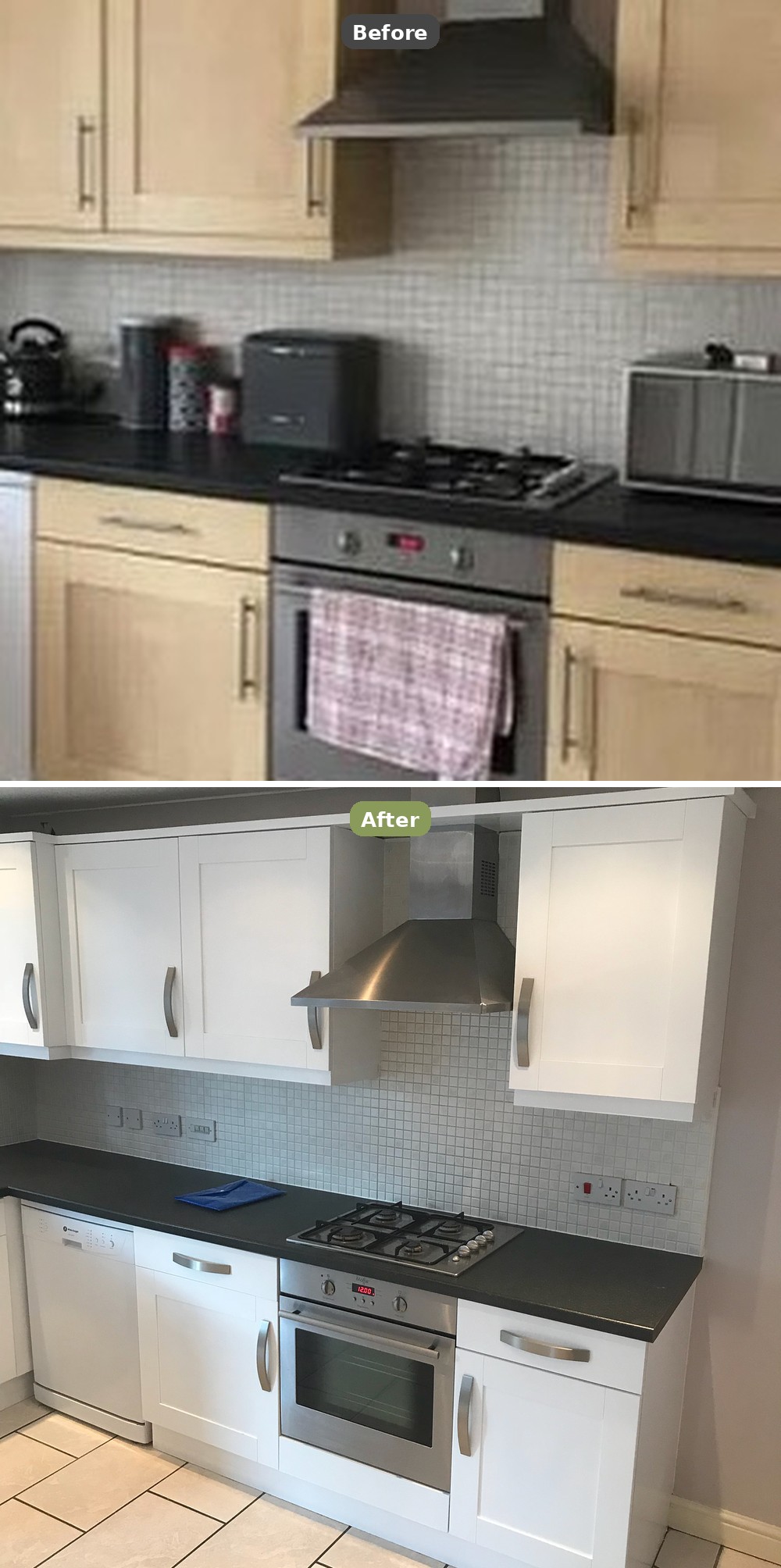
Scroll between these two shots and try to find a single thing that moved. The hood sits where it sat, the oven lines up with the oven, and even the socket positions are identical. The only new stuff in the room is paint and a pack of chrome handles.
What the kitchen looked like on day one
The before is a kitchen a lot of readers will recognize on sight: honey oak shaker fronts with a charcoal counter and a little mosaic backsplash. The counter and tiles were already swapped in a few years back, picked up in the hope of dragging the room forward.
This is the 2008-ish UK developer kitchen that came standard in about a million starter homes, and those earlier upgrades were the owner’s first swing at a facelift. They didn’t quite land. The warm oak kept pulling the room backward no matter what she put in front of it.
First, the hob wall got wrapped
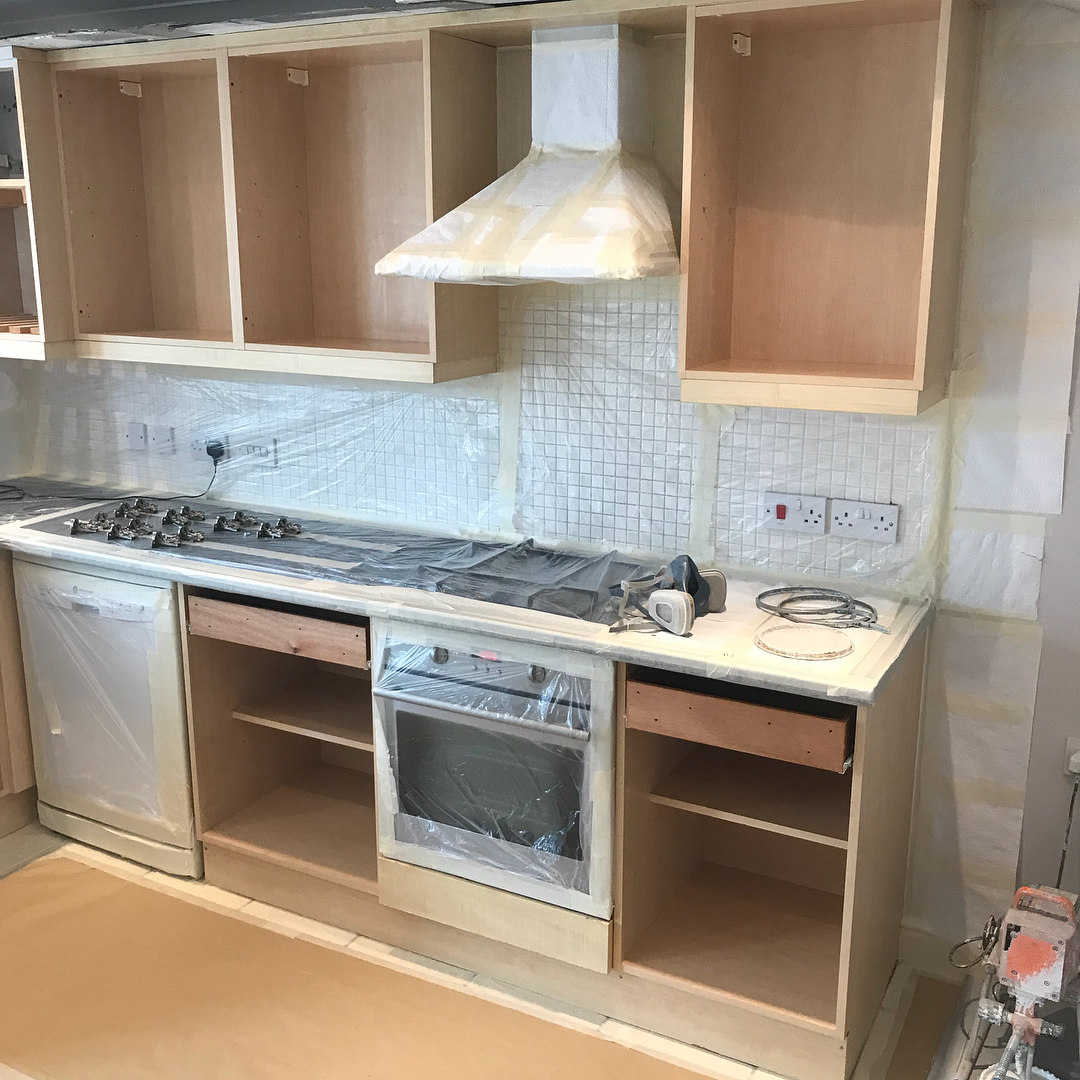
If you’ve tried to paint your own cabinets, this might look familiar in a slightly sad way. The pros treat it like surgical prep: every door comes off its hinges, the counters disappear under plastic, and the appliances get bagged. And yes, that respirator isn’t a prop.
Then the washer corner got the same treatment
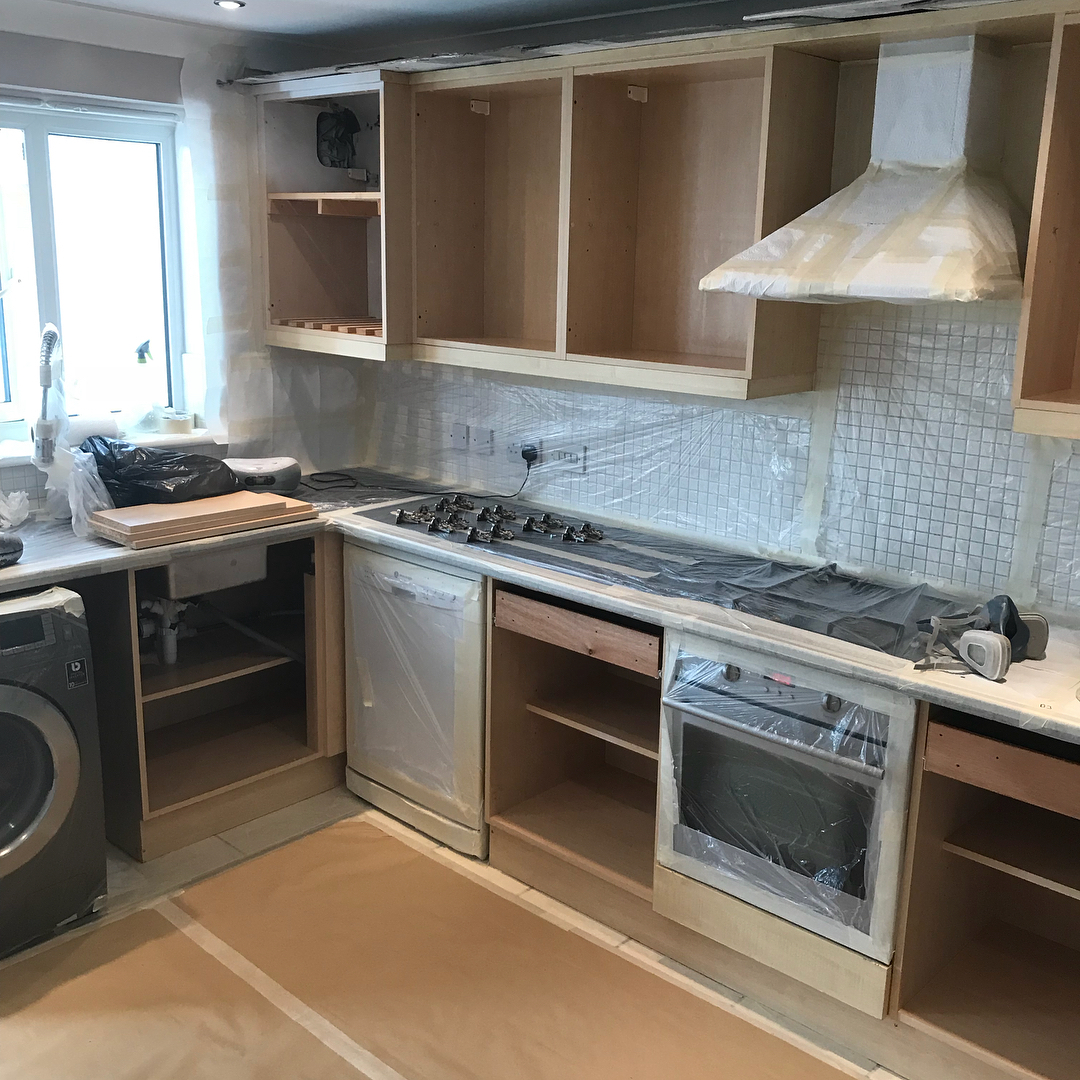
The L-corner on the other side got the same wrapping. Washing machine sealed up, floor papered, every cabinet box prepped where it stood. At this stage the room is basically a spray booth with a sink in it.
Why nobody picked up a brush
This is the step most DIY kitchen paint jobs skip, and it’s exactly why those jobs end up looking like DIY paint jobs. Brushes leave strokes, rollers leave stipple, and chalk paint picks up fingerprints the first time someone opens a drawer. A proper spray gun loaded with the right primer gives you something closer to a factory finish, which mechanically is what it is.
Hob wall, finished
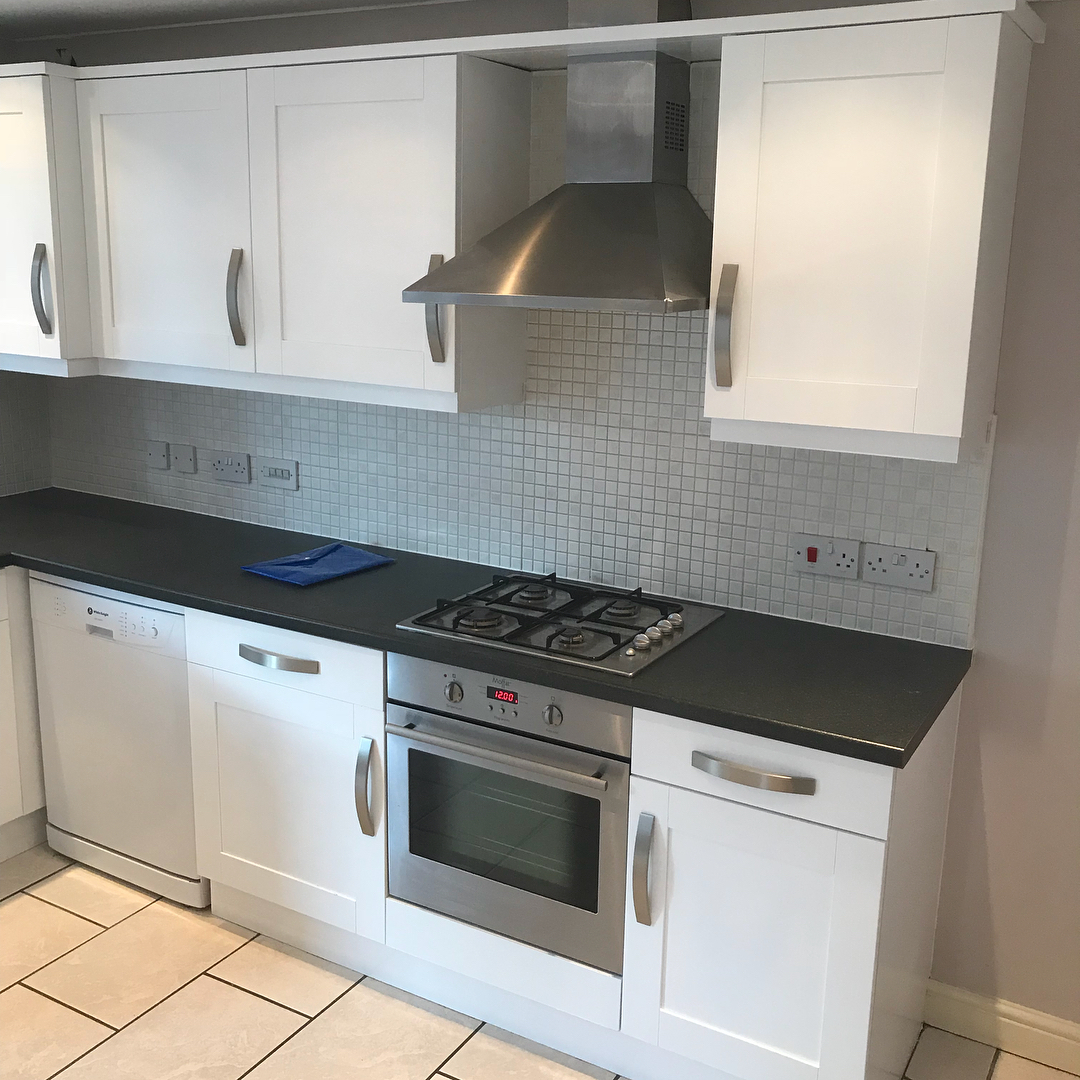
Look at that for a second. Same hob, same hood, same oven, same tile, same counter. The only things that physically changed in this frame are the paint and the handles, and the room is unrecognizable.
The corner came back looking like a showroom
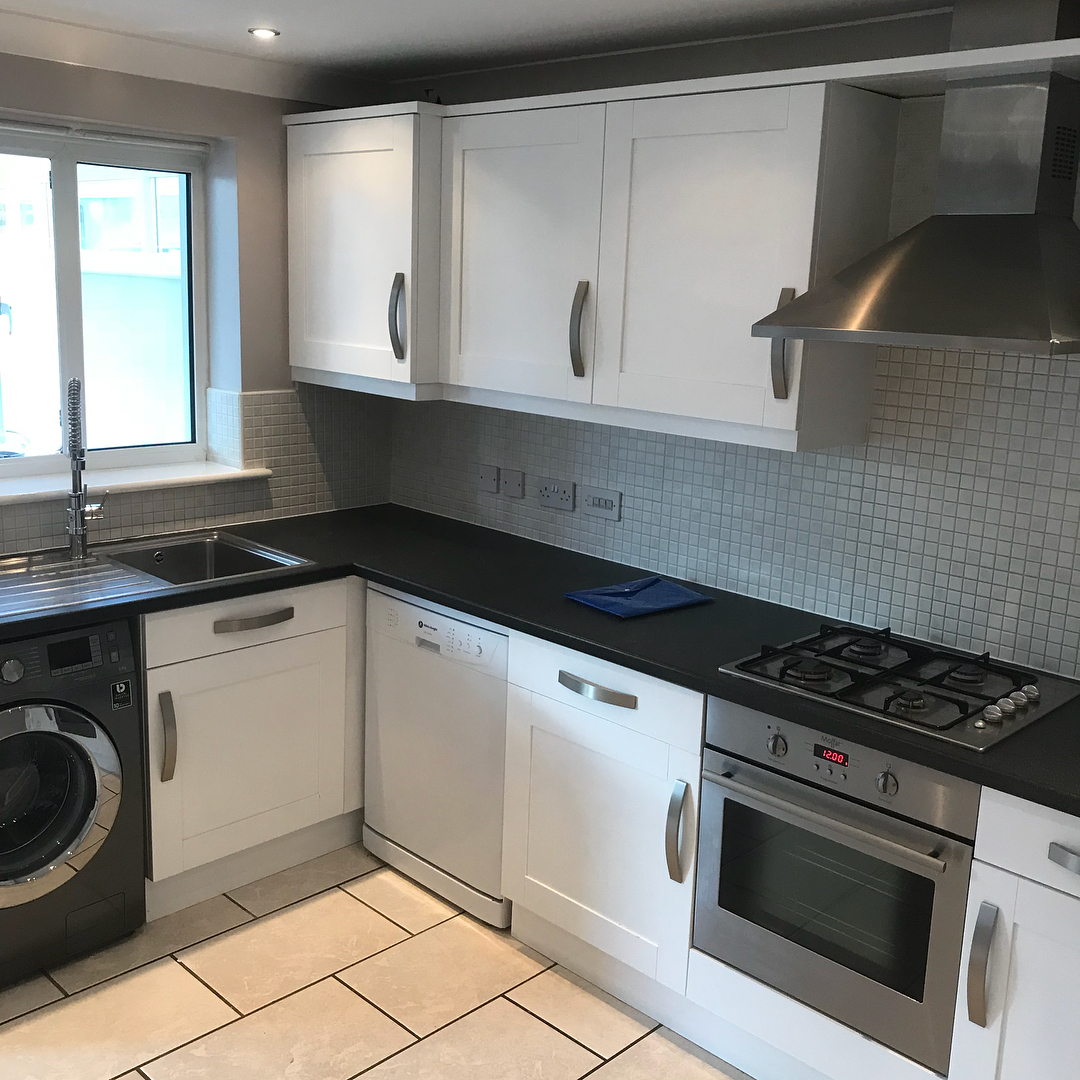
Same sink, same window, same washer, same mosaic tile. White gloss and a few new handles took a tired corner and gave it a show-home energy.
Watch the corner change in one frame
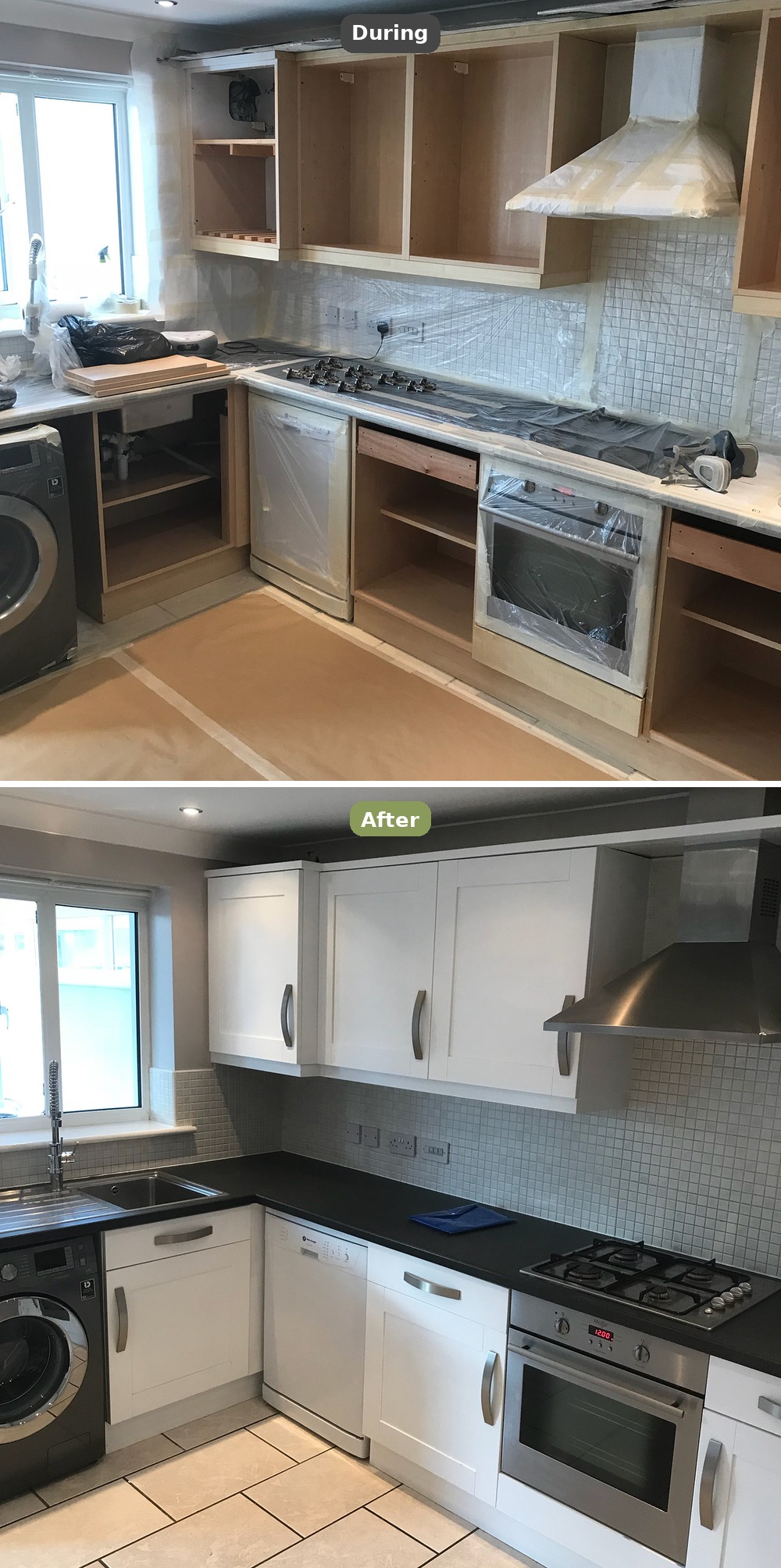
When you stack the two shots together, the scale of what’s actually changing starts to sink in. Nothing structural moved, nothing got ripped out, and the only new material in the whole room is what’s coming out of the spray gun.

Chrome handles, on purpose
Brass is the handle finish every magazine keeps pushing in 2026. She went chrome anyway, and it was the right call for this one. The hood, hob, oven, and sink are all stainless. Dropping brass into that mix would’ve felt mismatched. Brushed chrome quietly ties into the metal that was already in the room.
Gloss, when everyone’s doing matte
Matte is the big kitchen trend right now, and in a huge open-plan kitchen with sliders onto a garden, matte looks incredible. This isn’t that kitchen. It’s a small galley with one window, which means matte paint would have absorbed every bit of daylight hitting it. Gloss bounces that light back around the room. In a tight space, that one choice makes the walls feel further apart than they really are.
Dark counter, kept on purpose
Any painter in the world would have told her to rip the dark counter out. She didn’t, and the kitchen’s better for it. Set under a wall of brilliant white, the charcoal counter now reads like a deliberate two-tone move, the kind of thing people pay designers to pull off. Swap it for white quartz and you lose the contrast that gives the whole thing its snap.
Three things she refused to replace
Now the money story gets interesting. The cabinet boxes stayed in place, which matters because pulling boxes also triggers a new plumbing run for the sink and a re-template on the counter. That alone starts around £5,000 (roughly $6,300) before a single new door shows up.
Keeping the counter saved the hob-lift, sink-pull, templating, and second install visit that come with swapping it out. Another £2,000 (about $2,500) right there.
Nothing happened to the mosaic tile either, which spared a day of demo and a tiler on site. Call that another £1,500 (about $1,900) saved.
Keep all three and the whole kitchen comes down to what the spray crew charges plus a pack of handles. Against £12,000 to £20,000 (about $15,000 to $25,000) for a full replacement, the math stops being close.
One question before you call a fitter
Before anyone calls a kitchen fitter for a quote on a dated kitchen, there’s one question worth asking honestly: is the problem in the BONES, or just the FINISH? For almost every honey oak kitchen built in the 2000s, it’s the finish. The cabinet boxes are solid, the doors are solid, the layout usually works. Paint and chrome handles do most of the heavy lifting a full remodel does, for a fraction of the cost and almost none of the mess.