

You bring home a $20 feather wand, and your cat gives it one polite swat before wandering off. Vets pay attention to something other than playtime when a cat is adjusting to a new home. The hours after you set down her carrier may matter more than the toy you bought for her.
In short
- The toy is a plain cardboard box you already have at home.
- A box gives your cat a place to hide and feel secure.
- Research found lower stress in shelter cats given hiding boxes.
- Veterinarians point to security and warmth as reasons cats seek boxes out.
A box gives your cat a place to hide
View in gallery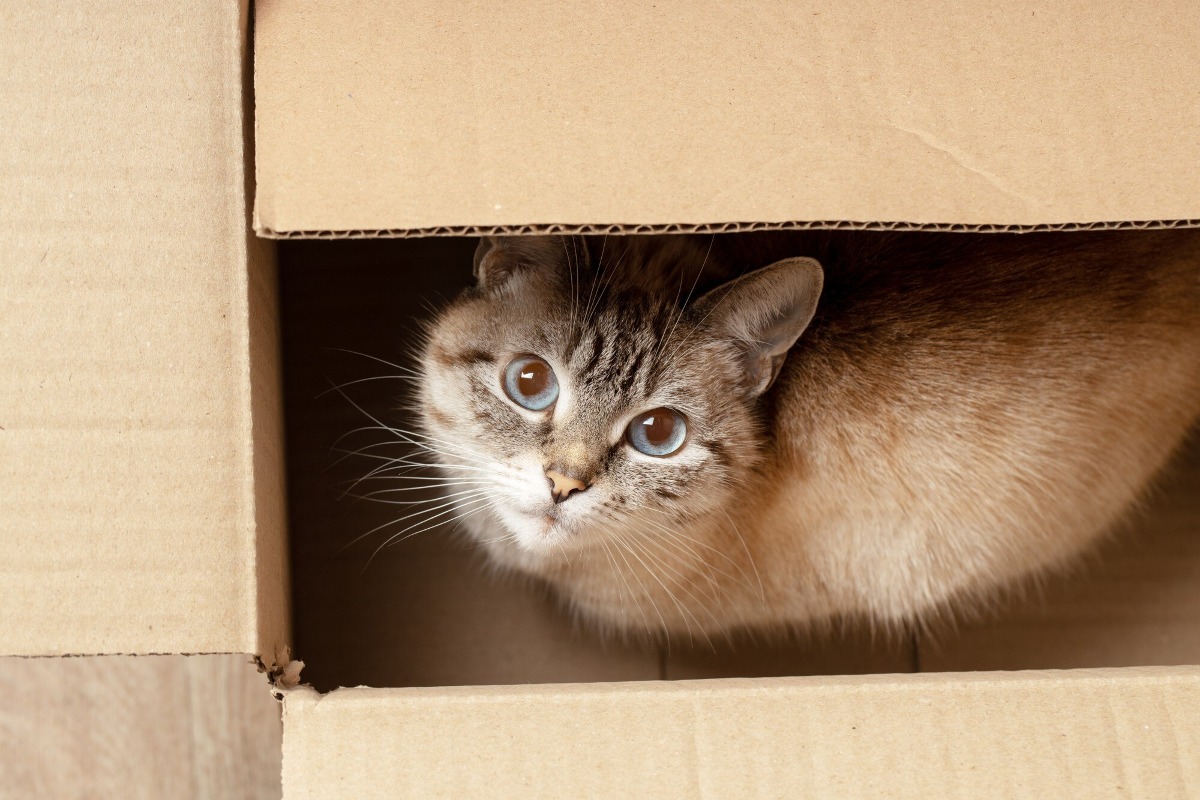
You set an empty delivery box beside the kitchen table, and your cat climbs in. It is easy to see a free toy where your cat sees a place to disappear for a while. It’s a cat phenomenon and it turns out researchers have looked into it too.
In a 2014 Utrecht University study, researchers observed 19 cats newly arrived at a Dutch shelter. They gave 10 cats cardboard hiding boxes; the other 9 had no boxes. By observation days 3 and 4, the cats with boxes showed lower stress scores. Around day 3, that group had reached a level of stress recovery the cats without boxes didn’t reach until day 14.
Claudia Vinke, one of the researchers, explained that hiding helps cats cope with changes and stress. So next time you find your cat wedged into a shoebox, she’s not just being odd. She’s simply found her own little retreat from the world.
Vets see comfort in the cardboard
Veterinarian Carlos Gutiérrez calls a cardboard box the perfect toy for a cat because it lowers stress and offers a sense of security. His advice is pleasingly simple, forgot about spending a fortune in the pet shop. Just use what you’ve already got. The box left over from a delivery already has what your cat is looking for.
He’s not the only vet who thinks that way. Dr. Mark D. Freeman says security is the most widely accepted reason cats love boxes. Dr. Chyrle Bonk points to their small, enclosed space, which helps cats feel protected from things that frighten them. A cat can settle inside while the activity in your home continues around the box.
There is comfort in the material, too. Dr. Ray Spragley says cardboard helps keep a cat from losing body heat. And Dr. Grant Little connects a cat’s interest in boxes with its instinct to hide and wait for prey. Part bed, part lookout post. Not bad for something you were about to recycle
Use the box you have
Before that next delivery box goes in the recycling, hang on to it. That plain household box is the one Gutiérrez recommends reusing. You don’t need to turn it into a special project for it to offer your cat an enclosed place of its own.
There’s more research behind this than you might expect. An earlier study in American shelters found stress-reducing effects from hiding boxes, and a later trial with Dutch shelter cats found lower behavioral stress during their first 12 days of shelter quarantine. For a cat facing unfamiliar surroundings, a simple place to hide made a measurable difference.
The limit
Those studies involved shelter cats, so they don’t establish the same measured effect for every cat at home. In the later trial, the boxes changed behavioral stress scores, not body weight or the urine measure of a stress hormone. Before offering a household box, follow Gutiérrez’s advice to inspect it and remove any staples. If your cat shows ongoing signs of stress, talk to your veterinarian.